
Review · BARCELONA
Barcelona: Gothic Quarter Walking Tour
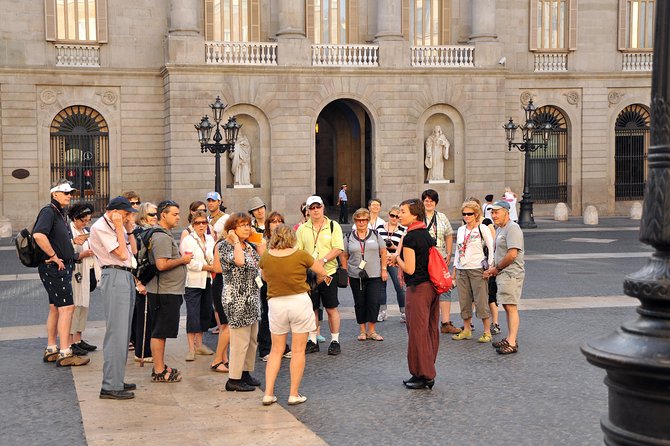
Barcelona’s old center is best understood on foot, one narrow lane and weathered stone wall at a time. This two-hour tour links Roman remains, medieval alleys, La Rambla, La Boqueria, the Cathedral, El Born, and Santa Maria del Mar in one compact walk. Teresa and Adele have recently led tours in different languages.
I like the route’s strong sense of time, from Roman Barcelona to the church built by local workers. I also like the practical start-of-trip value: you get restaurant tips and ideas for further sightseeing from guides such as Adele. The main drawback is pace. Two hours is enough for an excellent orientation, but not enough for a slow visit inside every landmark or a long market stop.
Key points at a glance
- Roman Barcelona beneath the medieval streets: See ancient remains that explain how the city began.
- A useful first-day route: Cover the Gothic Quarter, La Rambla, La Boqueria, El Born, and two major churches.
- A guide-led look at small lanes: The route takes you beyond the broad avenues into corners you might otherwise pass by.
- Four language choices: Tours are offered in English, French, Italian, and Spanish.
- A flexible format: The tour can be customized, and a private group is available.
- Good practical value: At $29 per person for two hours, it costs less than many longer sightseeing activities while covering several central districts.
Why this two-hour walk works
This tour gives you a quick but meaningful map of Barcelona’s old center. You begin at Pl. d’Urquinaona, 6, then move through Ciutat Vella and the Gothic Quarter before continuing toward La Rambla, La Boqueria, and the historic districts near the sea.
I like the way the route connects places that can feel separate when you visit them alone. Roman walls, Gothic churches, a market, a grand square, and a busy avenue all belong to the same story here. A guide can explain those links while you walk, rather than leaving you to piece them together from plaques and guidebook captions.
The tour is also customizable. That matters if you are more interested in architecture than food, or if you want extra attention on Barcelona’s Roman past. A private group is available, though the price and exact format should be checked when booking.
At $29, this is a fair price for a guided two-hour orientation in central Barcelona. You are paying for a live guide, language choice, and a carefully connected route, not for food, drinks, or admission to a separate attraction. If your goal is to see as much as possible in a short time, the value is strong. If you want long interior visits, a relaxed market lunch, or detailed museum-style commentary, you will need more time afterward.
More Gothic quarter walks in Barcelona:
- Barcelona all included: Sagrada, Park Güell, Montjuic & Gothic
★ 5.0 · 2,169 reviews - Barcelona Gothic Quarter Tapas & Taverns Food & Wine Tour
★ 5.0 · 1,470 reviews - Barcelona: Old Town and Gothic Quarter Walking Tour
★ 4.8 · 1,393 reviews
Starting at Pl. d’Urquinaona, 6
The walk begins at Pl. d’Urquinaona, 6, and returns there at the end. This gives the experience a clear start and finish, which is useful if you are fitting it between other plans.
From there, your guide takes you toward the Gothic Quarter and Ciutat Vella. The opening section is about orientation: learning where the old city sits and how Barcelona grew from an ancient settlement into a much larger medieval center.
I would book this early in your stay. One Italian-language tour with Adele was especially useful as a first-day activity because the guide offered suggestions for places to visit and restaurants to try later. That is one of the better reasons to take a walking tour at the beginning rather than near the end of a trip.
Roman remains in the Gothic Quarter
The Roman section gives the tour its foundation. The Gothic Quarter is not simply a collection of attractive old lanes. Roman remains scattered through the area show that Barcelona’s story began long before the medieval buildings that give the district its name.
Your guide explains how the Roman village developed into a medieval city. This context changes the way you read the streets. A narrow passage is no longer just a shortcut. A stone wall can point to an earlier layer of the city.
I like this part because it gives you something to look for after the tour ends. You are not only taking photographs of old stone. You are learning to notice how different periods sit beside one another.
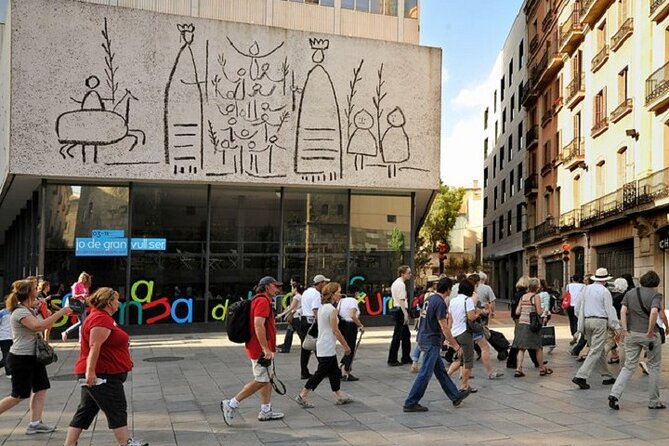
The lanes are also the reason a guide helps. The area can feel confusing, and some of its more interesting corners are easy to miss when you follow only the main pedestrian routes. Several French-language bookings praised the chance to discover small lanes that would otherwise have gone unnoticed.
Ciutat Vella and the medieval lanes
Ciutat Vella, or the Old City, broadens the story beyond the Gothic Quarter itself. Here, the guide explains how Barcelona’s older districts developed and points out details in the buildings, streets, and public spaces.
This section is less about checking off a single sight and more about reading the city at street level. You move through a maze of alleys, hearing about legends and the people who shaped the area. The experience suits you if you enjoy places that reward close looking rather than grand views.
It is worth keeping your expectations realistic. A two-hour walk cannot explain every street or building in Ciutat Vella. Think of this as a well-chosen introduction, not a full study of the district.
More architecture walks in Barcelona:
- Ramblas, Old Town, Gothic and Gaudi Architecture Walking Tour
★ 5.0 · 723 reviews - Kids and Family Gothic Quarter Walking Tour in Barcelona
★ 5.0 · 465 reviews - Barcelona Gothic Quarter Walking Tour
★ 4.5 · 456 reviews - Barcelona: Gothic Quarter Walking Tour
★ 4.9 · 383 reviews
La Rambla, Barcelona’s famous avenue
La Rambla offers a sharp change of mood. The Gothic Quarter’s narrow passages open onto Barcelona’s best-known avenue, lined with bars, restaurants, and street artists.
Your guide helps place La Rambla within the wider route rather than treating it as a stand-alone photo stop. You will see how the avenue connects the old city with the market and nearby historic districts.
La Rambla can be crowded and noisy, so this is not the quietest part of the walk. That is part of its character, but it may not suit you if you prefer slow architectural study. Still, it is useful to see the avenue with context. Afterward, you can decide if you want to return for a longer stroll or simply pass through on the way to another sight.
La Boqueria and the food market stop
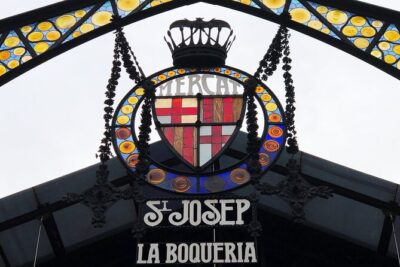
Mercat de la Boqueria brings food into the tour. The market is packed with color, produce, prepared food, and local shopping, giving you a more everyday view of the city than a church or monument can provide.
Food and drinks are not included, so treat this as a guided visit rather than a meal. You may have time to look around and note what you want to try later, but the two-hour schedule does not promise a long market break.
I like the practical benefit here. A guide can help you understand why the market matters and how it fits into La Rambla and the Old City. If you plan to eat there, you should allow separate time after the walk instead of expecting a full food experience during the tour.
Plaça Reial and a moment to slow down
Plaça Reial provides a welcome pause after the movement of La Rambla and La Boqueria. This grand square dates to the Napoleonic era and has long drawn artists and people passing through the old city.
The square is a good place to notice the contrast between Barcelona’s formal public spaces and its tight medieval streets. Your guide can explain the square’s place in the city while you take in its layout and atmosphere.
It is also one of the route’s natural breaks. The tour remains a walking experience, but this stop gives you a chance to slow your pace before moving on to the Cathedral and El Born.
Barcelona Cathedral and its stone details
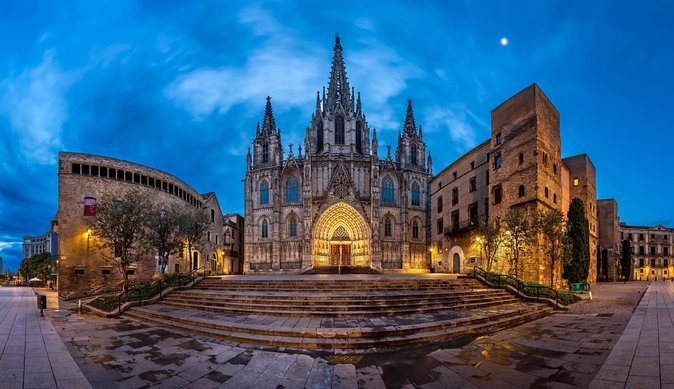
The Barcelona Cathedral is one of the route’s main architectural moments. Its Gothic design and gargoyle sculptures give you plenty to look at from the outside, and the guide explains why the building matters within the old city.
The gargoyles are especially memorable. They add a playful and slightly stern edge to the stonework, and they reward a closer look than a quick photograph from across the square.
The itinerary includes the Cathedral, but it does not specify a paid interior admission or a dedicated inside visit. If entering the church is important to you, ask the guide or operator what the scheduled stop includes on your date. That small check can prevent disappointment.
El Born, where old meets new
El Born changes the rhythm again. This neighborhood brings older buildings and streets together with newer shops, restaurants, and a more current city feel.
The value of seeing El Born on this tour is comparison. You can place it beside the Gothic Quarter and notice that Barcelona’s historic districts do not all feel alike. The guide helps you understand those differences without turning the walk into a list of dates and names.
This is also a useful area for later exploring. The tour gives you a first look, then you can return when you have more time. If you are choosing between a broad introduction and a single-neighborhood tour, this route offers more variety but less depth in each district.
Santa Maria del Mar, the people’s church
The final major sight is the Basilica of Santa Maria del Mar, also called St. Mary of the Sea. It is a striking example of Catalan Gothic architecture and is known for having been built by the people of the neighborhood themselves.
That human connection gives the church a different feel from a royal or state-sponsored monument. Your guide can explain how local workers and residents shaped the building, helping you see it as part of El Born’s community story.
As with the Cathedral, the supplied tour details do not promise a long interior visit or admission. You will see the basilica as part of the walking route, and you should confirm the exact access arrangement if going inside matters to you.
Guides, languages, and the personal touch
Live guiding is available in English, French, Italian, and Spanish. That range makes the tour practical for mixed-language groups, and the private-group option gives you more control over the pace and focus.
The strongest praise has centered on the guides’ personal approach. Teresa has led French and other language tours, with particular attention to Barcelona’s past and the city’s small lanes. Adele has guided in Italian, offering clear explanations and useful suggestions for restaurants and additional sights.
The tour is customizable, which is worth discussing before you set out. You might ask for more attention to Roman remains, Catalan Gothic buildings, local legends, or food-market culture. The exact guide depends on the date and language, so do not assume you will receive Teresa or Adele.
How much walking and time should you expect?
The stated duration is two hours, and the route includes several districts before returning to the starting point. Comfortable shoes are essential. The old center is made for walking, and you will get more from the tour if you are ready to keep moving.
The schedule is tight enough that each stop serves as an introduction. You will see a lot, but you will not have unlimited time at the market, Cathedral, or Santa Maria del Mar.
The tour is wheelchair accessible according to the activity details. If you use a wheelchair, it is still sensible to discuss your preferred route with the operator in advance, especially if you want particular stops or a customized pace.
Who should book this Barcelona walk?
I would recommend it to first-time visitors who want a clear introduction to the old city without spending half a day on one monument. It also suits anyone who enjoys architecture, local stories, food markets, and neighborhood contrasts.
Families and small private groups may appreciate the customizable format. Language choice is another strength, especially when a relative or friend is more comfortable in French, Italian, or Spanish than English.
I would be more cautious if you already know Ciutat Vella well or want long, detailed visits inside the Cathedral and Santa Maria del Mar. In that case, a shorter route may feel familiar, and you may prefer to explore one building at your own speed.
Should you book the Gothic Quarter Walking Tour?
Book this tour if you want a well-connected introduction to Barcelona’s old center for $29 and two hours. The strongest reasons are the Roman-to-medieval story, the range of neighborhoods, the multilingual guides, and the useful advice you can receive for the rest of your stay.
Go in expecting a brisk overview, not a full museum visit. Wear comfortable shoes, save extra time for La Boqueria and the churches, and ask ahead about interior access if that is important to you. For a first day in Barcelona, this is a practical way to get your bearings and find the corners you will want to revisit.
FAQ
Where does the tour start?
The tour starts at Pl. d’Urquinaona, 6.
Where does the tour finish?
The route returns to Pl. d’Urquinaona, 6.
How long does the tour last?
The tour lasts two hours.
How much does the tour cost?
The price is $29 per person.
Which languages are available?
The live guide is available in English, French, Italian, and Spanish.
Is the tour wheelchair accessible?
Yes, the activity is listed as wheelchair accessible.
Is this a private tour?
A private group option is available. The activity can also be customized.
Are food and drinks included?
No. Food and drinks are not included.
What should I bring?
Bring comfortable shoes for the walking route.
Can I cancel for a full refund?
Yes. You can cancel up to 24 hours in advance for a full refund. You can also reserve now and pay later.
Just added around Barcelona
- Love in the Gothic Quarter Barcelona: Self-Guided Romantic Walk★ 4.5 · 9 reviews
- Walking tour of the Gothic Quarter of Barcelona + Cathedral★ 5.0 · 8 reviews
- Wine tasting with a view of the Sagrada Familia★ 4.5 · 13 reviews
- Visit to the Modernist houses of the Americans★ 5.0 · 2 reviews
- Barcelona Jewish & Gothic Tour★ 5.0 · 18 reviews
- Roman & Gotic & Gaudi in Barcelona: private walking tour★ 4.5 · 2 reviews
- Self-Guided Audio Tour-The Surrealist Barcelona of Dalí and Gaudí★ 3.5 · 8 reviews
- Barcelona Gaudi Tour: Sagrada Familia, Casa Batllo & Casa Mila★ 5.0 · 4 reviews
Gothic Quarter Tours, compared.
Barcelona all included: Sagrada, Park Güell, Montjuic & Gothic
Read our review →
Barcelona Gothic Quarter Tapas & Taverns Food & Wine Tour
Read our review →
Barcelona: Gothic Quarter Ghosts and Legends Walking Tour
Read our review →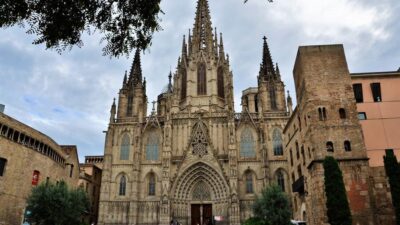
Barcelona: Old Town and Gothic Quarter Walking Tour
Read our review →
Barcelona Old Town & Gothic Quarter Small Group Tour
Read our review →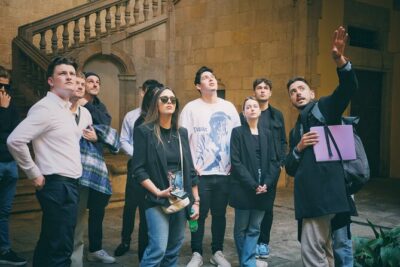
Ramblas, Old Town, Gothic and Gaudi Architecture Walking Tour
Read our review →
Barcelona: El Born and Gothic Quarter Wine & Tapas Bar Tour
Read our review →
Kids and Family Gothic Quarter Walking Tour in Barcelona
Read our review →Browse the lists this tour appears in