
Review · BARCELONA
Barcelona: Cemetery Tour – Gothic Graves & Local History
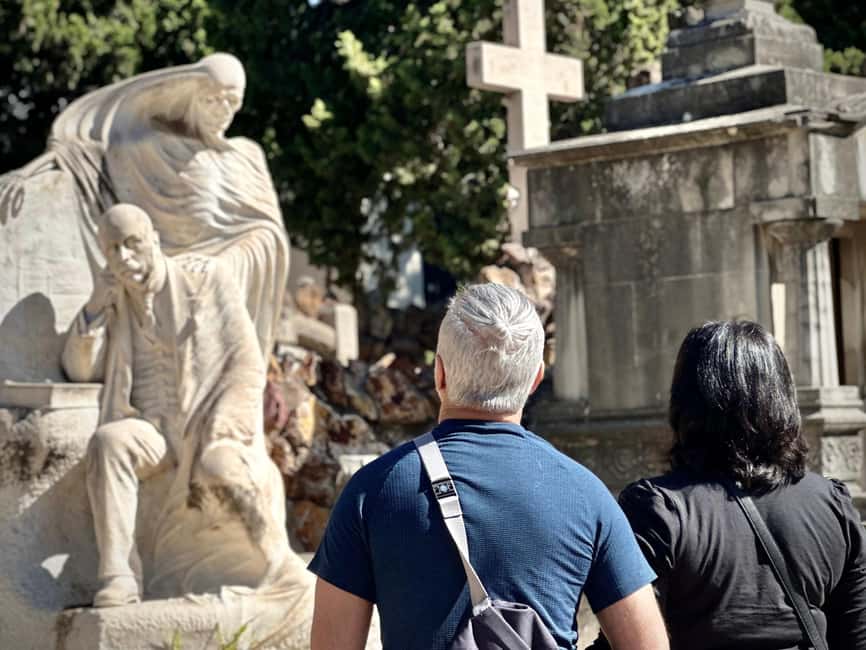
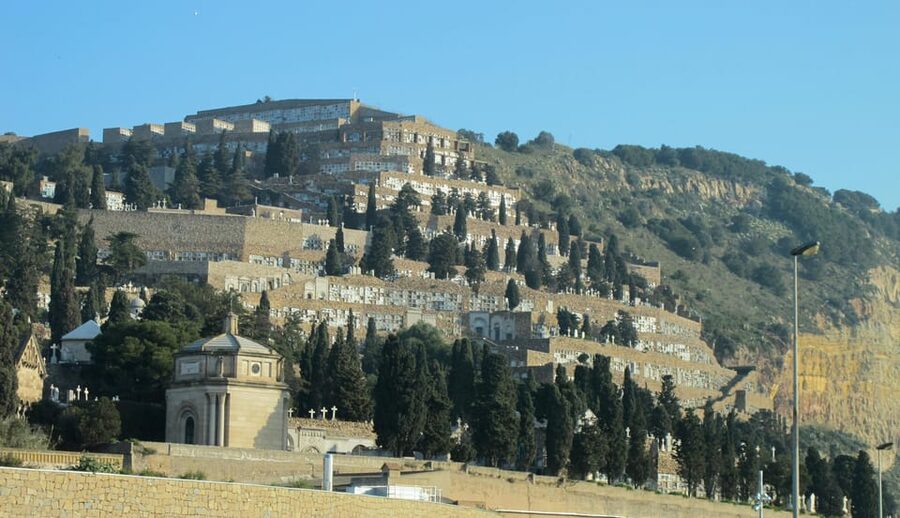
Montjuïc Cemetery is where Barcelona’s grand architecture meets its most personal stories. On the hillside above the sea, you’ll walk past churchlike mausoleums, angels, skeletons, obelisks, a pyramid, and the graves of writers, politicians, artists, and revolutionaries. Guide Onno brings the place into focus with stories that turn stone and marble into Barcelona’s human history.
I like the quiet setting and the fact that a guide helps you find the best corners of this very large cemetery. I also like the small-group feel, which makes it possible to stop for photos and questions instead of trailing behind a crowd. The main drawback is practical: stairs, slopes, and uneven paths make this a poor choice for anyone with mobility problems, recent surgery, or knee trouble.
Why this cemetery tour is worth your morning
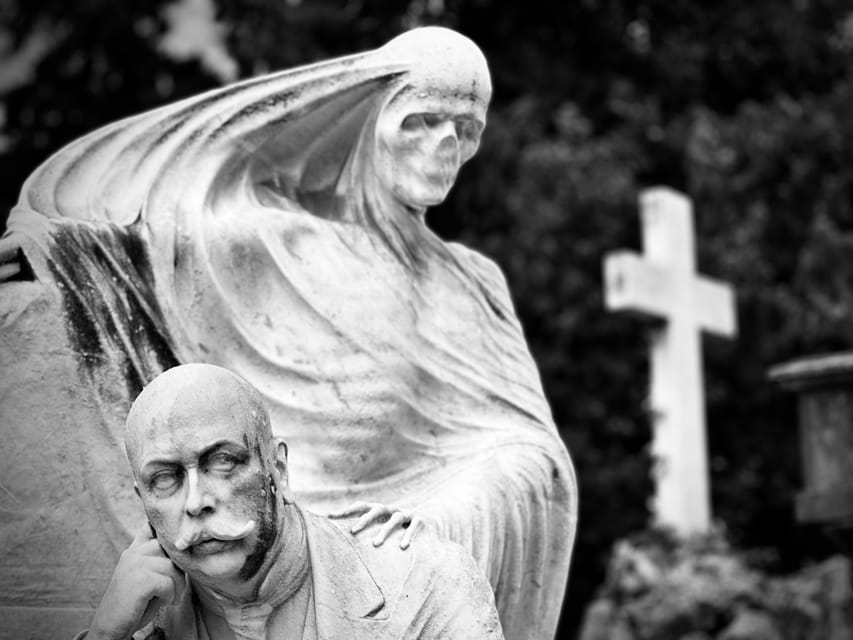
- A rare escape from Barcelona’s crowded sights: Montjuïc Cemetery is often remarkably quiet, even during a busy city break.
- Architecture you will not see in the Gothic Quarter: Look for mausoleums shaped like chapels, dramatic funeral sculpture, pyramids, obelisks, and ornate tombs.
- Barcelona’s past told through real people: The tour connects graves to local writers, politicians, city planners, artists, anarchists, and Civil War figures.
- A guide matters here: The cemetery is huge, and the best tombs are spread across its hillside paths.
- Excellent photo opportunities: You get unusual views over the sea as well as close views of sculpture and stonework.
- A manageable half-day outing: The tour lasts about 2.5 hours and includes transport from and back to a central meeting point.
Entering through Portal de Santa Madrona
The tour begins at Portal de Santa Madrona, where you meet the guide in front of the wooden doors or gate of the old city wall. Look for the white umbrella, the meeting marker provided for the group.
This starting point keeps the tour easy to find in central Barcelona. From there, you take the short ride toward Montjuïc Cemetery. The activity information describes this as round-trip city transport, while the route details label the transfer as a black cab lasting about 10 minutes. Since those descriptions differ slightly, confirm the exact vehicle when booking, but you should expect a brief transfer rather than a long ride.
That short journey matters. Montjuïc Cemetery is not simply another stop in the center of town. It sits on a hillside, and getting there without transport would add extra effort before the walking begins.
More Gothic quarter walks in Barcelona:
- Barcelona all included: Sagrada, Park Güell, Montjuic & Gothic
★ 5.0 · 2,169 reviews - Barcelona Gothic Quarter Tapas & Taverns Food & Wine Tour
★ 5.0 · 1,470 reviews - Barcelona: Old Town and Gothic Quarter Walking Tour
★ 4.8 · 1,393 reviews
Montjuïc Cemetery, a city of stone above the sea
The cemetery opened in the 19th century, and its scale is part of the experience. You are not strolling through a compact churchyard. Paths climb and descend across a broad hillside, with different sections containing family tombs, grand monuments, simpler graves, and memorials tied to Barcelona’s political past.
A guide is especially useful here because the most interesting places are not necessarily the largest ones. The tour takes you toward the notable graves and unusual works of art, helping you avoid spending your limited time wandering without context.
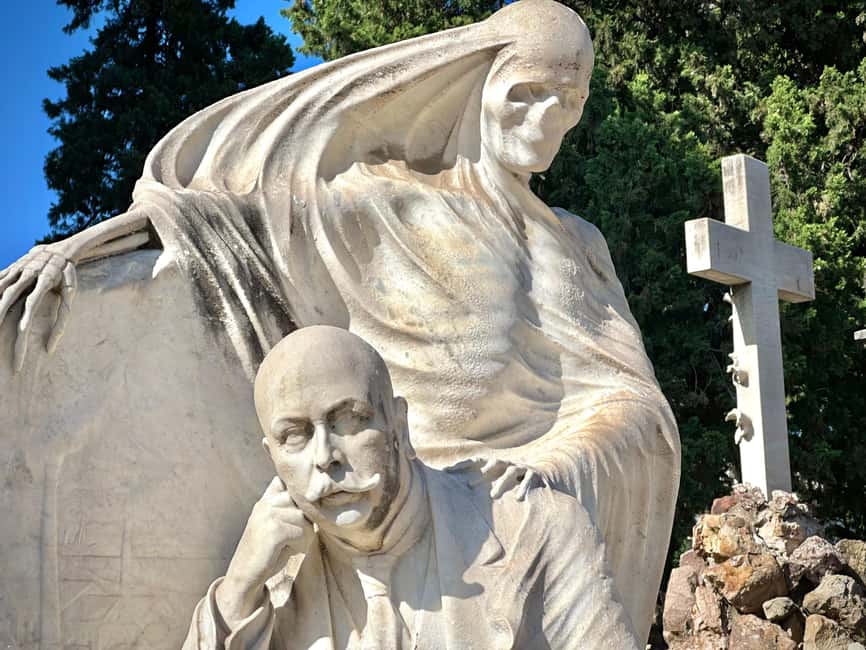
The architecture can feel theatrical. Some mausoleums look like miniature churches, while others are built around columns, domes, arches, or heavy stone doors. Sculptures of angels and skeletons add a darker note. A pyramid and obelisks bring an almost Egyptian flavor to the hillside. The result is part cemetery, part sculpture park, and part open-air history lesson.
That does not mean every moment is dramatic. Some sections are quiet and plain, and the tour includes walking between highlights. I see that as part of the value. You get a sense of the cemetery as a real place of remembrance, not just a collection of impressive monuments arranged for sightseeing.
The stories behind Barcelona’s famous residents
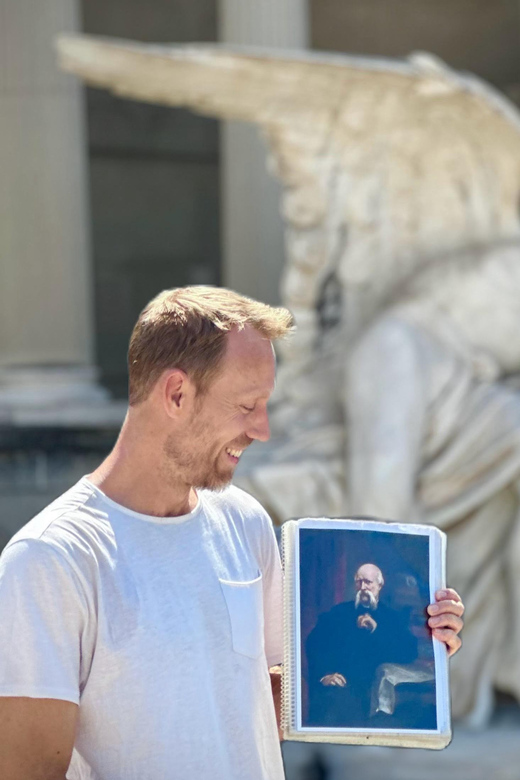
The strongest part of the tour is the link between the graves and the city outside the gates. You hear about important local figures and the lives they led, rather than looking at names carved into stone with no context.
One especially interesting grave is connected with Ildefons Cerdà, the city planner associated with Barcelona’s Eixample district. His connection gives you a new way to think about the city’s broad avenues and famous grid. A walk through the cemetery can send you back into Barcelona with sharper eyes, since streets and buildings begin to feel tied to individual decisions and ambitions.
The tour also touches on writers, politicians, artists, and other prominent citizens. You may find the simpler graves just as absorbing as the large family mausoleums. A modest tomb can open the door to a story about politics, culture, social change, or personal loss.
The guide’s role is not only to provide dates. Onno is described as relaxed, interactive, and full of small details that make the stops easier to remember. That style suits a cemetery. A dry list of names would quickly become hard work, while short stories and unusual facts keep the walk moving.
A quieter side of Barcelona
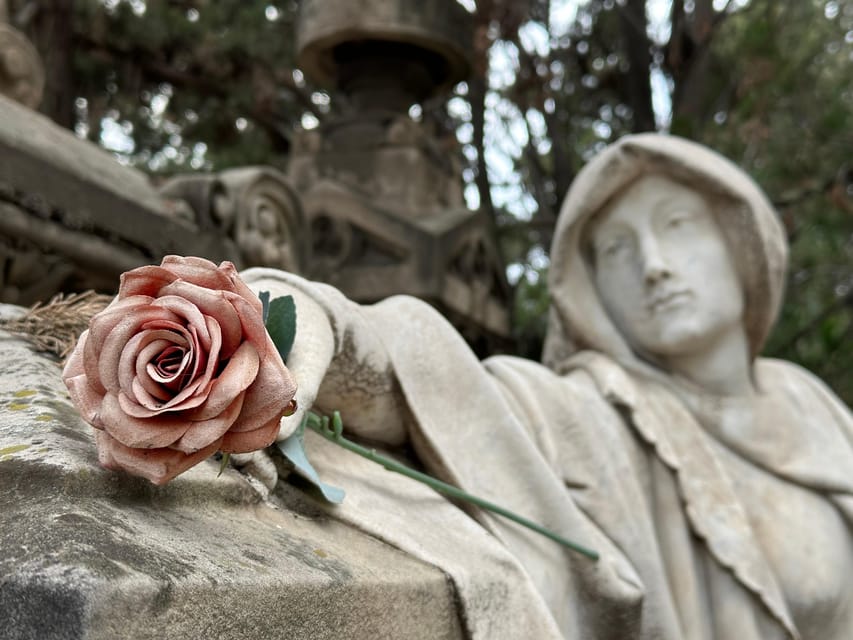
Barcelona can be noisy and crowded, particularly around its best-known churches, markets, and Gaudí buildings. Montjuïc Cemetery offers a sharp change of pace. The setting is peaceful, and it is possible to spend much of the tour with very few other people around.
That quiet is not just a pleasant break. It changes how you look at the place. You can pause beside a sculpture, study a family monument, or listen to a story without the constant movement of a major attraction. If you want an experience away from the standard city circuit, this tour makes a strong case for leaving the center for a few hours.
The cemetery is also visually striking because of its position. Paths on the hillside provide views toward the sea, while the monuments create close-up subjects for photography. Onno has also been praised for taking good photos during the experience, though you should treat that as a helpful extra rather than a guaranteed professional photography service.
Rain can make the stone and paths feel even more atmospheric, but it also makes footing less pleasant. Wear shoes with a firm grip and bring protection from the weather.
More history tours in Barcelona:
- Historical and Modernist Bike Tour Barcelona
★ 5.0 · 262 reviews - Barcelona: Tipsy Tapas & History Tour in the Gothic Quarter
★ 4.8 · 227 reviews - Barcelona Historical Walking Tour: Gothic Quarter and El Born
★ 5.0 · 217 reviews - Barcelona: Gothic Quarter Tour Dark History & Ghosts Tour
★ 4.8 · 64 reviews
The walking: manageable, but not effortless
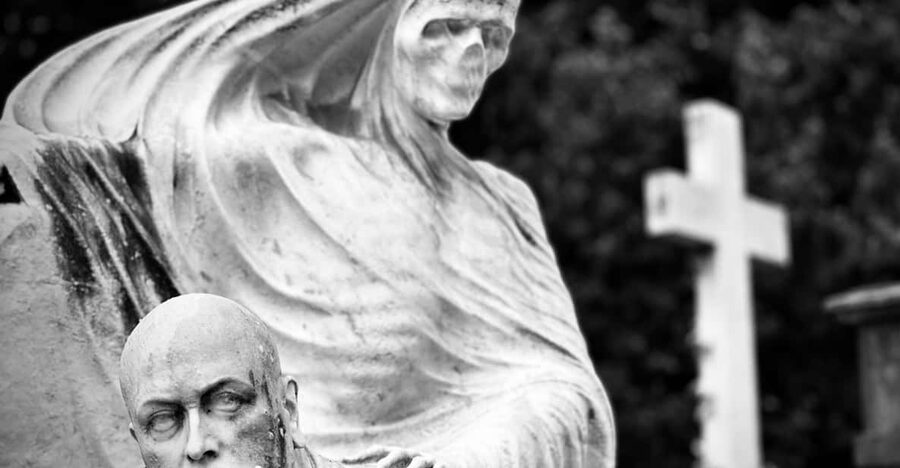
The tour lasts 2.5 hours, with walking spread across the cemetery rather than one nonstop climb. You will go up and down stairs and slopes at different points. The activity description says it is not continuously tiring, but the terrain can still be demanding for some people.
I would not book this if you use a wheelchair, have a significant mobility impairment, are recovering from surgery, or have serious knee problems. The experience is also listed as unsuitable for pregnant women, children under 12, and people over 70. Those limits are broad, so if you are near one of those categories but generally active, ask the operator before paying.
For everyone else, comfortable shoes are essential. This is not a polished museum floor. Uneven paths, steps, and the hillside setting are part of the visit. Take your time, especially when stopping for photos.
Fossar de la Pedrera and the Civil War connection
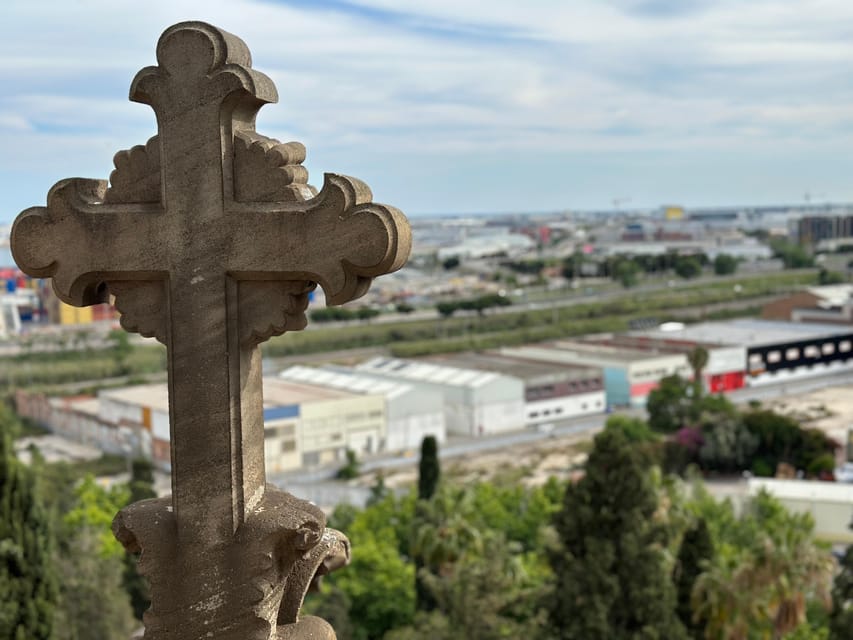
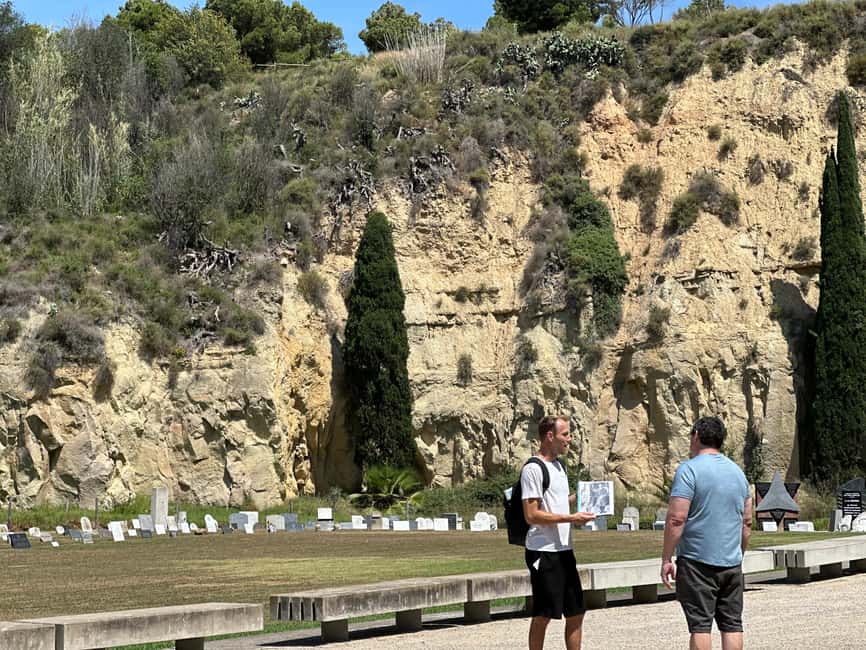
After the main cemetery visit, the route continues to Fossar de la Pedrera for about 15 minutes. This stop brings a more political and solemn side of Montjuïc into view.
The area is linked with Civil War and anarchist history, subjects that can be easy to miss on a standard Barcelona sightseeing route. It helps explain how the cemetery and the wider Montjuïc area connect with the city’s conflicts and political memory.
Do not expect another long walking section here. It is a shorter guided visit and photo stop, but its subject matter gives the tour more weight. The experience is not only about beautiful stonework. It also acknowledges people and events that shaped Barcelona in painful ways.
The graves of Buenaventura Durruti and Joan Miró
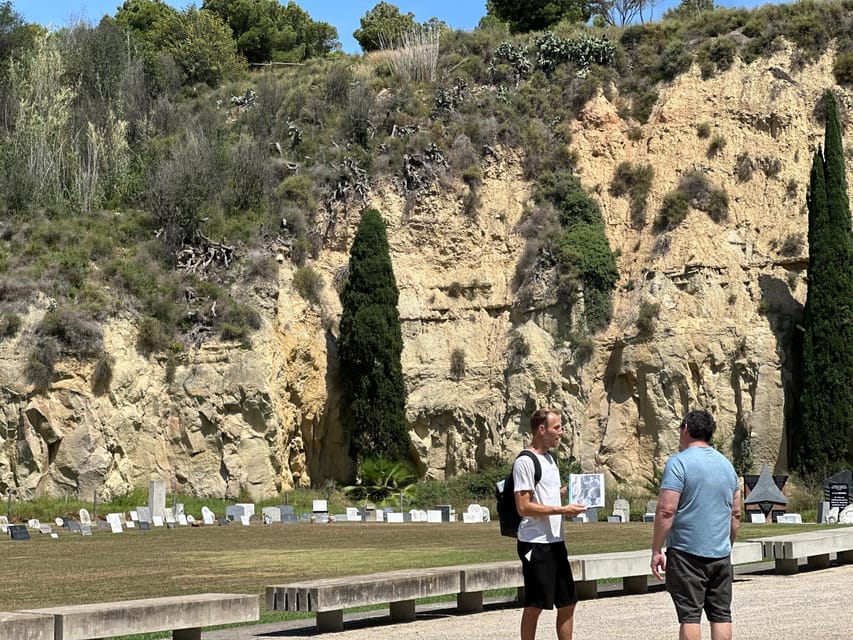
The next stops focus on two very different figures.
At the Tomba de Buenaventura Durruti, you hear about a major anarchist figure connected with the political struggles of the Spanish Civil War. This stop works well alongside Fossar de la Pedrera because it puts a human name and biography beside the broader history.
The visit to the Tomba de Joan Miró brings the route into the world of modern art. Miró is one of Barcelona’s best-known artists, and his grave provides a cultural link to the city’s museums, galleries, and public art. These short stops, about five minutes each, are not meant to be full biographical lectures. They are focused additions that show how varied the cemetery’s residents are.
Together, the final stops prevent the tour from becoming only an architecture walk. You move from elite family monuments to political memory and modern artistic identity.
Is $28 a fair price?
At $28 per person, this is a reasonable buy if you value a focused guide and included transport. You are paying for about 2.5 hours, a route through a large and confusing site, an English-speaking guide, and the transfer from a central location and back.
You could visit a cemetery without paying for a tour, but that would not give you the same route or background. The size of Montjuïc Cemetery makes it easy to miss the most interesting tombs, and the names alone do not explain why each person matters.
The value is strongest for first-time visitors to the cemetery, history fans, photographers, and anyone who has already seen Barcelona’s major sights. It is less compelling if you dislike walking, have little interest in funerary art, or want a lively social activity. This is a quiet, reflective outing, not a fast-paced attraction.
The small-group approach also matters. The experience is not designed for mass tourism, and a quieter group makes it easier to hear the guide and keep the cemetery’s peaceful mood intact.
Practical details before you reserve
The tour is conducted in English with a live guide. It begins and ends at Portal de Santa Madrona, and the guide waits with a white umbrella in front of the wooden gate.
Plan on being outdoors for the full walking portion. Comfortable shoes are more important than stylish ones, and you should prepare for stairs and changing weather. The cemetery has sea views, but the hillside also means more exposure to sun, wind, and rain than you might expect from a city-center walk.
The activity is not suitable for children under 12, wheelchair users, people with mobility impairments, pregnant women, people with recent surgeries, or people over 70 according to the stated conditions. If any of those categories are unclear in your case, ask before booking.
You can cancel up to 24 hours before the start for a full refund, and the reserve-now, pay-later option gives you some flexibility while arranging your Barcelona schedule.
Who should book this unusual Barcelona walk?
I would choose this tour if you want to see a less familiar side of Barcelona and enjoy stories tied to real people. It suits visitors who like architecture, sculpture, local politics, Civil War history, photography, and calm places where you can pay attention.
It is also a good choice after several crowded sightseeing days. The cemetery feels far removed from the city’s busiest streets, yet the stories connect directly to Barcelona’s planning, art, politics, and social life.
I would skip it if you need step-free access, prefer easy walking, or want an attraction with cafés, shops, and constant activity. The peaceful atmosphere is the point, but that also means the experience can feel subdued if cemeteries are not your thing.
Should you book the Montjuïc Cemetery tour?
Book it if you want a quiet, highly specific Barcelona experience that combines art, architecture, biography, and difficult local history. At $28, the guide and transport make sense, especially because the cemetery is large enough to overwhelm a first-time visitor.
Onno’s relaxed storytelling is a useful match for the setting, and the route covers more than grand tombs. You also get the Civil War connection at Fossar de la Pedrera and short visits to the graves of Durruti and Miró.
Wear good shoes, allow for stairs, and do not expect a polished museum visit. If that sounds appealing, this is one of the better ways to spend a quiet half-day away from Barcelona’s usual crowds.
FAQ
Where does the cemetery tour begin?
It begins at Portal de Santa Madrona, in front of the wooden doors or gate of the old city wall.
How do I identify the guide?
The guide waits with a white umbrella at the meeting point.
How long does the tour last?
The full activity lasts about 2.5 hours.
What language is the tour conducted in?
The live guided tour is conducted in English.
Is transportation included?
Yes. Round-trip transportation between the central meeting point and Montjuïc Cemetery is included. The activity details describe city transport, while the route information labels the short transfers as black cab rides of about 10 minutes.
What will I see at Montjuïc Cemetery?
You will see Gothic-style graves, large mausoleums, angels, skeletons, a pyramid, obelisks, other funeral artwork, and views toward the sea.
Which notable graves are included?
The route includes the graves of Buenaventura Durruti and Joan Miró. It also covers other important Barcelona figures, including Ildefons Cerdà.
Is the tour suitable for wheelchair users?
No. The activity is listed as unsuitable for wheelchair users and people with mobility impairments because of stairs, slopes, and uneven paths.
Is the tour suitable for children?
It is not suitable for children under 12.
Can I cancel for a refund?
Yes. You can cancel up to 24 hours in advance for a full refund. You can also reserve now and pay later.
Just added around Barcelona
- Love in the Gothic Quarter Barcelona: Self-Guided Romantic Walk★ 4.5 · 9 reviews
- Walking tour of the Gothic Quarter of Barcelona + Cathedral★ 5.0 · 8 reviews
- Wine tasting with a view of the Sagrada Familia★ 4.5 · 13 reviews
- Visit to the Modernist houses of the Americans★ 5.0 · 2 reviews
- Barcelona Jewish & Gothic Tour★ 5.0 · 18 reviews
- Roman & Gotic & Gaudi in Barcelona: private walking tour★ 4.5 · 2 reviews
- Self-Guided Audio Tour-The Surrealist Barcelona of Dalí and Gaudí★ 3.5 · 8 reviews
- Barcelona Gaudi Tour: Sagrada Familia, Casa Batllo & Casa Mila★ 5.0 · 4 reviews
Gothic Quarter Tours, compared.
Barcelona all included: Sagrada, Park Güell, Montjuic & Gothic
Read our review →
Barcelona Gothic Quarter Tapas & Taverns Food & Wine Tour
Read our review →
Barcelona: Gothic Quarter Ghosts and Legends Walking Tour
Read our review →
Barcelona: Old Town and Gothic Quarter Walking Tour
Read our review →
Barcelona Old Town & Gothic Quarter Small Group Tour
Read our review →
Ramblas, Old Town, Gothic and Gaudi Architecture Walking Tour
Read our review →
Barcelona: El Born and Gothic Quarter Wine & Tapas Bar Tour
Read our review →
Kids and Family Gothic Quarter Walking Tour in Barcelona
Read our review →Browse the lists this tour appears in