
Review · LECCE
Lecce: Baroque Architecture and Underground Walking Tour
Lecce’s Baroque stonework is only half the story. This 90-minute walk also takes you below the old city to the Jewish Museum, then links Roman remains, grand churches, palaces, and public squares into one clear account of how Lecce developed. I like the mix of major sights and smaller historical details, and I like that guides such as Max, Massimiliano, Fabrizio, and Angela bring different personalities to the walk.
The tour gives you two useful things right away: a short, well-planned introduction to Lecce, and a local guide who can explain what you are looking at instead of leaving you to admire a wall of carved stone. The main drawback is the limited time. You see the exteriors of several important buildings, but Santa Croce’s interior is not part of the standard plan, and the underground museum may feel modest if you expect a large museum.
Key points to know before booking
- The Jewish Museum adds a different layer: You go below street level to learn about Lecce’s Jewish past, not just its churches and Baroque decoration.
- Piazza Sant’Oronzo packs in several eras: The Roman Column, amphitheater remains, Old Town Hall, and former market square make this a useful stop for understanding the city.
- Piazza Duomo is the visual high point: The cathedral, bell tower, Seminary, and Archbishop’s Residence form one of Lecce’s finest architectural groups.
- The tour lasts almost exactly 90 minutes: That makes it easy to fit into a short stay, though it leaves little time for extended visits inside churches.
- Guide quality is a major part of the value: Max is often noted for humor and clear explanations, while other guides bring backgrounds in archaeology, architecture, and local history.
- You can choose shared or private: The private option should suit visitors who want more questions and a slower, more personal pace.
Why this Lecce walk works so well
Lecce can be hard to read at first. Its honey-colored local stone is covered in angels, columns, saints, masks, wreaths, and twisting plant forms. You may see the beauty immediately, but the city’s story can blur together unless someone points out the Roman foundations, the religious buildings, the Jewish quarter, and the later Baroque makeover.
This tour gives you that framework in a short period. You move through the historic center on foot, with no transport time and no long museum visit to interrupt the route. I see it as a strong first activity in Lecce, especially if you have only one day and want to decide which churches and monuments deserve a closer look afterward.
The price is listed at $29 per person. For a private tour, that is a reasonable rate if you value flexible questions and a more personal exchange. For a shared walk, the value depends on the group size and your guide, but the included Jewish Museum ticket helps. One past booking record showed a different price at a local office than online, so I would check the current rate and meeting point before paying. Prices can change, and the lower figure was not presented as a standing offer.
More Baroque architecture tours in Italy:
- Interpreti Veneziani Ensemble Baroque Concert in Venice Ticket
★ 4.5 · 403 reviews - Borghese Gallery Max 6 People Tour: Baroque & Renaissance in Rome
★ 5.0 · 185 reviews - Guided Walking Tour of Rome: Top Sights & Baroque Treasures
★ 5.0 · 155 reviews
Santa Croce and Lecce’s carved Baroque style
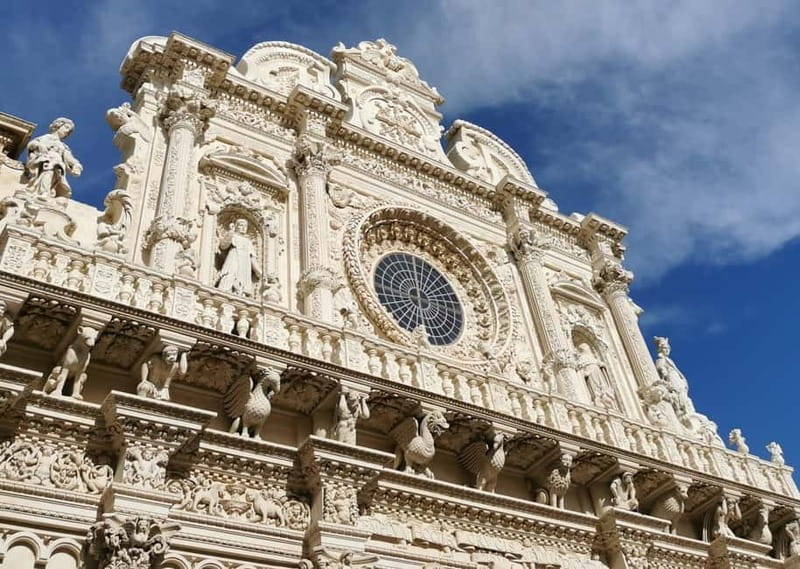
The walk begins with an exterior look at Santa Croce Church, the building most closely tied to Lecce’s Baroque identity. You will see a facade crowded with carved detail, including decorative figures and organic shapes that make the stone appear almost soft.
This is a good place for a guide to explain the local style. Lecce’s stone was workable enough for elaborate carving, and the builders used that quality freely. The result is theatrical rather than restrained. A guide can help you notice how the facade is arranged, what belongs to the church itself, and what reflects the taste of the period.
The standard tour visits Santa Croce from outside. That matters. If you want to study the interior, you may need to return on your own or buy a separate church pass. Some groups have entered churches during related walks or added church visits afterward, but you should not book this experience expecting guaranteed interior access to Santa Croce.
I like the opening stop because it gives the tour an immediate visual punch. The caution is that you may want more time here than the schedule allows. If church interiors are your main interest, ask about available add-on tickets or plan a second visit.
Piazza Sant’Oronzo brings Roman Lecce into view
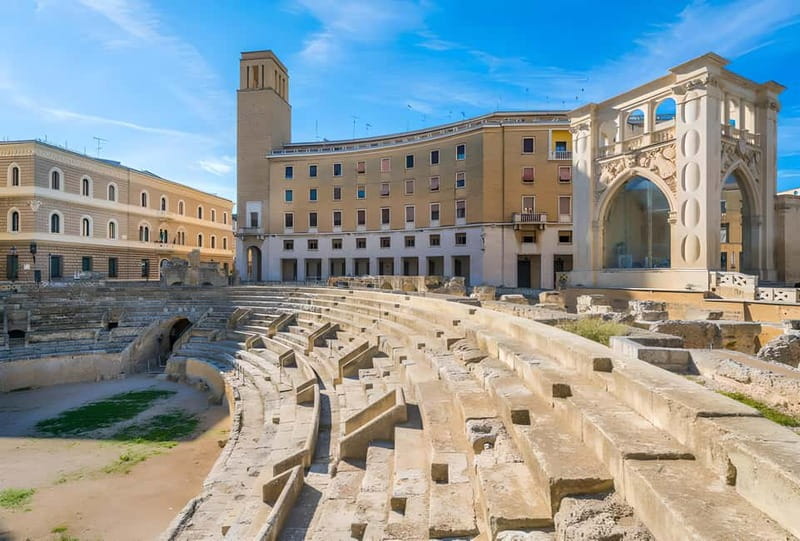
From Santa Croce, the route continues to Piazza Sant’Oronzo, once a market square and now one of the key public spaces in the old center. This stop is useful because several periods of Lecce’s past sit close together.
The Roman Column recalls the city’s Roman era. Nearby, the remains of a large Roman amphitheater show the scale of the ancient settlement. The excavation is not presented as an isolated archaeological site with a long visit. Instead, your guide uses it as part of the city walk, helping you understand how Roman structures fit into today’s streets.
You will also see the Old Town Hall in this area. The square can feel visually busy, with modern city life around ancient remains and later buildings. That mix is part of the point. Lecce is not a perfectly preserved stage set. It is a working city where Roman fragments, churches, offices, shops, and cafes share the same center.
The amphitheater has also been affected by restoration work at times. If you see barriers or incomplete sections, that does not mean the site is unimportant. It means the city is still maintaining and studying parts of its past. I would listen closely here because the guide’s explanation gives the ruins more meaning than a quick look from the pavement.
Corso Vittorio Emanuele and the Baroque city
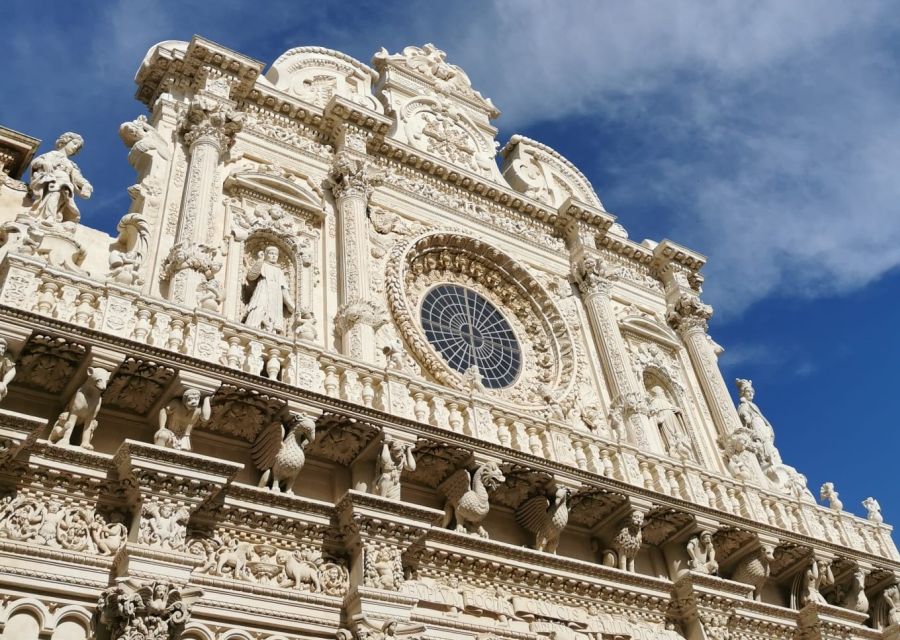
The route then follows Corso Vittorio Emanuele, where Baroque palaces line the way. This section is less about one single monument and more about learning to read Lecce’s streetscape.
Look up as you walk. Doorways, balconies, cornices, shields, and carved stone details can be easy to miss when you are focused on getting from one square to the next. The guide’s job here is to slow your eye down and point out how the city’s wealthy and religious buildings expressed status through decoration.
Sant’Irene Church is another important stop along this stretch. The recently restored church adds to the sense that Lecce’s old center is not simply a collection of ruins. Buildings are still being repaired, used, and brought back into clearer view.
This part of the walk should suit you if you enjoy visual details and urban design. It may feel less exciting if you want to enter every church or spend several minutes photographing each facade. The route has to keep moving to fit the 90-minute schedule.
Guides have different ways of handling this balance. Max is often associated with humor and memorable anecdotes, while other guides have been described as more formal or academic. Guides with training in archaeology and architecture have also led this route. The exact style depends on the person assigned, but the strongest versions combine facts with enough personality to keep the walk from becoming a lecture.
More architecture walks in Italy:
- Experience Florence’s Art and Architecture on a Walking Tour
★ 5.0 · 318 reviews - Palermo: Art and Architecture Walking Tour
★ 4.7 · 136 reviews - 3-hour walking tour Discovering Ragusa Baroque
★ 5.0 · 51 reviews - Rome’s Baroque Art Walking Tour: Who Killed Caravaggio?
★ 5.0 · 27 reviews
Piazza Duomo, Lecce’s grandest ensemble
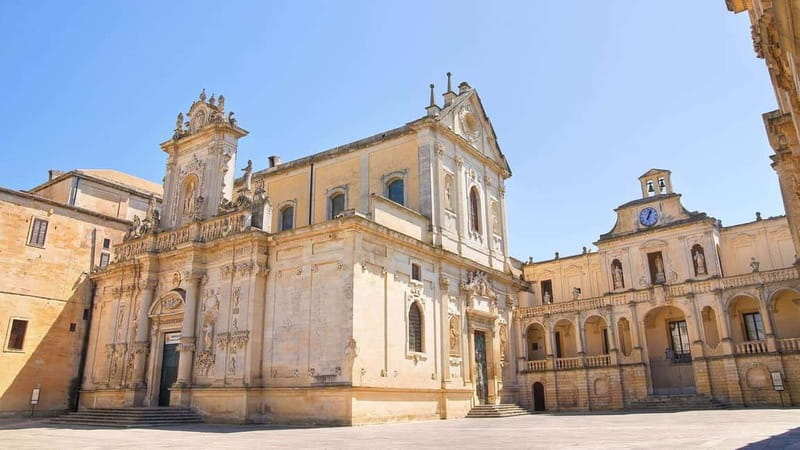
Piazza Duomo is likely the architectural high point of the tour. Unlike a square filled with unrelated buildings, this space works as a carefully composed group. You will see the cathedral, bell tower, Seminary, and Archbishop’s Residence from the outside.
The enclosed feeling of the square makes the buildings appear even more imposing. Your guide can explain how the buildings relate to each other and why the space is considered one of Italy’s notable architectural settings. This is where the earlier talk about Baroque design begins to make sense as a complete composition rather than a series of decorated facades.
The bell tower gives the square vertical force, while the lower buildings create a strong frame around the open space. Even without entering, you can learn a great deal from the arrangement of doors, windows, stonework, and proportions.
I would mark Piazza Duomo as the place where you should allow yourself a quiet minute. The guide will continue, but you can also step back and take in the whole scene. If you plan to visit the cathedral or climb a tower later, this introduction will make the interior visit more rewarding.
Below street level at the Jewish Museum
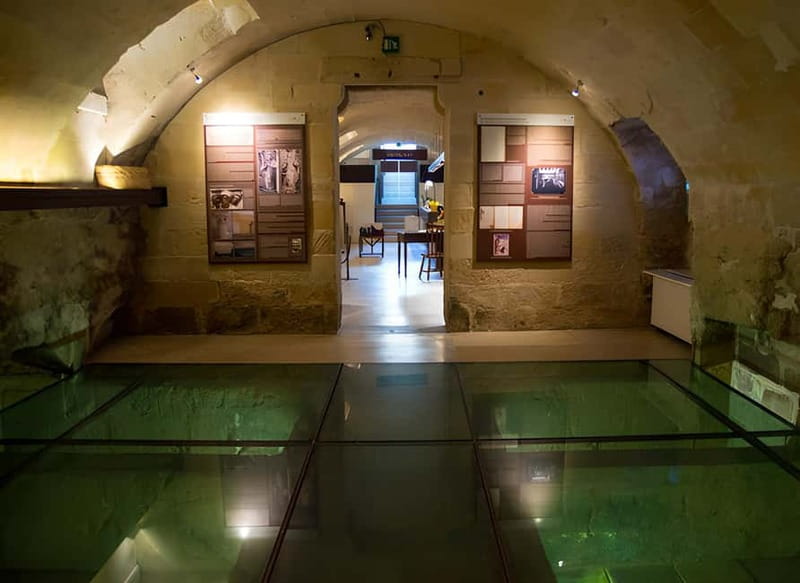
The final planned stop is the underground Jewish Museum, where the tour shifts away from Baroque facades and Roman remains. This change is important. Lecce’s story is not only the story of churches and noble palaces.
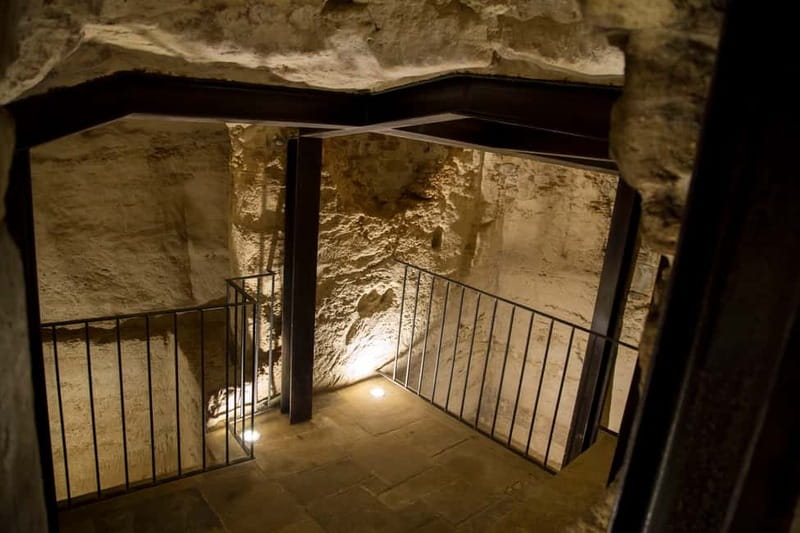
The museum presents the town’s Jewish past below the modern street level. You can expect a compact historical visit rather than a huge collection. The underground setting gives the stop a physical sense of time and change, showing how older layers of the city remain beneath the present one.
One useful point from the tour’s range of experiences is that the museum is not treated as a narrowly religious stop. The material concerns Lecce’s Jewish history and the city’s changing population and culture. If you are not especially interested in religious subjects, you may still find the museum worthwhile because it broadens the picture of who lived in Lecce and how the city changed.
The order can vary. The listed route places the museum at the end, while some groups have begun there before walking through the main squares. The meeting point can also vary according to the option you book. Check the details closely so you know where to start and how the route is arranged on your date.
What the guides add to the experience
The guide is the difference between this being a pleasant stroll and a useful history lesson. The strongest guides explain the city in plain language, answer questions, and keep the pace steady.
Max is repeatedly singled out for a friendly manner, humor, and clear accounts of the monuments. Massimiliano has also led the route, giving detailed explanations of Lecce’s past and present. Fabrizio, Angela, Antonio, Mario, Alex, and Ilena are among the other names associated with highly rated departures in the supplied booking information.
You cannot choose a particular guide unless the booking option allows it, so I would not promise yourself Max or any other individual. Still, the repeated pattern is clear: this activity depends heavily on local expertise. Some guides are serious and academic, while others use jokes and personal stories to make the information easier to remember.
The pace is generally described as comfortable, and the tour is intended to last 1.5 hours. One person expected two hours and was surprised when it finished after 90 minutes, but the scheduled duration is clearly 1.5 hours. Plan on a focused introduction, not a half-day exploration.
Price, group choice, and practical fit
At $29, the tour makes the most sense for someone who wants context quickly. You are paying for a live guide, a walking route through the center, and entry to the Jewish Museum. You are not paying for hotel transport, meals, or a full set of church admissions.
A shared group keeps the cost lower and can work well if you want a straightforward orientation. A private tour should be better for families, couples with many questions, or anyone who prefers to stop for photographs and explanations. Group size is not specified here, so check the option details if that is important to you.
The route is listed as wheelchair accessible. Since the meeting point varies and part of the experience takes place underground, I would still confirm the exact route and access arrangements when booking, especially if you need specific assistance.
The tour is offered in English, Italian, and French. Food and drinks are not included. Some departures have ended with an unexpected tasting of olive oil or wine, but that is not part of the listed inclusions, so treat it as a possible extra rather than a promise.
Wear comfortable shoes. The distance is not presented as demanding, but you will be walking and standing in the historic center. On hot days, the guide may adjust where the group pauses, using shade when possible. That small detail matters in southern Italy, especially during afternoon departures.
Free cancellation is available up to 24 hours before the start for a full refund, and the reserve-now-pay-later option can help if your Lecce plans are still shifting.
Who should book this Lecce tour
I would choose this walk if you are visiting Lecce for the first time and want a strong orientation before exploring alone. It suits people who like architecture but want the politics, religion, archaeology, and local life explained alongside the pretty stone.
It also works for families with older children and teenagers who may lose interest in a long museum visit. The Roman amphitheater, carved facades, public squares, and underground setting provide enough changes of scene to keep the route moving.
You may want something else if your priority is entering churches, climbing towers, or spending long periods at a single monument. This tour shows many important buildings from the outside. It gives you the map and the context, then leaves the more detailed visits for your own time.
FAQ
How long does the Lecce Baroque Architecture and Underground Walking Tour last?
The tour lasts 1.5 hours, or about 90 minutes.
What does the tour include?
It includes a walking tour, a local guide, and entry to the underground Jewish Museum.
Is Santa Croce Church visited inside?
The planned route includes an external visit to Santa Croce Church. Interior entry is not listed as included.
Does the tour visit Roman sites?
Yes. The route includes the Roman Column and the remains of a large Roman amphitheater in Piazza Sant’Oronzo.
Which languages are available?
The live guide service is available in English, Italian, and French.
Can I book a private tour?
Yes. You can choose between a shared group tour and a private option.
Is the tour wheelchair accessible?
The activity is listed as wheelchair accessible. Since the meeting point can vary, confirm the arrangements for your selected option.
Are food and drinks included?
No. Food and drinks are not included. Some departures have included an unexpected oil or wine tasting, but it is not a guaranteed part of the activity.
Can I cancel for a full refund?
Yes. You can cancel up to 24 hours in advance for a full refund. A reserve-now-pay-later option is also available.
Should you book it?
I would book this tour as a first look at Lecce, particularly if you have limited time or want help making sense of the city’s many styles. The combination of Santa Croce, Piazza Sant’Oronzo, Roman remains, Corso Vittorio Emanuele, Piazza Duomo, and the Jewish Museum gives you a useful range in only 90 minutes.
Book it with the right expectation: this is a guided introduction, not an all-access church tour. If you want the interiors of Santa Croce and other churches, add separate visits afterward. For architecture, Roman history, Jewish history, and an efficient walk led by a strong local guide, $29 is a fair price.
Just added around Italy
- Vicenza: discovering the city of Palladio by e-bike★ 5.0 · 4 reviews
- Vicenza: Palladian Architecture Private Walking Tour★ 3.3 · 3 reviews
- Turin: Art Nouveau Walking Tour with Coffee★ 5.0 · 11 reviews
- Vatican: Exclusive Baroque Evening With Aperitivo & Dinner★ 3.1 · 2 reviews
- Venice Music Project – Baroque Autumn – Season 2025★ 4.5 · 7 reviews
- Walking tour in Venice with an architect★ 5.0 · 16 reviews
- Palladio. A wonderful live tale through time&soul, from Ve/Pd/Vr★ 5.0 · 7 reviews
- Turin, Art Nouveau walking tour and coffee break★ 4.0 · 7 reviews
Baroque Architecture Tours, compared.
Train Exp. through the Alps (Royal Baroque Route from Nice)
Read our review →
Dresden: Tour of the Baroque Quarter with a Night Watchman
Read our review →
Interpreti Veneziani Ensemble Baroque Concert in Venice Ticket
Read our review →
Borghese Gallery Max 6 People Tour: Baroque & Renaissance in Rome
Read our review →
Concert at the Palais Schönborn-Batthyány by the Vienna Baroque Orchestra
Read our review →
Guided Walking Tour of Rome: Top Sights & Baroque Treasures
Read our review →
Noto, Modica and Ragusa: The Baroque Tour from Catania
Read our review →
Catania: Noto, Modica and Ragusa Ibla Baroque Tour
Read our review →Browse the lists this tour appears in