
Review · LECCE
Discover Lecce’s Baroque Secrets: A 3-Hour tour
Lecce’s Baroque stonework is only part of this three-hour walk. You’ll also taste local Extra Virgin Olive Oil, peek into a historic papier-mâché workshop, and go below street level at Museo Faggiano, where the city’s past is tucked under a modern house. I especially like the small group limit of 10 and the mix of grand monuments with everyday local craft.
The guides, including Francesca, Fabio Grasso, Gianluca, and Elenia, have brought different strengths to the walk. Fabio’s architecture background suits the carved facades, while Francesca has been praised for tailoring the pace and adding local tips. The main caution is that church entry fees are extra, and much of the tour is spent viewing buildings from outside unless you pay to enter selected churches.
Key points to know before booking
- Underground Lecce: Museo Faggiano adds a rare look beneath the city, with about 30 minutes in its subterranean rooms.
- A proper olive oil tasting: You’ll learn to notice aroma and flavor instead of simply dipping bread into oil.
- Small-group walking: The open tour is limited to 10 people, which helps the guide answer questions and keep the route moving.
- Baroque highlights: See Santa Croce, Palazzo dei Celestini, San Matteo, Santa Chiara, and other major sights.
- Local craft included: A stop at a papier-mâché workshop connects Lecce’s famous decoration with a living tradition.
- Budget detail: The $53 price includes the guide, oil tasting, workshop stop, and Museo Faggiano ticket, but not paid church entrances.
Why this Lecce tour feels different
Many city walks in Lecce focus on facades, photographs, and a quick explanation of the Roman Amphitheater. This one adds two useful layers: food and what lies below the pavement.
The Extra Virgin Olive Oil tasting gives you a short lesson in one of Apulia’s central food traditions. At the papier-mâché workshop, you get a look at a craft closely tied to Lecce’s religious art and decorative culture. Then Museo Faggiano changes the scale again, taking you from monumental churches to rooms and remains beneath an ordinary city building.
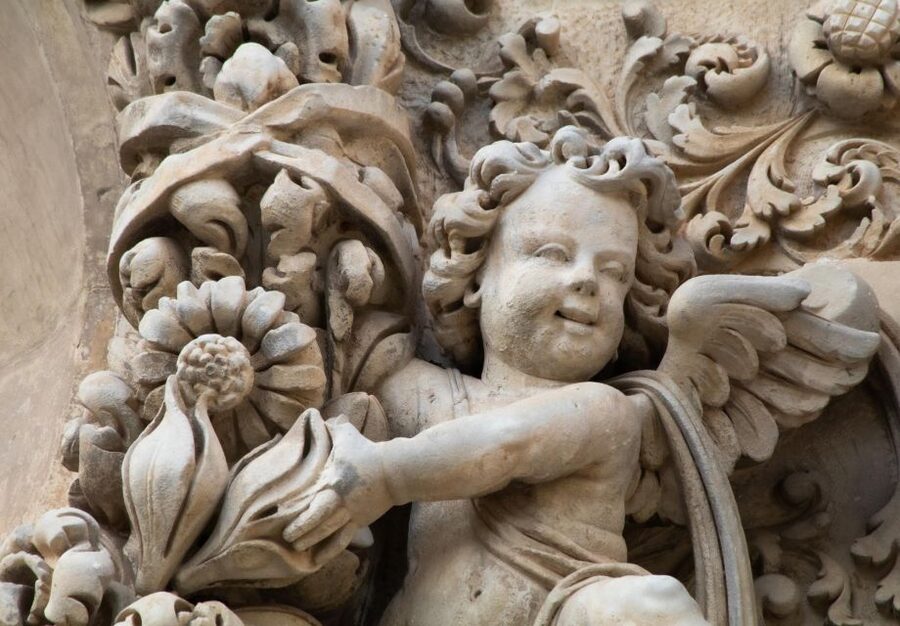
I like this range because it keeps the three hours from becoming a parade of similar church exteriors. Lecce’s Baroque style can be overwhelming at first. Every corner seems to have another carved angel, column, balcony, or mask. The tasting and workshop provide useful pauses, while the museum gives the walk a strong finish.
The group size matters, too. A maximum of 10 people is small enough for questions and conversation without making you feel as if you are attached to a large flag-waving group. The guides have also adjusted the experience when groups were very small. One couple found themselves as the only participants, allowing Francesca to give them a more detailed and personal walk.
More Baroque architecture tours in Italy:
- Lecce: Baroque Architecture and Underground Walking Tour
★ 4.6 · 1,248 reviews - Interpreti Veneziani Ensemble Baroque Concert in Venice Ticket
★ 4.5 · 403 reviews - Borghese Gallery Max 6 People Tour: Baroque & Renaissance in Rome
★ 5.0 · 185 reviews
Starting at Piazza del Duomo
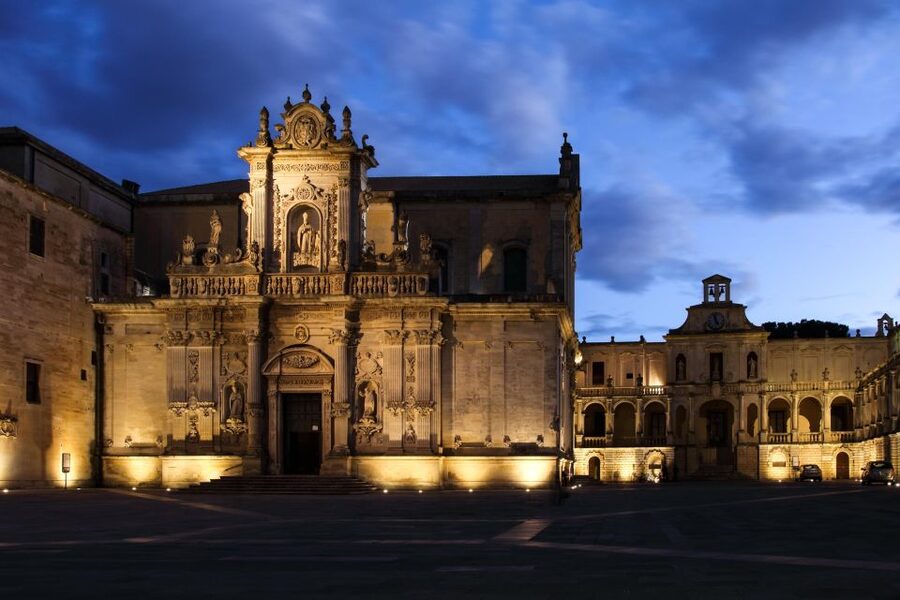
The tour begins at Piazza del Duomo, one of Lecce’s most striking urban spaces. The square is enclosed by a group of major buildings, so it feels more like a grand outdoor room than an ordinary public plaza.
This is a good place to begin because the architecture immediately introduces the main subject: Lecce’s Baroque style. Your guide can point out the shapes, decoration, and competing influences that appear across the city. If you are new to Lecce, listen for the broad outline first. One useful tip from the tour experience is that a short overview of the city’s history helps you make better sense of the details that follow.
A guide may spend considerable time here explaining architectural features. That can be rewarding if you enjoy buildings and decorative stonework, but it may feel slow if you prefer a quick orientation. Gianluca, who once stepped in for an injured guide, was praised for his enthusiasm and subject knowledge, though one participant would have preferred a broader introduction before the detailed architectural discussion.
I would treat Piazza del Duomo as your visual briefing. Pay attention to the repeated motifs, then look for them again during the rest of the walk.
Piazza Sant’Oronzo and the Roman Amphitheater
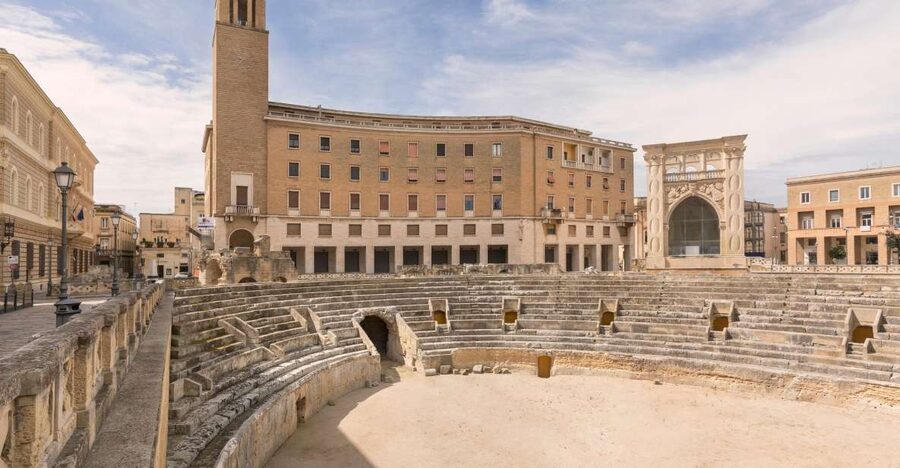
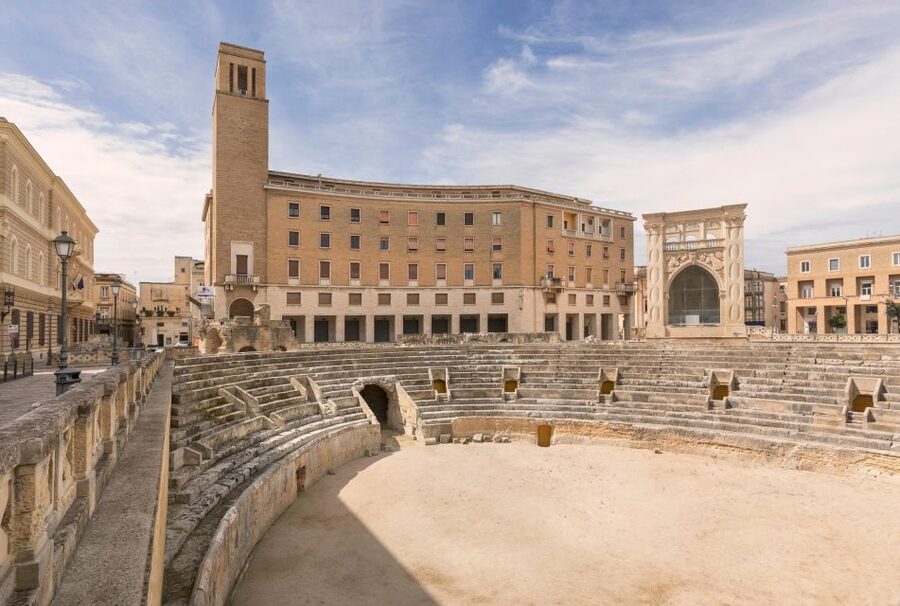
From the cathedral square, the route continues toward Piazza Sant’Oronzo, Lecce’s central civic space. This is where the Roman Amphitheater comes into view, a reminder that the city’s story reaches much further back than its Baroque churches.
The amphitheater ruins give the tour a useful change of period. Instead of looking upward at carved stone, you look down into the remains of a Roman public building integrated into the modern city. The contrast helps explain why Lecce feels layered rather than uniform.
The stop includes time for photographs, a guided visit, and walking through the square. You will not simply see a church after another church. The Roman remains provide one of the clearest visual anchors in the historic center.
This is also a good point to ask your guide how the ancient city relates to the later Lecce you are seeing. The tour is especially strong when it explains not only religious buildings, but also families, homes, and the people who shaped the city. That broader focus was one of the reasons Fabio Grasso received such high praise. His architecture studies helped him explain buildings beyond their decorative surfaces.
Santa Croce and the Baroque procession
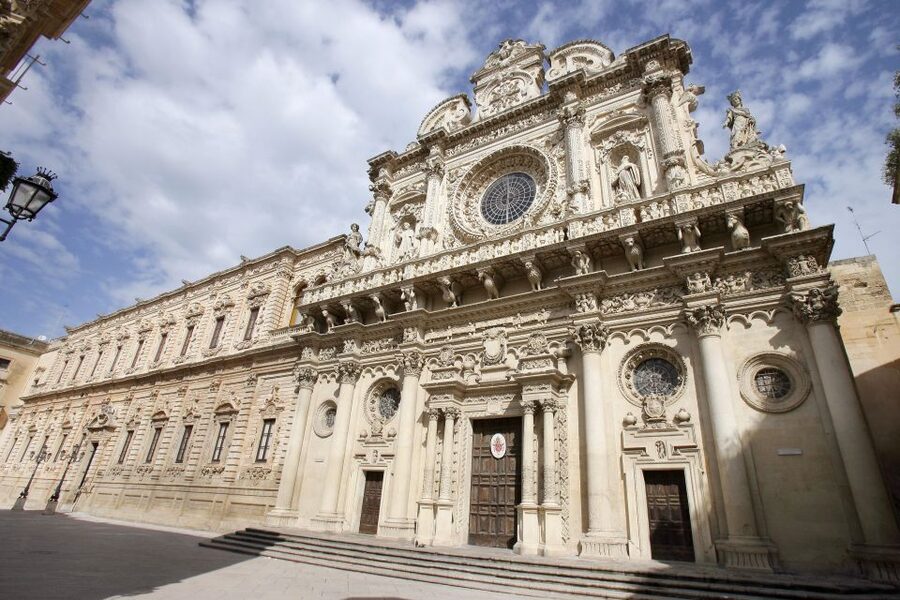
The Basilica of Santa Croce is one of the major architectural stops. Its facade is famous for its dense decoration, with carved details that reward a slow look. From ground level, you can study the stonework and the way the facade fills the viewer’s field of vision.
This is a place where a guide earns the fee. Without help, you may notice that the church is elaborate. With a good explanation, you can begin to separate the details and understand how the building fits into Lecce’s Baroque identity.
The route also takes in Palazzo dei Celestini, a grand former religious complex connected visually and historically with Santa Croce. The pairing makes sense because the buildings help you read the city as a whole rather than as isolated monuments.
Keep in mind that the tour does not automatically include every church interior. The information provided says paid church entrances are not included. One practical suggestion from the guides has been to save time after the walk for interiors such as Santa Croce and Sant’Irene. If you care about paintings, altars, or the full effect of the carved interiors, set aside extra time and budget.
That arrangement has an advantage: you are not forced to pay for every interior if your main interest is the city streets and facades. The drawback is that the three-hour experience may leave you wanting more time inside the most important buildings.
A few more architecture tours around Italy worth a look
- 3-hour walking tour Discovering Ragusa Baroque
★ 5.0 · 51 reviews - 3H Rome: Baroque, Ancient and food experience by Golf Cart
★ 3.3 · 3 reviews - Brussels 3-Hour Guided Art Nouveau Tour
★ 4.0 · 282 reviews - Munich 3-Hour Segway Tour: Nazi Munich & Royal Architecture
★ 4.9 · 194 reviews
Papier-mâché in a historic workshop
The stop at a papier-mâché workshop adds a human scale to the architecture. Lecce is known for elaborate religious sculpture and decoration, and papier-mâché has played an important role in that local tradition.
You’ll see the craft in a working historic setting rather than only hearing a short explanation in a square. This is the sort of stop I value on a city tour because it connects the grand Baroque look with the hands and skills behind it.
The visit is not described as a long class or hands-on workshop, so keep your expectations sensible. You are stopping to see the craft and learn about the tradition. For many people, that is enough to make the city’s decorative churches feel less remote and formal.
It also breaks up the walking route. Lecce’s center is compact, but three hours on stone streets can still feel long if every stop is a lecture about architecture. A craft visit gives you a different kind of information and a change of pace.
Extra Virgin Olive Oil, tasted with purpose
The oil tasting is not just a snack added to the schedule. It is a guided sensory stop focused on the aromas and flavors of Extra Virgin Olive Oil.
You’ll learn to pay attention to the oil itself, rather than treating it as a background ingredient. The tasting has been one of the most consistently praised parts of the experience, even by people who expected the churches and Roman remains to be the main attraction.
The format includes an expert-led tasting at a local venue. The supplied details also mention olive oil and wine in one description from a participant, but the formal inclusion is the Extra Virgin Olive Oil tasting. I would not book this expecting a full wine tasting.
This stop has practical value for the rest of your time in Apulia. If you plan to buy olive oil, a basic tasting vocabulary can help you compare bottles more carefully. You may also find that the stop gives you a better appreciation of how strongly food traditions shape the region’s identity.
For a $53 tour, this is one of the inclusions that improves the value. You are paying for the walk, the guide, and the museum ticket, but the tasting adds something you would not get from simply looking at buildings.
Museo Faggiano and the rooms beneath the city
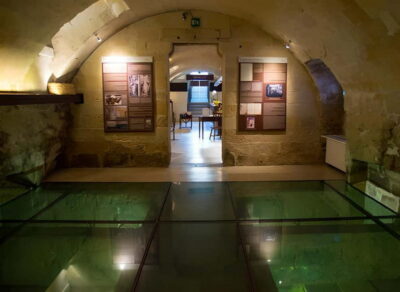
Museo Faggiano is the most unusual stop on the route. The visit takes you below street level into subterranean rooms, with about 30 minutes allocated for the guided visit.
The museum is compelling because it changes your view of Lecce. Above ground, the city presents churches, palaces, squares, and carefully carved facades. Below ground, you encounter a more practical and layered side of urban life. The contrast helps you understand that historic cities are not only collections of beautiful monuments. They are also places where old structures, earlier uses, and later renovations occupy the same footprint.
The ticket to the subterranean rooms is included, which is important when judging the price. Unlike the optional church interiors, this part does not require an extra payment.
The museum visit comes after several major outdoor sights, so it can also serve as a strong closing section. You begin with Lecce’s grand public face and end with something more intimate and unexpected. I would pay close attention here, since the underground setting gives the tour a story that is hard to reproduce with a guidebook paragraph.
The remaining churches and Roman Theater
The walk also includes the Church of Sant’Irene, the Church of Santa Chiara, the Roman Theater, and the Church of San Matteo. Together, these stops fill out the picture of central Lecce.
Sant’Irene is particularly useful as a comparison with Santa Croce. You can look for differences in facade design, scale, and decoration rather than treating every Baroque church as the same. Santa Chiara and San Matteo add more examples of Lecce’s distinctive stone carving and religious architecture.
The Roman Theater provides another ancient counterpoint to the Baroque center. It is smaller and less immediately dramatic than the amphitheater, but it helps show how much Roman material remains within the modern streets.
Expect the guide to explain buildings from the outside as the group moves along. That is efficient and keeps the route moving, but it means you should plan a second visit to the interiors that matter most to you.
The tour returns to Piazza del Duomo, so you finish where you began. That makes it easy to continue sightseeing, find a meal, or revisit a church after the guide has given you context.
Pace, group size, and guide quality
Three hours is a useful length for Lecce. You get a substantial introduction without giving up an entire day, and the route covers several periods and types of experience.
The pace seems best suited to people who want explanation rather than a rapid checklist. The strongest guide feedback centers on clear subject knowledge, enthusiasm, good English, and the ability to adapt. Francesca was praised for local tips and a detailed approach. Fabio Grasso brought an architecture background. Elenia was praised for excellent English and for explaining Lecce’s history across the route.
The experience is offered in Italian and English. Since the tour depends heavily on spoken explanation, ask questions when something interests you. In a group of up to 10, you should have a better chance to do that than on a large coach tour.
The only concern is consistency when a replacement guide is needed. One participant appreciated that Gianluca kept the tour running after the scheduled guide was injured, but found the opening less inspiring than hoped. That is a fair reminder that even a strong subject specialist may have a different presentation style.
Is $53 a fair price?
At $53 per person, the tour is not the cheapest way to walk around Lecce. You can see many facades and public squares without paying anything, and church interiors may require additional tickets.
The value comes from the combination. Your fee includes a live guide, the papier-mâché workshop stop, the Extra Virgin Olive Oil tasting, and the Museo Faggiano underground ticket. You also get a planned route linking Roman remains, Baroque churches, local craft, and food culture.
I think the price is fair if you want interpretation and a well-shaped introduction to Lecce. It is less attractive if you only want photographs or prefer to spend three hours entering churches at your own pace.
The small group helps justify the cost. A guide can adjust explanations, answer questions, and keep the walk from becoming a rigid script. If your group is especially small, you may receive a more customized experience, though that cannot be guaranteed.
You can cancel up to 24 hours before the tour for a full refund, and the reserve-now, pay-later option keeps your plans flexible. Those terms are useful if your Apulia schedule is still changing.
Who should book this walk?
I would recommend it to first-time visitors who want a solid orientation to Lecce, especially if you enjoy architecture but also want food and craft in the mix.
It suits couples, small families, and solo visitors who prefer a conversational walk. The route has enough variety for people with different interests, though anyone with limited walking tolerance should note that the experience is a three-hour city walk.
Architecture students and design fans may get the most from Fabio’s style of explanation, while food-focused visitors will appreciate the oil tasting. History fans will like the Roman Amphitheater, Roman Theater, and subterranean museum.
If your priority is seeing every church interior, this is not a complete substitute for an independent church tour. You should plan extra time and money for the paid entrances. If your priority is understanding how Lecce’s buildings, food, crafts, and buried layers fit together, the route makes much more sense.
FAQ
Where does the tour start?
The tour starts at P.za del Duomo, 2, in Piazza del Duomo, and returns there at the end.
How long does the experience last?
The tour lasts three hours.
What languages are available?
The live tour guide is available in Italian and English.
How many people can join the open tour?
The open tour has a maximum group size of 10 people.
Is the Museo Faggiano ticket included?
Yes. The ticket for Museo Faggiano’s subterranean rooms is included, with about 30 minutes set aside for the visit.
Are church entrance tickets included?
No. Entry tickets for paid churches are not included. The tour mainly explains and views the buildings along the route, so you should budget separately if you want to enter selected churches.
Should you book Discover Lecce’s Baroque Secrets?
Book it if you want more than a photo walk. The strongest reason to choose this experience is its range: Baroque facades, Roman remains, underground rooms, papier-mâché, and Extra Virgin Olive Oil in one compact route.
Before booking, decide how much church interior time you want. If you are happy seeing many buildings from outside and paying separately for only the churches that matter most, the tour offers good value. If you want a slow, interior-focused art tour, choose a different format or leave extra time afterward.
For most first visits, I’d make this an early Lecce activity. The guide’s explanations will help you recognize the city’s details later, and the oil tasting and museum give you memories that go beyond another list of ornate facades.
Just added around Italy
- Vicenza: discovering the city of Palladio by e-bike★ 5.0 · 4 reviews
- Vicenza: Palladian Architecture Private Walking Tour★ 3.3 · 3 reviews
- Vatican: Exclusive Baroque Evening With Aperitivo & Dinner★ 3.1 · 2 reviews
- Turin: Art Nouveau Walking Tour with Coffee★ 5.0 · 11 reviews
- Venice Music Project – Baroque Autumn – Season 2025★ 4.5 · 7 reviews
- Walking tour in Venice with an architect★ 5.0 · 16 reviews
- Palladio. A wonderful live tale through time&soul, from Ve/Pd/Vr★ 5.0 · 7 reviews
- Turin, Art Nouveau walking tour and coffee break★ 4.0 · 7 reviews
Baroque Architecture Tours, compared.
Lecce: Baroque Architecture and Underground Walking Tour
Read our review →
Train Exp. through the Alps (Royal Baroque Route from Nice)
Read our review →
Dresden: Tour of the Baroque Quarter with a Night Watchman
Read our review →
Interpreti Veneziani Ensemble Baroque Concert in Venice Ticket
Read our review →
Borghese Gallery Max 6 People Tour: Baroque & Renaissance in Rome
Read our review →
Concert at the Palais Schönborn-Batthyány by the Vienna Baroque Orchestra
Read our review →
Guided Walking Tour of Rome: Top Sights & Baroque Treasures
Read our review →
Noto, Modica and Ragusa: The Baroque Tour from Catania
Read our review →Browse the lists this tour appears in