
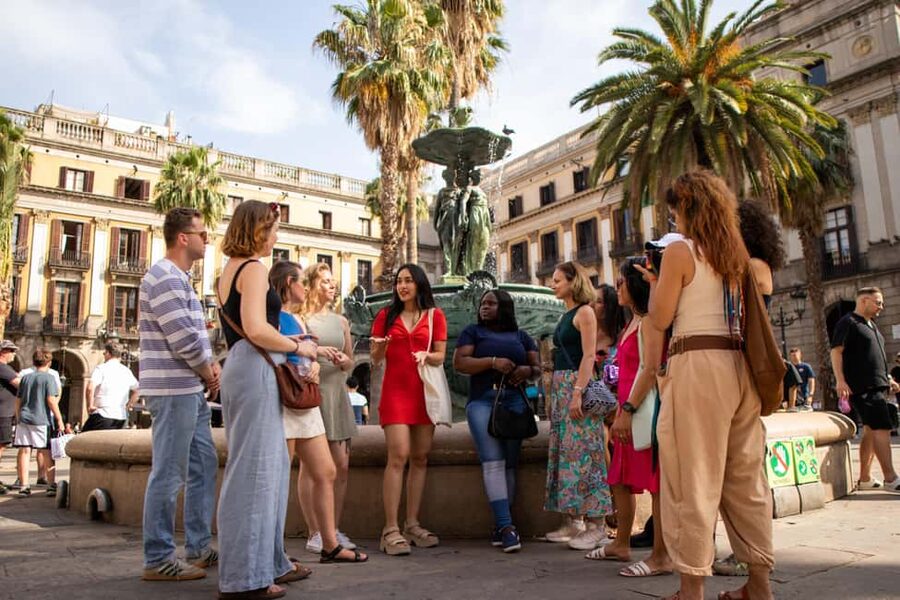
Review · BARCELONA
Barcelona Walk Like a Local: El Born & Gothic 15+ Sights
Barcelona’s old center reveals itself one story at a time. This $17 walking tour moves from El Born’s artistic streets into the Gothic Quarter, mixing Roman traces, medieval churches, Picasso connections, local legends, and small corners you could easily pass without noticing.
I like the way the walk joins the two historic districts instead of treating them as separate sights. I also like the strong guide record: Petra, Adriana, Jennifer, Jen, Santiago, Mariah, and Jan are among the guides praised for clear storytelling, humor, local tips, and an easy manner. The main thing to consider is pace. You cover a lot in 2 to 2.5 hours, but most stops are viewed from outside or discussed briefly rather than explored at length.
Key things to know before you book

- The route links El Born and the Gothic Quarter: You get two of Barcelona’s most atmospheric old neighborhoods in one compact walk.
- Santa Maria del Mar is a major stop: The church, often called the Cathedral of the People, gives the tour a strong architectural center.
- The stories go beyond dates and names: Expect legends about Bishop’s Bridge, Roman traces, artists, revolutionaries, and old local businesses.
- Guides shape the experience: Petra, Adriana, Jennifer, Jen, Santiago, Mariah, and Jan have all led highly praised walks.
- The meeting point is easy to spot: Look for the large glass cube monument on Passeig de Picasso, not inside the park, with a Side Routes sign.
- You need comfortable shoes: The tour runs in rain or shine and includes old streets and steady walking.
Why El Born is the right place to start
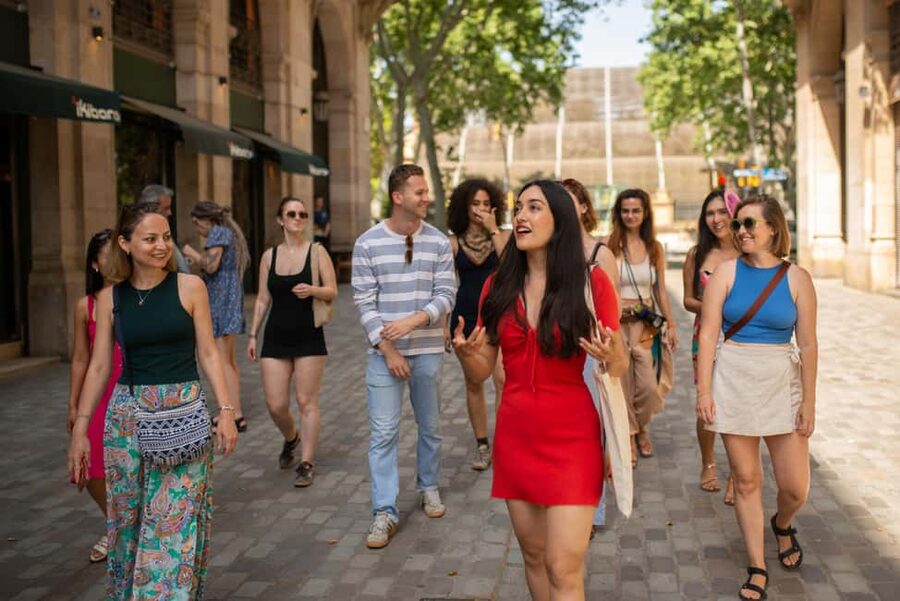
The walk begins at Passeig de Picasso, 13, near a large glass cube monument. The directions are worth reading carefully: do not go inside the park. Your guide should be beside the monument holding a Side Routes sign.
Starting in El Born gives the tour a different feel from a standard Barcelona introduction. This former artisan and merchant district has narrow lanes, old facades, small businesses, art, and a close connection to the city’s cultural life. I like beginning here because the neighborhood feels lived in, not simply arranged for sightseeing.
The opening guided section lasts about 30 minutes. You’ll hear how the old city developed and how El Born connects to Barcelona’s artists, traders, and political movements. The guide’s job here is less about pointing at one famous building and more about helping you read the streets.
That approach matters. Without a local voice, El Born can look like a pleasant maze of cafes, balconies, and stone walls. With context, details begin to make sense. You may notice how the streets change, where the old commercial life survives, and why the district became linked with art and rebellion.
More Gothic quarter walks in Barcelona:
- Barcelona all included: Sagrada, Park Güell, Montjuic & Gothic
★ 5.0 · 2,169 reviews - Barcelona Gothic Quarter Tapas & Taverns Food & Wine Tour
★ 5.0 · 1,470 reviews - Barcelona: Old Town and Gothic Quarter Walking Tour
★ 4.8 · 1,393 reviews
Casa Gispert and the value of old local businesses
Casa Gispert receives about 10 minutes of attention. The stop highlights one of Barcelona’s 100-year-old businesses and gives the walk a useful change of scale. Instead of dealing only in kings, churches, and major monuments, the tour points you toward the everyday commercial life that helped shape the old city.
I appreciate this kind of stop because it keeps the experience from becoming a march between grand buildings. A long-running shop can tell you something about continuity, family trade, and the way a historic district stays connected to ordinary life.
The visit is brief, so you should not expect a full shopping stop or a long tasting session. Think of Casa Gispert as a story point along the route, not a separate food experience. If you want to buy something, you’ll need to manage that within the tour timing and group movement.
Santa Maria del Mar, the church at the heart of El Born
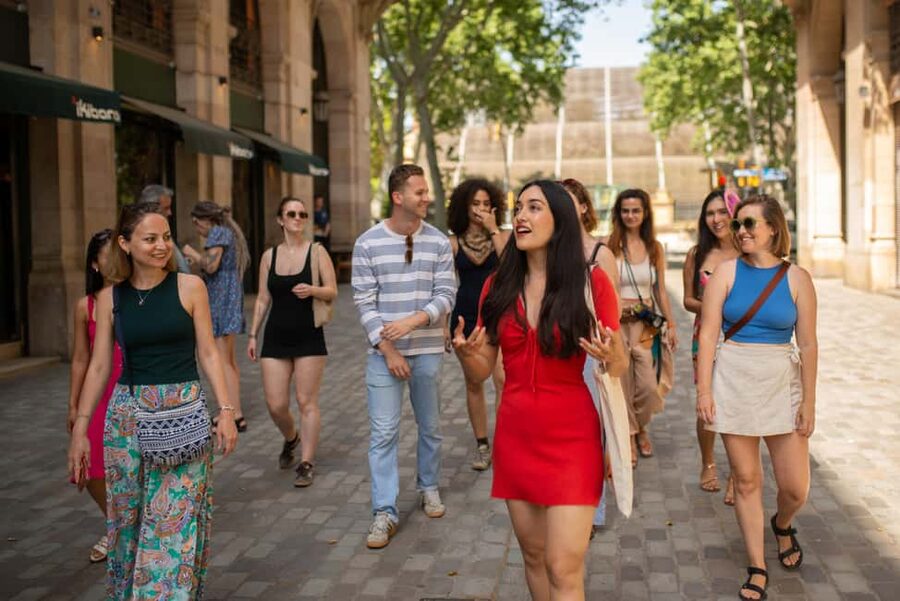
The tour then gives roughly 15 minutes to Santa Maria del Mar. Known as the Cathedral of the People, this church is one of the most important visual moments on the walk.
The name tells you something about its place in local memory. It is connected with the working people of medieval Barcelona, and its scale helps explain the wealth and importance El Born once held. Your guide can give you the human side of the building rather than leaving you with only dates and architectural labels.
The time is enough to appreciate the exterior and hear the key story, but it is not a long interior visit. If you want to study the church in silence, attend a service, or examine every detail, return on your own. That is a recurring point with this walk: it gives you a strong first look and useful context, then keeps moving.
For many people, Santa Maria del Mar will be the first major landmark that feels like a full architectural experience. It also helps set up the contrast between El Born’s artistic character and the more layered Roman and medieval streets of the Gothic Quarter.
Picasso, murals, and Barcelona’s creative side
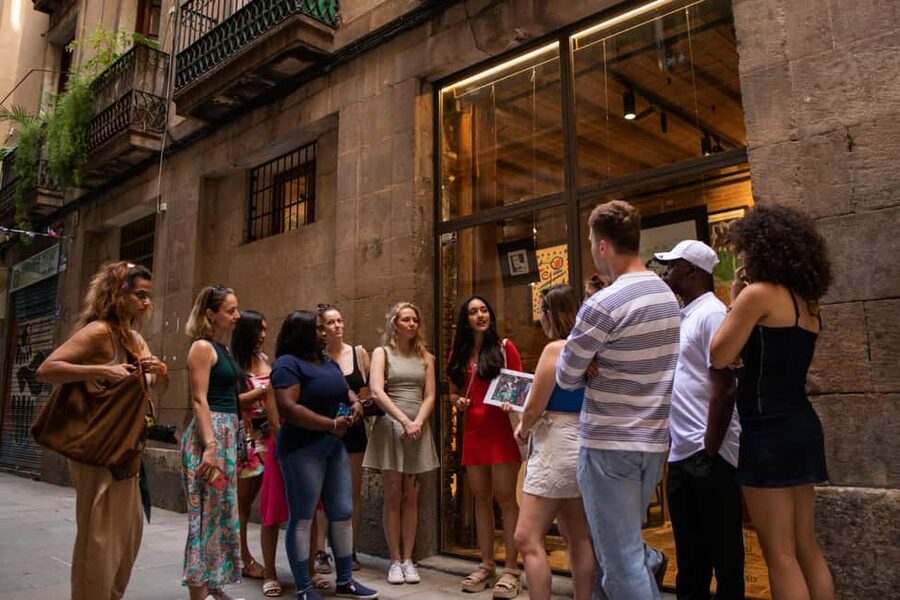
A 10-minute stop near the Picasso Museum connects El Born with one of Barcelona’s best-known artists. The focus is on Picasso’s relationship with the city and the artistic forces that shaped its identity.
You should not book this walk expecting museum entry. The Picasso Museum is included as a location and story stop, not as an extended gallery visit. If Picasso is a main reason for your Barcelona trip, plan a separate museum visit and use this tour to understand the surrounding district first.
The route also includes rebellious murals and a photo stop at the World Comes to Life With Each Kiss mural. This is one of the more playful parts of the outing. It gives you a chance to take a picture while hearing how public art and personal memories can shape a neighborhood.
I like the balance here. Barcelona is not presented only as Roman ruins and Gothic stone. You also get modern art, famous creative figures, street expression, and the city’s continuing habit of mixing old walls with new ideas.
More architecture walks in Barcelona:
- Ramblas, Old Town, Gothic and Gaudi Architecture Walking Tour
★ 5.0 · 723 reviews - Kids and Family Gothic Quarter Walking Tour in Barcelona
★ 5.0 · 465 reviews - Barcelona Gothic Quarter Walking Tour
★ 4.5 · 456 reviews - Barcelona: Gothic Quarter Walking Tour
★ 4.9 · 383 reviews
Forty-five minutes through Barcelona’s old center
The general Old City section takes about 45 minutes, making it the longest part of the route. This is where the tour’s promise of side streets and overlooked places has the most room to work.
You’ll move through the dense historic center, following the guide’s links between Roman Barcelona, medieval life, artists, revolutionaries, and local legends. The Roman influence is important because Barcelona’s oldest layers are not always obvious. The city has been rebuilt and altered many times, so a guide helps you spot the clues and understand what survives beneath the later streets.
The old center is also where the route can feel less predictable. You might stop in a quiet lane, a small square, or beside a building with a story that has little visual drama. That is part of the value. You are not simply collecting postcard views. You are learning how to look at the city.
The tradeoff is that the old center can be crowded, noisy, and uneven underfoot. The tour runs rain or shine, so shoes matter. I would wear something comfortable and practical rather than stylish but stiff footwear.
The Gothic Quarter and its Roman traces
The Gothic Quarter receives about 30 minutes of guided attention. This is the section most people picture when they imagine old Barcelona: narrow streets, stone buildings, small squares, church towers, and layers of Roman and medieval history.
Your guide will help connect the visible Gothic setting with the earlier Roman city. That connection is one of the strongest reasons to take the walk. You get a clearer sense that Barcelona is not one historic period preserved in isolation. Roman foundations, medieval buildings, religious power, political conflict, modern tourism, and local life all sit close together.
The tour also brings in darker legends and quirky stories. The tale of the cursed Bridge of Sighs is a featured example. Stories like this can be more memorable than a list of construction dates, though you should expect a mix of documented history and local lore rather than a purely academic lecture.
I would especially recommend this part to first-time visitors who want orientation. After the walk, several guests said they had a better idea of how to plan the rest of their time in Barcelona. That is practical value: you learn which streets and landmarks deserve a return visit.
Barcelona Cathedral, Bishop’s Bridge, and La Casa de l’Ardiaca
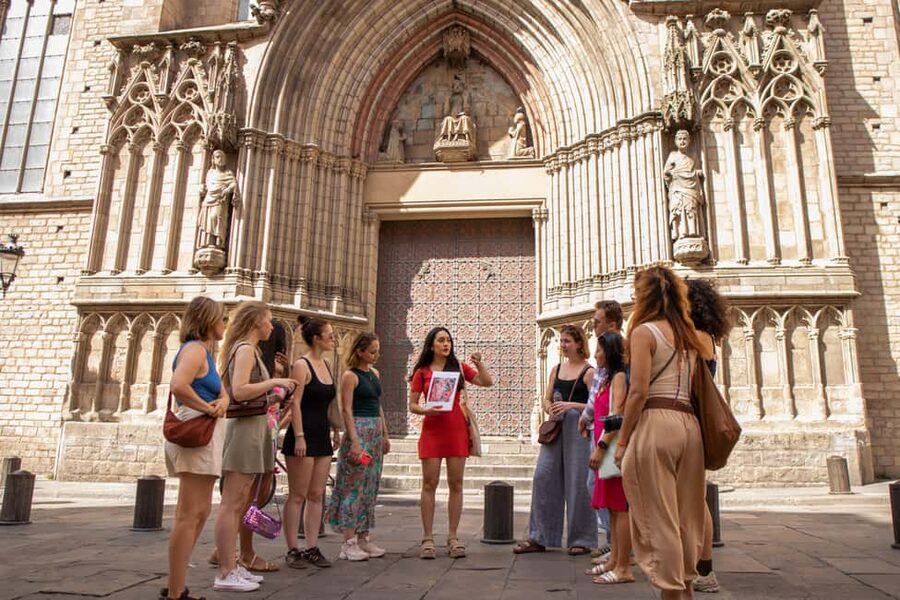
Barcelona Cathedral gets about 15 minutes. This is another major religious landmark, and the stop gives you a useful comparison with Santa Maria del Mar. You see two important churches in different neighborhoods, each with its own place in Barcelona’s story.
The cathedral stop is relatively short, so you will likely focus on the exterior, setting, and main explanations. If you want to go inside, check the current opening arrangements separately rather than assuming the tour includes admission.
Next comes Bishop’s Bridge, with around 10 minutes of explanation. It is one of the Gothic Quarter’s most recognizable photographic details, but its story is more interesting than its appearance alone. The guide uses it to tell the chilling local tale of the cursed bridge, giving the walk a touch of mystery.
La Casa de l’Ardiaca follows for another 10 minutes. This building helps show how the Gothic Quarter combines religious, civic, and residential history in a tight area. A local guide can point out details that disappear when you are hurrying toward the cathedral.
These three stops work well together. The cathedral gives you scale, the bridge gives you a memorable image and legend, and Casa de l’Ardiaca adds another layer to the district’s built history.
Plaça Sant Felip Neri and the quieter mood of the route
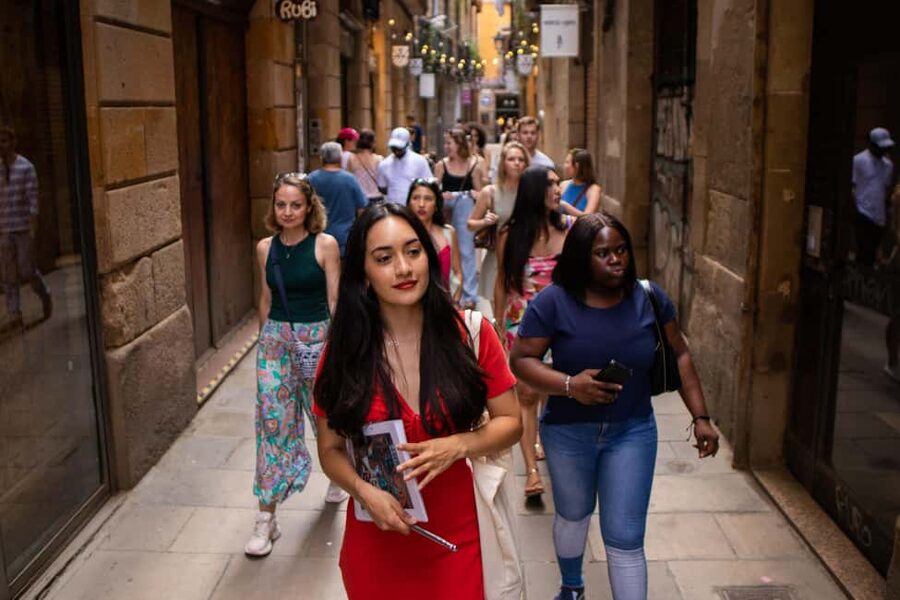
Plaça Sant Felip Neri is one of the most distinctive pauses in the Gothic Quarter. The square is known for its quiet atmosphere and the marks left on its walls, which connect the place with Barcelona’s painful past.
The tour treats it as a story stop rather than rushing through for a quick photograph. I find that important. Some places should be approached with a little restraint, and the guide’s explanation helps you understand why this square feels different from the more crowded lanes nearby.
It is also a good example of how the walk changes mood. One moment you are hearing a strange legend or discussing artists. The next, you are in a quieter space dealing with loss and memory. That variety keeps the two-hour route from becoming a string of similar church and street explanations.
Els Quatre Gats, Picasso, and the final stop
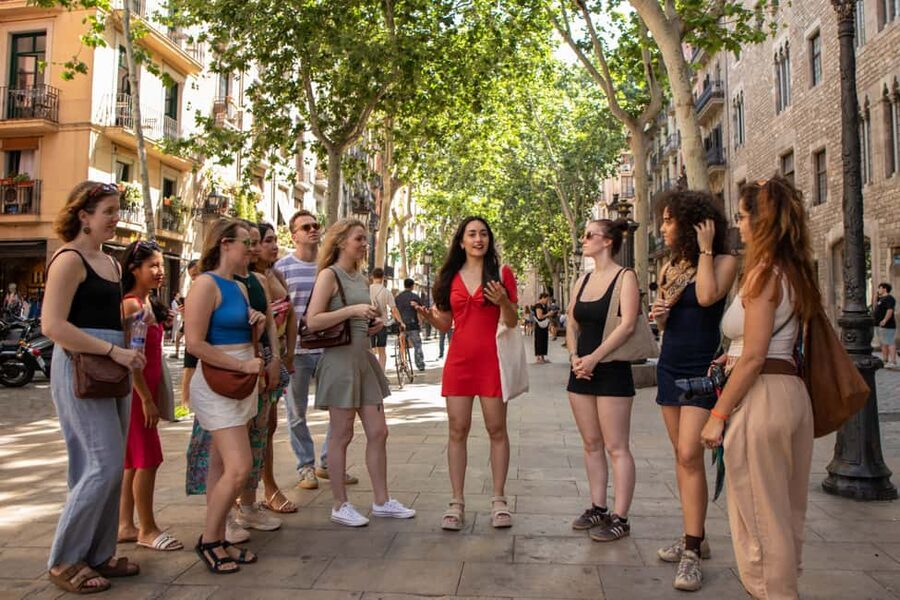
The walk ends at Els Quatre Gats, also written as Els 4 Gats. The stop includes about 15 minutes of sightseeing and brings the artistic thread back into focus.
This historic cafe is tied to Barcelona’s creative world and to artists such as Picasso. The setting gives the tour a fitting finish because the route has moved from old commerce and medieval churches toward the city’s modern artistic identity.
Ending here is also useful for your evening plans. You are not left at an anonymous street corner. You can decide if you want to stay in the area, find a meal, or continue exploring the Gothic Quarter. Some guides, including Adriana and Adrianna, have been especially appreciated for restaurant suggestions and practical advice about what to do next.
Do not expect the tour to include a meal or drink. Food and beverages are not part of the price, so treat Els Quatre Gats as the final sight and a possible place to consider for your own plans.
The guides make the $17 price work
At $17 per person, this is a strong value if you want orientation, stories, and a local point of view rather than paid entry into museums and churches. You are paying for a live English-speaking guide who connects more than 15 sights across two neighborhoods.
The strongest praise centers on the guides’ energy, clarity, humor, and ability to answer questions. Petra is repeatedly described as warm, animated, and helpful with local advice. Adriana is praised for her command of El Born and the Gothic Quarter, while Jennifer and Jen are often singled out for keeping the walk engaging and explaining both older history and modern Barcelona.
Santiago is noted for welcoming questions and showing real enthusiasm for the city’s past. Mariah is described as witty and funny, and Jan is praised for combining major sights with places people might miss alone. Those details suggest that the exact personality of your guide will shape the day, but the pattern is clear: the guide is the main attraction.
There is one value limit to keep in mind. The tour does not include transport, meals, drinks, or museum entry. You will still need to pay separately if you want to go inside the Picasso Museum or spend more time in the cathedrals.
Who should take this walk?
I would choose this tour for a first or second day in Barcelona. It gives you a map in your head, helps you sort El Born from the Gothic Quarter, and provides ideas for later meals and sightseeing.
It suits:
- Solo visitors who want company and local suggestions
- Couples looking for history without a full-day commitment
- Families able to manage several hours of walking
- Friends who enjoy legends, art, architecture, and street scenes
- Anyone who prefers stories and local context over a formal museum lecture
It is less suitable if you want long interior visits, a slow photography walk, or a specialist architectural study. The route covers many places, and the time at each one is often short.
Private groups are available, which may help if you want a more personal pace or have a particular group dynamic. The standard information does not promise a specific guide, so if you have a strong preference for Petra, Adriana, Jennifer, or another guide, ask when booking rather than assuming.
Practical details that affect your day
The tour lasts 2 to 2.5 hours, though the individual stop times add up to a busy route. Plan to walk continuously through old streets and allow extra time if you want to take photographs.
Wear comfortable shoes. This is not a suggestion to ignore. The route passes through historic areas where the surfaces may be less forgiving than a modern sidewalk, and the tour operates in all weather.
English is the stated tour language. A live guide leads the experience, and the booking terms allow cancellation up to 24 hours before the start for a full refund. You can also reserve now and pay later, which is useful when your Barcelona schedule is still shifting.
Bring a camera, but do not let photography turn the walk into a scavenger hunt. The best value comes from listening to the links between the places, then returning later to photograph or enter the spots that catch your interest.
Should you book Barcelona Walk Like a Local?
Book it if you want a lively introduction to El Born and the Gothic Quarter, especially if you like local legends, art, old businesses, Roman traces, and practical tips. The combination of Santa Maria del Mar, Barcelona Cathedral, Bishop’s Bridge, Plaça Sant Felip Neri, Picasso connections, and the two historic districts is a lot of ground for $17.
Skip it if your priority is extended time inside museums or cathedrals. This is a guided overview with plenty of stops, not a series of long admissions.
For most first-time visitors, I would take the walk early in the trip. Let the guide show you the structure of the old city, note the restaurants and streets worth revisiting, then return on your own when you want more time. That is where this experience earns its keep: it helps you see Barcelona with better questions.
FAQ
How much does the Barcelona Walk Like a Local tour cost?
The tour costs $17 per person.
How long does the walking tour last?
The stated duration is 2 to 2.5 hours.
Where does the tour begin?
It begins at Passeig de Picasso, 13. Look for the large glass cube monument and the guide holding a Side Routes sign. Do not go inside the park.
Where does the tour finish?
The tour finishes at Els Quatre Gats, also known as Els 4 Gats.
What language is the tour conducted in?
The live tour guide speaks English.
Does the tour include food, drinks, or transportation?
No. Transportation to the starting point, meals, and drinks are not included.
Is museum or cathedral admission included?
The provided tour details do not include admission to the Picasso Museum or the cathedrals. These locations are included as sightseeing or guided stops.
What should I bring or wear?
Wear comfortable shoes suitable for walking and bring a camera. The tour runs in rain or shine.
Just added around Barcelona
- Love in the Gothic Quarter Barcelona: Self-Guided Romantic Walk★ 4.5 · 9 reviews
- Walking tour of the Gothic Quarter of Barcelona + Cathedral★ 5.0 · 8 reviews
- Wine tasting with a view of the Sagrada Familia★ 4.5 · 13 reviews
- Visit to the Modernist houses of the Americans★ 5.0 · 2 reviews
- Barcelona Jewish & Gothic Tour★ 5.0 · 18 reviews
- Roman & Gotic & Gaudi in Barcelona: private walking tour★ 4.5 · 2 reviews
- Self-Guided Audio Tour-The Surrealist Barcelona of Dalí and Gaudí★ 3.5 · 8 reviews
- Barcelona Gaudi Tour: Sagrada Familia, Casa Batllo & Casa Mila★ 5.0 · 4 reviews
Gothic Quarter Tours, compared.
Barcelona all included: Sagrada, Park Güell, Montjuic & Gothic
Read our review →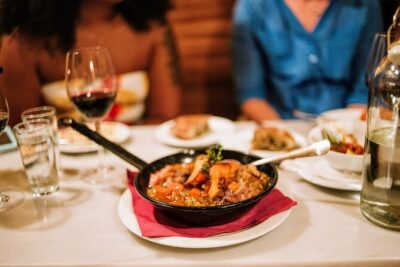
Barcelona Gothic Quarter Tapas & Taverns Food & Wine Tour
Read our review →
Barcelona: Gothic Quarter Ghosts and Legends Walking Tour
Read our review →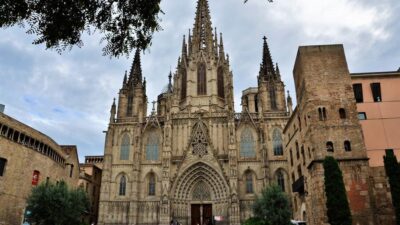
Barcelona: Old Town and Gothic Quarter Walking Tour
Read our review →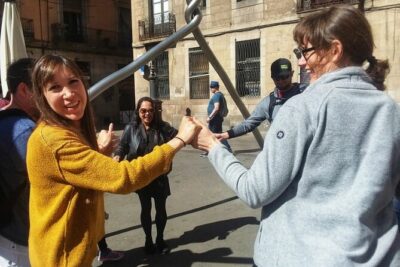
Barcelona Old Town & Gothic Quarter Small Group Tour
Read our review →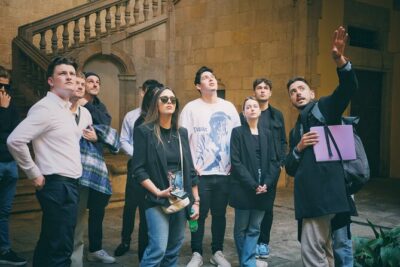
Ramblas, Old Town, Gothic and Gaudi Architecture Walking Tour
Read our review →
Barcelona: El Born and Gothic Quarter Wine & Tapas Bar Tour
Read our review →
Kids and Family Gothic Quarter Walking Tour in Barcelona
Read our review →Browse the lists this tour appears in