
Review · SICILY
Palermo Walking Tour – Baroque and Aristocracy
Palermo’s most revealing sights are packed into its old center, and this private walk links them with a clear theme: Baroque power and aristocratic life. You’ll move from Quattro Canti through grand palaces, churches, convents, torture sites, and the old port, with the city’s long and sometimes uncomfortable story always close at hand.
I like the visit to Palazzo Alliata di Villafranca, where restored aristocratic rooms include a Crucified Christ attributed to Van Dyck. I also like the contrast between lavish Santa Caterina and the darker history of Piazza Marina. The main catch is practical: monument entrance fees are not included, and a four-hour route with several interior visits can feel full.
Key points to know
- A private four-hour route links Quattro Canti, Santa Caterina, Piazza Marina, and La Cala.
- Palazzo Alliata di Villafranca offers a look inside one of Palermo’s grand aristocratic homes.
- Santa Caterina reveals the secluded world of high-born cloistered nuns and lavish Baroque decoration.
- Piazza Marina carries a darker story, including its past connection with the Holy Inquisition.
- Guide Elisabeth has led the walk with strong local knowledge, humor, and clear passion for Palermo.
- Tickets cost extra, so check the total price before booking and do not expect an interior visit to Palazzo Gangi.
Palermo’s old center, read through power and privilege
This is not simply a checklist of churches and piazzas. The route asks you to look at Palermo through the people who controlled it: aristocratic families, religious orders, Spanish rulers, and the institutions that judged or punished ordinary residents.
That approach gives the walk a useful shape. You begin at Quattro Canti, where Palermo’s old streets meet in a grand Baroque crossroads. From there, the route follows the ancient axis of the city toward aristocratic homes and religious buildings before reaching the old harbor at La Cala.
I like this structure because the streets between the stops matter. Palermo’s buildings, corners, and changing facades help explain how the city grew. A good guide can turn those short walks into part of the lesson rather than treating them as empty time between attractions.
The tour begins at 2:00 pm at Quattro Canti, also called Teatro del Sole. It is a central meeting place and an easy point from which to begin exploring the historic center. The first stop lasts about 15 minutes and is free.
The activity is private, so only your group participates. That should make it easier to ask questions and adjust the pace than on a large group outing. The published price is $157.28 per person, which is a serious cost for a four-hour walk, especially because admission tickets are extra. Its value depends heavily on how much you want personal guiding and how many people share the booking.
More Baroque architecture tours in Italy:
- Lecce: Baroque Architecture and Underground Walking Tour
★ 4.6 · 1,248 reviews - Interpreti Veneziani Ensemble Baroque Concert in Venice Ticket
★ 4.5 · 403 reviews - Borghese Gallery Max 6 People Tour: Baroque & Renaissance in Rome
★ 5.0 · 185 reviews
Quattro Canti and the ancient city axis
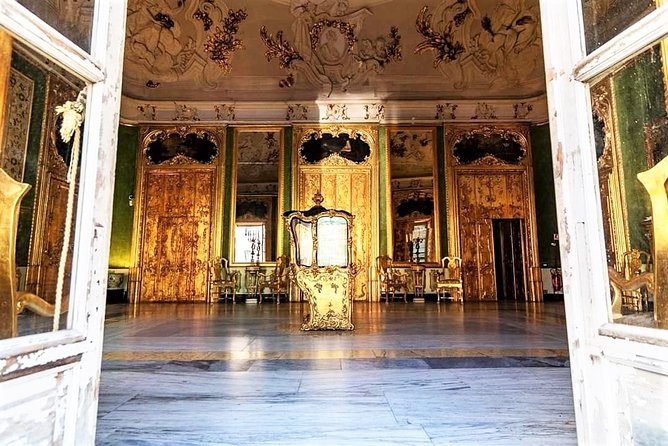
Quattro Canti is a fitting starting point. Its four curved Baroque facades frame the crossing and give the area a formal, theatrical feel. The name means Four Corners, while Teatro del Sole refers to the way sunlight moves across the facades during the day.
You will spend only about 15 minutes here, but the stop sets up the rest of the tour. This is where Palermo’s main historic routes meet, and your guide can place the following palaces and churches within the old city’s basic layout.
Do not expect a long architectural lecture at this first stop. Its value is orientation. You get your bearings, meet the guide, and start reading Palermo as a city shaped by ceremony, religion, and rank.
Palazzo Alliata di Villafranca and the world of Palermo’s aristocracy
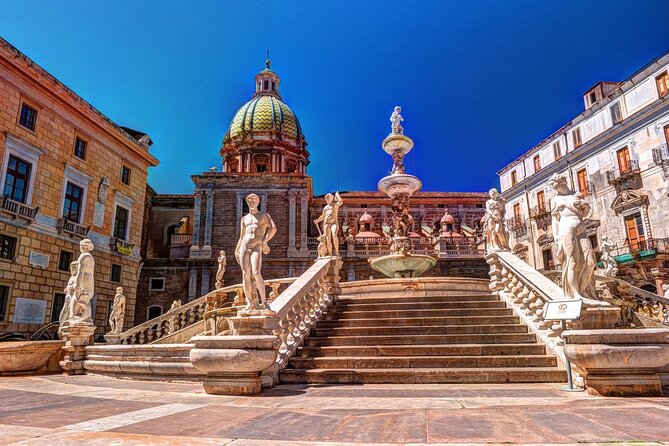
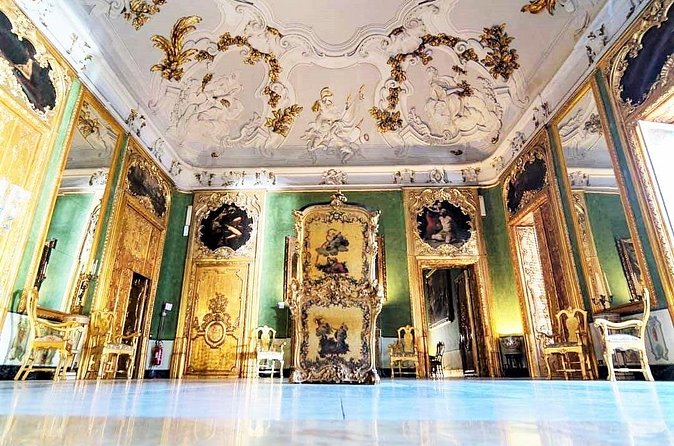
From Quattro Canti, you continue along the old city axis to Palazzo Alliata di Villafranca. This is one of the most important stops on the route because it takes you inside an aristocratic residence rather than leaving you to admire grand doors from the street.
The palace was one of the wealthiest homes of Palermo’s noble families. Its restored rooms show the scale and taste of that world, where decoration was a way to announce status. The most notable artwork mentioned for the visit is a beautiful Crucified Christ attributed to Van Dyck.
You will have roughly 30 minutes here. That is enough for an introduction to the rooms and their decoration, though not enough for a slow museum-style visit. Since the entrance fee is not included, you should confirm the current admission arrangement when booking or before the tour begins.
This stop gives the tour a human focus. Instead of hearing only about noble families in the abstract, you see the sort of setting in which they lived. It also makes the later religious stops more interesting, since Palermo’s churches and convents were closely tied to family wealth and social rank.
One important expectation: do not book this walk assuming it includes an interior visit to Palazzo Gangi. The tour does not list that palace as an interior stop. If seeing Palazzo Gangi inside is a priority, you will need a separate plan.
Piazza Pretoria and Palermo’s famous fountain
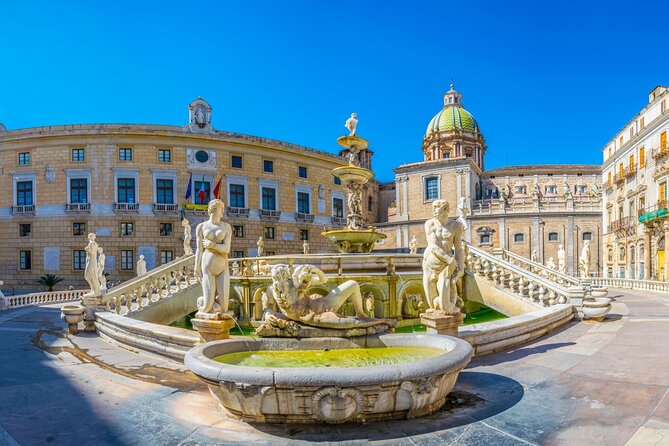
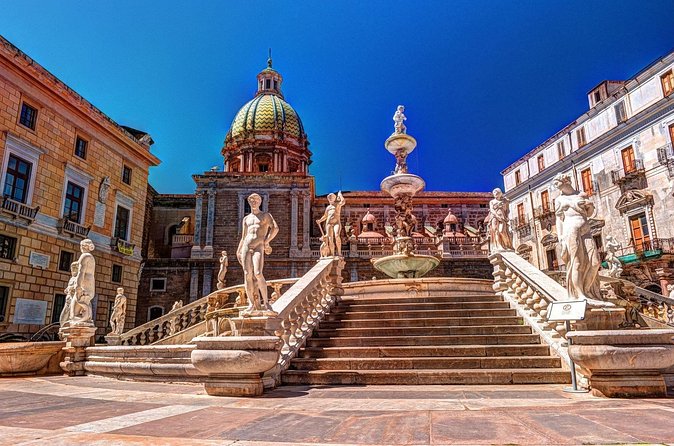
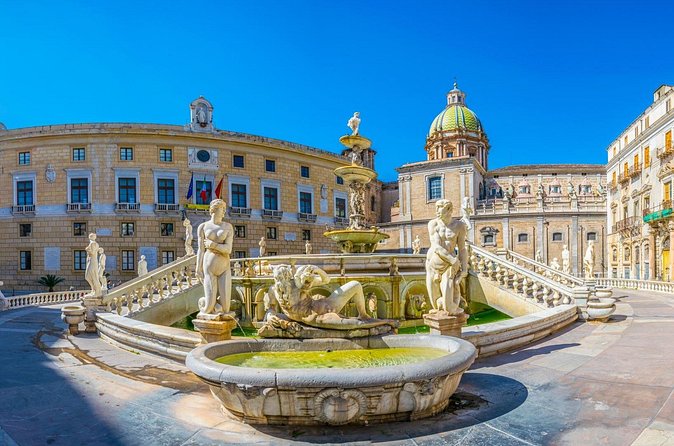
Piazza Pretoria brings the route back into an open public space. Its fountain, often called the Fountain of Shame, is one of Palermo’s most famous sights.
The nickname gives your guide an opening to explain the stories and public reactions attached to the fountain. You will spend about 20 minutes here, with no admission charge.
This is a good place to pause and let the city’s public and private sides meet. Palazzo Alliata showed aristocratic life behind walls. Piazza Pretoria shows how wealth, display, and controversy could become part of the public streetscape.
The stop is fairly short, so expect storytelling rather than a detailed study of every sculpture. Still, the fountain works well in a walking tour because you can see it while also taking in the surrounding buildings and the movement of the square.
More architecture walks in Italy:
- Experience Florence’s Art and Architecture on a Walking Tour
★ 5.0 · 318 reviews - Guided Walking Tour of Rome: Top Sights & Baroque Treasures
★ 5.0 · 155 reviews - Palermo: Art and Architecture Walking Tour
★ 4.7 · 136 reviews - 3-hour walking tour Discovering Ragusa Baroque
★ 5.0 · 51 reviews
Piazza Bellini and the domes of San Cataldo
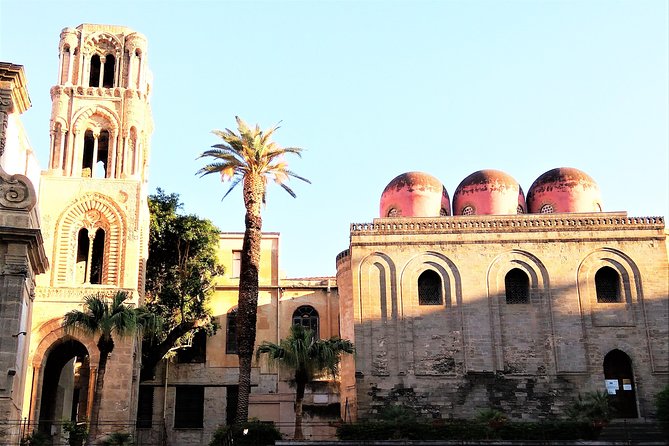
At Piazza Bellini, the tour turns toward Palermo’s medieval religious past. The focus is the 12th-century domes of San Cataldo, a church connected with the Order of the Knights of the Holy Sepulcher.
The church’s domes are among the most recognizable features in the square. Their simple, rounded forms create a sharp contrast with the grander Baroque decoration seen elsewhere on the walk. That contrast is one of the pleasures of Palermo: several centuries can appear together within a few steps.
The stop is scheduled for about 30 minutes, and entrance is not included. Because the route includes several interiors, you should allow for the possibility that opening arrangements can affect what you see. One past tour had closures connected with Covid, an unusual circumstance, but it also points to a wider truth about historic buildings: access can change.
If San Cataldo is open, the visit adds architectural depth to the day. If it is closed, the exterior and the surrounding piazza still give you a useful view, but the experience will be less complete.
Santa Caterina and the hidden life of cloistered nuns
The Church and Monastery of Santa Caterina d’Alessandria is likely to be the emotional center of the walk. For centuries, this complex was reserved for young cloistered nuns from Palermo’s highest aristocratic families.
That detail changes how you see the building. Santa Caterina was not simply a place of worship. It was also a secluded world shaped by family expectations, social class, and religious rules. Young women from powerful households could live behind the walls, surrounded by elaborate altars, lapis lazuli, and precious stones.
The contrast is striking. Outside, Palermo was shaped by Spanish rule, political pressure, and ordinary hardship. Inside, these women lived among costly materials and carefully controlled religious spaces. The church lets you see how faith and privilege could operate together.
The visit lasts about 30 minutes, with admission not included. You should budget both time and money for the stop. Of all the interiors on the route, this is the one most likely to reward a guide’s explanation, since the social meaning of the rooms is as important as their decoration.
I especially like the way this stop expands the idea of aristocracy. Palazzo Alliata shows noble wealth in a family residence. Santa Caterina shows how that same social order shaped the lives of women, religious communities, and charitable institutions.
San Francesco d’Assisi and the Gothic rose window
The route then reaches the small square in front of the Basilica di San Francesco d’Assisi. The church is known here for its splendid Gothic rose window, which gives the facade a different mood from the Baroque buildings earlier in the day.
You will spend about 15 minutes at this stop. Admission is not included. The short visit works as a visual change of pace after the palace and monastery interiors.
This is not presented as a long church tour. Think of it as a focused stop where your guide points out the facade, the rose window, and the church’s place in the old city. If you enjoy comparing architectural periods, this brief pause helps you see how Palermo’s medieval Gothic elements sit beside later Spanish and Baroque additions.
Piazza Marina, the Garibaldi Garden, and a darker past
At Piazza Marina, the route moves from aristocratic display and religious life toward punishment and political control. The square’s Garibaldi Garden contains a centuries-old Ficus magnolioides, a striking living feature in the middle of the historic center.
The setting is pleasant, but the story attached to it is not. The area was once associated with condemnations and tortures carried out by the Holy Inquisition. That contrast gives the stop its force. You are not asked to look at Palermo as a pretty collection of monuments. You are also asked to consider fear, judgment, and the cost of power.
The visit lasts about 15 minutes and is free. As with Piazza Pretoria, the stop relies on explanation and atmosphere rather than admission to a major interior.
This is also where the title’s reference to Spanish Sicily becomes most meaningful. Palermo’s Spanish centuries brought court culture and grand decoration, but they also brought systems of control. The route does well when it places both sides in the same afternoon.
Ending at La Cala with cannoli and ice cream
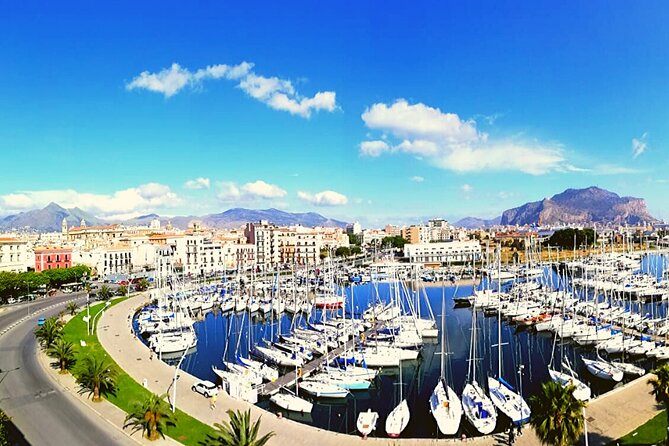
The walk ends at La Cala, the old port neighborhood. This is a smart finish. After palaces, churches, and stories of the Inquisition, you reach a more relaxed part of the city associated with traditional ice cream and cannoli.
The final stop is brief, about 10 minutes, and free. It is less a formal attraction than a pleasant ending point where you can continue on your own.
The tour does not state that food is included, so plan to pay separately if you want ice cream or cannoli. That small detail matters because the ending is described around these local treats, not as a provided tasting.
La Cala also gives the route a sense of movement. You start at the formal center of old Palermo and finish by the water, after crossing several layers of the city. You can easily treat the final stop as a place to continue exploring, though the tour itself ends there.
Price, pace, and what you actually receive
At $157.28 per person, this is not a budget walk. The price includes a professional guide and a private experience, but it excludes monument entrance tickets. For a couple or small group that values direct conversation and a tailored pace, the private format may justify the cost.
For a larger party, the per-person price may feel easier to accept, especially since group discounts are available. You should compare the total cost with the number of people in your group and add the likely entrance fees before making a decision.
The route lasts about four hours. Its listed stop times add up to less than the full duration, leaving room for walking between locations, explanations in the streets, and possible delays at monuments. You will be on your feet for most of the afternoon, so moderate physical fitness is required.
The walk is offered in English. One guide, Elisabeth, has also provided the tour in French when needed, but French should not be assumed as the standard language. If language is important to your booking, confirm it in advance.
A mobile ticket is available, and the meeting point is near public transportation. The start and finish are in central Palermo, at Quattro Canti and Via Cala, but the experience itself is a walking tour rather than a vehicle-based outing.
Who should book this Palermo walk
I would choose this tour if you want Palermo explained through architecture, class, religion, and political power. It suits you especially well if grand interiors interest you as much as famous outdoor sights.
It is also a good choice for a first afternoon in the historic center. The route gives you a clear introduction to several central areas, and the private format lets you ask about the buildings that catch your eye.
You may want a different plan if you dislike extra admission costs, prefer a shorter walk, or mainly want Palermo’s headline cathedral and royal palace. Those sights are not part of this route. You should also skip it if Palazzo Gangi is your main goal, since an interior visit is not included.
The strongest part of the experience is the guide’s storytelling. Elisabeth has been described as charming, well informed, humorous, and deeply engaged with Palermo. Those qualities matter here because the route depends on connecting buildings to complicated stories, not just naming dates and styles.
Should you book it?
Book this walk if you want a private, story-led introduction to Palermo’s old center, with special attention to aristocratic homes, religious life, and the darker side of Spanish Sicily.
The best reasons are Palazzo Alliata, Santa Caterina, and the contrast between lavish interiors and places linked to punishment. The main cautions are the $157.28 price, extra monument tickets, the four-hour walking commitment, and the fact that Palazzo Gangi is not an interior stop.
If those conditions suit you, this is a thoughtful way to see Palermo beyond the postcard views. If you want a low-cost highlights walk, you can find better value elsewhere.
FAQ
Where does the Palermo walking tour begin?
The tour begins at Quattro Canti, also called Teatro del Sole, at Piazza Villena in Palermo.
Where does the tour end?
The walk ends at Via Cala in the La Cala area, near Palermo’s old port.
What time does the tour start?
The scheduled start time is 2:00 pm.
How long does the tour last?
The tour lasts approximately four hours.
Is the tour private?
Yes. Only your group participates in the activity.
Is the tour offered in English?
Yes. English is the stated tour language. A guide named Elisabeth has also provided the tour in French on one occasion, but French is not the listed standard language.
Are monument entrance tickets included?
No. Entrance tickets to the monuments are not included in the tour price.
Is Palazzo Gangi visited inside?
No interior visit to Palazzo Gangi is included. You should not book this experience expecting access inside that palace.
Just added around Italy
- Vicenza: discovering the city of Palladio by e-bike★ 5.0 · 4 reviews
- Vicenza: Palladian Architecture Private Walking Tour★ 3.3 · 3 reviews
- Vatican: Exclusive Baroque Evening With Aperitivo & Dinner★ 3.1 · 2 reviews
- Turin: Art Nouveau Walking Tour with Coffee★ 5.0 · 11 reviews
- Venice Music Project – Baroque Autumn – Season 2025★ 4.5 · 7 reviews
- Walking tour in Venice with an architect★ 5.0 · 16 reviews
- Palladio. A wonderful live tale through time&soul, from Ve/Pd/Vr★ 5.0 · 7 reviews
- Turin, Art Nouveau walking tour and coffee break★ 4.0 · 7 reviews
Baroque Architecture Tours, compared.
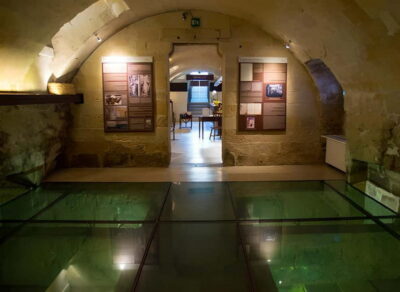
Lecce: Baroque Architecture and Underground Walking Tour
Read our review →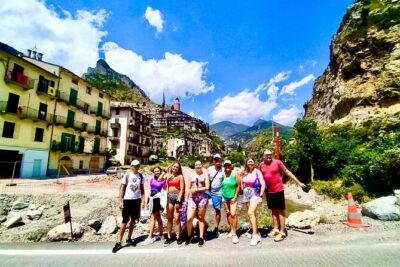
Train Exp. through the Alps (Royal Baroque Route from Nice)
Read our review →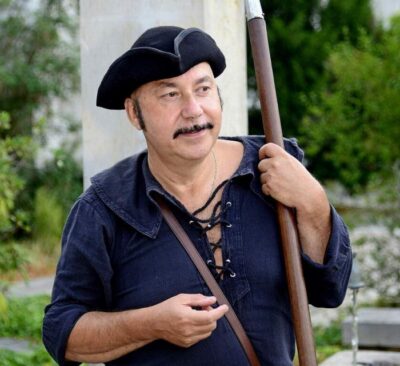
Dresden: Tour of the Baroque Quarter with a Night Watchman
Read our review →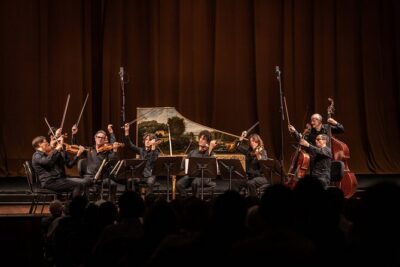
Interpreti Veneziani Ensemble Baroque Concert in Venice Ticket
Read our review →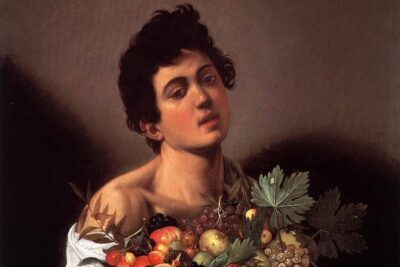
Borghese Gallery Max 6 People Tour: Baroque & Renaissance in Rome
Read our review →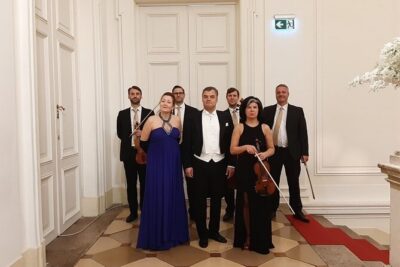
Concert at the Palais Schönborn-Batthyány by the Vienna Baroque Orchestra
Read our review →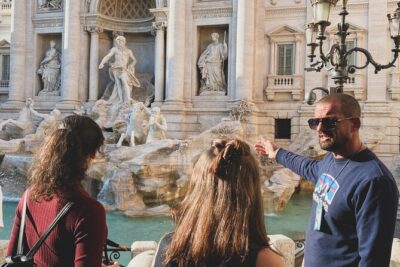
Guided Walking Tour of Rome: Top Sights & Baroque Treasures
Read our review →
Noto, Modica and Ragusa: The Baroque Tour from Catania
Read our review →Browse the lists this tour appears in