
Review · ROME
Renaissance Rome and Baroque Rome
Rome’s center is a giant outdoor gallery, and this 2-hour-15-minute walk links many of its best-known sights in one clean route. You’ll begin at Piazza Venezia and finish at Piazza del Popolo, with Renaissance and Baroque landmarks filling the space between.
I like the small maximum group of 15, which should make it easier to hear the English-speaking guide in busy squares. I also like the route’s range, from Mussolini’s balcony and the Altar of the Fatherland to Bernini fountains, the Pantheon, and the Spanish Steps. The drawback is simple: this is a brisk overview, and the Pantheon admission is not included.
Key points to know before you book
- A one-way route through central Rome: You start at Piazza Venezia and finish at Piazza del Popolo, so the tour gives you a useful sightseeing line rather than returning you to the starting point.
- Several major sights in one short walk: Piazza Navona, the Pantheon, Spanish Steps, Trevi Fountain, and Piazza del Popolo all fit into the experience.
- A maximum of 15 people: The group size is small enough to support a more personal guide-led walk.
- Important political and royal details: You’ll see Mussolini’s balcony and the balcony linked with Letizia Bonaparte, Napoleon’s mother.
- Free access at most listed stops: The Pantheon is the exception, with admission not included.
- Weather matters: The activity requires good weather, and a cancellation for poor conditions brings a choice of another date or a full refund.
Why this Rome walk works well
The best feature here is the route. Many Rome sightseeing plans become a jumble of disconnected squares, churches, fountains, and monuments. This walk gives you a clear west-to-north line through the historic center, beginning beside the Altar of the Fatherland and ending at Piazza del Popolo.
That makes it useful early in a Rome visit. You can use the walk to get your bearings, learn which sights deserve a later return, and move through several important neighborhoods without spending time figuring out each connection yourself.
The tour lasts about two hours and 15 minutes. Listed stop times add up to roughly 100 minutes, leaving about 35 minutes for walking and transitions. That tells you what to expect: the guide can explain each place, but you will not have unlimited time at every monument.
You should also expect an outdoor experience. The route includes several open public squares and fountains, and the activity can be canceled if weather conditions are poor. Comfortable shoes and protection from sun or rain are sensible, though the supplied details do not specify how much seating or shelter is available.
More Baroque architecture tours in Rome:
- Borghese Gallery Max 6 People Tour: Baroque & Renaissance in Rome
★ 5.0 · 185 reviews - Guided Walking Tour of Rome: Top Sights & Baroque Treasures
★ 5.0 · 155 reviews - Rome’s Baroque Art Walking Tour: Who Killed Caravaggio?
★ 5.0 · 27 reviews
Piazza Venezia and the Altar of the Fatherland
The meeting point is the Altar of the Fatherland in Piazza Venezia. This is a strong place to begin because the square brings together ancient Rome, modern Italian politics, and grand nineteenth-century national symbolism.
You’ll spend about 20 minutes here. The stop includes the balcony associated with Mussolini, a detail that adds political weight to what can otherwise seem like a purely monumental square. You’ll also hear about the balcony connected with Letizia Bonaparte, Napoleon’s mother. Those two references give the opening stop a more personal and political angle.
The Altar of the Fatherland itself is one of Rome’s most conspicuous landmarks. You do not need an admission ticket for this stop, so the guide can focus on the outside setting and its meaning without adding a separate entry process.
I like beginning here because it immediately shows that Rome is not only about emperors, popes, and ancient ruins. The city’s story also includes modern government, monarchy, fascism, and national identity. If you prefer a slower look at monuments, though, 20 minutes may feel short.
The meeting point is listed as Piazza Venezia, 00186 Rome, specifically at the Altar of the Fatherland. You should arrive with your mobile ticket ready and give yourself enough time to locate the exact gathering point in the square.
Along the Corso toward Piazza Navona
The route then continues along the Corso, described in the tour information as the way of the course. This connecting section matters because it links the large opening square with the more intimate fountains and piazzas that follow.
The exact amount of commentary during this walk is not specified, so I would treat it mainly as a transition between major stops. Still, guided walking time can be useful in Rome. You are moving through the central city while the guide keeps the route organized, rather than stopping at random corners and trying to work out your next turn.
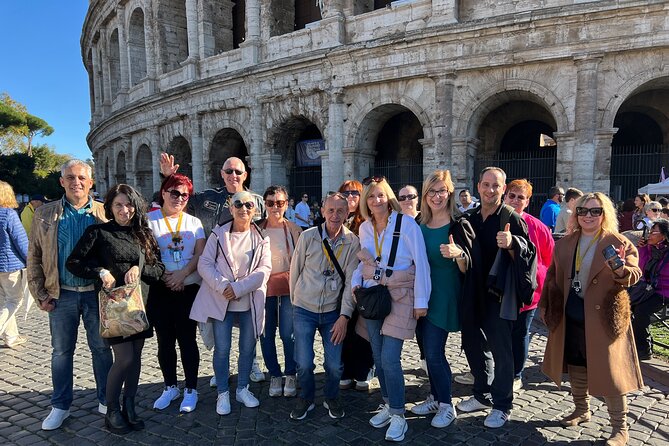
This is also where the small group can make a practical difference. A maximum of 15 people is more manageable than a large crowd when crossing streets or regrouping after a stop. You should still stay close to the guide, since central Rome can be crowded and the route includes several busy public spaces.
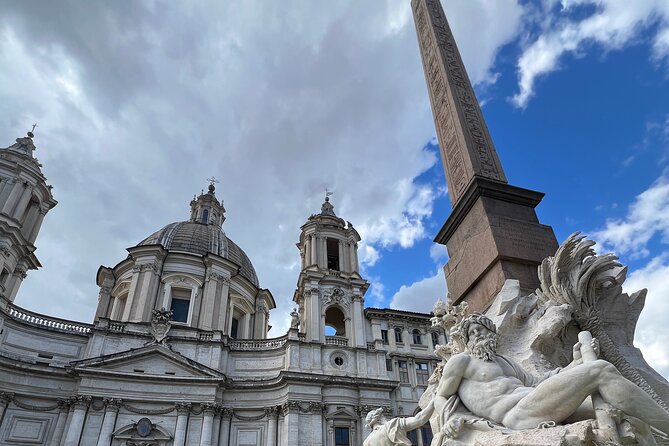
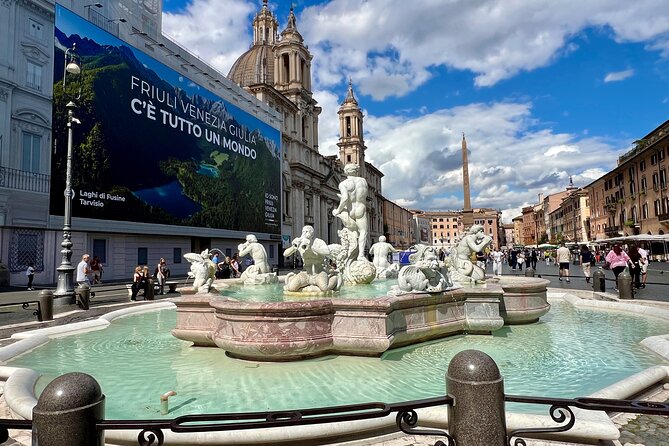
Piazza Navona and Bernini’s Four Rivers
Piazza Navona receives another 20-minute stop. The square is known for its elongated shape and its fountains, with the Fountain of the Four Rivers as the main feature named for this tour.
This is the Baroque heart of the walk. The fountain gives the guide a natural way to explain how Rome used sculpture, water, architecture, and public space to create drama. You’ll have time to look at the composition and the surrounding buildings, but not necessarily enough time for a long independent visit.
The fountain is free to view, as is the square itself. That keeps the tour simple and helps the group maintain its pace. You will not need to pause for a ticket line here.
Piazza Navona can be visually overwhelming. There is a lot to take in, and a guide’s explanation helps you focus on the features that matter. I would pay attention to the relationship between the fountain and the open square, rather than trying to photograph every angle.
Same city, a completely different century:
- City Walk with Architect: Private walking tour of Rome
★ 5.0 · 22 reviews - Musical masterpieces: The best of the Baroque concert
★ 5.0 · 17 reviews - Capuchins Crypt: Christmas Baroque Concert
★ 4.8 · 15 reviews - Rome: Caravaggio and Baroque Art Private Guided Tour
★ 4.4 · 11 reviews
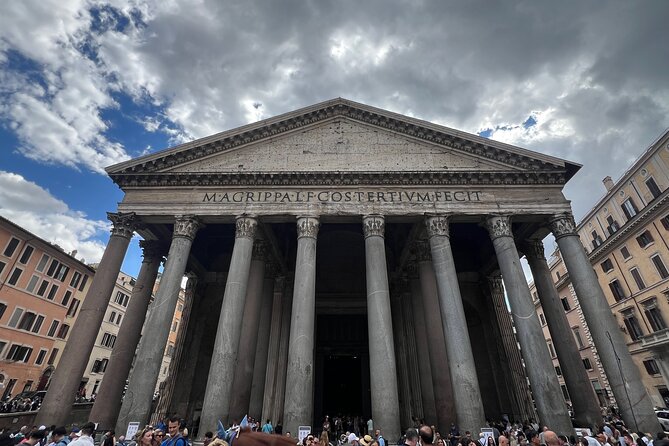
The Pantheon and the admission question
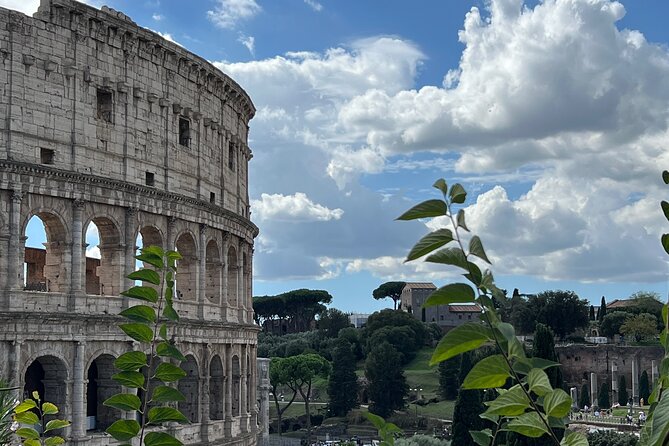
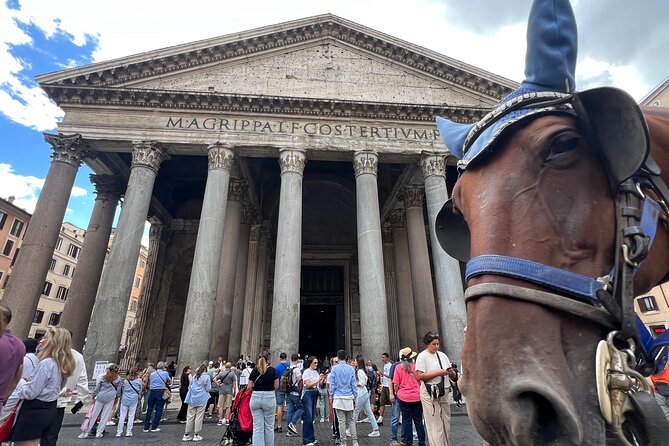
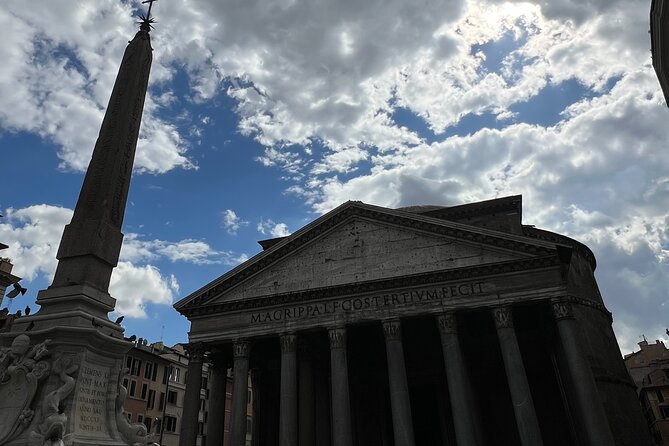
The Pantheon is the next named stop, with about 20 minutes allocated. This is one of the most important practical details in the entire experience: admission is not included.
That means you should not assume the tour price covers entry inside. The supplied information does not state the current admission amount, ticket procedure, or whether the group enters together. Ask for clarification before booking if seeing the interior is essential to you.
Even with that limitation, the Pantheon remains a valuable stop. Its exterior and surrounding square are part of the walking route, and the guide can place it within the larger story of Rome’s transformation from ancient city to Renaissance and Baroque capital.
A 20-minute slot is enough for a focused explanation and some photographs. It may not be enough for a leisurely visit if admission requires a separate process. If you want to spend extended time inside, plan to return independently and treat this stop as an introduction.
This is also the point where the advertised price needs a closer look. At $60.01 per person, the value depends partly on what you expect. You are paying for an English-language guide, a planned route, commentary at several major sights, and a small group capped at 15. You are not paying for Pantheon admission, and the experience does not include a long list of interior entries.
The Spanish Steps, Trinità dei Monti, and Bernini’s Barcaccia
The walk continues to the Spanish Steps, with another 20-minute stop. The surrounding landmarks include Trinità dei Monti and Bernini’s Barcaccia fountain.
This section gives you three connected sights in one compact area. The steps are the obvious focus, but the church above and the fountain below help explain how Rome’s public spaces work together. You can look from the base toward the church, then down toward the boat-shaped fountain, while the guide ties the pieces together.
No admission ticket is listed for this stop. That is useful because you can focus on the space itself without worrying about an extra cost. The time remains limited, so this is best viewed as a guided orientation rather than a full exploration of the surrounding streets.
The Spanish Steps can be a difficult place to linger. The route information does not promise free time, reserved access, or a quiet setting. You should expect a stop shaped by the group’s schedule, with the guide keeping everyone moving toward the next part of the route.
Trevi Fountain in the middle of the route
The Fountain of Trevi is included between the Spanish Steps and Piazza del Popolo. No separate duration is provided for this stop, unlike the five locations assigned 20 minutes.
That missing time matters. You should expect to see the fountain as part of the walk, but you should not assume a full 20-minute explanation or a long pause. The guide may use it as a shorter viewing point while keeping the group on schedule.
If Trevi Fountain is one of your top priorities, ask how much time the walk normally allows there. The supplied details confirm that it is part of the route, but they do not give a precise stop length.
Even a short visit can help you understand where the fountain fits into the central Rome route. You can also note its location and return later if you want more time for photographs or a slower look.
Finishing at Piazza del Popolo
The final stop is Piazza del Popolo, also known as the Square of the People. The tour ends here after about 20 minutes at the square.
This ending works well for an afternoon or evening plan because you finish in a major public space rather than being returned to the starting point. From there, you can continue with your own plans, though the supplied information does not specify onward transport instructions or a hotel drop-off.
The square provides a broad final setting after the tighter spaces around the Pantheon, Trevi Fountain, and Spanish Steps. It also gives the tour a clear endpoint, which is helpful if you want to arrange your next activity nearby.
Remember that the route is one-way. If you need to return to Piazza Venezia, you will have to make your own way back. The tour is close to public transportation, but no specific bus, tram, or Metro directions are provided.
Group size, guide style, and what the price buys
The tour is offered in English and uses a mobile ticket. Confirmation arrives at booking, and the group is limited to a maximum of 15 people. Those details make this a straightforward option if you want a planned walk without managing paper vouchers or a very large crowd.
The strongest service detail is the direct care before the walk. The owner personally called one customer to make sure the meeting instructions were clear. That suggests you can expect attention to basic coordination, which is especially useful at a large meeting area such as Piazza Venezia.
The guide is described as engaging and able to offer interesting information at every stop. No guide name is supplied, so I would not promise a particular person or speaking style. Still, the available rating is five out of five from 19 reviews, with 100 percent recommending the experience. That is a small sample, but it points to consistently strong satisfaction with the staff and commentary.
At $60.01, this is not a bargain-priced self-guided walk. The value is strongest if you want structure, context, and an English-speaking guide across several major landmarks. It is weaker if you are happy to use a map, read about the sights yourself, or spend long periods inside the Pantheon and at Trevi Fountain.
Who should book this experience
I would choose this tour for a first visit to Rome, especially if you want to cover the central sights in a single morning or afternoon. It also suits you if you like learning the story behind monuments but do not want a full-day commitment.
The route should work well for most people because most travelers can participate, service animals are allowed, and the activity is near public transportation. The details do not describe the walking surface, step count, or accessibility arrangements, so contact the operator if you have specific mobility needs.
This is less suitable if your main goal is entering monuments or taking your time at each location. The Pantheon ticket is not included, and the short stop schedule favors breadth over a slow, detailed visit.
You can cancel for a full refund up to 24 hours before the start time. Changes or cancellations inside that window are not accepted for a refund. Since good weather is required, a weather cancellation brings an alternative date or a full refund.
Should you book the Renaissance and Baroque Rome walk?
Book it if you want a compact, guided route through Rome’s most famous central squares, with political details at Piazza Venezia and Baroque highlights at Piazza Navona, the Spanish Steps, Trevi Fountain, and Piazza del Popolo.
The best reasons to choose it are the maximum group of 15, the useful one-way route, and the guide’s reported attention to clear meeting instructions and engaging commentary. Keep your expectations realistic: this is an outdoor overview, not a set of long monument visits, and you will pay separately for the Pantheon if you enter.
At $60.01, I see it as a reasonable orientation walk for a first Rome visit, particularly when you value a human guide and an organized route. If you want quiet time, included admissions, or detailed interior touring, save the money and plan the sights independently.
FAQ
How long does the Renaissance and Baroque Rome tour last?
The tour lasts approximately 2 hours and 15 minutes.
Where does the tour begin?
It begins at the Altar of the Fatherland in Piazza Venezia, 00186 Rome, Italy.
Where does the tour end?
The tour ends at Piazza del Popolo, also called the Square of the People, in the Flaminio area.
Is the Pantheon admission included?
No. Pantheon admission is not included in the tour price.
How many people can join the tour?
The activity has a maximum of 15 participants.
What happens if bad weather cancels the tour?
Because the experience requires good weather, you will be offered another date or a full refund if it is canceled for poor weather.
Just added around Rome
- Vatican: Exclusive Baroque Evening With Aperitivo & Dinner★ 3.1 · 2 reviews
- Rome Pantheon Highlights From Ancient Rome to Baroque★ 5.0 · 5 reviews
- Borghese Gallery Private Tour: The Greatest Baroque Masterpieces★ 5.0 · 6 reviews
- Private Baroque Tour: Discover Bernini & Caravaggio’s Best Works★ 5.0 · 3 reviews
- Private Personalized Architecture Tour of Rome with an Architect★ 5.0 · 5 reviews
- New Year’s Baroque Concert at Doria Pamphilj Palace★ 5.0 · 2 reviews
- Rome Baroque: Fountains and Squares Private Walking Tour★ 5.0 · 7 reviews
- Moonlight Walking Tour in the Heart of the Imperial & Baroque Rome★ 5.0 · 5 reviews
Baroque Architecture Tours, compared.
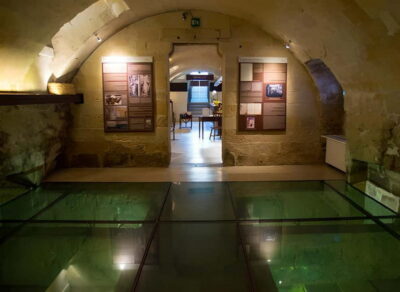
Lecce: Baroque Architecture and Underground Walking Tour
Read our review →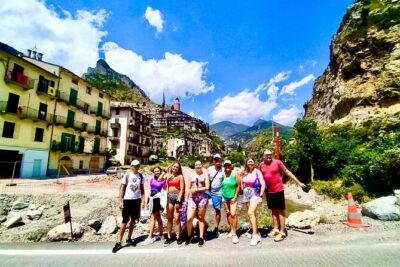
Train Exp. through the Alps (Royal Baroque Route from Nice)
Read our review →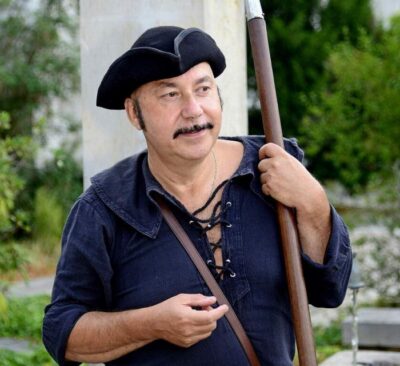
Dresden: Tour of the Baroque Quarter with a Night Watchman
Read our review →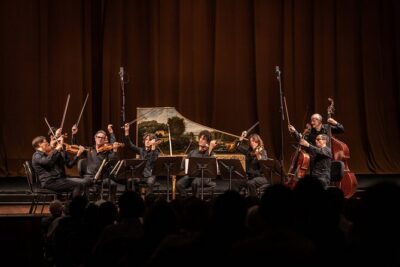
Interpreti Veneziani Ensemble Baroque Concert in Venice Ticket
Read our review →
Borghese Gallery Max 6 People Tour: Baroque & Renaissance in Rome
Read our review →
Concert at the Palais Schönborn-Batthyány by the Vienna Baroque Orchestra
Read our review →
Guided Walking Tour of Rome: Top Sights & Baroque Treasures
Read our review →
Noto, Modica and Ragusa: The Baroque Tour from Catania
Read our review →Browse the lists this tour appears in