
Review · BARCELONA
Barcelona: Gothic Quarter Walking Tour
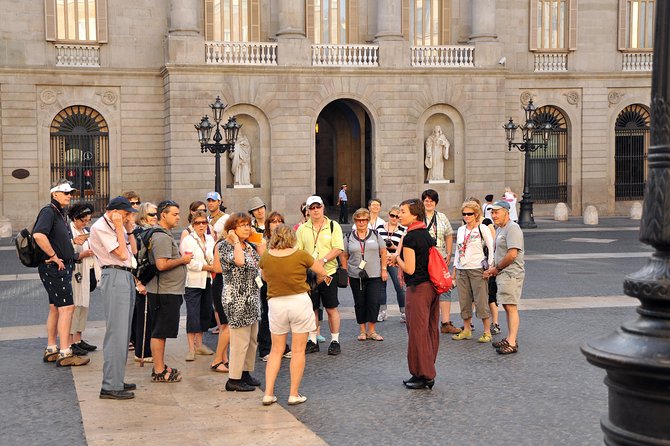
Barcelona’s Gothic Quarter is at its best when you look past the postcard views and follow its layers backward. This two-hour walk begins at Barcelona Cathedral, then moves through Roman Barcino, royal squares, medieval chapels, and narrow lanes where the city’s past still shapes the streets.
I like the clear route and the chance to see both the cathedral cloister and Plaça del Rei without spending half a day on a sprawling city tour. I also like the human touch promised by guides such as Iris, whose facts, anecdotes, and patience make the old stones easier to read. The drawback is practical: cobblestones, uneven walking, and two hours on foot make this a poor choice for anyone with back problems or limited mobility.
Key points to know before booking
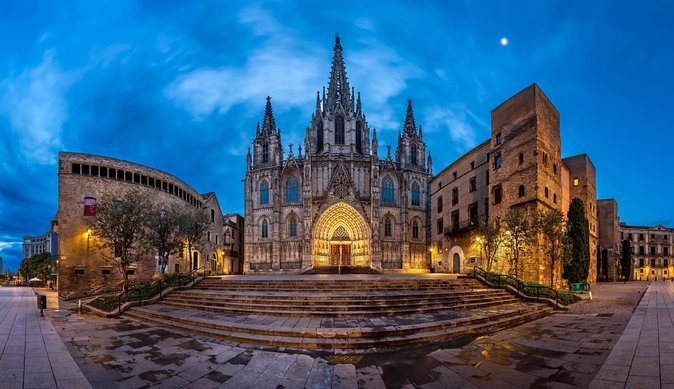
- Barcelona Cathedral begins the story: You visit the cathedral and its impressive cloister as part of the guided walk.
- Roman Barcino lies beneath the modern city: The route explains Barcelona’s Roman beginnings before moving into its medieval past.
- Plaça del Rei was a center of power: The square connects the city’s Roman remains with the royal and medieval buildings around it.
- Santa Àgata Chapel adds a quieter stop: This historic chapel helps show the artistic variety of the old city.
- The walk lasts two hours: That is enough time for context and several major sights, but not for a slow, in-depth visit to every interior.
- You can choose your language: Live guiding and audio support are offered in English, Spanish, and Chinese.
Why this Gothic Quarter walk works well
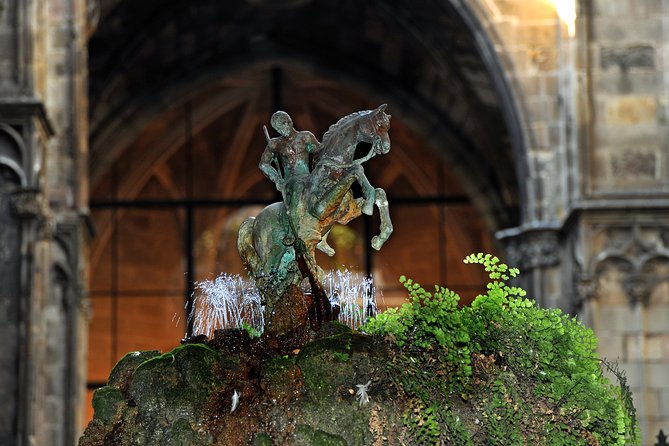
I like tours that give a city a clear timeline. This one moves from Roman Barcino to the medieval city and then through the Gothic Quarter as it feels today. You are not simply looking at old walls. You are learning how one city was built on top of another.
The route also keeps its focus. Instead of trying to cover all of Barcelona, it stays in the historic center and links a handful of important places. That makes the experience useful early in a visit, when you want to get your bearings, or later, when you want more meaning behind streets you have already crossed.
The price is $22 per person. For two hours with a live guide, that is a reasonable way to put the quarter into context, especially if you prefer a planned route to wandering without a sense of what you are seeing. It is not a substitute for a full cathedral visit or a museum tour, but it offers a compact introduction at a modest cost.
The strongest personal touch comes from the guide. Iris is singled out for clear facts, anecdotes, and patience. Those qualities matter in the Gothic Quarter, where the story can quickly become a string of dates and names. A guide who explains why a place mattered, rather than only identifying it, makes the walk more useful.
More Gothic quarter walks in Barcelona:
- Barcelona all included: Sagrada, Park Güell, Montjuic & Gothic
★ 5.0 · 2,169 reviews - Barcelona Gothic Quarter Tapas & Taverns Food & Wine Tour
★ 5.0 · 1,470 reviews - Barcelona: Old Town and Gothic Quarter Walking Tour
★ 4.8 · 1,393 reviews
Starting at Av. de la Catedral, 7
The meeting point is in front of Restaurant Catedral 1951 at Av. de la Catedral, 7. This is a straightforward location beside one of the quarter’s major landmarks, but give yourself enough time to find the exact meeting spot. The tour ends at the same place, so you do not need to arrange transport back from another part of the city.
The first short walk takes about 15 minutes. That transition matters because it shifts you from the meeting point into the older core of Barcelona. Wear shoes with good grip. The route uses cobblestone streets, and comfort will affect how much attention you can give the guide.
The tour lasts two hours in total. That pace is fairly brisk but manageable for visitors who are comfortable walking. Expect several 15-minute guided segments, with the route moving between nearby sights rather than stopping for long breaks.
Barcelona Cathedral and its cloister
Barcelona Cathedral is the first major stop. Here, the guide introduces a building shaped by several artistic styles, giving you an early lesson in the city’s layered architecture.
The cloister is especially worthwhile. It offers a different experience from the main church space, with a more enclosed and detailed setting. The tour includes a visit to the cathedral and cloister, so you are not limited to admiring the exterior from the square.
You should think of this as an introduction rather than a full cathedral study. The guided portion is listed at about 15 minutes, which is enough to explain the building’s place in Barcelona but not enough to inspect every feature at leisure. If the cathedral captures your interest, you may want to return on your own, subject to the site’s visiting arrangements.
This stop also gives the rest of the route a useful starting point. You begin with a major religious building, then step backward to the Roman settlement and forward again into the medieval city. That movement through time is one of the tour’s best features.
Following the Roman city of Barcino
From the cathedral, the walk follows the footprint of ancient Barcino, Barcelona’s Roman name. The exact emphasis depends on the guide, but the purpose is clear: you see the Gothic Quarter not only as a medieval district, but as a city built over an older Roman foundation.
This is where a guide adds real value. Roman remains can be difficult to understand when you encounter them as isolated stones or fragments. With an explanation of the city beneath the modern streets, the quarter becomes easier to read.
The tour does not promise an extensive archaeological visit, so keep your expectations measured. This is a walking explanation of Roman Barcelona, not a dedicated archaeology tour. Still, the Roman section helps you understand why the old center has its particular shape and why later buildings occupy such a compact area.
I enjoy this kind of historical layering because it turns an ordinary walk into a sequence of clues. The stone under your feet, the age of the surrounding buildings, and the route itself begin to connect.
More architecture walks in Barcelona:
- Ramblas, Old Town, Gothic and Gaudi Architecture Walking Tour
★ 5.0 · 723 reviews - Kids and Family Gothic Quarter Walking Tour in Barcelona
★ 5.0 · 465 reviews - Barcelona Gothic Quarter Walking Tour
★ 4.5 · 456 reviews - Barcelona: Gothic Quarter Walking Tour
★ 4.9 · 383 reviews
Plaça del Rei and the city’s medieval power
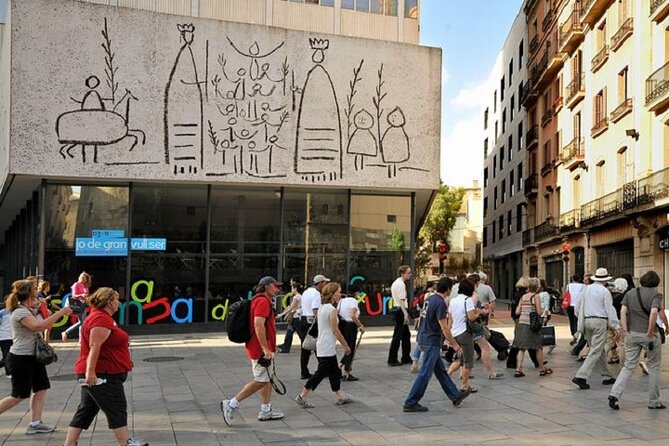
The next major stop is Plaça del Rei, or King’s Square. During the period of Catalan counts and monarchs, this was a center of power. It is one of the most important places on the route because it brings together government, royal authority, archaeology, and medieval architecture.
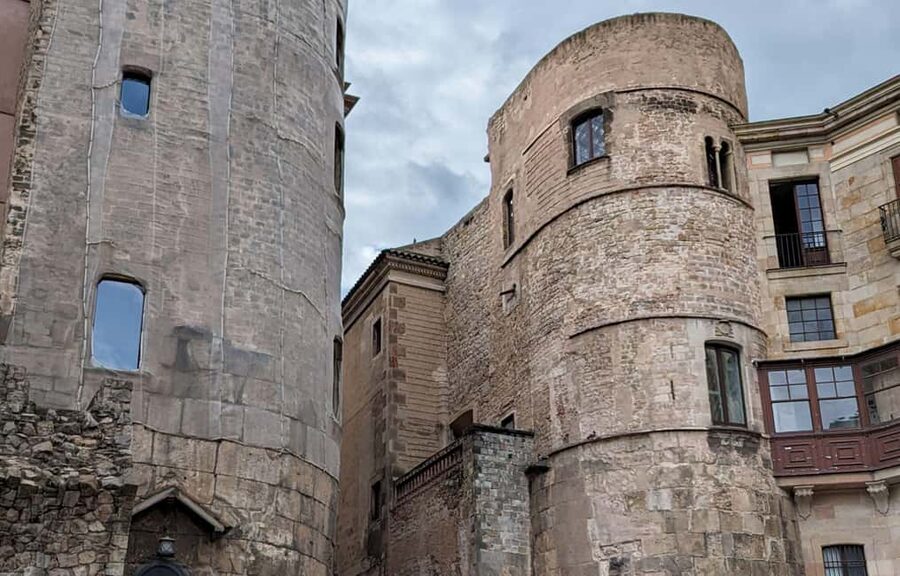
Beneath and around the square are remains linked to both the Roman city and the medieval city. The Saló del Tinell and the Chapel of Santa Àgata help show how this area functioned as more than a handsome public space. It was tied to power, ceremony, and religious life.
The guide’s job here is to help you picture daily life as well as grand events. That balance matters. Royal buildings can seem remote when presented only as monuments, but the square becomes more understandable when you consider the people who worked, worshiped, governed, and gathered there.
Allow yourself time to look up and around. Plaça del Rei is the kind of place where the architecture rewards a slower glance, even if the tour itself keeps moving. The 15-minute guided segment gives you the main story, while a return visit would allow more time for quiet observation.
Santa Àgata Chapel and Barcelona’s changing styles
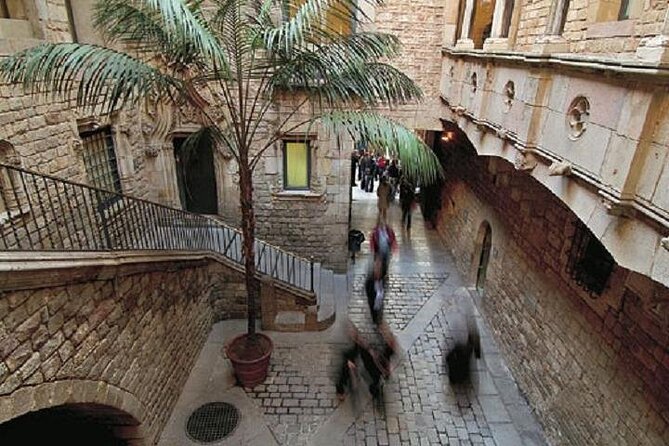
The Chapel of Santa Àgata is included as another guided stop. Its value lies partly in how it adds variety to the route. You are not seeing only one type of old building. The cathedral, royal spaces, Roman remains, and chapel each show a different part of Barcelona’s development.
The chapel also connects the political and religious sides of the medieval city. Together with the Saló del Tinell and Plaça del Rei, it helps explain why this part of Barcelona carried such weight.
The information provided does not promise a long interior visit, so treat this as a focused orientation stop. You will hear about the chapel and its place in the historic center, then continue through the surrounding streets.
For many people, this is where the quarter begins to feel less like a collection of sights and more like a connected district. You are moving through the same compact area that held Roman, royal, and religious importance at different times.
Narrow lanes of the Old City
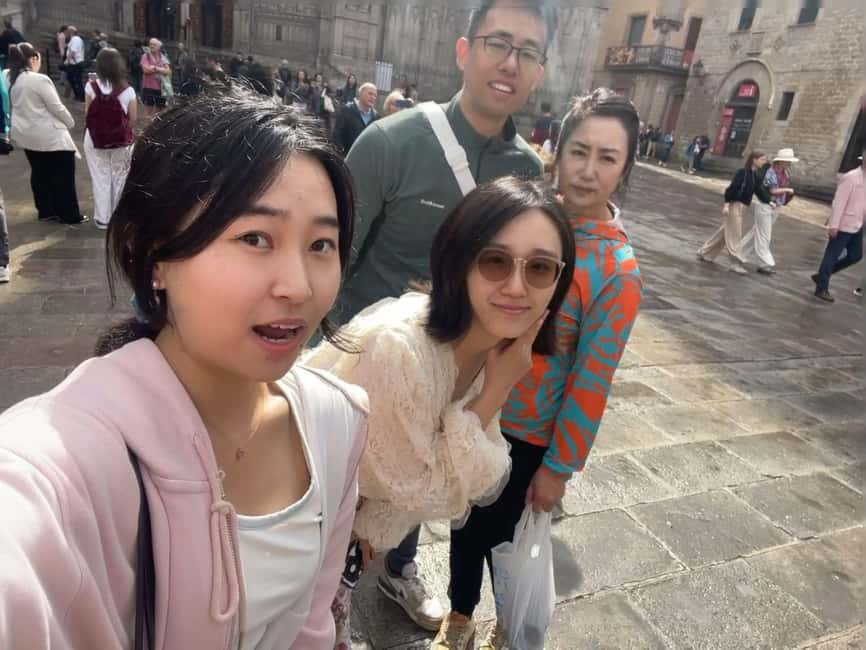
The walk continues through the Old City and the Gothic Quarter. Here, the experience becomes less about one grand landmark and more about the atmosphere of the streets.
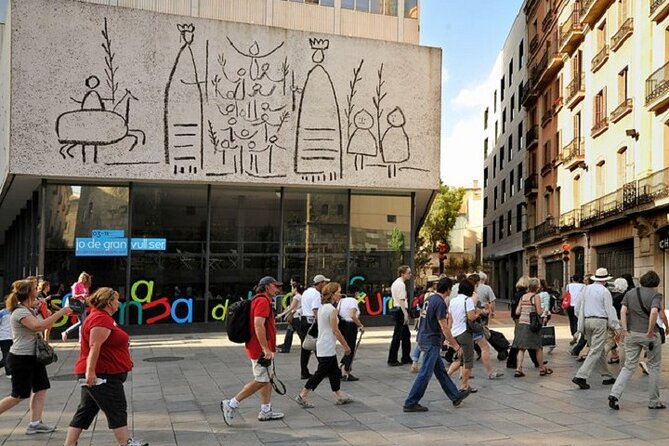
Expect narrow, cobblestone lanes, old buildings, and wrought-iron street lamps. The route is designed to show you corners that are easy to miss when you are rushing toward a major attraction. You may find that the most memorable details are small: a doorway, a turn in the street, or a building that makes more sense after the guide explains its setting.
This part of the tour is also where the practical drawback becomes clearest. Uneven paving can be tiring, especially in uncomfortable shoes. The activity is not suitable for wheelchair users, people with mobility impairments, or people with back problems. Anyone who finds long walks difficult should consider that carefully before booking.
Photography is allowed, but keep your camera work considerate. These are public streets, and the tour information asks you to respect other people’s privacy. The best approach is to pause when the group pauses, listen for the explanation, and take photographs without blocking the narrow passage.
What the guide and audio support add
The tour offers a live guide in English, Spanish, or Chinese. Audio support is also included in those three languages. That gives you two ways to follow the explanation, which is helpful if street noise or the pace makes every spoken detail hard to catch.
A live guide provides more than dates. The supplied information highlights Iris for her facts, anecdotes, and patience. That combination is worth noting because the Gothic Quarter can produce a dry history lesson if the guide simply recites information. Anecdotes give the setting a human scale, while patience helps when people need a point repeated or clarified.
The tour is not described as private, and no group size is provided. You should therefore expect a standard guided group experience rather than a guaranteed one-to-one walk. The audio guide can help you keep up with the main points, but it will not replace the chance to ask a live guide a question.
Is two hours enough?
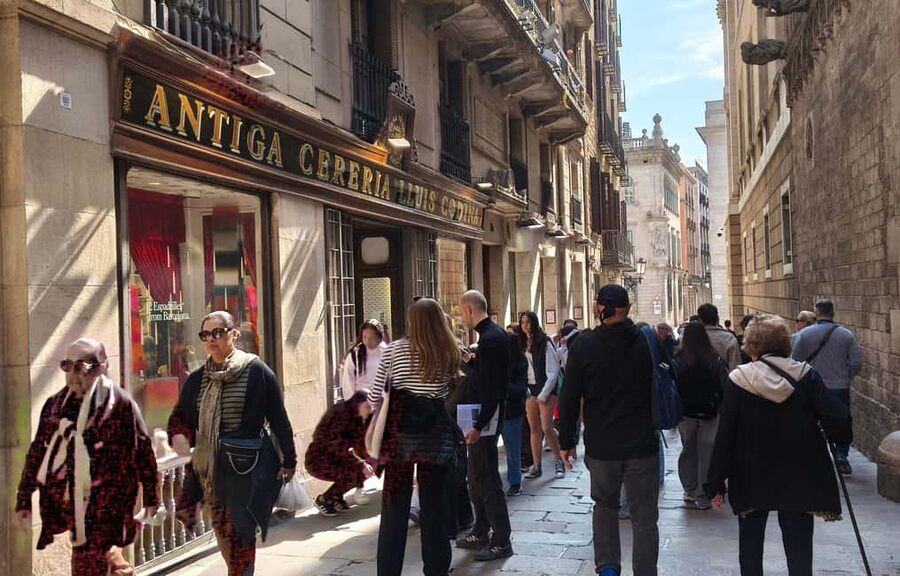
Two hours is a good length for a first look at the quarter. You cover the cathedral, Roman Barcino, Plaça del Rei, Santa Àgata Chapel, the Old City, and the Gothic Quarter without committing most of your day.
The tradeoff is depth. Each listed guided segment lasts about 15 minutes, so the tour gives you a series of focused introductions rather than long visits at each location. You will gain a useful framework, but you should not expect enough free time to study every architectural detail or explore every interior at length.
I would use this tour as a first-day orientation. Afterward, you will know which places deserve a longer return visit. It also works well for a short stay, when a compact route gives you more value than trying to research the quarter alone.
The walk returns to Av. de la Catedral, 7. That makes planning simple. You can continue sightseeing nearby, stop for a meal, or return to a place that caught your attention during the tour.
Practical details and value at $22
At $22, the tour is priced for an accessible introduction rather than a luxury experience. The cost covers the guided walk, the cathedral and cloister visit, Plaça del Rei, the Roman and medieval context, and audio support in three languages.
The value depends on how much explanation you want. If you are content to read signs and wander, you may prefer to explore independently. If you want a sensible route and a clear account of how Roman and medieval Barcelona relate to each other, the fee is fair.
Book with comfortable shoes and prepare for changing weather. The walk is outdoors for much of its route, and the old streets may offer little room to avoid sun, rain, or uneven paving. Keep your belongings secure as you move through the busy historic center.
You can cancel up to 24 hours in advance for a full refund, and the reserve-now, pay-later option keeps the booking flexible. Check availability for the exact starting time, since the tour runs at scheduled times rather than whenever you arrive.
Who should book this Gothic Quarter tour?
I would recommend it to first-time visitors who want a readable introduction to Barcelona’s oldest center. It suits people who enjoy architecture, city history, and short guided walks more than long museum visits.
It is also a good fit if you want to understand the quarter before exploring it alone. The Roman and medieval sections give you a useful framework, while the cathedral and Plaça del Rei provide clear landmarks.
I would be cautious if you dislike cobblestones, have back problems, or use a wheelchair. The activity specifically excludes people with mobility impairments and wheelchair users, and the route involves walking through uneven old streets.
The language choice is another reason to consider it. English, Spanish, and Chinese are available for both the live guide and audio support. If Iris leads your walk, you can expect a style built around facts, anecdotes, and patience.
Should you book it?
Book this tour if you want two focused hours in Barcelona’s historic core, with the cathedral, Roman Barcino, Plaça del Rei, Santa Àgata Chapel, and Gothic Quarter lanes tied into one story. At $22, it offers good value for a clear introduction, especially early in your stay.
Skip it if you want long interior visits, a relaxed pace, or a route suited to limited mobility. For everyone else, the tour is a practical way to see why Barcelona’s old center feels so layered, compact, and full of clues from earlier centuries.
FAQ
How long does the Barcelona Gothic Quarter walking tour last?
The tour lasts two hours. Check availability for the scheduled starting times.
How much does the tour cost?
The price is $22 per person.
Where does the tour meet?
The meeting point is in front of Restaurant Catedral 1951 at Av. de la Catedral, 7.
Where does the tour end?
The activity ends back at the meeting point at Av. de la Catedral, 7.
Which languages are available?
The live guide and included audio guide are available in English, Spanish, and Chinese.
Does the tour visit Barcelona Cathedral?
Yes. The guided walk includes Barcelona Cathedral and its cloister.
Does the tour include Plaça del Rei and Santa Àgata Chapel?
Yes. The route includes a guided visit to Plaça del Rei and the Chapel of Santa Àgata.
Is the tour suitable for wheelchair users?
No. The activity is not suitable for wheelchair users, people with mobility impairments, or people with back problems. It includes walking on cobblestone streets.
Just added around Barcelona
- Love in the Gothic Quarter Barcelona: Self-Guided Romantic Walk★ 4.5 · 9 reviews
- Walking tour of the Gothic Quarter of Barcelona + Cathedral★ 5.0 · 8 reviews
- Wine tasting with a view of the Sagrada Familia★ 4.5 · 13 reviews
- Roman & Gotic & Gaudi in Barcelona: private walking tour★ 4.5 · 2 reviews
- Visit to the Modernist houses of the Americans★ 5.0 · 2 reviews
- Barcelona Jewish & Gothic Tour★ 5.0 · 18 reviews
- Self-Guided Audio Tour-The Surrealist Barcelona of Dalí and Gaudí★ 3.5 · 8 reviews
- Barcelona Gaudi Tour: Sagrada Familia, Casa Batllo & Casa Mila★ 5.0 · 4 reviews
Gothic Quarter Tours, compared.
Barcelona all included: Sagrada, Park Güell, Montjuic & Gothic
Read our review →
Barcelona Gothic Quarter Tapas & Taverns Food & Wine Tour
Read our review →
Barcelona: Gothic Quarter Ghosts and Legends Walking Tour
Read our review →
Barcelona: Old Town and Gothic Quarter Walking Tour
Read our review →
Barcelona Old Town & Gothic Quarter Small Group Tour
Read our review →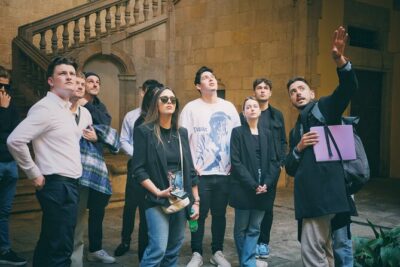
Ramblas, Old Town, Gothic and Gaudi Architecture Walking Tour
Read our review →
Barcelona: El Born and Gothic Quarter Wine & Tapas Bar Tour
Read our review →
Kids and Family Gothic Quarter Walking Tour in Barcelona
Read our review →Browse the lists this tour appears in