
Review · FLORENCE
Experience Florence’s Art and Architecture on a Walking Tour
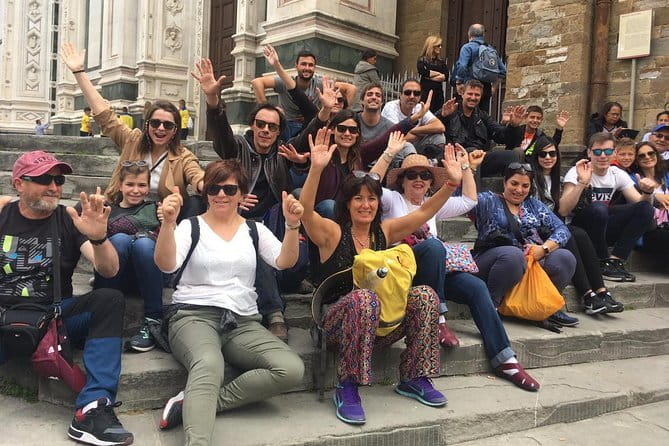
Florence is compact, but its history comes at you fast. This 2-hour-15-minute walking tour gives you a useful first look, from Santa Maria Novella to Santa Croce, while a guide explains the Medici, Renaissance art, churches, and grand squares around you. It is a smart way to get oriented before choosing which museums and monuments deserve your time.
I like two things here. First, the route covers the major sights without asking you to study a map. Second, guides such as Ludi, Natalia, Ludovica, and Ryan are praised for clear English, strong local knowledge, helpful food advice, and small details such as Florence’s wine windows. The possible drawback is sound: a small speaker may not carry well in busy streets, especially if the group grows beyond the stated limit.
Key points
- The route runs from Santa Maria Novella to Santa Croce, making it useful on your first morning in Florence.
- You see the Duomo complex, Piazza della Signoria, the Uffizi area, Ponte Vecchio, and Santa Croce without paying separate museum admission.
- Local guides add practical advice, including food ideas, toilets, viewpoints, and less obvious sights.
- The stated maximum is 20 people, though one reported August departure became much larger and harder to hear.
- The tour is conducted in English and begins at 10:30 am.
- The low price works as an introduction, with tipping left to your judgment rather than hidden in a full-cost ticket.
A fast first look at Florence’s historic center
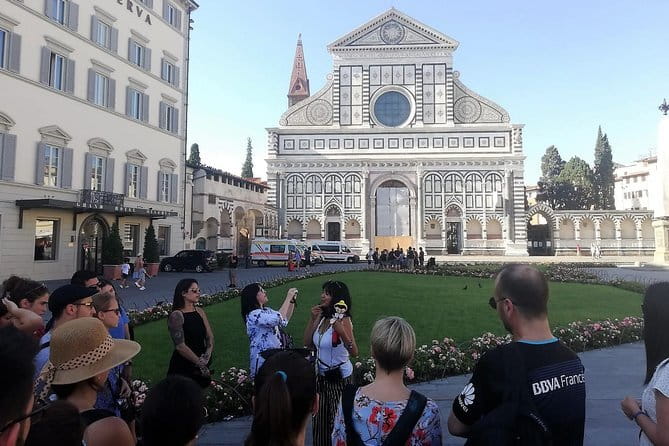
This is an orientation walk, not a museum tour. You will see the outside of several famous buildings, hear the stories that connect them, and finish near Santa Croce with a better sense of how Florence fits together.
The route is well chosen for a short visit. It moves through the old center rather than sending you out to distant neighborhoods, and it links religious buildings, shopping streets, civic squares, sculpture, and Medici power. The listed stop times add up to about 70 minutes, so the remaining time is used walking between sights and listening along the way.
That balance matters. You get enough time for photographs and explanations, but you should not expect long visits inside the churches or museums. Plan to return later to the Duomo, Uffizi, Palazzo Vecchio, or Santa Croce if one catches your interest.
The tour starts at 10:30 am in front of the Basilica of Santa Maria Novella at Piazza di Santa Maria Novella 4n. It ends in front of Santa Croce at Piazza di Santa Croce 18R. Those are useful landmarks, and the end point leaves you in a good part of the center for lunch, more sightseeing, or a walk toward the river.
More architecture walks in Florence:
- The Official Art Deco Walking Tour by The Miami Design Preservation League
★ 5.0 · 1,580 reviews - Barcelona: Gothic Quarter Ghosts and Legends Walking Tour
★ 4.7 · 1,443 reviews - Barcelona: Old Town and Gothic Quarter Walking Tour
★ 4.8 · 1,393 reviews
Santa Maria Novella sets the Renaissance mood
The first stop is the Basilica of Santa Maria Novella, where the guide spends about 10 minutes on the church and its story. Even from the square, the building gives you a strong introduction to Florence: patterned marble, careful proportions, and a public setting that has welcomed people into the city for centuries.
You should treat this as an exterior introduction. Admission is listed as free for the stop, but the tour does not promise a full church visit or time inside. If you want to study the interior, chapels, or artworks at length, return on your own.
Starting here also makes practical sense. Santa Maria Novella is easy to locate, and the nearby station makes the meeting point convenient if you are arriving by train or public transportation. Look for the guide in front of the basilica, not simply somewhere in the large square.
Via de’ Tornabuoni shows Florence’s polished side
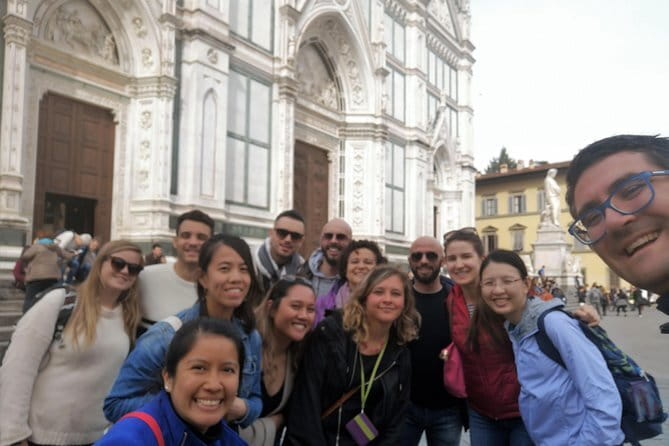
The walk continues along Via de’ Tornabuoni, with stops around Piazza Antinori, the shopping street, Palazzo Strozzi, and Piazza Santa Trinita. This section gives you a different Florence from the church squares and grand monuments.
Via de’ Tornabuoni is associated with elegant shops and impressive old palaces. Palazzo Strozzi offers a clear lesson in how wealthy Florentine families used architecture to project status. Piazza Santa Trinita, meanwhile, helps you see how the city’s streets, churches, and river routes connect.
The guide’s role is especially useful here. Without context, this can look like a pleasant shopping street and little more. With an explanation of the families, buildings, and urban layout, you begin to read the city as a record of power and money.
Piazza della Repubblica reveals Roman Florence
The stop at Piazza della Repubblica is brief, about five minutes, but it adds an important layer. The subject is Firenze Romana, or Florence in the Roman period.
The square’s broad shape differs from the tighter medieval streets nearby. Your guide can help explain why the area feels more open and how later rebuilding changed the center. Do not expect a long archaeology lesson here. This is a quick piece of context that helps you understand why Florence is not only a Renaissance city.
I appreciate this kind of short stop on an express walk. It keeps the route moving while reminding you that Florence’s story began long before the Medici and the famous artists.
A few more architecture tours around Florence worth a look
- Architectural Florence: Private Tour with a Local Expert
★ 5.0 · 3 reviews - Chicago Architecture River Cruise
★ 5.0 · 15,756 reviews - Chicago River 90-Minute Architecture Tour
★ 4.5 · 9,629 reviews - Chicago River: 1.5-Hour Guided Architecture Cruise
★ 4.8 · 8,046 reviews
The Duomo demands your attention
The Cathedral of Santa Maria del Fiore is the tour’s biggest visual moment. In roughly 10 minutes, the guide covers the cathedral, the Baptistery, Giotto’s Campanile, and Brunelleschi’s dome.
That is a lot to take in. The point is not to inspect every panel of the facade or explain every stage of construction. Instead, you get the main ideas and the chance to understand how the cathedral complex works as a group of buildings.
The Baptistery, bell tower, and dome are easy to photograph but harder to understand without help. A good guide can point out the relationship among them and explain why Brunelleschi’s dome matters to Florence’s identity.
Admission to the cathedral complex is not included. The tour listing specifically marks admission as not included, so plan and budget separately if you want to enter. This walking experience is best used to decide what deserves a return visit. The 10-minute stop is not enough for a full interior visit, dome climb, or museum visit.
Expect crowds and street noise around the Duomo. This is where the sound issue matters most. Stay close to the guide, position yourself where you can see the speaker, and ask to move if you cannot hear. The guide may carry a mini-speaker, but it is not the same as a personal headset.
Orsanmichele links commerce, faith, and sculpture
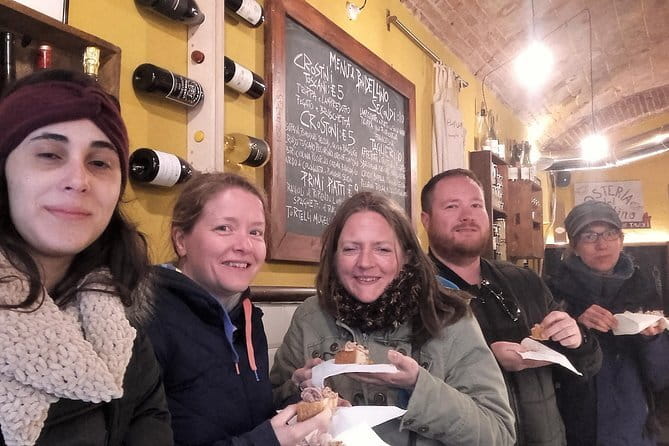
The Church and Museum of Orsanmichele gets about 10 minutes. It is one of the most interesting stops because the building does not fit the simple category of church or museum.
The guide discusses sculpture by figures including Donatello, Ghiberti, Giambologna, Brunelleschi, Verrocchio, Sangallo, and Orcagna. Even a short explanation can make the exterior statues and niches far more meaningful.
This is a stop where the guide’s art background matters. You may see a row of sculptures, but the names and rivalries give the building a stronger sense of purpose. If you enjoy sculpture, note this location and return when you have more time.
Admission is listed as free, but the schedule still allows only a brief visit. Consider the stop a preview rather than a thorough museum experience.
Piazza della Signoria is Florence’s outdoor gallery
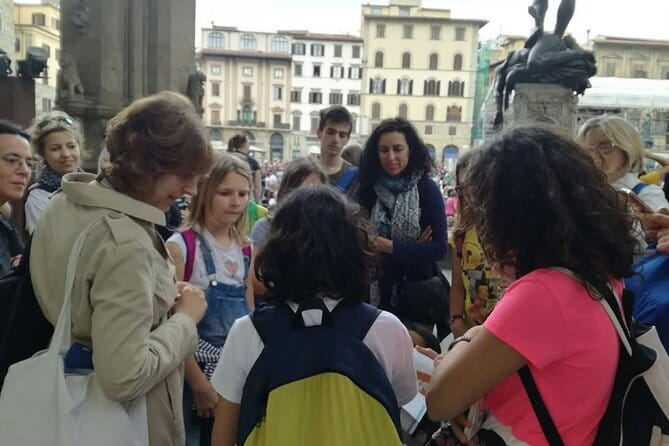
The tour spends about 15 minutes in Piazza della Signoria, the longest single stop. That feels right. This square gathers Palazzo Vecchio, the Uffizi, Loggia dei Lanzi, the Torre di Arnolfo, and the route toward Ponte Vecchio in one powerful setting.
The sculpture list is equally packed: David, Marzocco, Cosimo de’ Medici, Perseus by Cellini, and works linked to the Medici period. Your guide can help you separate original works from copies and explain how sculpture served politics as well as decoration. Do not expect every statue to receive equal attention in 15 minutes, but you should leave with a clear idea of why this square mattered.
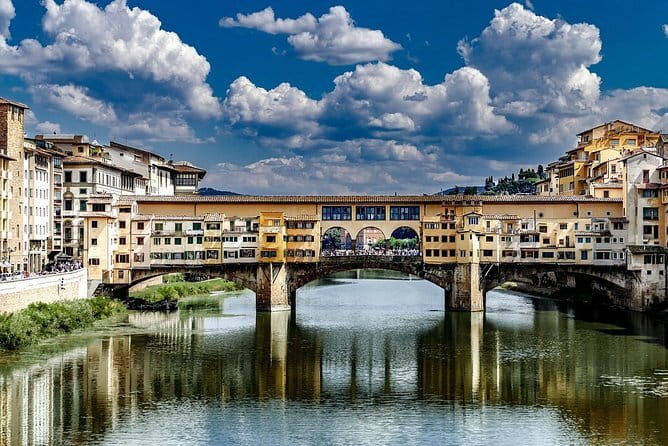
This is also where Florence’s public life becomes easiest to read. Palazzo Vecchio represents government and Medici authority. The Uffizi reflects the power of collecting and administration. The loggia functions like an open-air display space. Ponte Vecchio then carries you toward the river and another side of the city.
If you plan to visit the Uffizi or Palazzo Vecchio later, listen for details that help you choose. The tour does not include museum admission, and the stop is mainly an outdoor explanation.
Santa Croce finishes with Dante and Florentine memory
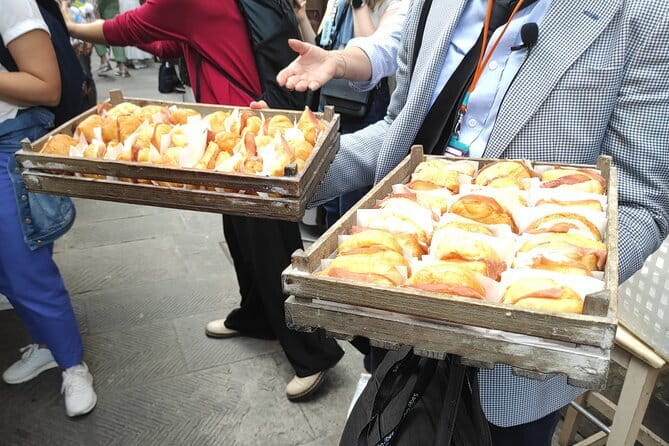
The walk ends at the Basilica of Santa Croce, with about 10 minutes devoted to the basilica’s story and the monument to Dante. This is a fitting finish because Santa Croce is tied to the city’s memory of artists, writers, thinkers, and political figures.
The guide leaves you in front of the basilica, not inside it. Admission to the church is not part of the tour, so you can decide later if you want to enter. The closing explanation gives you a useful reason to return rather than treating Santa Croce as simply another pretty square.
The end point is also practical. You are already in central Florence, with the rest of the afternoon open. You can continue sightseeing, find a meal, or use the walk’s suggestions about food and local stops.
The guides make the difference
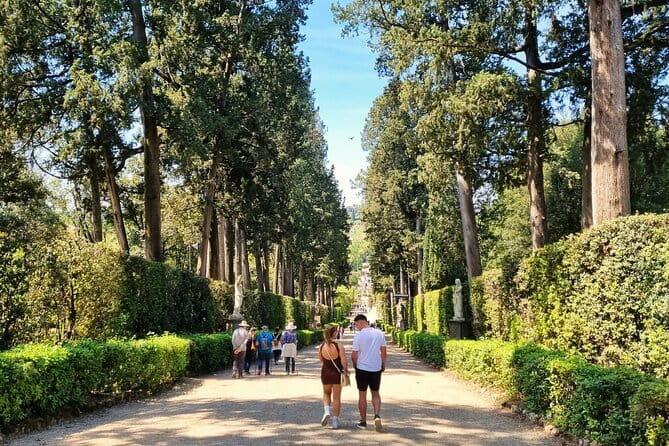
The strongest part of this experience is the human element. Ludi is noted for sharing practical tips about food, toilets, viewpoints, and less obvious places. Natalia is described as patient, engaging, and especially strong on Florence, art, and the Medici family. Ludovica is praised for an enjoyable manner and for taking a route that includes quieter streets.
Another guide, identified as Ryan by a participant, is described as walking at a manageable pace and keeping a group together even during a city marathon. Those details matter more than grand claims. A walking tour works when the guide can control the pace, keep the group informed, and adjust to heat, noise, and street conditions.
One guide reportedly found shade on a very hot day. That sounds small, but in Florence during summer, it can make the difference between enjoying the walk and merely enduring it.
English is the operating language. The overall rating is 4.8 from 318 ratings, with 97 percent recommending the experience. Those numbers point to a strong general record, but the sound complaints should not be ignored.
Group size and hearing deserve attention
The stated maximum is 20 people. That is a reasonable size for a city walking tour, especially in narrow streets and crowded squares. A smaller group also gives you a better chance to ask questions and stay near the guide.
There was, however, an August incident in which more than 40 people joined. The operator acknowledged that the usual group size should be closer to 20 or 25 and said stricter limits would be used. This is worth knowing if you are booking during a busy period.
The guide may use a mini-speaker, but personal headsets are not included. If you have hearing concerns, stay close, ask the guide to repeat key points, and speak up early rather than waiting until you have missed half the explanation.
Is $3.63 a good value?
At $3.63 per person, this is unusually inexpensive for more than two hours with a guide. The value comes from orientation and access to local context, not from included admissions or a full museum visit.
The tour follows a free-tour model. You pay a small booking amount, then decide what tip reflects the guide’s work. The low price should not lead you to expect a private tour, museum tickets, headphones, or a slow, in-depth art lecture. For a first look at Florence, it can be excellent value. For detailed art study, it is only a starting point.
I would compare this cost with the price of wandering without a plan. You can certainly see the same squares for free, but you may miss the connections among the Duomo, Medici power, sculpture, shopping streets, and civic buildings. The guide turns a sequence of sights into a story.
Who should book this walk?
I would choose this tour if you are visiting Florence for the first time, have one morning available, or want a quick orientation before returning to selected museums. It also suits budget-minded visitors who want a local guide without committing to a full-price private experience.
It works well for adults and families who can walk for more than two hours. Most people can participate, and service animals are allowed. The tour is near public transportation, which makes the start convenient.
I would think twice if you need guaranteed personal audio, dislike groups, or want to spend long periods inside churches and museums. The route is compact but active, and the tour depends on hearing the guide in public spaces.
You should also reserve at least 24 hours ahead if your plans might change. Cancellation is free up to that point, but cancellations or changes made less than 24 hours before the 10:30 am start are not refunded. Poor weather or failure to reach the minimum number of participants can lead to a new date, another experience, or a full refund.
My call: book it for orientation, not depth
I would book this as an affordable first pass through Florence. The route hits the city’s essential landmarks, and the best guides add practical advice that can shape the rest of your stay. The wine windows and quieter side streets also give the walk more personality than a simple march between famous squares.
Go in with the right expectations. You are buying a guided introduction, not a ticketed monument tour. Stay near the guide, confirm you can hear, and save the Duomo interior, Uffizi, Orsanmichele, and Santa Croce for later if you want real time with the art.
FAQ
Where does the Florence walking tour start?
It starts at Piazza di Santa Maria Novella 4n, in front of the Basilica of Santa Maria Novella in Florence.
What time does the tour begin?
The tour begins at 10:30 am.
Where does the tour end?
It ends in front of the Basilica of Santa Croce at Piazza di Santa Croce 18R.
How long does the walking tour last?
The approximate duration is 2 hours and 15 minutes.
What language is the tour offered in?
The tour is offered in English.
Are admission tickets included?
Admission is not included for the Cathedral of Santa Maria del Fiore. The listed stops at Santa Maria Novella, Via de’ Tornabuoni, Piazza della Repubblica, Orsanmichele, Piazza della Signoria, and Santa Croce are marked as free stops, but the tour does not promise extended interior visits.
How many people can join the tour?
The stated maximum is 20 travelers.
Can I cancel for a refund?
Yes. You can cancel at least 24 hours before the start time for a full refund. Cancellations or changes made less than 24 hours before the start are not refunded. If poor weather or an insufficient number of participants cancels the tour, you will be offered another date or experience, or a full refund.
Just added around Florence
- Florence : Brunelleschi’s Dome Climb Entry Ticket & Duomo★ 4.0 · 12 reviews
- Florence Brunelleschi’s Dome and Cathedral Complex Entry Tickets★ 4.0 · 14 reviews
- Florence Private tour Cathedral, Brunelleschi’s Dome, Museum, Baptistery★ 5.0 · 3 reviews
- Architectural Florence: Private Tour with a Local Expert★ 5.0 · 3 reviews
- Brunelleschi’s Dome Climb and Cathedral Museum Guided Tour★ 4.0 · 3 reviews
- Brunelleschi’s Dome – Private Tour★ 5.0 · 5 reviews
- Brunelleschi’s Dome 1-Hour Guided Tour with Pre-Climb Explanation★ 4.0 · 3 reviews
- Brunelleschi’s Dome Climb VIP Guided Tour★ 4.5 · 3 reviews
Walking Tours, compared.
The Official Art Deco Walking Tour by The Miami Design Preservation League
Read our review →
Barcelona: Gothic Quarter Ghosts and Legends Walking Tour
Read our review →
Barcelona: Old Town and Gothic Quarter Walking Tour
Read our review →
Lecce: Baroque Architecture and Underground Walking Tour
Read our review →
Chicago in a Day: Food, History & Architecture Walking Tour
Read our review →
Ramblas, Old Town, Gothic and Gaudi Architecture Walking Tour
Read our review →
Chicago’s Secret Interiors Architectural Walking Tour
Read our review →Browse the lists this tour appears in