
Review · FLORENCE
Architectural Florence: Private Tour with a Local Expert
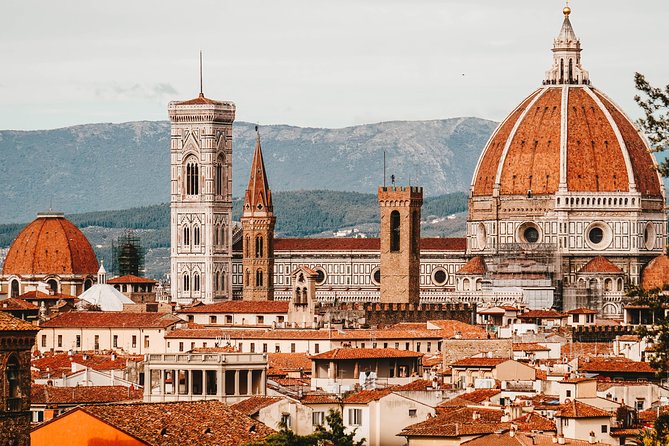
Florence makes a fine walking museum, but its buildings tell the story best when someone points out the details. This private tour links Santo Spirito, Santa Maria Novella, the Duomo, Palazzo Vecchio, the Uffizi, Ponte Vecchio, Pitti Palace, and a hilltop villa in about two hours. The route covers a remarkable range of styles, from Florentine Gothic to the clean lines of the Renaissance.
I like the one-to-one format, which lets you set the pace and ask about the buildings that catch your eye. I also like the local guide’s focus on architecture rather than a simple list of dates. The main drawback is time: two hours is short for ten major sights, and admission tickets are not included, so this works best as an architectural orientation rather than a full museum tour.
Key points to know before booking
- Private for up to two people: You get an exclusive guide rather than a large group, with a route adjusted to your interests and walking speed.
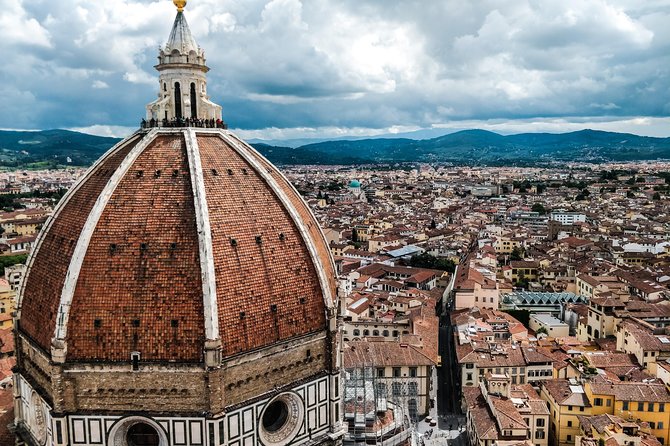
- A strong architectural range: See Brunelleschi’s dome, Florentine Gothic details, Renaissance palaces, medieval civic buildings, and a historic bridge.
- The Uffizi is viewed with ease, not entered by ticket: Museum admission is not included, so confirm what you want to see inside before booking.
- The walk begins at Santo Spirito: The meeting point is Basilica di Santo Spirito in Piazza Santo Spirito.
- The end point is near the Pitti Palace area: The tour finishes on Costa San Giorgio, leaving you well placed to continue exploring Florence.
- The price favors a small private party: At $786.04 for up to two people, this is costly for a two-hour walk but more reasonable when split between two people who value private attention.
Why this Florence architecture walk works
The best feature here is its range. In a short span, you can connect the buildings of religious Florence, civic Florence, Medici Florence, and the Florence of merchants and artists. That gives you a useful framework for the city instead of leaving each famous sight as an isolated photo stop.
You also get a route that crosses the Arno. That matters because Florence can feel divided into two different worlds. The north side holds the Duomo, Santa Maria Novella, Palazzo Vecchio, and the Uffizi. Across the river, Santo Spirito, Pitti Palace, and the hilltop villa offer a quieter look at the city’s Renaissance character.
The tour is hosted by an independent local, and the itinerary can change with your interests, walking pace, and weather. That flexibility is valuable if you want to ask about façades, urban design, churches, or the Medici family rather than follow a fixed script.
Still, keep the two-hour limit in mind. Ten stops in that time means the experience must move quickly, and several places are likely to be exterior viewpoints or brief visits. The tour does not include museum, monument, or transport admission, so it should not be treated as a ticketed museum package.
More private architecture tours in Florence:
- Brunelleschi’s Dome – Private Tour
★ 5.0 · 5 reviews - Florence Private tour Cathedral, Brunelleschi’s Dome, Museum, Baptistery
★ 5.0 · 3 reviews - Brunelleschi’s Dome – Private Tour
★ 5.0 · 2 reviews
Starting at Santo Spirito in Oltrarno
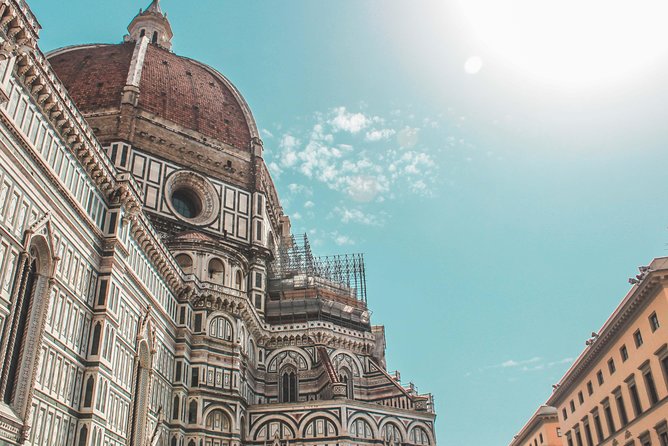
The walk begins at Basilica di Santo Spirito, at Piazza Santo Spirito. This is a smart starting point because the church presents a calm, restrained version of Renaissance design. Filippo Brunelleschi planned the building, and its elegant simplicity makes a useful contrast with the more decorated façades you see elsewhere in Florence.
The setting also gives you an immediate sense of the Oltrarno, the part of the city south of the river. The square is a natural place to meet and get oriented before the route begins. You can ask your guide to set the focus on architecture, art, religious buildings, or the Medici period.
Because the tour is private, you do not have to fit your questions into a large group. That is one of the strongest reasons to book this experience instead of a general city walk. If you care about how Brunelleschi’s ideas shaped later buildings, this is a good place to begin that conversation.
Santa Maria Novella and Florence’s decorated façade
Santa Maria Novella brings a different architectural mood. The basilica combines Gothic and Renaissance elements, and its façade is one of the city’s most recognizable. It is also an important religious site with major works of art.
The value of seeing Santa Maria Novella with an architecture-focused guide is the chance to compare its parts. You can look at the older Gothic structure alongside the more orderly Renaissance treatment of the façade. Those contrasts help explain why Florence is so important in European art and building design.
The itinerary includes Santa Maria Novella among several major stops, so your time here may be brief. If you want a detailed look at the interior and its art, ask about that when you meet your guide. The tour is designed to adapt, but it cannot provide a full visit to every church and museum in two hours.
The Duomo and Giotto’s Campanile
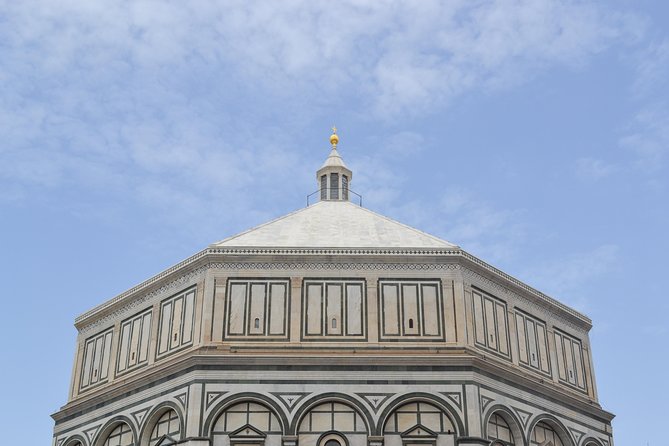
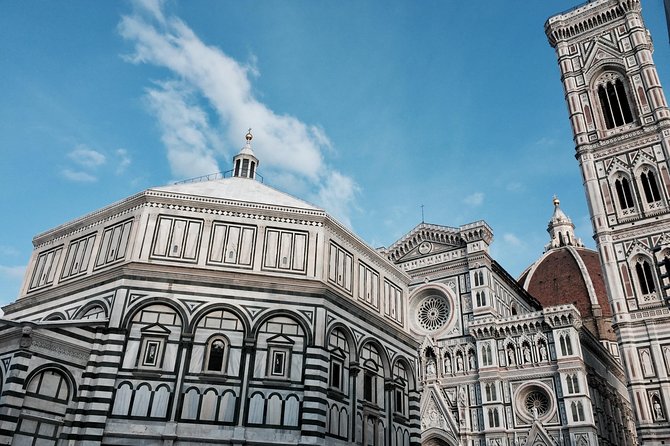
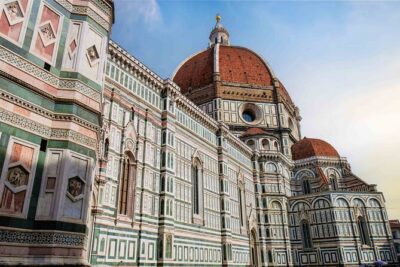
The Cathedral of Santa Maria del Fiore dominates Florence, and Brunelleschi’s dome remains the main architectural prize. Its size and shape changed the city skyline and helped make Florence a center of Renaissance design.
You do not need a long lecture to understand why the Duomo matters. From the square, the scale becomes clear. The cathedral’s marble exterior, the dome’s powerful profile, and the surrounding buildings create one of Italy’s most memorable urban spaces.
Nearby Giotto’s Campanile adds a Florentine Gothic counterpoint. The bell tower is decorated, vertical, and highly detailed, while the dome feels broad and technically bold. Together, the two buildings let you see the shift from medieval Gothic design toward Renaissance thinking.
The bell tower also offers panoramic views of Florence, though this experience does not include admission tickets. If climbing the tower or entering the cathedral is important to you, check the ticket arrangements before booking. The guide can explain the complex, but entry fees for monuments are separate.
A few more architecture tours around Florence worth a look
- Experience Florence’s Art and Architecture on a Walking Tour
★ 5.0 · 318 reviews - Chicago Architecture River Cruise
★ 5.0 · 15,756 reviews - Chicago River 90-Minute Architecture Tour
★ 4.5 · 9,629 reviews - Chicago River: 1.5-Hour Guided Architecture Cruise
★ 4.8 · 8,046 reviews
Civic power at Palazzo Vecchio
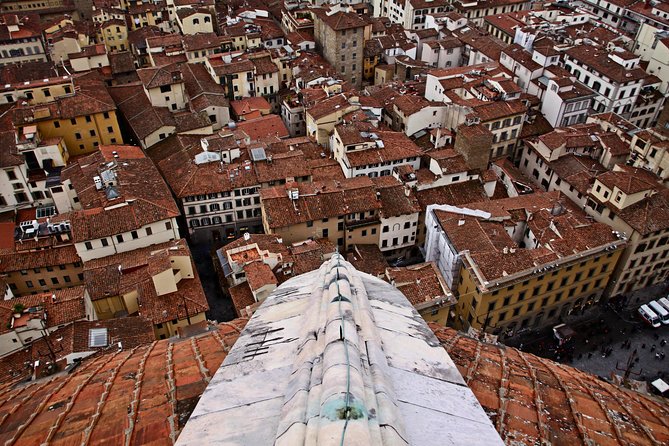
Palazzo Vecchio overlooks Piazza della Signoria and is easy to recognize by its crenellated tower. This was the seat of civic power, not a church, and its fortress-like appearance tells you something about Florence’s political life.
Inside are historic chambers and important artworks, but admission is not part of the tour price. The building still makes sense from the outside, especially when your guide explains how the palace relates to the square and the other civic buildings around it.
I like this stop because it shifts the story away from artists and church patrons. Florence was also a city of government, rival factions, merchants, and public authority. Palazzo Vecchio gives the walking route a useful political center.
The Uffizi, one of Florence’s great art buildings
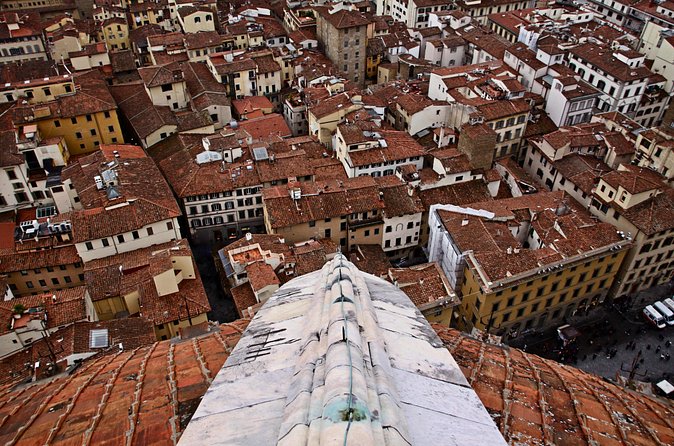
The Uffizi is famous for its Renaissance collection, but the building itself deserves attention. Located near Piazza degli Uffizi, it has a distinctive design and an important place in the city’s architectural story.
The tour promises an easier look at the Uffizi, but you should read that in context. The experience does not include museum admission, and two hours cannot support a full gallery visit alongside all the other stops. You may see the building, understand its place in Florence, and receive advice from your guide about how to approach it later.
That can be a good use of time. A local expert can help you decide which parts of Florence deserve a separate visit, especially if you have limited days in the city. If your main goal is Botticelli, Michelangelo, or other works inside the gallery, reserve separate museum time and treat this tour as an introduction.
Crossing the Arno on Ponte Vecchio
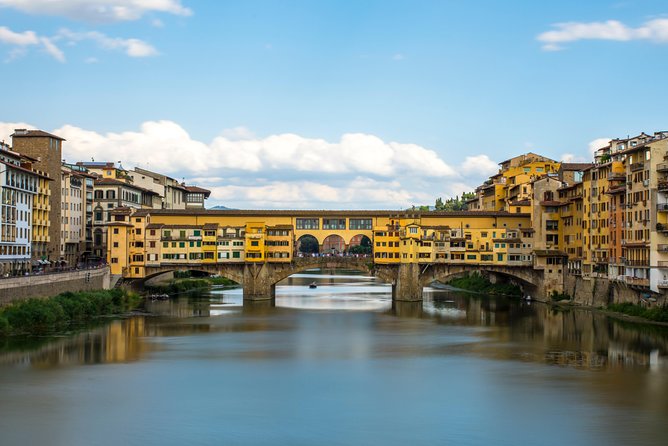
Ponte Vecchio is one of Florence’s most familiar sights: a medieval stone bridge lined with shops over the Arno River. It is also a practical link between the northern and southern parts of the route.
The bridge is more than a pretty crossing. Its surviving structure connects Florence’s medieval street plan with the city’s later Renaissance identity. As you walk across, you can look at the unusual row of shops and the way the bridge occupies the river.
This is one of the places where a private guide can make a short stop useful. You can ask about the bridge’s role in Florence, its shop-lined design, and how it fits into the route toward Pitti Palace and Costa San Giorgio.
Expect other people in this area, especially at popular times. The tour does not promise a quiet bridge or a long pause. Its value is in seeing Ponte Vecchio as part of the city’s development, not simply checking it off a list.
Pitti Palace and the Medici side of Florence
Pitti Palace brings the route into a grander Renaissance setting. Located in Piazza de’ Pitti, the palace now houses several museums and reflects the wealth and power associated with the Medici family.
The exterior alone gives you a sense of scale. After the compact streets near the Duomo and the crowded civic square, the palace feels broad and imposing. It also helps explain the importance of the Oltrarno, which became closely linked with elite residences, collections, and gardens.
Again, museum admission is not included. If you want to see the collections inside, plan a separate visit. The guide’s role here is to place the palace in Florence’s architectural and cultural story, not to provide entry to every museum along the way.
The final route toward Costa San Giorgio gives the walk a natural uphill finish. The tour is not recommended for people with impaired mobility, and you should take that warning seriously. Even without a long climb, Florence’s streets and changing levels can make a fast architectural walk tiring.
A villa, gardens, and views over Florence
The last major stop is a villa with gardens and broad views over Florence. The supplied details do not identify the villa by name, so you should confirm the exact site with the guide or provider if that matters to your planning.
This ending changes the emphasis from individual buildings to the relationship between architecture, gardens, and the city beyond. From a higher point, you can see Florence as a whole and understand how the dome, towers, bridges, and palaces relate to one another.
It is a fitting close because the tour begins with a single church and ends with a wider view of the city’s design. The villa and gardens also connect Florence’s artistic culture with its surrounding spaces, rather than treating architecture as something found only indoors.
Weather may change the order or selection of stops. That is reasonable for a view-based ending, but it also means you should not expect a completely fixed route.
What $786.04 means in practical terms
The listed price is $786.04 per group of up to two people. Split between two, that is $393.02 per person for about two hours. That is a steep price for a short walk, especially since admission tickets and personal expenses are extra.
The price becomes easier to justify if you want an exclusive guide, a flexible route, and close attention to architecture. You are paying for privacy and customization rather than a low-cost overview. A couple with a strong interest in Florence’s buildings may find that worthwhile, particularly if they want to ask detailed questions or avoid a large group.
It is less attractive if you simply want to see the main sights quickly or plan to visit the Uffizi and cathedral interiors. In that case, a standard city tour plus separate museum tickets may offer better value.
The experience is booked about 30 days ahead on average, which suggests you should not leave it until the last moment if your dates are fixed. Confirmation arrives at booking, and the tour is offered in English with a mobile ticket.
Who should book this private walk?
I would consider this tour for two people who care more about buildings and city design than shopping or food. It also suits first-time visitors who want a clear introduction to Florence before exploring the major museums on their own.
The private format helps if your interests are specific. You can focus on Brunelleschi, Gothic architecture, Medici buildings, churches, civic power, or the city’s changing skyline. The strongest praise attached to the experience focuses on the guide’s detailed understanding of Florence and its architecture, so that subject focus is central to its appeal.
I would be cautious if you have limited mobility, dislike hills, or want long visits inside the museums and monuments. The walking pace can adapt, but the route itself is ambitious, and entry tickets are not included.
Free cancellation is available until 24 hours before the start time. Changes or cancellations made less than 24 hours before the tour are not accepted for a refund.
Should you book Architectural Florence?
Book it if you want a private architectural framework for Florence, especially as a couple or a pair willing to pay for personal attention. The route gives you Brunelleschi, Gothic churches, civic Florence, the Uffizi, Ponte Vecchio, Medici power, and a high view across the city in one compact outing.
Skip it if you want a slow museum visit, interior access, or the lowest possible price. Two hours is enough for a lively overview, not enough for deep time at ten major sites. For the right audience, though, the flexibility and architectural focus make this a useful first look at Florence.
FAQ
How long does the Architectural Florence tour last?
The tour lasts approximately two hours.
How much does the private tour cost?
The price is $786.04 per group of up to two people.
Is the tour private?
Yes. Only your group participates, and the tour is described as an exclusive private activity.
In what language is the tour offered?
The tour is offered in English.
Where does the tour begin?
It begins at Basilica di Santo Spirito, Piazza Santo Spirito 30, Florence.
Where does the tour end?
It ends at Costa San Giorgio 2, Florence.
Are museum and monument tickets included?
No. Entry tickets for transportation, museums, and monuments are not included.
Which major Florence sights are included in the route?
The route includes Santo Spirito, Santa Maria Novella, the Cathedral of Santa Maria del Fiore, Giotto’s Campanile, Palazzo Vecchio, the Uffizi, Ponte Vecchio, Pitti Palace, and a villa with gardens and views of Florence.
Can the itinerary change?
Yes. The itinerary adapts to your interests and walking pace, and stops may change because of weather conditions.
Is the tour suitable for people with impaired mobility?
The tour is not recommended for guests with impaired mobility. Most people can participate, and service animals are allowed.
Just added around Florence
- Florence : Brunelleschi’s Dome Climb Entry Ticket & Duomo★ 4.0 · 12 reviews
- Florence Brunelleschi’s Dome and Cathedral Complex Entry Tickets★ 4.0 · 14 reviews
- Florence Private tour Cathedral, Brunelleschi’s Dome, Museum, Baptistery★ 5.0 · 3 reviews
- Brunelleschi’s Dome – Private Tour★ 5.0 · 5 reviews
- Brunelleschi’s Dome Climb and Cathedral Museum Guided Tour★ 4.0 · 3 reviews
- Brunelleschi’s Dome 1-Hour Guided Tour with Pre-Climb Explanation★ 4.0 · 3 reviews
- Brunelleschi’s Dome Climb VIP Guided Tour★ 4.5 · 3 reviews
- Florence: Cathedral Tour & Brunelleschi’s Dome Climb Ticket★ 5.0 · 3 reviews
Florence Architecture Tours, compared.
Florence: Brunelleschi’s Dome Climb Entry Ticket & Duomo
Read our review →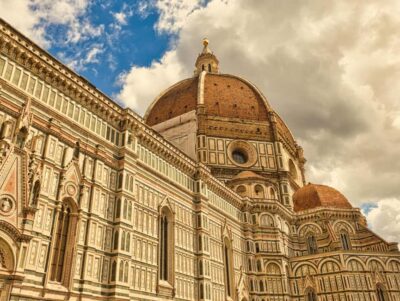
Florence: Brunelleschi’s Dome Reserved Entry Ticket & Duomo
Read our review →
Florence Skip-the-Line Duomo Tour with Guide & Brunelleschi Dome
Read our review →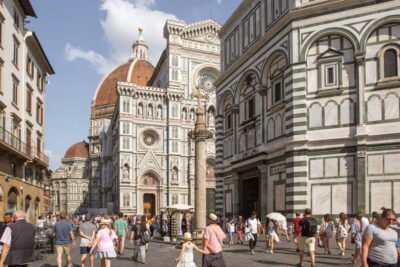
Florence: Duomo Area Tour and Brunelleschi Dome Climb Ticket
Read our review →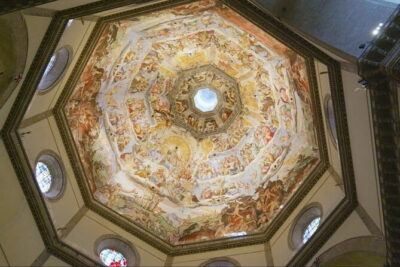
Florence in a Day: David, Cathedral & City Highlights Guided Tour
Read our review →
Florence: David, Cathedral & City Highlights Guided Tour
Read our review →

Browse the lists this tour appears in