
Review · CHICAGO
Explore Chicago’s Hidden Past: Prohibition Culture & Architecture
Chicago’s Prohibition story is best understood on foot, among the theaters, office towers, river bridges, and grand public spaces that gave 1920s Chicago its swagger. This walk connects those pieces with the Chicago Theatre, the Pedway, Daley Plaza, the Riverwalk, and the Bean, while your guide supplies the stories you would likely miss alone.
I like the small-group format, capped at about 15 people, because it leaves room for questions and personal advice. I also like the mix of major sights and quieter details, plus the Chicago-style popcorn and other surprise local tastes. The main caution is that the tour promises Prohibition culture but spends more time on general city history and architecture, so serious architecture students or Prohibition buffs may want more depth.
Key points to know before booking
- The route covers about 4.8 kilometers: Wear comfortable shoes and expect a steady city walk lasting roughly two and a half hours.
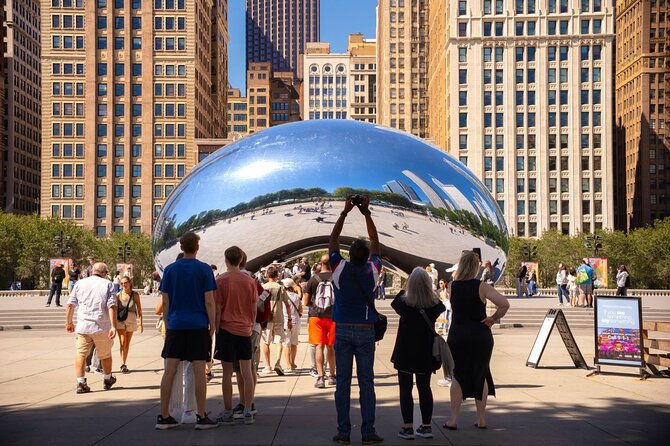
- The tour ends at Cloud Gate: You finish beside the Bean in Millennium Park, with time to take the classic Chicago photo.
- The Pedway depends on conditions: Weather and access can affect the underground section and the Riverwalk.
- Guides make the difference: Rich, Dave, Dash, and Kevin have all led tours, with a style that often feels personal and easygoing.
- Architecture gets more attention than Prohibition: You will hear about the 1920s, but this is not a bar crawl or a focused speakeasy tour.
- The $49.96 price buys orientation as much as sightseeing: You get a compact introduction to the Loop, riverfront, landmarks, food, and places to explore later.
Starting under the Chicago Theatre marquee
Meet at the Chicago Theatre, 175 North State Street, beneath one of the city’s most recognizable theater signs. It is a smart starting point: easy to find, close to public transportation, and firmly tied to Chicago’s entertainment past.
The first ten minutes help set the tone. You are not simply ticking off a famous facade. Your guide begins placing downtown Chicago into a larger story of theaters, commerce, public life, and the social world that grew around the city during the Prohibition era.
The tour is conducted in English, and the guide names attached to past departures include Rich, Dave, Dash, and Kevin. The experience can vary with the person leading it, but the strongest accounts point to guides who explain clearly, welcome questions, and adjust the pace when needed. If you prefer a tour that feels like a walk with an outgoing local rather than a formal lecture, this format should suit you.
A few more architecture tours around Chicago worth a look
- Chicago Architecture River Cruise
★ 5.0 · 15,756 reviews - Chicago River 90-Minute Architecture Tour
★ 4.5 · 9,629 reviews - Chicago River: 1.5-Hour Guided Architecture Cruise
★ 4.8 · 8,046 reviews
The Chicago Pedway and the working Loop
From the theater, the group moves toward the Chicago Pedway, a network of underground passages used by commuters and locals. The Pedway portion takes about 20 minutes when weather and access allow.
This is one of the more useful parts of the experience because it shows you a side of Chicago that many visitors never notice. Above ground, the Loop can feel like a wall of towers and traffic. Below ground, the city reveals its practical commuter system. It is not a grand monument, but it gives you a better sense of how downtown functions on a weekday.
Weather matters here. The walk runs in rain, snow, or shine, but the Pedway and Riverwalk portions are weather permitting. Dress for the forecast and do not assume that an underground route will replace all outdoor walking.
The group also passes the City Hall and County Building, where Chicago’s city government and Cook County offices operate. This part is more about context than entry. Your guide links civic buildings to the way the Loop developed as a center of business and government.
Daley Plaza and the Picasso
At Daley Plaza, you stop at the Chicago Picasso, a major public artwork installed in 1967. Allow about ten minutes.
The Picasso is a useful change of pace after the older buildings and civic surroundings. It shows how Chicago’s public spaces continued to change long after the early skyscrapers appeared. The sculpture also gives your guide a chance to discuss public art and urban planning, rather than simply listing dates and building names.
You do not need to be an art specialist to enjoy this stop. The value comes from seeing how one large work changed the feel and use of a downtown plaza. If you like learning why a city looks the way it does, this is more rewarding than a quick photo stop.
Walking beside the Chicago River
The route then heads toward the Chicago River, where you spend about 20 minutes walking past buildings and watching the city move around its main downtown waterway.
The river is one of the tour’s strongest sections. From street level, you get changing views of towers, bridges, and the narrow corridor of water cutting through the Loop. You also share space with the daily commute, which makes the experience feel less staged than a sightseeing circuit built only around monuments.
This is where the connection to Chicago’s 1920s culture becomes easier to picture. The riverfront helped shape the city’s commercial identity, while the buildings around it supplied the grand setting for business, nightlife, politics, and social life. The tour does not turn Prohibition into a full investigative story, but it uses the city itself to show the era’s setting.
Photography is good here, especially if you enjoy broad skyline views rather than close-up building details. Keep in mind that city sidewalks can be crowded, and the guide may need to keep moving to stay on schedule.
Same city, a completely different century:
- Chicago Architecture Center River Cruise aboard First Lady
★ 5.0 · 5,536 reviews - Chicago: Architecture River Cruise Skip-the-Ticket Line
★ 4.8 · 4,325 reviews - Chicago River 45-Minute Architecture Tour from Magnificent Mile
★ 4.5 · 2,924 reviews - Chicago Lake and River Architecture Tour
★ 4.5 · 2,308 reviews
The Riverwalk, Wrigley Building, and Tribune Tower
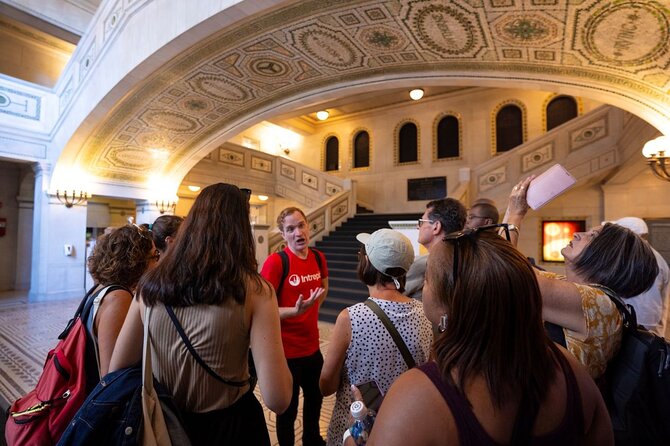
Weather permitting, the group strolls along the Chicago Riverwalk for about 20 minutes. This award-winning public space gives you a lower and more open view of the city’s architecture.
The Riverwalk section is especially useful for first-time visitors because several well-known buildings come into the same visual frame. You can see Marina Towers, the Wrigley Building, and Tribune Tower while your guide explains what you are looking at and why the riverfront matters.
The Wrigley Building, at 400 North Michigan Avenue, is one of Chicago’s most familiar landmarks. Tribune Tower, at 435 North Michigan Avenue, rises 463 feet across 36 stories in a neo-Gothic style. You pass both rather than taking a full interior tour, so set your expectations accordingly.
This distinction matters. If you want a broad introduction to famous buildings, the route works well. If you want long discussions of architects, structural choices, or interior details, you may find the treatment too brief. One past account found the walk closer to a trivia tour than a serious architecture class. That is a fair warning, especially if you already know Chicago’s central landmarks.
The Magnificent Mile and downtown shopping streets
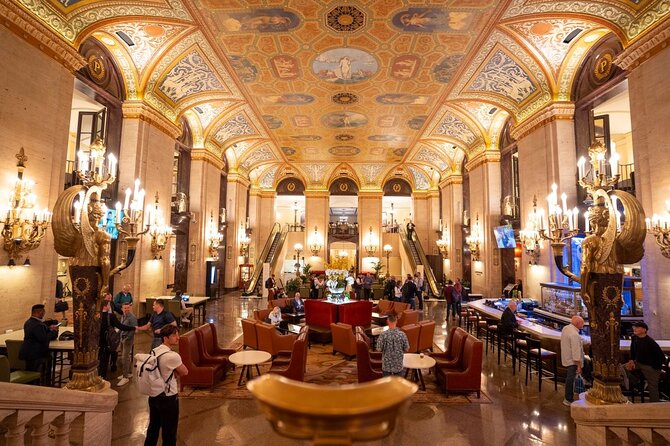
The walk continues past the Magnificent Mile on North Michigan Avenue. The area grew from the 1909 Burnham Plan and now combines shops, restaurants, hotels, and major landmarks.
You get a sense of how the city shifts from the office-heavy Loop toward one of its best-known commercial avenues. The guide may point out buildings such as the Jewelers Building and London House, both included among the architectural sights on the route.
Do not expect a shopping stop or much time to browse. The point is to understand the avenue as part of Chicago’s planned growth and changing city life. If your main goal is shopping, save that for after the tour. If you want to know where the Magnificent Mile fits into the city’s design, this passing explanation is helpful.
A few accounts found the balance between walking and stopping uneven. One person felt too much time went to Marshall Field’s and buying popcorn, with less attention paid to the Wrigley Building, Tribune Tower, NBC Building, or Flamingo sculpture. The exact balance may depend on your guide and the group, but you should know this is a moving overview, not a building-by-building master class.
Inside the Chicago Cultural Center
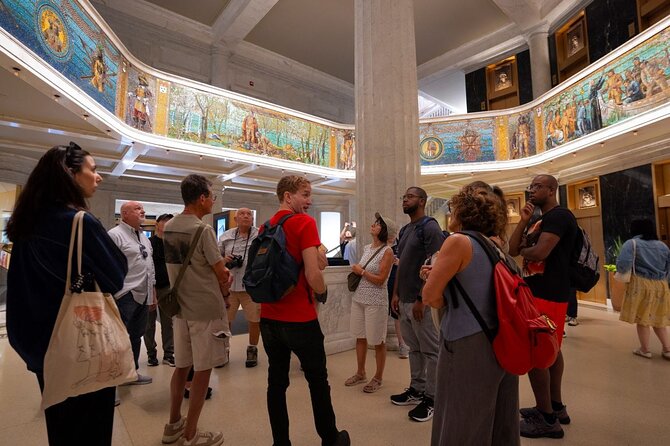
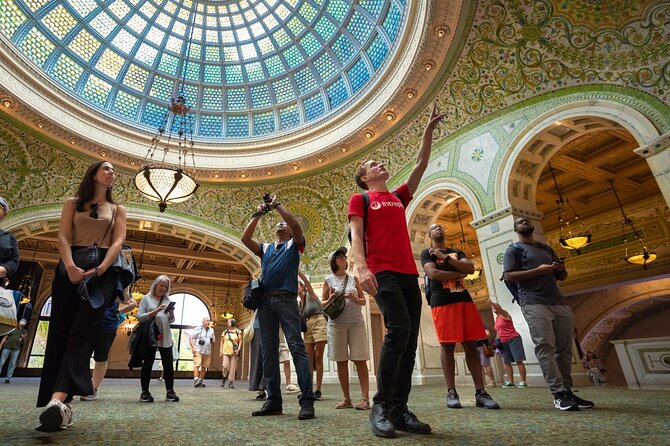
The Chicago Cultural Center is one of the best stops because you go inside. Plan on roughly 15 minutes in this Chicago Landmark, where mayors have welcomed presidents, royalty, and other dignitaries.
The former library interior gives the walking tour a needed pause from traffic and weather. Look up as you move through the building. The ceilings and interior details help explain why Chicago is such a strong city for architectural sightseeing, even when you are not entering a major museum.
This stop received especially strong praise from people who enjoyed the building’s interior and the explanation of its past. I agree with the emphasis. A city walk can become a string of exterior photos, but the Cultural Center gives you a real interior experience at no extra admission cost.
The stop is also a reminder to book this tour early in your visit. You receive ideas for other sights, meals, drinks, and activities, and you can return to the Cultural Center later if you want more time than the group allows.
Millennium Park and Cloud Gate
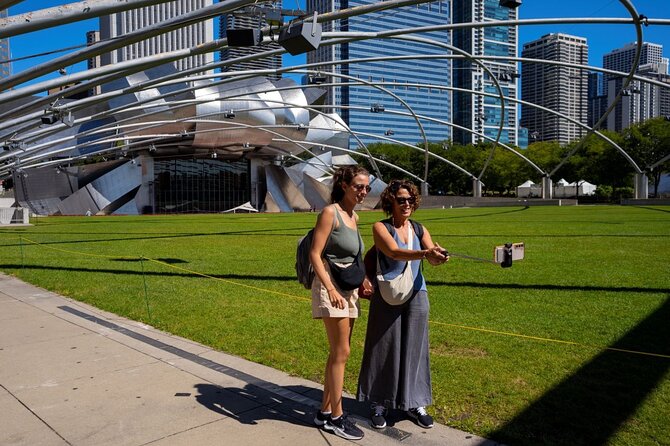
The final section leads to Millennium Park, followed by Cloud Gate, the polished sculpture better known as the Bean. You spend about 20 minutes in Millennium Park and roughly ten minutes at Cloud Gate.
This is the tour’s most obvious photo opportunity. The Bean reflects the skyline, park, and people around it, so your guide can help you get the classic image before ending the walk. The tour concludes here rather than returning to the starting point, which makes it easy to continue toward nearby sights, lunch, or drinks.
Your guide offers suggestions for what to do next. That matters because Millennium Park sits near several major attractions, including the Chicago Cultural Center and other downtown sights. You can use the tour as a way to get your bearings, then choose your own pace for the rest of the day.
The ending also works well for a short visit. In two and a half hours, you see a broad slice of central Chicago without spending the whole day indoors or on a bus.
What the $49.96 price really covers
At $49.96 per person, the tour is fairly priced if you value local explanation and a strong first look at downtown. There are no major admission fees built into the route, but you are paying for the guide’s time, route planning, storytelling, and advice as much as for the sights themselves.
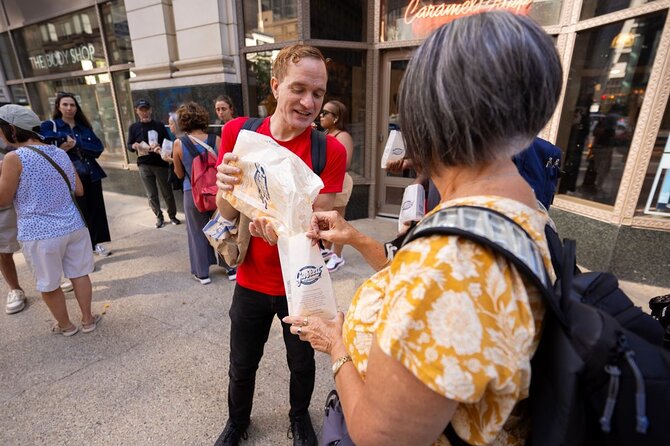
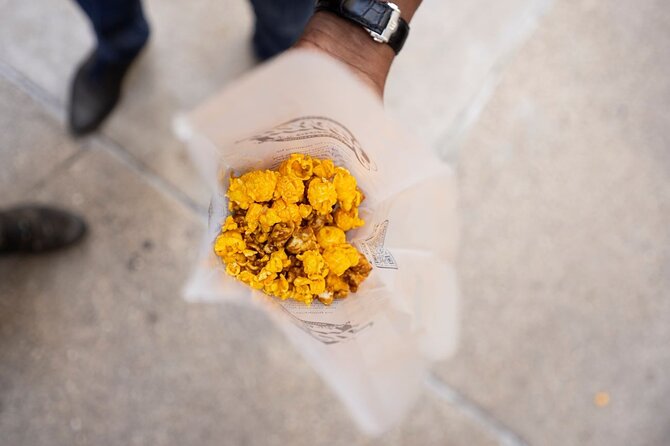
The included popcorn and surprise local treats add a small food element without turning the experience into a food tour. Additional food and drinks are not included, and gratuities are separate. Some departures have included chocolate or other local samples, but you should treat those as part of the guide’s approach rather than a full meal.
The strongest value comes when you take the tour early in your stay. You learn the layout of the Loop, identify places worth revisiting, and get practical ideas for lunch, drinks, and later sightseeing. One person wished they had taken it on the first day, and that is sensible advice.
A private option may suit you if you want the guide to adjust the pace or focus. A private departure described in the feedback allowed the guide to respond to interests, revisit parts of the Art Institute, and slow down for a guest with a sore knee. The standard experience, however, is a small-group walk with a maximum of about 15 people.
Walking, weather, children, and timing
The route covers about three miles, or 4.8 kilometers. It is described as suitable for all ages and fitness levels, but that does not mean it is effortless. You will spend most of the two and a half hours on city streets, with possible stairs or changes in surface around the Pedway and riverfront.
Wear shoes you can trust and dress for rain, snow, or heat. The tour operates in all weather, and the sections that depend on conditions may change. Bring a phone for the mobile ticket and keep your hands free for photos and walking.
Children under six join free. Children ages six through eleven pay the adult rate, and you need to identify children in your party when booking. Service animals are allowed, and the route is near public transportation.
The group size is small enough for questions, but the pace can still feel brisk. If you need extra time for photographs or have a mobility concern, tell the guide at the start. The tour can be accommodating, but the fixed route and city setting place limits on how long the group can wait at each building.
Who will enjoy this Chicago walk most
I would choose this tour for a first or second day in Chicago, especially if you want the city explained rather than simply photographed. It suits people who enjoy architecture, public art, civic spaces, skyline views, and local stories in one compact outing.
It is also a good match for families because the Bean, popcorn, and changing scenery keep the route from feeling like a long lecture. The small group helps children ask questions, though three miles may be a lot for very young walkers.
You may want something else if your main goal is Prohibition nightlife, speakeasies, cocktails, or detailed architectural criticism. The Prohibition theme is present, but the walk gives equal or greater weight to general Chicago history, public art, famous buildings, and practical orientation.
Should you book it?
Book this tour if you want a friendly introduction to central Chicago, a manageable route through major landmarks, and a guide who can point out details you might pass without noticing. The Chicago Riverwalk, Cultural Center, and Bean give the walk a strong shape, while guides such as Rich, Dave, Dash, and Kevin have shown the value of a warm, flexible presentation.
Skip it if you have already spent several days covering the Loop and want a specialist architecture tour with long building analyses. Also skip it if you expect a dedicated Prohibition bar experience.
For most first-time visitors, I would book it near the start of the trip. Arrive ready to walk, accept that the route may move quickly, and treat the Prohibition theme as one thread in a wider story about Chicago’s streets, buildings, and public life.
FAQ
Where does the tour start?
The tour starts at the Chicago Theatre, 175 North State Street, Chicago, Illinois 60601.
Where does the tour end?
The tour ends at Millennium Park near Cloud Gate, also called the Bean, on Michigan Avenue.
How long does the experience last?
The walking tour lasts approximately two hours and 30 minutes.
How far do you walk?
The route covers about 4.8 kilometers, or three miles.
What landmarks are included?
You pass or visit the Chicago Theatre, Chicago Pedway, City Hall and County Building, Chicago Picasso, Chicago River, Chicago Riverwalk, Wrigley Building, Tribune Tower, Magnificent Mile, Chicago Cultural Center, Millennium Park, and Cloud Gate.
Is the Chicago Riverwalk always included?
The Riverwalk portion is weather permitting. The experience operates in rain, snow, or shine, but parts of the route may depend on conditions.
Is the Chicago Pedway always included?
The Pedway portion is also weather permitting. It is planned as part of the route when access and conditions allow.
Is food included?
Chicago-style popcorn is included, along with surprise local treats along the way. Additional food and drinks are not included.
Are children allowed?
Yes. Children under six join free, while children ages six through eleven join at the adult rate. You should identify children in your party when booking.
What is the cancellation policy?
You can cancel at least 24 hours before the start time for a full refund. Cancellations or changes made less than 24 hours before the start time are not accepted for a refund.
Just added around Chicago
- Private Chicago Architecture Tour★ 5.0 · 5 reviews
- Private Frank Lloyd Wright Architectural Tour by Luxury Vehicle★ 3.5 · 7 reviews
- Chicago Luxury Minibus City Tour and Architecture River Cruise★ 4.5 · 8 reviews
- Chicago History and Architecture Walking Tour with Boat Cruise★ 4.5 · 10 reviews
- Small Group History And Architecture Walking Tour of Chicago★ 4.5 · 8 reviews
- Private Chicago Architecture Walking Tour★ 5.0 · 6 reviews
- Chicago: Evolution of the Skyscraper Walking Tour★ 4.9 · 10 reviews
- Chicago’s Modern Skyscrapers Guided Walking Tour★ 5.0 · 6 reviews
Chicago Architecture Tours, compared.
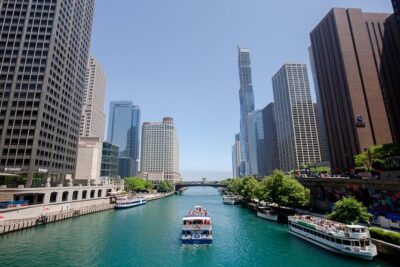
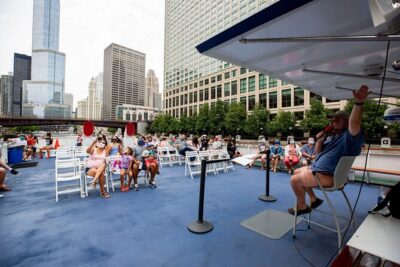
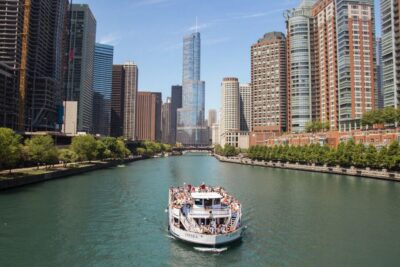
Chicago River: 1.5-Hour Guided Architecture Cruise
Read our review →
Chicago Architecture Center River Cruise aboard First Lady
Read our review →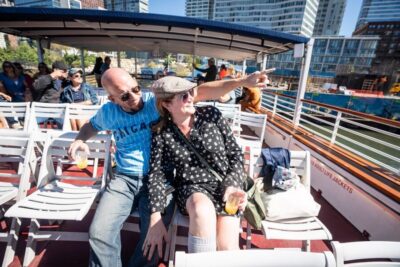
Chicago: Architecture River Cruise Skip-the-Ticket Line
Read our review →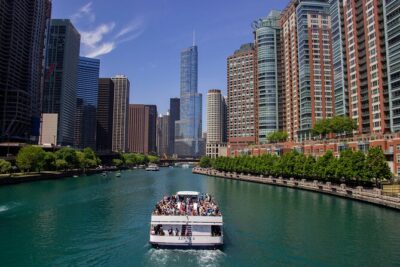
Chicago River 45-Minute Architecture Tour from Magnificent Mile
Read our review →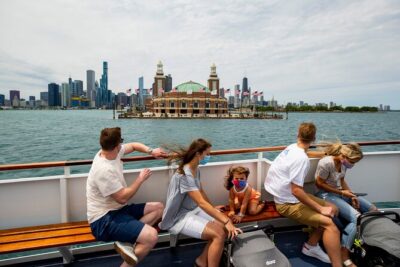
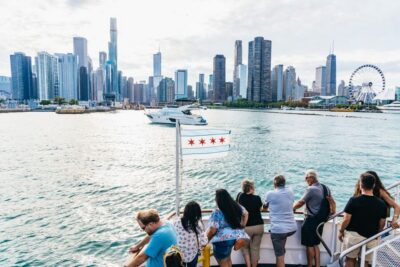
Chicago: 1.5-Hour Lake and River Architecture Cruise
Read our review →Browse the lists this tour appears in