
Review · CHICAGO
Magnificent Mile Tour With Optional 360 Chicago Upgrade
Chicago’s Magnificent Mile tour is really an architecture walk with a retail setting. In about two hours, you move from Millennium Park and the Chicago River to Michigan Avenue, hearing how Chicago’s buildings changed from Beaux Arts and Art Deco to later modern styles. Add the 360 Chicago option, and you finish high above the city with time to stay as long as you like.
I like the way this tour connects famous buildings with the people and business decisions behind them, rather than treating Michigan Avenue as one long shopping strip. I also like the compact route, lively guides such as Ben and Chris, and the chance to add a major observation deck without arranging a separate visit. The main caution is simple: the Bean is not included, and this is a brisk architecture tour, not a broad survey of every downtown sight.
Key things to know before you book
- The walk starts at Millennium Park: Meet at the Federal Building Columns on East Randolph Street at 10:00 a.m.
- The route covers several architectural eras: Expect Beaux Arts, Art Deco, Chicago School influences, and later modernist design.
- The Magnificent Mile is the main event: You pass the Tribune Tower, Wrigley Building, world’s largest Starbucks retailer, Burberry, Cartier, and more.
- The group is limited to 20 people: That is small enough for questions without making the walk feel private.
- The 360 Chicago option ends the tour well: The observation deck sits 1,030 feet above Michigan Avenue, and the visit is self-guided.
- Plan for city walking: The experience runs about two hours, with free admission at the outdoor stops and English commentary throughout.
Why this Chicago walk works
The clever part of this experience is its route. You do not spend two hours planted in front of one monument while a guide recites dates. You walk through the center of Chicago, moving between parks, river views, office towers, department-store façades, and luxury storefronts.
That movement matters. Chicago’s architecture is easiest to understand when you see it in relation to the street around it. A grand early skyscraper, an Art Deco façade, and a polished modern tower can appear within a short walk. The guide helps you connect those styles to the city’s growth and to the commercial power of Michigan Avenue.
The guide also gives the walk its personality. Ben is described as energetic, humorous, and especially good at turning architectural facts into stories about pioneers and businesspeople. Chris is also singled out for keeping the presentation interesting. The exact guide on your departure can vary, but the format gives you a real person to question rather than an audio recording to follow.
The pace is fairly quick. You cover a lot of ground in 120 minutes, which is good for a first look but leaves little time for long photo stops, shopping, or lingering inside buildings. Wear comfortable shoes and think of this as a city orientation with a strong architecture focus.
Other buildings people go to see in Chicago:
- Chicago Architecture River Cruise
★ 5.0 · 15,756 reviews - Chicago River 90-Minute Architecture Tour
★ 4.5 · 9,629 reviews - Chicago River: 1.5-Hour Guided Architecture Cruise
★ 4.8 · 8,046 reviews
Starting among the columns at Millennium Park
The meeting point is the Federal Building Columns on East Randolph Service Street, near Millennium Park. The tour begins at 10:00 a.m., a useful time for seeing the downtown core before your day gets crowded with other plans.
Here, the guide introduces the history of Chicago’s lakefront and places the city’s center in context. You also get a glimpse of the Chicago Cultural Center, whose Italian Renaissance style gives the opening section a formal, old-world feel.
This first stop lasts about 20 minutes and costs nothing beyond the tour itself. It is a smart starting point because you begin with civic Chicago, then move toward the commercial heart of Michigan Avenue.
One important point: Millennium Park does not mean a stop at Cloud Gate, the Bean. The Bean is not part of this experience. If seeing it is a priority, plan a separate visit before or after the walk. That distinction matters because the tour’s focus is architecture and the Magnificent Mile, not every famous attraction around the park.
Reading Chicago from the Riverwalk
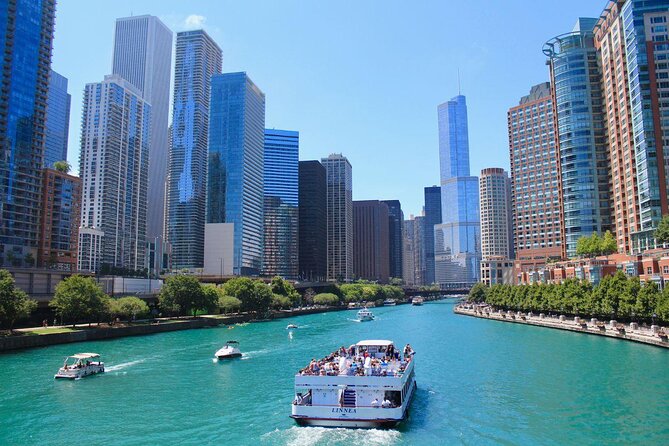
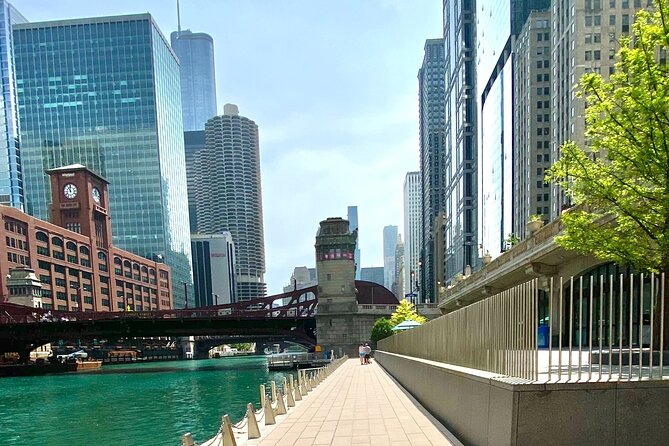
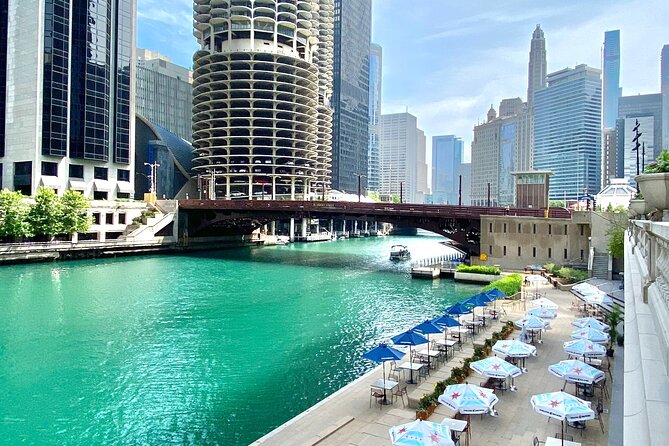
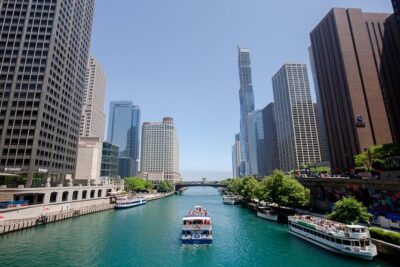
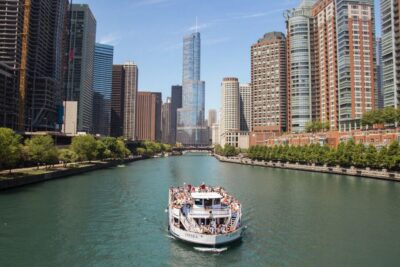
The next section takes you to the Chicago Riverwalk for about 20 minutes. From the water, you can admire three notable Chicago buildings associated with the 1920s and look at how Beaux Arts and Art Deco ideas appear in the downtown skyline.
This is one of the strongest parts of the route for people who like buildings but do not always know what they are seeing. The river gives you a clean angle on the façades, and the guide explains the effect of the Chicago School of Architecture. You are not simply shown a row of handsome buildings. You learn why Chicago became such an important place for new approaches to tall commercial structures.
The Riverwalk also provides a change of pace. After the civic setting of Millennium Park, the water brings the city’s vertical architecture into view. You will want to keep your camera ready, but listen closely too. The guide’s explanation is what turns a pleasant walk by the river into a useful lesson in urban design.
The stop is outdoors, so conditions can shape the experience. The supplied details do not promise indoor alternatives, and the tour is built around walking between sites. Check the forecast, bring suitable clothing, and leave room in your schedule for the route’s steady pace.
The Magnificent Mile, from Starbucks to Art Deco
The longest portion of the tour, about 50 minutes, unfolds along the Magnificent Mile. This is where the experience earns its name. Michigan Avenue combines high-end retail, major landmarks, grand hotels and commercial buildings, creating a street that feels polished but still distinctly Chicago.
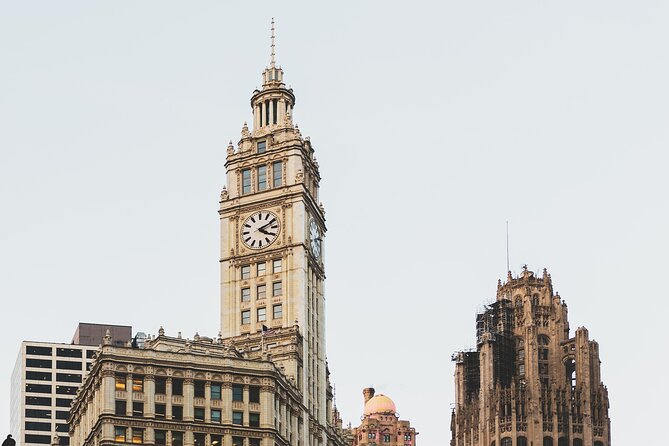
You pass the Tribune Tower and the Wrigley Building, two of the area’s best-known architectural landmarks. The guide also points out the world’s largest Starbucks retailer, Burberry’s unusual façade, and the only Harry Potter themed store in the United States outside Orlando.
These commercial stops are not random shopping references. They show how Michigan Avenue keeps changing while its older buildings remain part of the street’s identity. A luxury storefront can sit beside an ornate tower, while a newer retail concept takes over a historic-looking corridor. That mix gives the walk its character.
You will also see several design periods, from Art Deco through late modernist work. For me, that is more useful than a simple checklist of famous addresses. You begin to notice how decoration, geometry, materials, and scale shift from one building to the next.
The retail stops are mainly for viewing from the street. Do not book this expecting a shopping excursion or time inside every store. The value is in seeing how commerce shapes the avenue and how the buildings frame that commercial life.
The guide’s delivery matters here because there is a lot to absorb. Ben is known for making a large amount of information approachable, using humor and stories instead of a dry list of architectural terms. That style suits the street, where the sights come one after another and the group must keep moving.
Same city, a completely different century:
- Chicago Architecture Center River Cruise aboard First Lady
★ 5.0 · 5,536 reviews - Chicago: Architecture River Cruise Skip-the-Ticket Line
★ 4.8 · 4,325 reviews - Chicago River 45-Minute Architecture Tour from Magnificent Mile
★ 4.5 · 2,924 reviews - Chicago Lake and River Architecture Tour
★ 4.5 · 2,308 reviews
From everyday commerce to Cartier
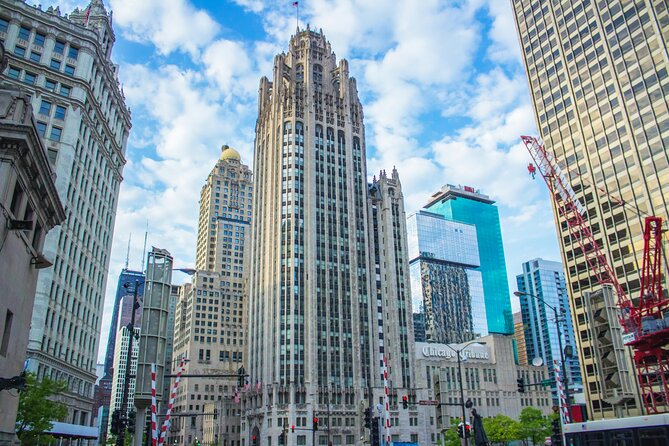
The walk continues around the Chicago River for another 20 minutes, showing how everyday commercial retail and high-end brands share the same downtown setting.
You pass storefronts associated with St. Laurent and Cartier, along with the Esquire Theater. This section gives the tour a different flavor from the earlier architecture stops. Here, the story is not only about towers and civic design. It is also about prestige, branding, entertainment, and the way Michigan Avenue sells an image of Chicago to the world.
That contrast is useful. A street can be famous for its architecture while also functioning as a shopping corridor, business address, and social stage. The tour makes those layers visible without requiring you to spend money in the stores.
The guide also helps you understand the relationship between the buildings and the businesses that occupy them. This is where the tour’s human stories can make a difference. Instead of treating the avenue as a static museum, you get a sense of the businesspeople and commercial forces that shaped it.
Finishing 1,030 feet above Michigan Avenue
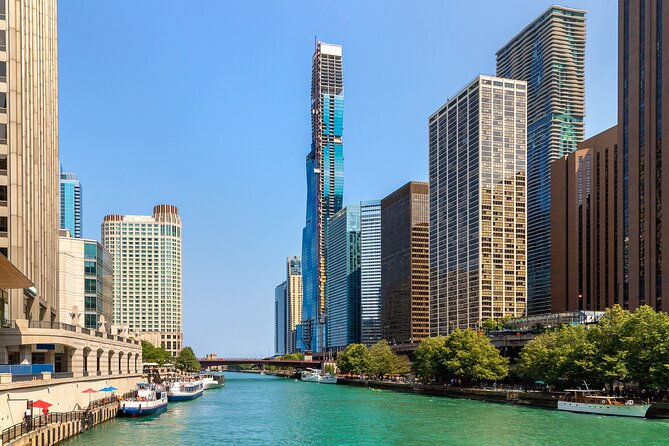
If you choose the upgrade, the walking tour ends at 360 Chicago, at 875 North Michigan Avenue on the 94th floor. The observation deck rises 1,030 feet above the city, giving you broad views toward the Magnificent Mile, Lake Michigan, and the surrounding downtown area.
This is a self-guided visit, so you are not rushed out when the walking commentary ends. You can stay as long as you like, which is a real advantage. The tour’s walking portion has a fixed rhythm, but the observation deck lets you slow down, take photographs, and look at the city on your own terms.
The optional upgrade changes the value equation. On the basic tour, you get a two-hour guided walk through a concentrated part of downtown. With 360 Chicago added, you finish with a major skyline view without having to arrange a separate attraction at a different time.
TILT is not included. You can purchase that thrill ride on-site if you want it, but it is an extra decision and extra cost. If your main goal is the view, the observation deck itself is the important addition. If you enjoy rides that tilt you outward over the city, you have the option to add that later.
Keep the ending in mind when planning your day. The tour does not return to Millennium Park. You finish at 360 Chicago, so it is convenient to continue exploring Michigan Avenue afterward, but less useful if you need to be back near the starting point.
Is $39 a fair price?
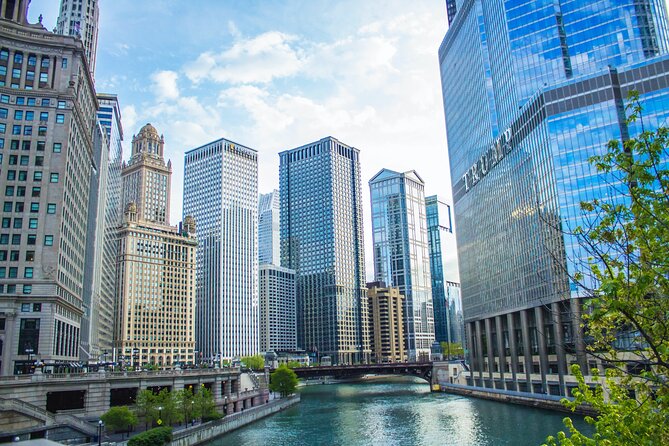
The listed price is $39 per person for the walking experience. At that rate, you are paying for a professional local guide, a two-hour route, and a focused introduction to several important parts of central Chicago. The outdoor stops themselves do not require admission fees, so the main value comes from the guide’s interpretation and the efficient route.
I consider that fair for someone who wants structure and context. You could walk Michigan Avenue on your own, but you would likely miss the connections between the Chicago School, Art Deco, later modernism, and the businesses that shaped the avenue. You would also need to research the buildings in advance or stop repeatedly to read about them.
The optional 360 Chicago ticket can make the package more useful, especially if you already want a city view. The supplied information does not give the upgrade price, so compare the total cost with buying a separate observation deck ticket. The convenience of ending there is part of the value, but you should still check the final price before booking.
A group maximum of 20 is another positive. It is not a private tour, yet it is small enough for the guide to answer questions and keep the group together. Guides such as Ben have been praised for being responsive, engaging, and willing to offer suggestions for the rest of your Chicago visit.
Who will enjoy this experience most?
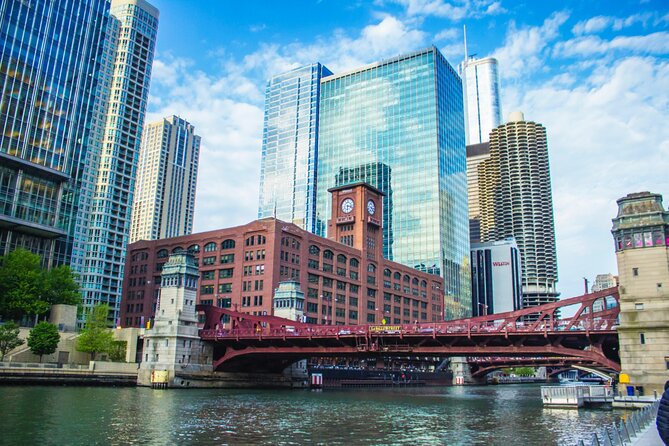
This tour suits you if you want a strong first look at downtown Chicago and prefer learning while walking. It is especially good for:
- First-time visitors who want a clear introduction to Michigan Avenue
- Architecture fans who want more than landmark names
- Shoppers who want context for the stores and façades along the Magnificent Mile
- People who like guides with humor and a lively presentation
- Anyone who wants to pair a walking tour with 360 Chicago
- Locals looking for a short, structured look at familiar streets
It is less suitable if your priority is the Bean, extended shopping time, museum entry, or a slow photography walk. It is also not the right choice if you want a full architectural survey of all Chicago. The route is concentrated around Millennium Park, the river, Michigan Avenue, Rush Street, and the 360 Chicago finish.
Most people can take part, and service animals are allowed. The tour is near public transportation, which helps with reaching the starting point and leaving from the observation deck. Still, you should be ready to walk outdoors for the full route and manage the pace of a group.
Practical timing and cancellation advice
The tour begins at 10:00 a.m. and lasts about two hours before the optional observation deck visit. Since the 360 Chicago portion is self-guided, you can remain there as long as you wish after the walking portion ends.
Confirmation arrives when you book, and a mobile ticket is provided. The experience is offered in English. It is often booked well ahead, with an average booking time of 22 days in advance, so reserve early if your Chicago dates are fixed.
You can cancel for a full refund up to 24 hours before the start time. Cancellations or changes made less than 24 hours before the tour are not accepted for a refund. The cut-off follows local Chicago time.
Should you book the Magnificent Mile tour?
Book it if you want a compact, guide-led introduction to Chicago architecture with a practical route through the city’s commercial center. The best parts are the mix of architecture and business history, the energetic presentation associated with guides such as Ben and Chris, the small maximum group size, and the optional finish at 360 Chicago.
Skip it if you mainly want the Bean, long shopping stops, or entry into multiple buildings. For the right traveler, $39 buys more than a walk down a famous street. It gives you a framework for understanding why Michigan Avenue looks the way it does, then lets you see that street from 1,030 feet above it if you choose the upgrade.
FAQ
Where does the tour begin?
It begins at the Federal Building Columns on East Randolph Service Street in Chicago, near Millennium Park.
What time does the tour start?
The tour starts at 10:00 a.m.
How long does the walking tour last?
The full experience takes about two hours, not counting the time you choose to spend at 360 Chicago.
Is the Bean included?
No. The Bean is not a stop on this tour. The focus is Chicago architecture and the Magnificent Mile.
What does the 360 Chicago upgrade include?
The upgrade includes admission to the 360 Chicago observation deck on the 94th floor, 1,030 feet above Michigan Avenue. The visit is self-guided, and you may stay as long as you like.
Is TILT included with the 360 Chicago ticket?
No. TILT is not included, but you can purchase that upgrade on-site.
How many people can join the tour?
The tour has a maximum group size of 20 people.
Can I cancel for a refund?
Yes. You can cancel at least 24 hours before the start time for a full refund. Changes or cancellations made less than 24 hours before the experience are not accepted.
Just added around Chicago
- Private Chicago Architecture Tour★ 5.0 · 5 reviews
- Private Frank Lloyd Wright Architectural Tour by Luxury Vehicle★ 3.5 · 7 reviews
- Chicago Luxury Minibus City Tour and Architecture River Cruise★ 4.5 · 8 reviews
- Private Chicago Architecture Walking Tour★ 5.0 · 6 reviews
- Chicago History and Architecture Walking Tour with Boat Cruise★ 4.5 · 10 reviews
- Small Group History And Architecture Walking Tour of Chicago★ 4.5 · 8 reviews
- Chicago: Evolution of the Skyscraper Walking Tour★ 4.9 · 10 reviews
- Chicago’s Modern Skyscrapers Guided Walking Tour★ 5.0 · 6 reviews
Chicago Architecture Tours, compared.
Chicago River: 1.5-Hour Guided Architecture Cruise
Read our review →
Chicago Architecture Center River Cruise aboard First Lady
Read our review →
Chicago: Architecture River Cruise Skip-the-Ticket Line
Read our review →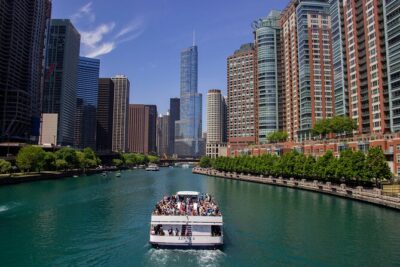
Chicago River 45-Minute Architecture Tour from Magnificent Mile
Read our review →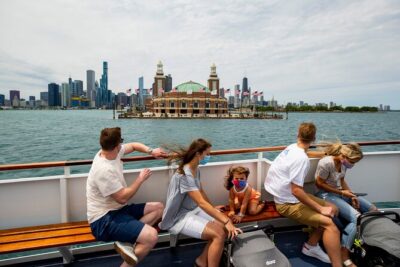
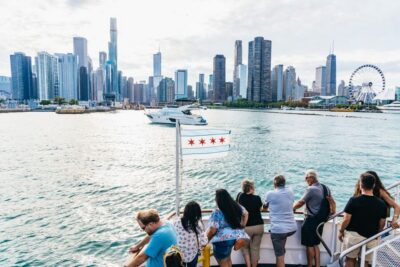
Chicago: 1.5-Hour Lake and River Architecture Cruise
Read our review →Browse the lists this tour appears in