
Review · CHICAGO
Chicago Architecture Center River Cruise aboard First Lady
Chicago’s skyline makes the most sense from the river. From the deck of Chicago’s First Lady, towers rise directly above you, bridges slide overhead, and the city’s building history unfolds in a compact 90-minute cruise. It is a smart way to see major sights without burning your legs on city blocks.
I like the Chicago Architecture Center docents, who explain not just what a building is called, but why it was designed that way and how it changed the city. I also like the choice of open-air and enclosed seating, plus the onboard bar, restroom, and warm lower salon when Chicago’s weather turns sharp.
The main drawback is the fixed nature of the booking. Tickets cannot be refunded or transferred, and seating is general admission, so you need to arrive about 30 minutes early for a good choice of seats. The cruise also runs in all weather, which makes a hat, sunglasses, and an extra layer sensible.
Key points to know before you book
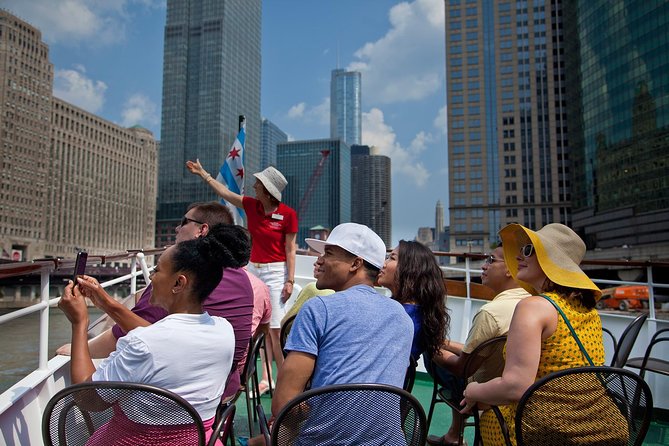
- The river is the real sightseeing platform: You get close views of Marina City, Willis Tower, Navy Pier, and several major modern buildings.
- Docent-led rather than canned commentary: Guides such as Cynthia, Laura, Amy, Russell, Mark, and Nick have been praised for clear, lively presentations, though your guide will vary.
- Plan for 90 minutes: The route gives you a broad introduction to Chicago without taking up half a day.
- Seating is first come, first served: Printed seat numbers do not assign you a place.
- The lower salon is climate controlled: You can stay comfortable in rain or cold, though the open deck offers the best photographs.
- Arrive early and leave luggage behind: There is no luggage storage at the dock or on the boat, and the dock has no elevator access.
Why this river cruise is such a good Chicago introduction
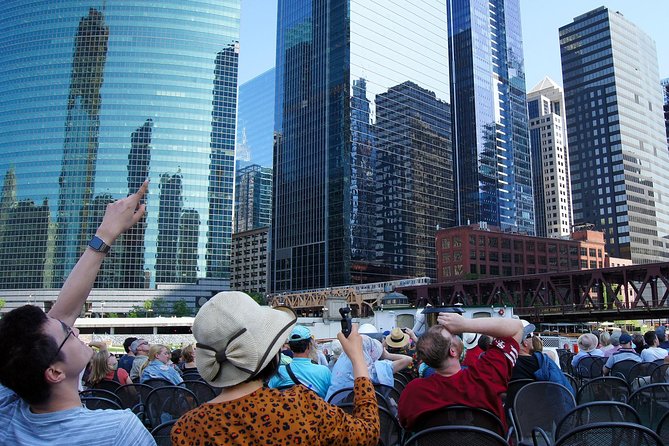
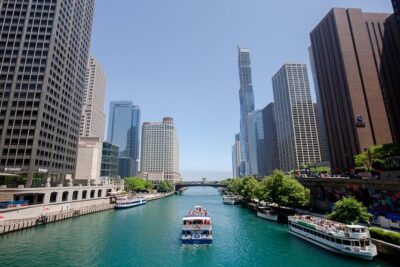
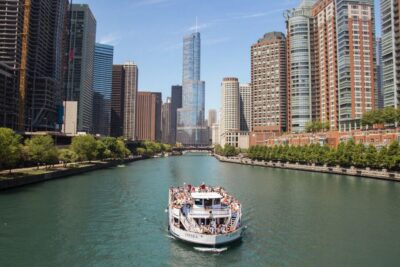
Chicago’s architecture is easier to understand when you see the buildings in relation to one another. On foot, a tall tower can seem like an isolated object. From the river, you watch the skyline change as the boat moves, and the guide can point out how older warehouses, Art Deco towers, Modernist offices, and newer glass buildings share one narrow corridor.
That context is the heart of this experience. The tour is not simply a boat ride with a few building names thrown in. The docent explains Chicago’s growth, the river’s role in industry and transport, and the way riverfront construction has shifted from working port to public attraction.
The cruise is also efficient. At $57 per person, it is not a cheap way to get from one part of downtown to another. You are paying for the trained guide, the boat, the route, and the chance to see a large section of central Chicago in a short time. For a first visit, that package offers good value, especially if you use the cruise to plan the rest of your sightseeing.
I would schedule it near the beginning of your stay. The information gives you a better sense of direction, and later, when you walk around downtown, you can recognize buildings and connect them to the stories you heard on the river.
More architecture boat tours in Chicago:
- Chicago Architecture River Cruise
★ 5.0 · 15,756 reviews - Chicago River: 1.5-Hour Guided Architecture Cruise
★ 4.8 · 8,046 reviews - Chicago: Architecture River Cruise Skip-the-Ticket Line
★ 4.8 · 4,325 reviews
Getting to the dock at 112 East Wacker Drive
The cruise leaves from the Chicago Riverwalk, near the northeast corner of Michigan Avenue and Wacker Drive. The entrance is at street level, and the dock is about three blocks north of Millennium Park and close to the Magnificent Mile.
Allow more time than the simple downtown address suggests. Wacker Drive has multiple levels, and the Riverwalk entrance is not the same as walking along the upper roadway. The ticket office is at the Riverwalk level. Arriving 30 minutes before departure gives you time to find the right entrance, collect any required boarding material, and join the line without watching the clock.
The dock has no elevator access. That matters if you have mobility concerns, a large stroller, or heavy bags. Strollers can be brought aboard, but children must be removed during boarding, and the stroller is folded and stored in the salon.
Do not bring luggage. There is no storage area on the dock or boat, so leave suitcases at your hotel. Service animals are allowed, but pets are not.
Boarding Chicago’s First Lady
All seating is general admission. If your ticket displays a seat number, ignore it, since seats are not assigned. Boarding is first come, first served, so an early arrival gives you more control over where you sit.
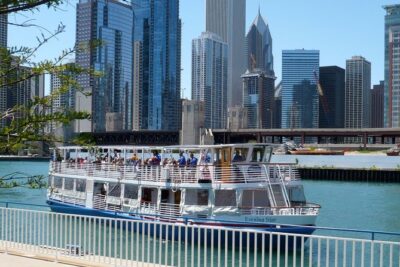
The boat has an open upper deck and an enclosed lower salon with climate control and large windows. The upper deck is the better place for unobstructed photographs and a full sense of the buildings rising around the river. The lower level is the practical choice in rain, wind, or cold.
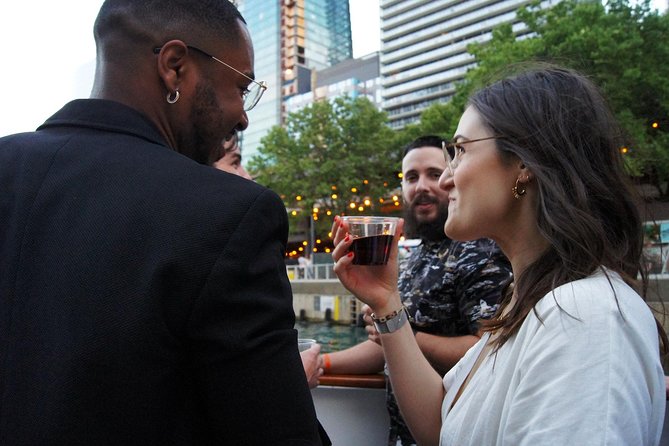
There is a restroom onboard, though it closes 15 minutes before the end of the cruise for safety reasons. A full bar sells drinks and light snacks, including the hot chocolate that has been singled out as a welcome treat on colder departures.
The boat can carry up to 250 people. That is large enough to create a proper sightseeing atmosphere, but not so large that the guide is addressing an enormous vessel from far away. Specific boats, routes, and schedules can change, so do not build a tight connection around the exact timing.
Chicago River: the city’s moving front door
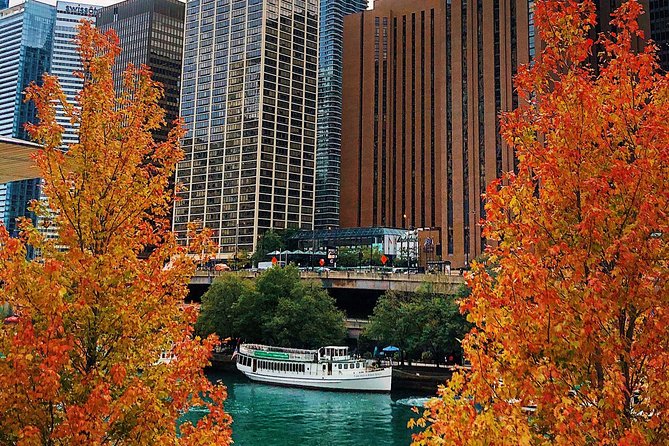
The first major subject is the river itself. Chicago’s river has passed through several lives: industry, shipping, transportation, public works, cleanup, and recreation. The boat gives you a practical view of that change because the waterway is still bordered by buildings with very different jobs and ages.
Your guide uses the river to explain how Chicago grew into a major commercial city. Bridges, warehouses, offices, and towers are not random pieces of scenery. They reflect changing needs and changing ideas about what downtown should be.
This opening section gives the cruise its shape. You are not just looking upward at facades. You are learning why the river mattered, why development gathered around it, and why the water is now one of the city’s best public viewpoints.
A few more architecture tours around Chicago worth a look
- Chicago River 90-Minute Architecture Tour
★ 4.5 · 9,629 reviews - Chicago River 45-Minute Architecture Tour from Magnificent Mile
★ 4.5 · 2,924 reviews - Chicago Lake and River Architecture Tour
★ 4.5 · 2,308 reviews - Chicago: 45-Minute Family-Friendly Architecture River Cruise
★ 4.7 · 2,304 reviews
Navy Pier and Chicago’s habit of reuse
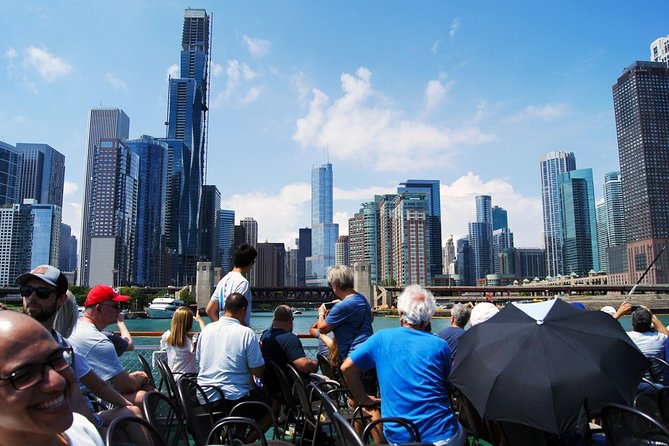
Navy Pier appears as a large reminder that city spaces can change purpose. It has served as a naval base, university campus, shipping center, and entertainment destination.
Seen from the water, the pier also helps you understand Chicago’s relationship with the lakefront. It is not part of the close-in river corridor in the same way as the office towers, but it connects the river story to the city’s wider waterfront.
The guide’s treatment of Navy Pier is useful because it frames the place as more than a tourist attraction. Its changing roles show how Chicago has adapted older infrastructure instead of treating every historic structure as fixed in time.
Marina City: the twin towers that changed the riverfront
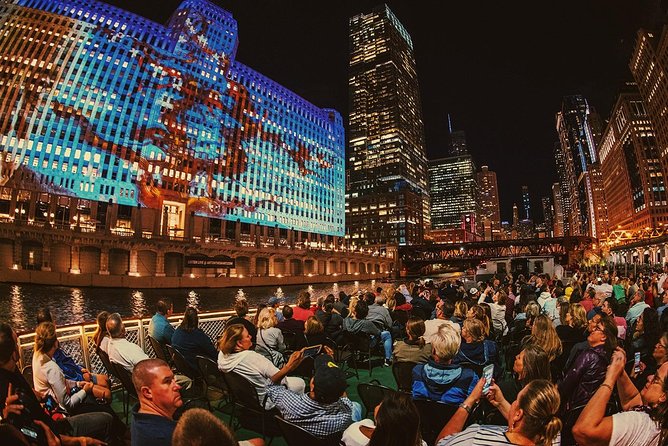
Marina City is one of the cruise’s most memorable sights. Bertrand Goldberg designed the rounded towers as an urban experiment meant to draw middle-class Chicagoans back toward the center of the city after years of suburban migration.
From the river, the distinctive forms are especially easy to read. Their shape is not a minor decorative choice. It reflects a serious attempt to create a mixed urban community with housing and daily life close to downtown work.
This is where the docent-led format pays off. A quick sightseeing boat might point to the towers and move on. Here, you get the social and planning idea behind them. That extra layer makes Marina City easier to remember when you see it again from street level.
Trump Tower and the buildings in conversation
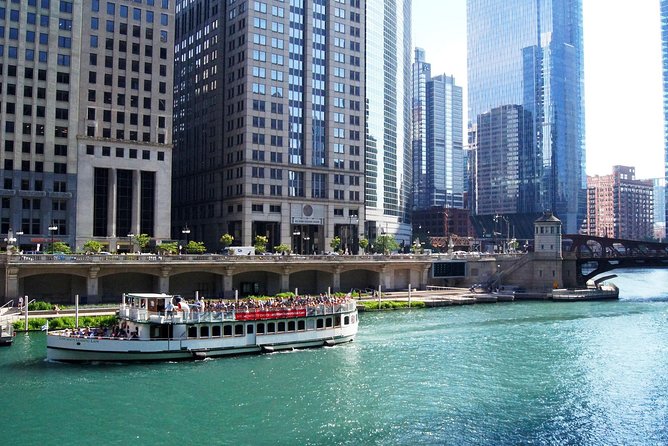
The Trump International Hotel & Tower provides a chance to consider how a newer building responds to its neighbors. The guide explains that reflecting its surroundings involves more than a shiny glass and steel exterior.
That idea returns throughout the cruise. Buildings are described in relation to the river, the street wall, nearby towers, and the city’s earlier architectural choices. You get a better sense of Chicago as a continuing argument between old and new design.
The name of a building may be familiar, but the useful part is understanding its place in the group. From the boat, you can compare materials, height, setbacks, and shapes without crossing busy streets every few minutes.
Modernism at the river: Mies van der Rohe
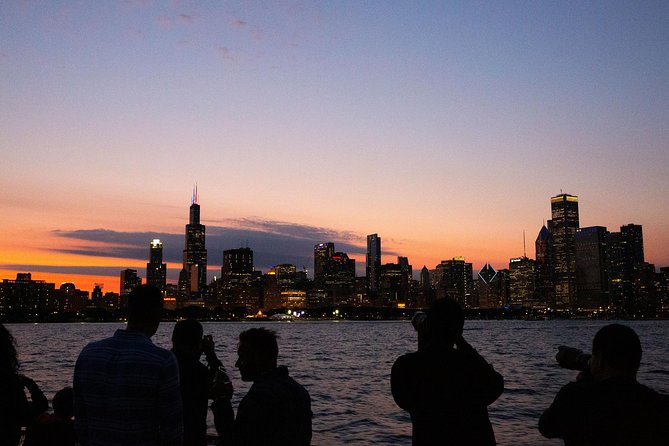
One of the last American projects designed by Ludwig Mies van der Rohe occupies a prominent position along the river. Its powerful Modernist character gives the guide a clear opening to discuss restraint, structure, and the visual effect of steel and glass.
Mies is central to Chicago’s architectural identity, and this stop gives you more than a name to add to a list. You see how a building’s proportions and location affect the river corridor. The boat’s slow movement lets you consider the structure from changing angles, something you cannot get from one sidewalk viewpoint.
The exact route and vessel may change, but the Modernist portion is one of the reasons architecture enthusiasts choose this cruise over a standard sightseeing ride.
150 North Riverside and the engineering show
150 North Riverside is one of the riverfront buildings that makes you look twice. Its narrow base and broad upper form create the impression that the tower is balancing above the ground.
The guide connects the visual trick to engineering. This is a good example of the tour’s wider appeal: you do not need to know architectural terminology to appreciate the building, but you get enough explanation to understand why its form is unusual.
The river provides the ideal viewing angle. From street level, the lower structure can be difficult to read. From the water, the building’s relationship to its base becomes much clearer.
The cruise also passes the Boeing International Headquarters at 100 North Riverside Plaza. Together, these stops show how the riverfront has become a setting for bold corporate architecture rather than only older commercial buildings.
Willis Tower and the scale of Chicago
Willis Tower, formerly known as the Sears Tower, held the title of the world’s tallest building for almost 25 years. Its scale is difficult to grasp from a single street corner, but the river offers a broader angle.
The guide places the tower in the story of Chicago’s competition, ambition, and engineering. You get a useful reminder that the city’s skyline was not built all at once. Each period had its own idea of what height, office space, and prestige should look like.
This is one of the moments when the cruise saves you time. You can see Willis Tower along with several other major structures in one continuous route, rather than arranging separate walks around downtown.
The former Marshall Field’s wholesale warehouse
Size mattered in the Midwest, and the building completed in 1930 was once the largest building in the world. It served as Marshall Field’s wholesale warehouse, where retailers could buy stock.
That purpose gives the structure a different place in the city’s story. It was not built as a glamorous skyscraper for public display. It was a giant working facility tied to commerce and distribution.
The stop helps widen the tour beyond famous towers. Chicago architecture is not only about record-breaking height or dramatic silhouettes. Large warehouses and commercial buildings also reveal how the city earned its living.
The Chicago Mercantile Exchange and Tribune Freedom Center
The cruise includes a view of the Chicago Mercantile Exchange Building at 20 South Wacker Drive. Its presence connects the riverfront to Chicago’s role in finance and trade.
The Chicago Tribune Freedom Center adds another working-city chapter. Together, these buildings help show that the river corridor is still connected to news, business, markets, and production, not just hotels and attractions.
The route covers many names, so do not expect to remember every detail. I suggest choosing a few buildings that interest you and writing down their names after the tour. The cruise is best used as a broad introduction, not as a substitute for a full architectural study.
Weather, photography, and comfort aboard
Chicago weather can change the feel of the outing. The boat runs in rain or shine, and the river can be shaded by tall buildings even when the day is bright. In colder weather, bring a warm layer because you may want to spend time outside for photographs.
Sunglasses, a cap, or a visor are useful because the sun can interfere with your view of the upper floors. The open deck gives the cleanest sightlines, but glass reflections and bright light can affect pictures from the lower salon.
The enclosed level is not a poor second choice. Large windows keep you connected to the scenery, and climate control makes it the sensible refuge during uncomfortable conditions. The onboard bar adds a relaxed option, particularly on evening departures or chilly days.
Who will get the most from this cruise
I recommend the cruise to first-time visitors, architecture fans, couples, friends, and families with older children. The material is substantial enough for adults, while the changing skyline and boat movement keep the experience from feeling like a classroom.
It is not recommended for children younger than 12. Children must be accompanied by an adult, and the 90-minute presentation is more suited to young people who can follow a sustained explanation.
This is also a good choice for a short Chicago stay. If you have only a day or two, the cruise covers a wide section of the central city quickly. It is less useful if you want a leisurely, highly personal tour of only a few buildings, since the boat keeps moving and the group is large.
Should you book Chicago’s First Lady?
Book it if you want an efficient, well-explained introduction to Chicago’s architecture and riverfront. The best parts are the docent commentary, the close water-level views, and the way the guide connects individual buildings to the city’s growth.
The $57 price is fair if you value interpretation rather than simply transportation or scenery. You are paying for a focused architectural lesson with excellent views, not just a ride on the river.
Skip it if you dislike fixed schedules, cannot manage stairs to the dock, need luggage storage, or want a fully flexible booking. Also think carefully about the no-refund, no-transfer rule before purchasing.
For most visitors, I would schedule this early in a Chicago trip, arrive 30 minutes ahead, dress for the weather, and aim for a spot with a clear view. It is one of the fastest ways to understand why Chicago’s skyline looks the way it does.
FAQ
Where does the Chicago Architecture Center River Cruise depart?
It departs from the Chicago Riverwalk at 112 East Wacker Drive. The Riverwalk entrance is near the northeast corner of Michigan Avenue and Wacker Drive, close to Millennium Park and the Magnificent Mile.
How early should I arrive?
Arrive 30 minutes before departure. Allow extra time during summer, when the area can be busy and boarding may take longer.
Is seating assigned?
No. Seating is general admission and boarding is first come, first served. Seat numbers printed on tickets are not valid for assigning places.
What happens if it rains?
The cruise operates in all weather. The boat has an open-air upper deck and an enclosed, climate-controlled lower salon with large windows.
Can I buy food or drinks onboard?
Yes. A full bar is available, and drinks and light snacks can be purchased during the cruise.
Can I bring luggage or a pet?
No luggage can be brought aboard, and there is no luggage storage at the dock. Pets are not allowed, though service animals are permitted.
Is the cruise accessible by elevator?
There is no elevator access to the boat dock. Strollers may be brought onboard, but children must be removed during boarding and the stroller must be folded and stored in the salon.
Just added around Chicago
- Private Chicago Architecture Tour★ 5.0 · 5 reviews
- Private Frank Lloyd Wright Architectural Tour by Luxury Vehicle★ 3.5 · 7 reviews
- Chicago Luxury Minibus City Tour and Architecture River Cruise★ 4.5 · 8 reviews
- Private Chicago Architecture Walking Tour★ 5.0 · 6 reviews
- Chicago History and Architecture Walking Tour with Boat Cruise★ 4.5 · 10 reviews
- Small Group History And Architecture Walking Tour of Chicago★ 4.5 · 8 reviews
- Chicago: Evolution of the Skyscraper Walking Tour★ 4.9 · 10 reviews
- Chicago’s Modern Skyscrapers Guided Walking Tour★ 5.0 · 6 reviews
Architecture River Cruises, compared.
Chicago River: 1.5-Hour Guided Architecture Cruise
Read our review →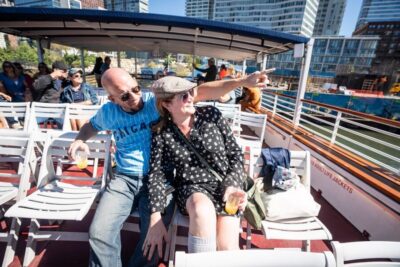
Chicago: Architecture River Cruise Skip-the-Ticket Line
Read our review →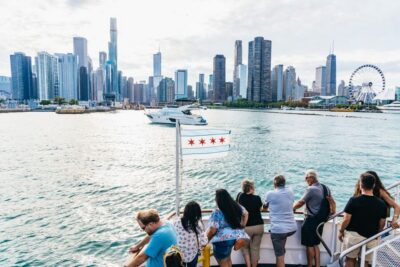
Chicago: 1.5-Hour Lake and River Architecture Cruise
Read our review →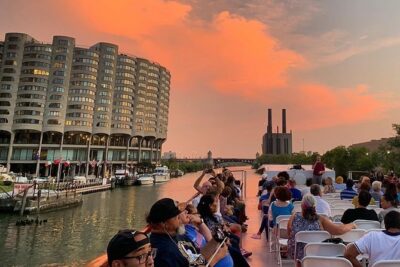
Chicago River 90-Minute Architecture Boat Tour
Read our review →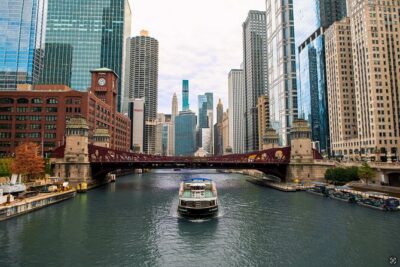
Chicago City Tour with Architecture River Cruise Option
Read our review →
Browse the lists this tour appears in