
Review · ITALY
Best of Bologna in one day : Food, architecture, art and history
Bologna reveals itself in layers: Romanesque churches, medieval towers, Europe’s oldest university, Renaissance art, hidden canals, and a food culture that needs no sales pitch. This seven-hour private tour ties those pieces together with a guide who knows how to explain the city rather than simply point at it.
I like the mix of major sights and quieter corners, especially the Anatomical Theatre, San Domenico’s art, and the brief look at the Canale delle Moline. I also like that the day ends with serious local food, including aged Parmigiano, culatello, traditional lasagna, and a short pasta-making lesson.
The main caution is pace. You cover a lot of ground, absorb a great deal of information, and spend much of the day on foot. Riccardo Bacchi is an art historian with an intense command of Bologna, so this suits curious, attentive people more than anyone seeking a light stroll with occasional commentary.
Key points to know before booking
- A private day with Riccardo Bacchi: Your group receives a focused introduction to Bologna rather than a standard large-group walk.
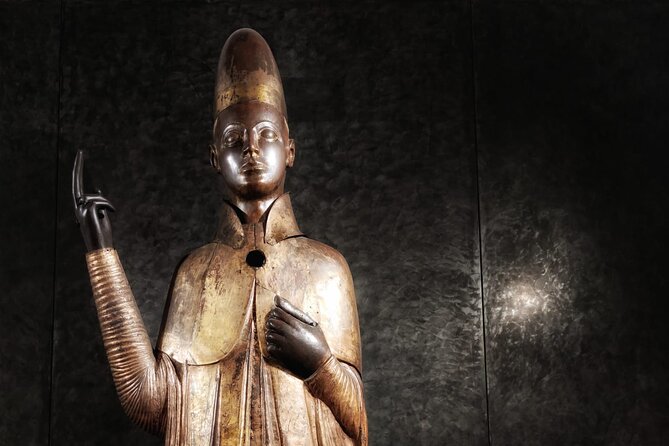
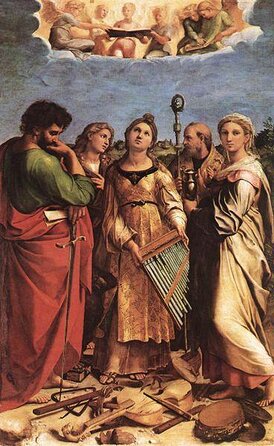
- Art from the Middle Ages to the Baroque: See work linked to Nicolò dell’Arca, Michelangelo, Raphael, Titian, Carracci, Guercino, and other major figures.
- The Archiginnasio is a highlight: Frescoes, the historic library, and the wooden Anatomical Theatre show how Bologna’s university shaped the city.
- The food stop is substantial: Expect several Emilia-Romagna specialties, not just a token tasting.
- The pace is brisk: Wear trainers or other comfortable walking shoes and be ready to listen.
- Best for first-time visitors with limited time: It gives you a broad cultural map of Bologna in one long day.
What this Bologna day is really trying to do
This is not a food tour with a few churches added on, and it is not a standard city walk with a gelato break. The experience connects architecture, painting, religion, university life, medieval commerce, and regional cooking.
That approach matters in Bologna. A church may look like one more Italian church until someone explains its political patrons, its unusual sculptures, or the student life that grew around it. A market may seem like a place to grab lunch until you see how it fits into the city’s medieval trade and Emilia-Romagna’s food traditions.
Riccardo’s style, based on the information available, is highly detailed and academic without losing its personal side. He has been praised for explaining difficult subjects clearly, pointing out small details, adjusting the tour to individual interests, and offering practical advice for the rest of a Bologna visit. If you enjoy art, medical history, architecture, religion, or medieval politics, you will have plenty to work with.
The tour begins at Bar Vittorio Emanuele beside Piazza Maggiore and returns there at the end. Because it is a private activity, only your group takes part. That makes it easier to ask questions and spend a little more time on subjects that catch your attention, though the packed schedule still requires steady movement.
A few more architecture tours around Italy worth a look
- Rione Sanità tour among baroque, revival, street art & food
★ 4.8 · 59 reviews - Rione Sanità Tour among Baroque, Revival, Street Art & Food
★ 5.0 · 48 reviews - Sorrento: Gothic-Baroque Art Tour & Free local Tasting
★ 5.0 · 16 reviews
Piazza Maggiore and the rooms of Palazzo Comunale
Piazza Maggiore is the right place to begin. This is Bologna’s civic heart, and the opening forty minutes set up the city’s political, religious, and artistic story.
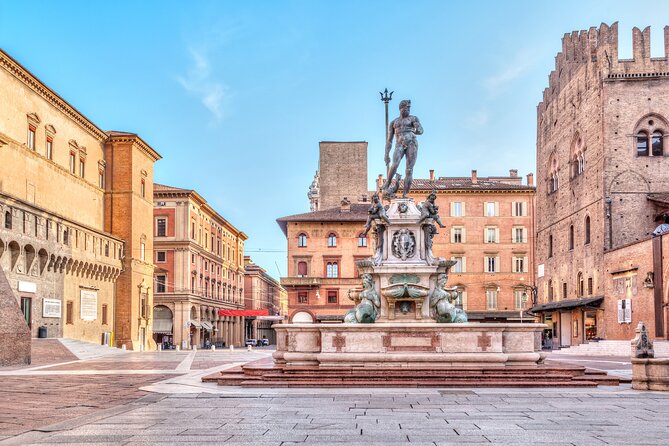
You see the Fountain of Neptune, San Petronio, Palazzo Comunale, and the terracotta sculpture associated with Nicolò dell’Arca. The square works best when you look beyond its scale and notice the competing messages around it: city government, church power, public sculpture, and the wealth of Bologna’s ruling families.
The tour also enters several frescoed rooms in Palazzo Comunale. A visit inside gives you more than an exterior view of the palace, with grand rooms, painted decoration, and Bramante’s horses staircase among the architectural details. This is one of the places where a guide adds real value, since the rooms can seem like a collection of decorated spaces without a clear explanation of their purpose.
Allow your attention to settle before racing on. The information begins early, and this is only the first stop.
Santo Stefano, Santa Maria della Vita, and terracotta drama
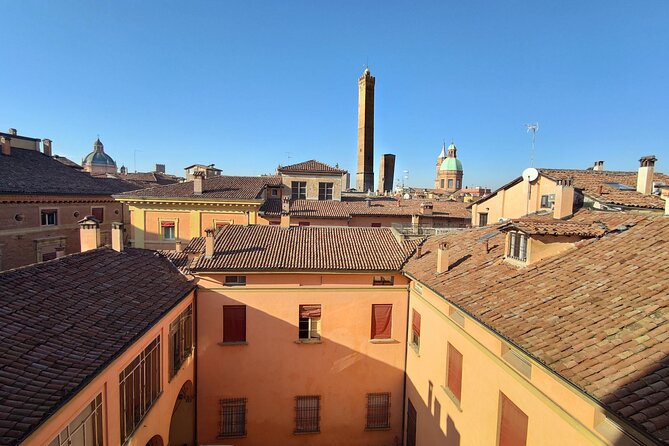
Piazza Santo Stefano receives about twenty minutes at this stage of the day. Its complex of early medieval and Romanesque buildings is unusual, with linked structures, Gothic additions, porticoes, stairways, frescoes, and a terrace offering views toward Bologna’s towers.
The stop is short for a place with so many layers. You will get an introduction rather than a full study of every building. That is useful for orientation, but if you have a strong interest in medieval architecture, you may want to return later at a slower pace.
Next comes Santa Maria della Vita, a Baroque church famous for Nicolò dell’Arca’s Lamentation. The work is a major Renaissance terracotta group, and it brings a human force to the tour after the broad civic spaces of Piazza Maggiore. The twenty-minute visit is focused, but the sculpture rewards close looking. Pay attention to the expressions, movement, and arrangement of the figures rather than treating the work as a quick photo stop.
Bologna’s university at the Archiginnasio
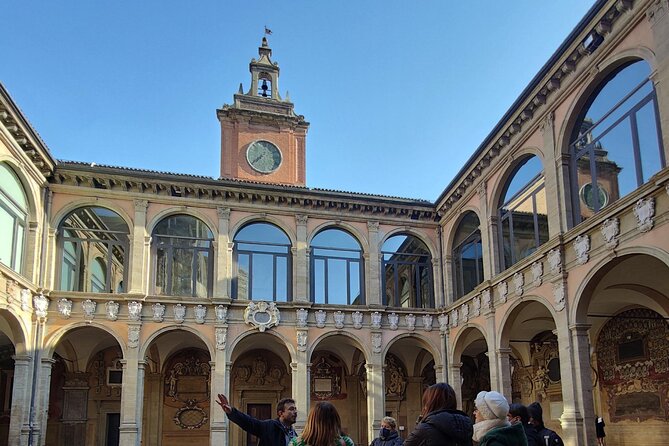
The Archiginnasio is one of the day’s strongest stops. This Renaissance and Baroque palace once housed the University of Bologna and preserves an extraordinary sense of academic life.
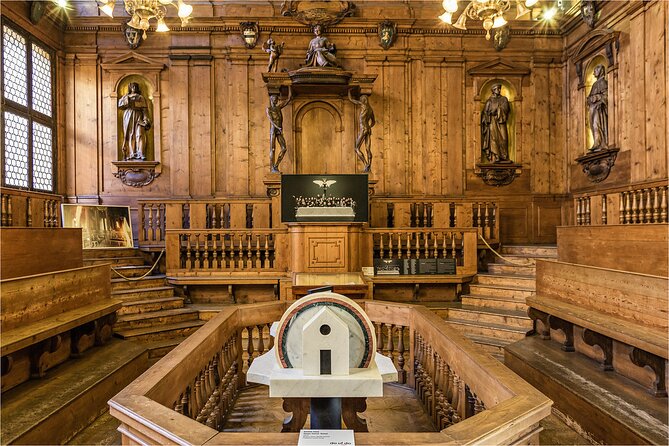
You see frescoed rooms, historic books, the old library, and the wooden Anatomical Theatre. The theatre is especially memorable because it links art, science, and the practical study of the human body. The building’s decoration also reveals how education was tied to status and patronage.
This stop lasts about twenty minutes, which is enough for a guided introduction but not enough to inspect every detail. Riccardo’s background in art and medical history is particularly useful here. If you enjoy the history of science, tell him early in the day. The tour can respond to personal interests, and the Anatomical Theatre may become one of your most rewarding stops.
Same city, a completely different century:
- Florence: Cathedral & Brunelleschi’s Dome Ticket & Audio App
★ 4.4 · 6,973 reviews - Florence: Brunelleschi’s Dome Climb Entry Ticket & Duomo
★ 4.5 · 3,815 reviews - Florence: Brunelleschi’s Dome Reserved Entry Ticket & Duomo
★ 4.6 · 2,216 reviews - Lecce: Baroque Architecture and Underground Walking Tour
★ 4.6 · 1,248 reviews
The Pinacoteca’s long sweep of Italian painting
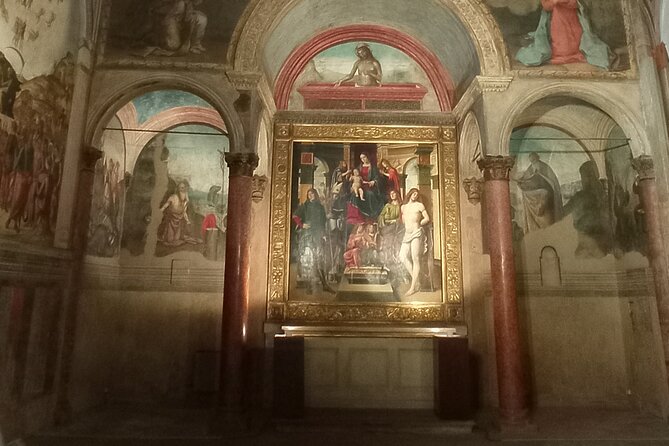
The National Art Gallery of Bologna receives forty minutes. Its collection covers artists and periods from Giotto to Raphael, Titian, Guido Reni, Parmigianino, the Carracci, Guercino, and other painters connected with Bologna and northern Italy.
A short museum visit can be frustrating if you expect a full gallery tour. Here, the benefit is selection. Riccardo can give you a framework for the paintings, explain the local school, and point out works that deserve your attention. You will not see everything in forty minutes, but you should leave with a clearer idea of Bologna’s place in Italian art.
This is also where the tour’s packed nature becomes clear. You move from civic architecture to medieval sculpture, university history, and a major painting collection before lunch. Take notes if you want to remember names, but do not try to record every detail. The day offers more material than most people can retain in one pass.
The Quadrilatero, where art gives way to food
The Quadrilatero is Bologna’s old market district, with historic stalls, shops, taverns, and food businesses woven into the city center. The forty-minute walk here changes the tone without breaking the tour’s central theme.
You see how Bologna’s food culture belongs to the city’s history, not just its restaurant scene. The stop is free, and it provides context before the more substantial tasting at Bruno e Franco, La Salumeria.
The food portion includes figs with Parma ham, culatello, salami, mortadella, pasta, Bolognese-style meatballs and peas, tagliatelle with ragù, three- to four-year Parmigiano Reggiano, traditional green lasagne Bolognesi, and Modena balsamic vinegar aged as long as twenty-four years. The selection is broad enough to function as a small meal, not merely a sample plate.
You may also encounter additional local specialties during the tasting. The useful point is that the food is tied to the region: cured meats, fresh pasta, aged cheese, ragù, and balsamic vinegar all show different forms of Emilia-Romagna cooking.
San Giacomo Maggiore and Santa Cecilia
The church of San Giacomo Maggiore receives about forty minutes. It is an important art stop, especially for the Bentivoglio Chapel, a major example of Emilian Renaissance patronage.
The nearby Oratory of Santa Cecilia adds frescoes and a connection with musical performance. Together, these spaces show how churches served as places of worship, family display, artistic competition, and music.
This part of the route suits people who want more than the most famous postcard views. It is also a good example of why a local guide can help. Bologna’s center is full of buildings that can be easy to pass without realizing what is inside.
A five-minute look at the Canale delle Moline
The Canale delle Moline receives only five minutes, so do not expect a long canal walk. Instead, treat it as a quick glimpse of another Bologna, one of medieval houses, towers, porticoes, palaces, staircases, frescoed rooms, oratories, and concealed waterways.
The stop is brief but useful. It reminds you that Bologna was shaped by water and trade as well as by churches and universities. If you want photographs, be ready when you arrive, since there is little time to linger.
San Domenico and the city’s artistic power
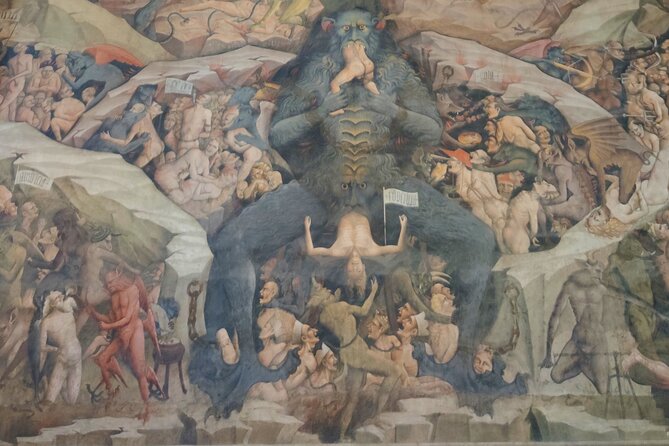
The Basilica of San Domenico is given forty minutes and is one of the most rewarding church visits on the route. Its art includes the Ark of Saint Dominic, associated with Nicola Pisano, Nicolò dell’Arca, and Michelangelo.
The basilica also contains an elaborate wooden choir linked with alchemical ideas, Mozart’s favored organ, and a Renaissance cloister. That combination makes the stop unusually broad. You move from sculpture to music, religious devotion, craft, and intellectual tradition in one setting.
The church is best approached slowly, but the itinerary keeps the visit moving. Listen for the details that interest you most, then mark the basilica as a place to revisit if you have another day in Bologna.
The Santo Stefano complex, seen again with more context
Later, the tour returns to the Basilica Santuario di Santo Stefano, this time for about forty minutes. It is listed separately from the earlier Piazza Santo Stefano visit because the square gives you the wider architectural setting, while the basilica visit focuses on the medieval and early medieval complex itself.
The buildings were created in the image of the Holy Sepulchre in Jerusalem, giving the site a religious purpose and visual logic that is easy to miss on a quick independent visit. This second look should make more sense after you have spent the day learning how Bologna’s churches, patrons, and medieval institutions fit together.
The repeated Santo Stefano area may feel slightly confusing in the schedule, but it is not wasted time. The two visits approach the place from different angles.
Tasting Emilia-Romagna and making pasta
The final food stop at Bruno e Franco lasts about an hour, followed by a thirty-minute pasta class. This is a welcome change after hours of art and architecture.
The tasting covers famous regional products and familiar Bologna dishes. You can expect cured meats, cheese, pasta, lasagna, ragù, and balsamic vinegar, with the chance to understand how ingredients differ in age, texture, and use. The meal is especially valuable if you have only a short stay and want a concentrated introduction to local cooking.
The pasta lesson focuses on egg pasta used for tagliatelle, tortellini, lasagna, balanzoni, tortelloni, and passatelli. It is a short class rather than a full culinary workshop, but it gives you a practical link to the food you have just eaten.
The experience ends back at the original meeting point. You should finish with a useful list of dishes and ingredients to seek out on your own.
Is $174.69 a fair price?
At $174.69 per person, this is not a budget walking tour. The value depends on how much you want from a single day.
You are paying for a private guide, about seven hours of focused sightseeing, admission to several named sites, an art museum visit, substantial food tastings, and a pasta lesson. You also receive the time-saving benefit of a planned route through places that can be easy to miss.
The price makes more sense for a couple, family, or small group that wants personal attention and has only one or two days in Bologna. Group discounts may improve the value if several people book together. If you prefer to explore at your own speed, eat independently, and read about art as you go, the cost may feel high.
The tour is booked on average about sixty days ahead, so planning early is sensible if your dates are fixed.
Who should book this experience?
I would choose this tour for a first visit, especially if you have only two days in Bologna and want a strong cultural foundation. It also suits anyone who likes connecting paintings and buildings to politics, religion, education, science, and food.
It is a particularly good match for:
- People who enjoy detailed art and history talks
- Visitors who want Bologna beyond the main square
- Food lovers who want regional specialties in one sitting
- Small private groups seeking flexibility
- Anyone interested in university, medical, or religious history
- People willing to walk at a brisk pace
I would think twice if you dislike long explanations, need frequent unscheduled breaks, or want a relaxed food crawl. Riccardo’s command of the subject is a major strength, but you need to listen actively. Several people have found the amount of information intense, which is useful warning rather than a fault.
Wear comfortable walking shoes. The route includes many stops, historic interiors, porticoes, churches, museum rooms, and city streets, and the pace does not leave much room for tired feet.
Practical details before you commit
The tour is offered in English and includes a mobile ticket. It begins at Bar Vittorio Emanuele, Piazza Maggiore 1, and ends at the same place.
Most people can take part, and service animals are allowed. The meeting point is near public transportation. Confirmation is provided when you book.
Free cancellation is available if you cancel at least twenty-four hours before the local start time. Cancellations or changes made later are not accepted for a refund.
Should you book the Best of Bologna in one day tour?
Book it if you want Bologna explained through its art, buildings, university, churches, markets, and food, all in one private day. Riccardo Bacchi is the central reason to choose it: his art-historian background and passion for the city turn a busy route into a connected story.
Skip it if you want a slow morning, a long lunch, or only a few headline sights. For the right person, though, this is a strong use of one day, especially when your time in Bologna is short and you want to leave with both cultural context and a clear idea of what to eat next.
FAQ
How long does the Bologna tour last?
The experience lasts approximately seven hours.
Is this a private tour?
Yes. Only your group participates in the activity.
What language is the tour offered in?
The tour is offered in English.
Where does the tour start and end?
It starts at Bar Vittorio Emanuele, Piazza Maggiore 1, Bologna, and ends back at the same meeting point.
Are food tastings included?
Yes. The food portion includes several Emilia-Romagna specialties, including cured meats, Parmigiano Reggiano, tagliatelle with ragù, green lasagna, and traditional balsamic vinegar.
Is a pasta-making class included?
Yes. A thirty-minute class covers pasta made with eggs for dishes such as tagliatelle, tortellini, lasagna, balanzoni, tortelloni, and passatelli.
What is the cancellation policy?
You can cancel up to twenty-four hours before the experience for a full refund. Changes or cancellations made less than twenty-four hours before the start time are not accepted for a refund.
More 1-Day Tours in Italy
- Private One Day Tour of Montalbano and the Baroque Ibleo
★ 4.5 · 2 reviews - Barcelona in 1 Day: Sagrada Familia, Park Guell,Old Town & Pickup
★ 5.0 · 13,541 reviews - Private Montserrat, Gaudi and Modernism Day Trip from Barcelona
★ 4.5 · 20 reviews - Barcelona in One Day: Gaudí, Gothic Quarter &Tapas (Private Tour)
★ 5.0 · 18 reviews
More History Tours in Italy
- Historical Guided Tour of Florence’s Iconic Cathedral
★ 3.5 · 88 reviews - Lecce Jewish and Baroque heritage private tour
★ 5.0 · 10 reviews - Chicago in a Day: Food, History & Architecture Walking Tour
★ 5.0 · 1,153 reviews - Kuala Lumpur: Batu Caves & Historic Buildings Tour
★ 4.7 · 539 reviews
Just added around Italy
- Vicenza: discovering the city of Palladio by e-bike★ 5.0 · 4 reviews
- Vicenza: Palladian Architecture Private Walking Tour★ 3.3 · 3 reviews
- Turin: Art Nouveau Walking Tour with Coffee★ 5.0 · 11 reviews
- Vatican: Exclusive Baroque Evening With Aperitivo & Dinner★ 3.1 · 2 reviews
- Venice Music Project – Baroque Autumn – Season 2025★ 4.5 · 7 reviews
- Walking tour in Venice with an architect★ 5.0 · 16 reviews
- Palladio. A wonderful live tale through time&soul, from Ve/Pd/Vr★ 5.0 · 7 reviews
- Turin, Art Nouveau walking tour and coffee break★ 4.0 · 7 reviews
Historical Tours, compared.
Chicago in a Day: Food, History & Architecture Walking Tour
Read our review →
Kuala Lumpur: Batu Caves & Historic Buildings Tour
Read our review →
Charleston’s Best Highlights: History, Culture & Architecture
Read our review →
Palm Springs Modernism Architecture & History Bike Tour
Read our review →
Charleston: History and Architecture Guided Walking Tour
Read our review →
Historic Georgetown: History, Gossip, & Architecture Walking Tour
Read our review →
Charleston History, Homes, and Architecture Guided Walking Tour
Read our review →
Browse the lists this tour appears in