Review · BARCELONA
Sant Pau Recinte Modernista Entrance Ticket in Barcelona
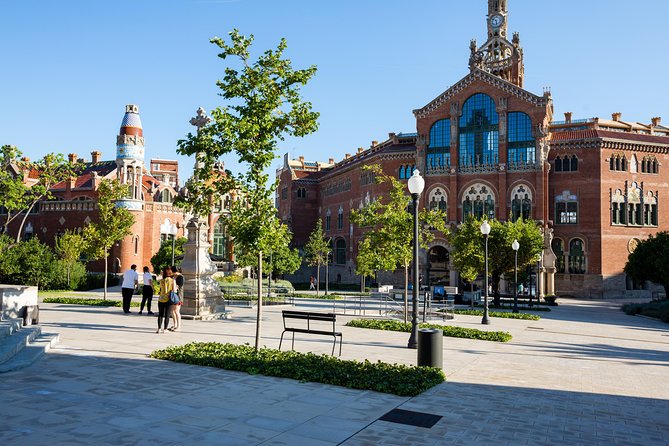
Sant Pau is not simply an old hospital with pretty walls. It is a whole Modernisme complex, built around gardens and linked by underground passages, where mosaics, stained glass, domes, and sculpture turn medical care into architecture. The restored pavilions offer a quieter counterpoint to Barcelona’s busiest sights.
I like the freedom to enter during opening hours and set my own pace. I also like the mix of art and social history, from the 1401 hospital foundation to old treatment rooms and underground routes. The main drawback is the self-guided layout: signs can be inconsistent, and temporary closures or private events may limit what you see.
Key points to know before you go
- A former hospital built as a city of pavilions: Sant Pau spreads across several buildings rather than one grand interior.
- The underground tunnels are a highlight: Patients and hospital staff once used tiled passages to move between buildings.
- The Sant Salvador Pavilion explains the long story: Exhibits trace the hospital from 1401 into the 21st century.
- The €4 audio guide is worth considering: The ticket does not include a guide, and extra narration can make the visit easier to follow.
- Plan on 1 to 2 hours: You can move quickly, but the architecture and exhibits reward a slower visit.
- Book ahead for peace of mind: The prepaid ticket guarantees entry during busy periods, with free cancellation up to 24 hours before the start time.
Why Sant Pau feels different from other Barcelona sights
Barcelona has no shortage of grand Modernista buildings, but Sant Pau gives you a different experience. Instead of entering one apartment, church, or showcase façade, you walk through a planned medical complex made up of pavilions, gardens, service areas, and tunnels.
That arrangement matters. The buildings were designed for hospital use, but they were also meant to provide light, air, beauty, and calm. You can see how the complex separated functions into different pavilions, rather than crowding every activity into one block.
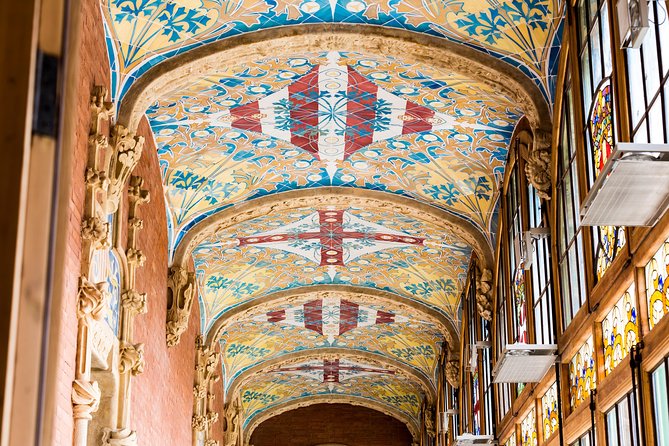
The artistic treatment is unusually broad. Look up at the domes, study the ceramic tilework, and examine the sculptures and stained glass around the exteriors. The decoration is not limited to one famous room. It appears across the complex, which makes the visit feel more like walking through an open-air architectural museum.
I especially like the contrast between the formal buildings and the gardens. The grounds give you room to pause, take in the arrangement of the pavilions, and escape Barcelona’s usual street noise for a while. Several reviews describe the site as surprisingly peaceful, and that calm is one of its strongest qualities.
More entry tickets in Barcelona:
- Barcelona: Sagrada Familia Entry Ticket with Audio Guide
★ 4.6 · 105,312 reviews - Barcelona: Sagrada Familia Skip-the-Line Entry Ticket & Tour
★ 4.8 · 12,789 reviews - Park Guell and Sagrada Familia Tour with Skip the Line Tickets
★ 5.0 · 6,384 reviews
Starting at the Administration Pavilion
Your self-guided visit begins at the Administration Pavilion. This is a sensible introduction because it presents both sides of Sant Pau: its medical purpose and its artistic importance.
Inside the exhibition area, an interactive touch table and video presentation explain how the hospital functioned and why its architecture matters. These displays help answer a basic question: why would a hospital need such elaborate decoration?
You will also begin to understand the scale of the place. Sant Pau is not a single restored room with a few explanatory panels. It is a network of pavilions connected by routes that once supported everyday hospital operations.
The prepaid mobile ticket makes the entrance simple. You show the voucher on your phone, and the admission process is designed to get you inside without a long wait. The ticket is useful during busy periods, although there may be little or no line on a quiet Monday afternoon. In other words, you are paying for certainty as much as speed.
The Sant Salvador Pavilion and 600 years of medical care
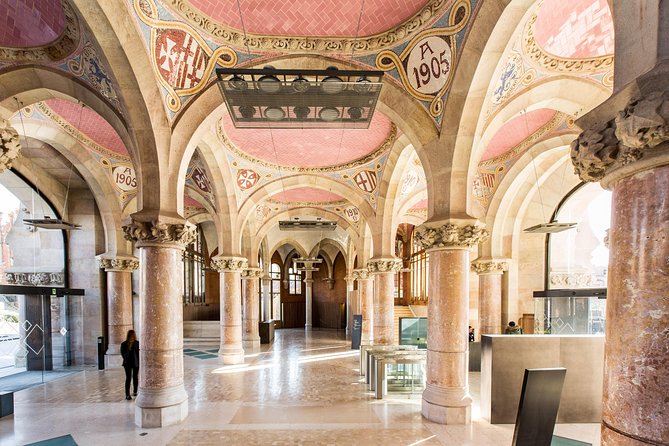
The Sant Salvador Pavilion provides the main historical framework for the visit. Its displays trace the Hospital de la Santa Creu i Sant Pau from its founding in 1401 through the 21st century.
That long time span gives the complex more meaning than its decoration alone. You are not just admiring tilework from the Modernisme period. You are also seeing part of a medical institution that continued into modern times.
On the upper floor, a contemporary installation shaped like a dragon pays tribute to Lluís Domènech i Montaner, the architect closely linked with the complex and with Catalan Art Nouveau. The installation gives the historical displays a more modern note and connects the building’s original artistic language with a present-day interpretation.
If you enjoy social history, this pavilion may be one of the most useful stops. You can learn how hospital care changed over time and how the institution developed from its medieval foundation into a modern medical center.
The subject is not presented as a standard art museum tour. You will encounter hospital equipment, explanations of treatment, and displays about care from roughly a century ago to the present. That blend suits anyone interested in the relationship between medicine, architecture, and public life.
Walking the underground tunnels
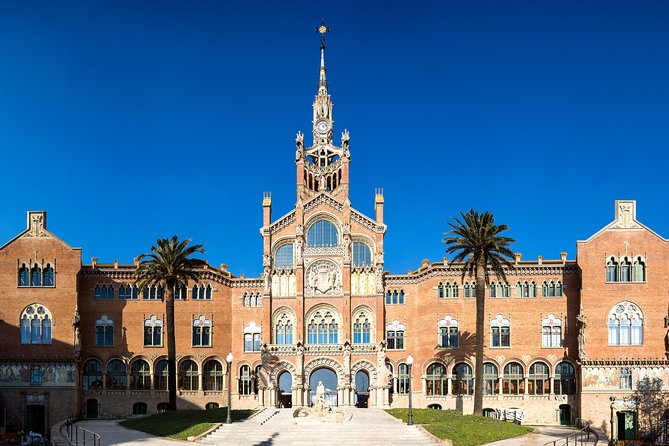
The tunnels are among the most distinctive parts of the visit. They connect the pavilions and lead out toward the gardens, giving you a practical view of how the hospital operated.
The tiled passageways are attractive, but their real value is functional. They were used to move patients and hospital services between buildings without sending everyone through the open grounds. Once you understand their purpose, the complex becomes easier to read.
The tunnels also change the rhythm of the visit. One moment you are looking at a decorated façade or a domed roof; the next, you are following a passage built for quiet movement and practical work.
Directions can be a little hit and miss. A map supplied at entry helps, and you should pause to check it rather than assume every turn is obvious. Some people find the self-guided route confusing, especially if a section is closed or a sign is easy to miss.
That is the main weakness of visiting without a guide. You have freedom, but you must pay attention. If you want the clearest possible route, ask at the entrance about the current map and available audio options before setting off.
A few more architecture tours around Barcelona worth a look
- Barcelona: Sant Pau Recinte Modernista Entry Ticket
★ 4.6 · 2,567 reviews - Barcelona: Sagrada Familia, Modernism, and Old Town Tour
★ 4.7 · 1,621 reviews - Ramblas, Old Town, Gothic and Gaudi Architecture Walking Tour
★ 5.0 · 723 reviews - Historical and Modernist Bike Tour Barcelona
★ 5.0 · 262 reviews
Sant Rafael, the old Surgery Room, and the hospital interiors
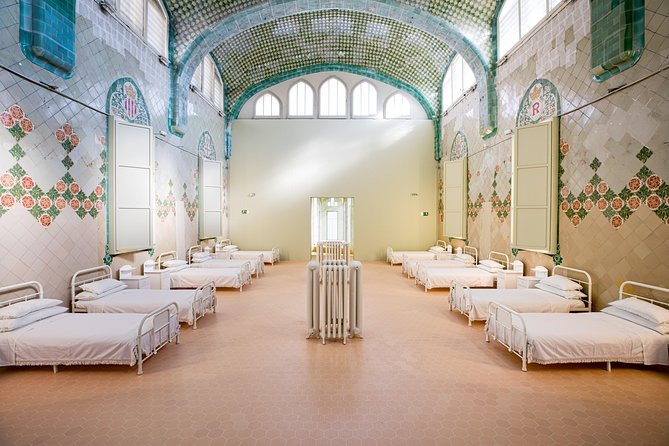
The restored Sant Rafael Pavilion gives you another look at the hospital’s interior spaces. It helps show how the buildings worked as medical facilities, not just as decorated monuments.
The old Surgery Room is especially useful for understanding the difference between the building’s beauty and the realities of treatment. You can see older medical equipment and consider how patients experienced care in an era when modern medicine was still developing.
This is where the visit becomes more than an architecture stop. The decorative details may draw you in, but the medical story gives the rooms a human purpose. You can admire the workmanship while also thinking about the people who were treated there.
The restored interiors are generally easy to explore at your own speed. You are not tied to a group schedule, so you can spend extra time with a display that interests you and move quickly past material that does not.
The complex was still used as a hospital in the 1990s, a detail that makes the transition from working institution to cultural site feel surprisingly recent. Sant Pau is not an ancient ruin separated from modern life. It served patients within living memory.
The Domènech i Montaner Room, Pau Gil Room, and Main Hall
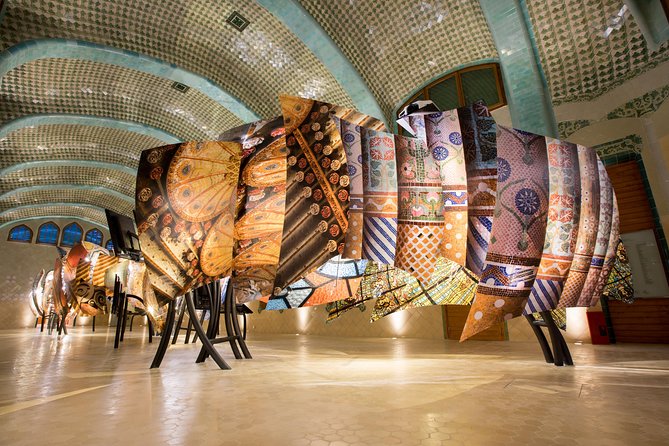
The Lluís Domènech i Montaner Room and Pau Gil Room bring the architect and the institution together. These rooms help explain the planning and ambition behind the complex.
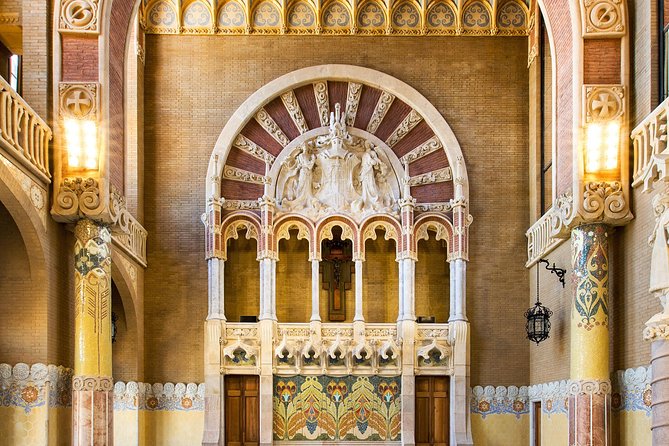
The Main Hall is another important stop. It gives you a sense of the ceremonial side of Sant Pau, with the kind of architectural detail that makes you slow down and look carefully.
Do not rush these interiors. The strongest details are often above eye level or at the edges of a room. Tile patterns, carved elements, colored glass, and decorative surfaces reward a few quiet minutes rather than a quick photograph.
The visit does not depend on a guide narrating every room, but an audio guide can make these spaces easier to understand. The optional device costs €4 at the entrance, and that extra charge is separate from the admission ticket. Several people found the audio narration worthwhile, while others managed well with the printed guide and written exhibits.
English translations are available in the exhibits, which makes the visit workable for English-speaking visitors even without an audio device. If you want more historical explanation, budget the extra €4 and ask for the audio option when you arrive.
Sant Jordi Pavilion and temporary exhibitions
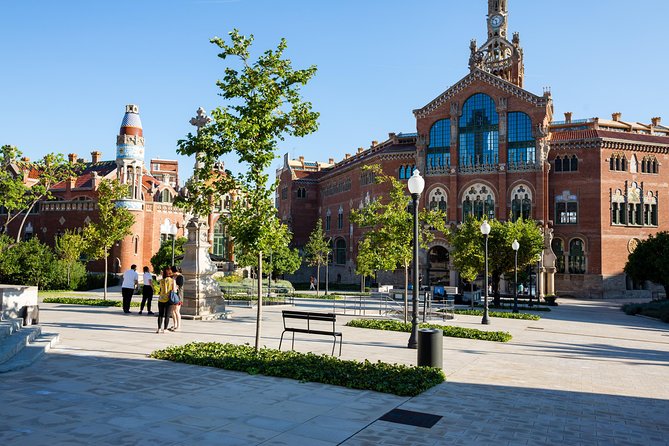
The Sant Jordi Pavilion hosts rotating temporary exhibitions. What you see here can change, so it is best to treat this as an added feature rather than the main reason for your visit.
The pavilion provides a useful final stop because it shows that Sant Pau remains an active cultural site. The complex is not frozen in one historical period. Alongside its restored medical and architectural displays, it can host changing material.
Temporary events can affect the route. A private or influencer event has, at times, blocked access to parts of the complex. That kind of interruption is not normal sightseeing, but it is worth understanding before you book a tightly scheduled visit.
If a section is closed, the architectural value of the site remains, but the admission may feel less worthwhile. This is one reason I would avoid planning Sant Pau as a rushed stop between two fixed appointments.
How much time should you allow?
The official estimate is about 1 to 2 hours. An hour is enough for a brisk visit focused on the major buildings, tunnels, and outdoor details.
I would allow closer to 90 minutes if you want to read the displays, examine the tilework, and spend time in the gardens. Add more time if you use the audio guide or stop carefully in the Sant Salvador Pavilion.
The complex is large enough that you can easily miss a building if you hurry or follow the route loosely. A self-guided visit does not force you to see every section in order, which is convenient, but it also means you need to keep track of where you have been.
The site can work well on a hot or rainy day because parts of the visit are indoors, and seating and air-conditioned areas provide occasional relief. Still, conditions vary from room to room, so do not assume the entire visit will be climate-controlled.
Price, advance booking, and practical value
At about $21.78 per person, this is not Barcelona’s cheapest cultural stop. The price makes more sense if you value time, architecture, and the ability to explore without joining a group.
The ticket includes admission to the Sant Pau Recinte Modernista, but not food, drinks, a guide, or the optional audio device. If you want a fully explained visit, add the €4 audio guide cost to your budget.
Booking ahead has one clear advantage: it guarantees admission to a popular attraction. The ticket is mobile, and confirmation arrives at booking. Some people have been admitted earlier than the time printed on their ticket, but you should not rely on that flexibility.
The booking also includes free cancellation if you cancel at least 24 hours before the experience start time. Changes or cancellations inside that 24-hour window are not accepted for a refund.
The ticket is sold at the same price as booking directly through the Sant Pau website, according to one detailed comparison. The main value here is the prepaid entry and cancellation flexibility, not a discount.
Getting there and fitting Sant Pau into your day
Sant Pau is on Sant Antoni Maria Claret in central Barcelona and is near public transportation. The Green Line stop on the hop-on hop-off bus is directly outside, which can make the site easy to combine with other sightseeing.
It is also a short distance from the Sagrada Família. That makes Sant Pau a natural pairing if you are already visiting Gaudí’s basilica. The two sites are very different: Sagrada Família is a famous religious building, while Sant Pau gives you a broader view of Modernisme through a working hospital complex turned cultural site.
I would avoid treating Sant Pau as a quick photo stop. Its best features are spread across the grounds, and the history makes more sense when you connect the pavilions, tunnels, gardens, and medical displays.
Who will enjoy Sant Pau most?
I would recommend this visit to you if you like architecture but want something less crowded than Barcelona’s biggest attractions. It also suits anyone interested in hospitals, public health, social history, or the practical side of historic buildings.
Families can follow the route at their own pace, and the dragon installation, tunnels, and unusual hospital setting may hold children’s attention better than a traditional museum. Still, the written history requires patience, and younger children may not enjoy every display.
This is also a good choice for repeat visitors to Barcelona. If you have already seen the best-known Modernista buildings, Sant Pau offers a fresh angle on the period.
It is less ideal if you want a polished, fully narrated tour with no route-finding effort. The self-guided format gives you independence, but the signs are not always perfect, and access to lifts may be limited. If stairs are difficult for you, ask staff about the current accessible route before beginning.
Should you book the Sant Pau entrance ticket?
Book it if you want a calm, detailed visit to one of Barcelona’s most unusual Modernista sites, and you are comfortable exploring without a guide. The mosaics, tunnels, pavilions, gardens, and medical displays offer more substance than a quick architectural photo stop.
The ticket is especially useful during busy periods, when guaranteed entry matters. I would also pay the €4 for the audio guide if you want help connecting the rooms and historical periods.
Skip it if your schedule is already packed, you dislike self-guided attractions, or a private event or partial closure would make the price feel too high. For most architecture and history fans, though, Sant Pau earns its place beside Barcelona’s better-known Modernista sights.
FAQ
How long does the Sant Pau visit take?
The visit takes approximately 1 to 2 hours. A brisk visit can take about an hour, while reading the exhibits and using the audio guide may require closer to two hours.
Is the Sant Pau tour guided?
No. The admission is for a self-guided visit, and a guide is not included. An optional audio guide can be rented at the entrance for €4.
Is an audio guide included with the ticket?
No. The audio guide costs an additional €4 at the entrance. Written exhibits and a paper guide are available to help you follow the site.
What buildings can I see inside Sant Pau?
The visit includes the Administration Pavilion, Sant Salvador Pavilion, Sant Rafael Pavilion, the old Surgery Room, the Lluís Domènech i Montaner Room, the Pau Gil Room, the Main Hall, and the Sant Jordi Pavilion, subject to access and temporary closures.
Are the underground tunnels open to visitors?
The self-guided route includes the network of underground tunnels connecting the pavilions and gardens. Access can be affected by closures or events.
Can I use a mobile ticket?
Yes. The admission ticket is available as a mobile voucher, and confirmation is provided when you book.
Is Sant Pau near public transportation?
Yes. The complex is near public transportation and is directly outside a Green Line stop on the hop-on hop-off bus.
Is Sant Pau close to the Sagrada Família?
Yes. Sant Pau is a short distance from the Sagrada Família, making it possible to visit both attractions in the same area of Barcelona.
Are food and drinks included?
No. Food and drinks are not included in the admission ticket.
Can I cancel for a refund?
Yes. You can cancel for a full refund if you do so at least 24 hours before the experience start time. Cancellations or changes made less than 24 hours in advance are not accepted for a refund.
Just added around Barcelona
- Love in the Gothic Quarter Barcelona: Self-Guided Romantic Walk★ 4.5 · 9 reviews
- Walking tour of the Gothic Quarter of Barcelona + Cathedral★ 5.0 · 8 reviews
- Wine tasting with a view of the Sagrada Familia★ 4.5 · 13 reviews
- Visit to the Modernist houses of the Americans★ 5.0 · 2 reviews
- Barcelona Jewish & Gothic Tour★ 5.0 · 18 reviews
- Roman & Gotic & Gaudi in Barcelona: private walking tour★ 4.5 · 2 reviews
- Self-Guided Audio Tour-The Surrealist Barcelona of Dalí and Gaudí★ 3.5 · 8 reviews
- Barcelona Gaudi Tour: Sagrada Familia, Casa Batllo & Casa Mila★ 5.0 · 4 reviews
Tickets, compared.
Barcelona: Sagrada Familia Entry Ticket with Audio Guide
Read our review →
Barcelona: Sagrada Familia Skip-the-Line Entry Ticket & Tour
Read our review →
Florence: Cathedral & Brunelleschi’s Dome Ticket & Audio App
Read our review →
Barcelona: Park Güell and Gaudí House Museum Entry Ticket
Read our review →
Barcelona: Gaudi’s Casa Vicens Skip-the-Line Entrance Ticket
Read our review →
Chicago: Architecture River Cruise Skip-the-Ticket Line
Read our review →
Florence: Brunelleschi’s Dome Climb Entry Ticket & Duomo
Read our review →