
Review · BARCELONA
Barcelona Gothic Quarter History Tour
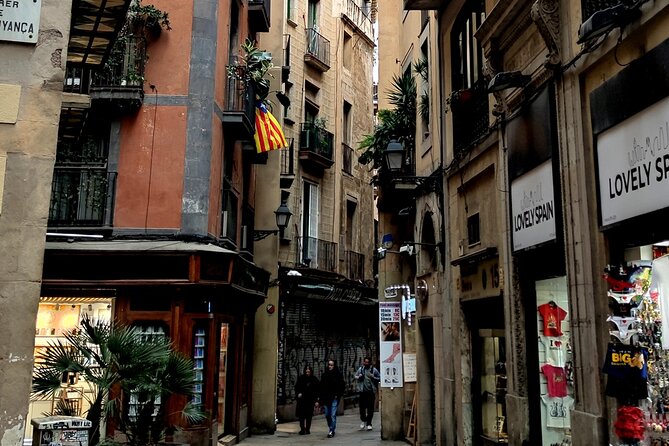
Barcelona’s Gothic Quarter is easiest to understand when you look below the medieval streets. Roman Barcelona, the Crown of Aragon, Catalan Gothic art, Jewish heritage, and Civil War memories all sit within a short walk. This tour connects those layers with stops at the Roman cemetery, Barcelona Cathedral, Plaça del Rei, and the Temple of Augustus.
I like the small maximum of eight people, which should make it easier to hear Andrea and ask questions. I also like the route’s range: you get major sights, lesser-known historical details, and a few local touches, including a 200-year-old shop and the treasures of Petritxol Street. The main consideration is pace. Two hours is enough for an introduction, not a full inspection of every church, museum, or monument.
Key points to know before you book
- Roman Barcelona comes first: Begin at an ancient cemetery and finish with the columns of a Roman temple.
- Andrea leads the walk: She guides in English and Spanish and is praised for clear explanations, warmth, and local insight.
- A compact group helps: The tour accepts no more than eight people, a useful size for narrow old-city streets.
- The route covers difficult history: Expect discussion of the Inquisition, Catalan Judaism, and the Spanish Civil War.
- The finish is well placed: End at Plaça Reial, a useful spot for continuing your evening in the old city.
- The price reflects personal guiding: At $57.99 per person, this is not the cheapest way to stroll, but the small group and wide historical range add value.
Why this Gothic Quarter walk works
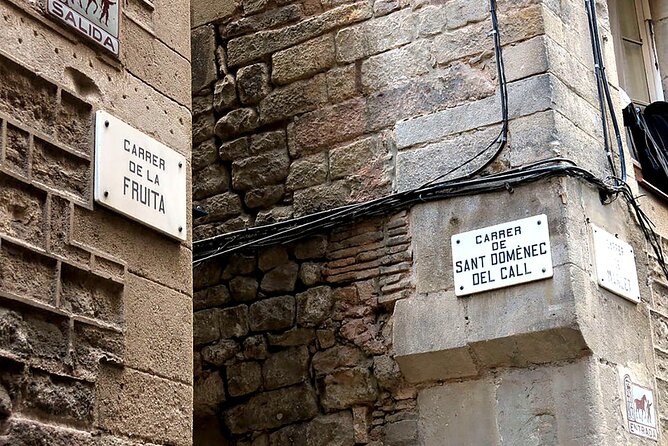
I like tours that explain a city in layers rather than pointing at attractive buildings one by one. This route begins with Roman remains, moves through medieval Barcelona, addresses religious and political conflict, and ends in one of the city’s best-known squares.
You also get a sensible walking route. The starting point is on Carrer de Duran i Bas, near the center of Ciutat Vella, and the tour finishes at Plaça Reial. There is no private transportation, so you spend the entire experience on foot. That is the right choice here: the old quarter makes more sense when you pass from one small square to another at street level.
The group limit matters. With no more than eight people, you are less likely to lose the guide in a narrow lane or miss an explanation beside a busy public square. Andrea is the named guide, and the strongest praise focuses on her enthusiasm, patience, detailed explanations, and ability to point out things larger groups might miss.
The tour is offered in English, with in-person guiding also available in Spanish. It starts at 4:00 pm and lasts about two hours. That timing gives you a useful introduction before dinner, though you should allow a little flexibility if the walk runs slightly beyond its approximate duration.
More Gothic quarter walks in Barcelona:
- Barcelona all included: Sagrada, Park Güell, Montjuic & Gothic
★ 5.0 · 2,169 reviews - Barcelona Gothic Quarter Tapas & Taverns Food & Wine Tour
★ 5.0 · 1,470 reviews - Barcelona: Old Town and Gothic Quarter Walking Tour
★ 4.8 · 1,393 reviews
Stop 1: Roman cemetery at MUHBA Via Sepulcral Romana
The first stop introduces Barcelona before its Gothic lanes existed. At MUHBA Via Sepulcral Romana, you see an old Roman cemetery, with admission included at no extra charge.
This is a smart opening because cemeteries reveal how the Roman city was organized. You are not beginning with a grand church or a famous plaza. Instead, you start with an archaeological reminder that Roman life extended beyond the forum, homes, and public buildings.
The stop lasts about five minutes, so expect an introduction rather than a long museum visit. The short visit works well as a scene setter. Andrea can explain why the remains matter before leading you into the later layers of the quarter.
If you want a detailed archaeological tour, this stop may feel brief. If you want a clear starting point for understanding Barcelona’s age, it does its job.
Stop 2: Plaça del Pi and Catalan Gothic style
At Plaça del Pi, the focus shifts to Catalan Gothic architecture and Santa Maria del Pi. You also hear about the small treasures of nearby Petritxol Street.
This is one of the places where a guide adds real value. A square may look like a pleasant pause in the walking route, but the right explanation helps you notice the design of the church, the shape of the surrounding streets, and the way old commerce still gives the area its character.
The stop is planned for about 15 minutes, long enough for a useful explanation without turning into an extended church visit. The supplied details do not promise entry inside Santa Maria del Pi, so you should treat this as an exterior and neighborhood history stop unless Andrea advises otherwise on the day.
Petritxol Street is a nice inclusion. It gives the walk a more local scale after the Roman remains and before the larger monuments. You will hear about the street’s notable details rather than simply passing through it on the way to the next square.
Stop 3: Barcelona Cathedral in ten focused minutes
Barcelona Cathedral receives about ten minutes of attention. Andrea explains its history, giving you a quick framework for one of the Gothic Quarter’s central landmarks.
A short cathedral stop can be useful if you already plan to return on your own. You learn what to look for, how the building fits into the old city, and why it matters before deciding if you want a longer visit later.
The tradeoff is clear. Ten minutes is not enough for a full architectural tour or a careful look at every interior feature. The tour provides context, not a complete cathedral visit. I would see this stop as a primer that helps you make better use of your own time afterward.
Because the walk includes several other periods and locations, the limited time here keeps the whole route moving. You will not spend the entire afternoon on one monument while missing the broader story of the quarter.
More history tours in Barcelona:
- Historical and Modernist Bike Tour Barcelona
★ 5.0 · 262 reviews - Barcelona: Tipsy Tapas & History Tour in the Gothic Quarter
★ 4.8 · 227 reviews - Barcelona Historical Walking Tour: Gothic Quarter and El Born
★ 5.0 · 217 reviews - Barcelona: Gothic Quarter Tour Dark History & Ghosts Tour
★ 4.8 · 64 reviews
Stop 4: Plaça del Rei, power and punishment
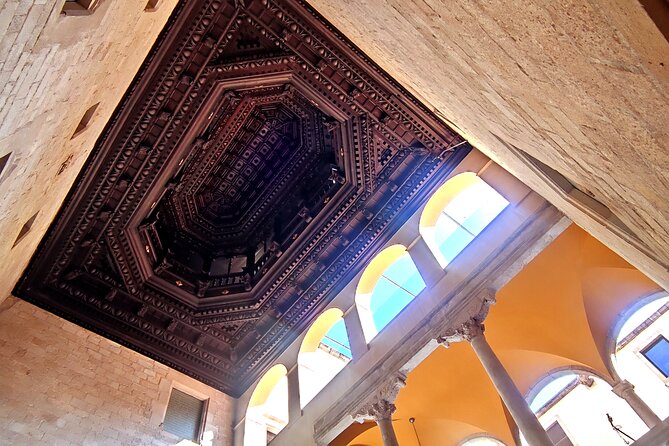
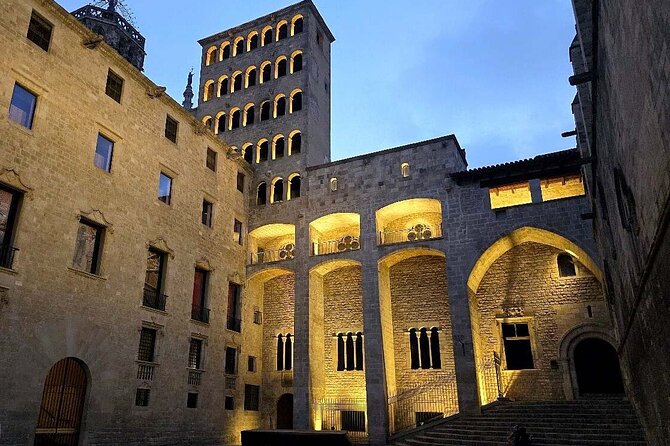
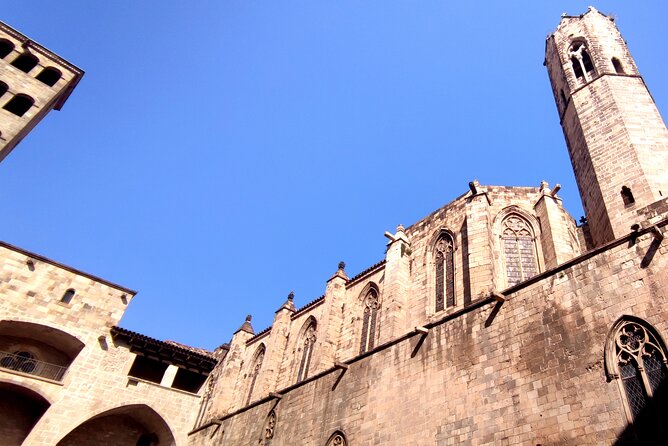
Plaça del Rei is scheduled for about 15 minutes and brings together several hard-to-separate subjects: Barcelona’s Roman past, the Crown of Aragon, and the Inquisition.
That combination gives the stop weight. You are not only hearing about kings and impressive medieval buildings. You are also hearing how authority worked, how religion and government overlapped, and how official power could affect ordinary lives.
The square itself is an effective setting for this conversation. The important point is not just its appearance, but how a public space can carry several eras at once. Andrea’s role is to connect those eras so you are not left with disconnected dates.
This is also one of the tour’s more serious sections. If you prefer only light sightseeing, the discussion of the Inquisition may feel heavier than the architectural stops. I consider that a strength, since Barcelona’s past cannot be reduced to pretty lanes and church towers.
Stop 5: MUHBA Temple of Augustus
The Temple of Augustus is another short stop, planned for about ten minutes. You visit the remains of a temple that formed part of the Roman Forum.
This stop pairs neatly with the Roman cemetery at the beginning. The cemetery shows one side of Roman urban life, while the temple points toward the civic and religious center of the ancient city.
The remains are especially useful for orientation. You can begin to picture the old Roman settlement beneath the present-day Gothic Quarter. That mental map is one of the most helpful things a walking tour can give you, because later streets and buildings no longer seem like isolated sights.
Again, ten minutes means a focused explanation rather than an exhaustive archaeological study. The tour values range and connection. You see several sites, then use Andrea’s commentary to understand how they relate.
Stop 6: Plaça Sant Felip Neri and Civil War memory
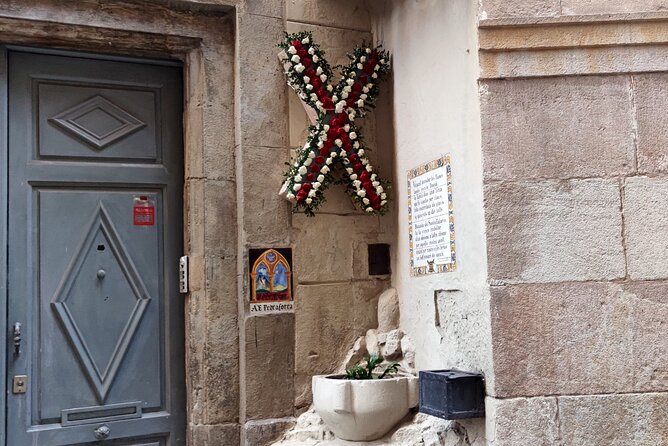
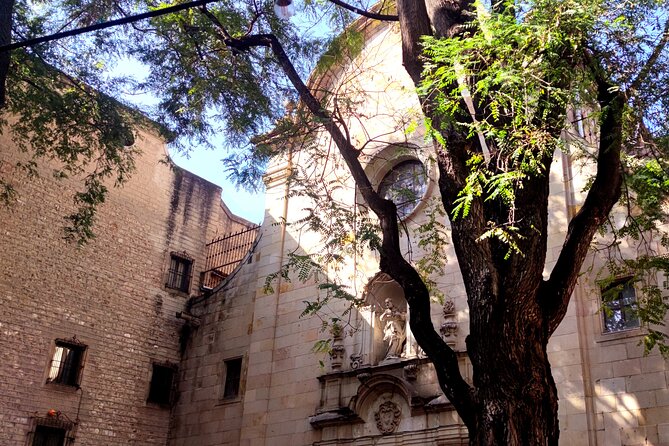
Plaça Sant Felip Neri brings the route into the 20th century, with a discussion of the Spanish Civil War. The square is not treated simply as a picturesque pause. Its history gives the tour a sharp change in tone.
I appreciate this kind of stop because it prevents the Gothic Quarter from becoming a postcard version of itself. Medieval buildings are only part of the story. Modern conflict also left marks on the neighborhood, and the square offers a place to discuss that past directly.
The scheduled time is about ten minutes. That should give Andrea room to explain the historical context without making this a full military or political history lecture.
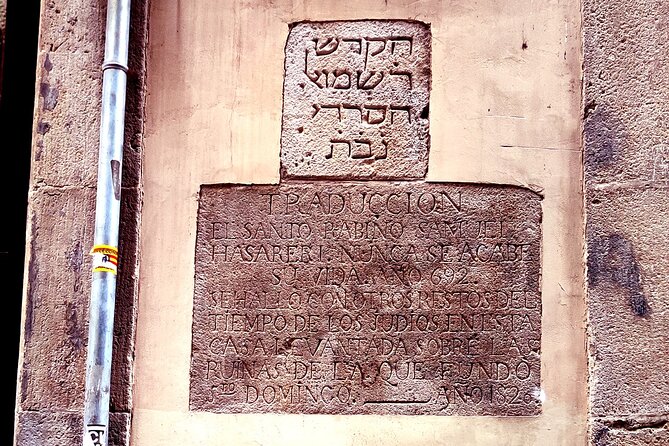
The walk also includes a discussion of Catalan Judaism, though the supplied schedule does not attach a numbered stop or exact duration to it. That subject adds another important layer, especially when placed beside the conversations about Christian institutions, royal power, and the Inquisition.
Plaça Reial and the final local detail
The tour ends at Plaça Reial after a final stop of about ten minutes. Here you learn about the square’s past and visit a remarkable 200-year-old shop.
That detail gives the finish a more personal feel. After Roman ruins, cathedrals, royal history, and Civil War memory, a long-running shop brings the story back to daily life and local commerce. It also keeps the ending from feeling like a simple photo stop.
Plaça Reial is a practical place to finish. You can continue exploring Ciutat Vella, stop for food, or simply use the square as a landmark while planning the rest of your evening. The route does not return you to the starting point, so plan to continue from Plaça Reial rather than expecting a loop.
Is $57.99 a fair price?
At $57.99 per person, the value depends on what you want from a walking tour. You are not paying for transport or admission-heavy sightseeing. The listed stops have no separate admission charge, and the route is walked entirely on foot.
You are paying for interpretation, structure, and a small group. A guide who can connect Roman urban planning with medieval religion, royal power, Jewish heritage, Civil War memory, and everyday local history gives you more than a route map can provide.
The maximum of eight is important here. A larger group could cost less, but it may be harder to ask questions or follow an explanation in a tight square. If Andrea’s personal approach is your priority, the price is easier to justify.
If you are comfortable exploring on your own with a guidebook or audio app, $57.99 may feel high for two hours. If you want a human guide to organize the quarter and point out details you might miss, the cost is reasonable for a compact, specialized walk.
Who should choose this tour?
I would choose this experience for a first visit to Barcelona when I wanted a historical orientation before exploring the old city alone. It suits people who like architecture, archaeology, religion, politics, and local stories in one route.
It also suits you if you prefer a small group. The limit of eight creates a more personal setting than a standard city walk. Andrea’s style, based on the available feedback, is especially well suited to people who value patience, enthusiasm, local knowledge, and clear explanations.
Families and most able participants can take part, though this is a walking experience through historic streets. Service animals are allowed, and the meeting point is near public transportation.
You may want another option if you need extensive indoor access, a detailed cathedral visit, or a tour built around museum collections. You may also prefer a longer experience if you want every stop covered at length. This tour gives you breadth in about two hours, not a slow study of one site.
The weather policy is worth noting. The experience requires good weather, and it may be moved or refunded if poor conditions cause cancellation. You can cancel for a full refund up to 24 hours before the start time. A minimum group size also applies, so a cancellation for that reason can result in another date, another experience, or a full refund.
My verdict on the Barcelona Gothic Quarter History Tour
I would book this tour if I wanted the Gothic Quarter explained by a guide rather than simply photographed. The route has a strong arc, from Roman cemetery to Roman temple, from Catalan Gothic buildings to royal power, from Jewish heritage and the Inquisition to Civil War memory and modern local life.
The best reason to choose it is the mix of subjects and the small group. Andrea’s warm, patient guiding style is central to the experience, and the tour gives her room to explain details that can disappear in a large crowd.
Book it if you value context, have two hours free at 4:00 pm, and are happy to walk outdoors. Skip it if you want major indoor attractions, private transportation, or a slow, specialist tour of the Cathedral. For a compact first look at Barcelona’s oldest quarter, it offers a thoughtful route and a useful start to your time in the city.
FAQ
How long does the Barcelona Gothic Quarter History Tour last?
The tour lasts approximately two hours.
What time does the tour start?
The tour starts at 4:00 pm.
Where does the tour begin?
The meeting point is Carrer de Duran i Bas, 11, Ciutat Vella, Barcelona.
Where does the tour finish?
The tour ends at Plaça Reial in Barcelona’s Ciutat Vella.
Is the tour offered in English?
Yes. The tour is offered in English, and in-person guiding is available in English and Spanish.
How many people can join the tour?
The experience has a maximum of eight participants.
Is transportation included?
No. Private transportation is not included. The experience is a walking tour.
Can I cancel for a full refund?
Yes. You can cancel up to 24 hours before the start time for a full refund. Cancellations or changes made less than 24 hours before the start time are not accepted for a refund.
Just added around Barcelona
- Love in the Gothic Quarter Barcelona: Self-Guided Romantic Walk★ 4.5 · 9 reviews
- Walking tour of the Gothic Quarter of Barcelona + Cathedral★ 5.0 · 8 reviews
- Wine tasting with a view of the Sagrada Familia★ 4.5 · 13 reviews
- Visit to the Modernist houses of the Americans★ 5.0 · 2 reviews
- Barcelona Jewish & Gothic Tour★ 5.0 · 18 reviews
- Roman & Gotic & Gaudi in Barcelona: private walking tour★ 4.5 · 2 reviews
- Self-Guided Audio Tour-The Surrealist Barcelona of Dalí and Gaudí★ 3.5 · 8 reviews
- Barcelona Gaudi Tour: Sagrada Familia, Casa Batllo & Casa Mila★ 5.0 · 4 reviews
Gothic Quarter Tours, compared.
Barcelona all included: Sagrada, Park Güell, Montjuic & Gothic
Read our review →
Barcelona Gothic Quarter Tapas & Taverns Food & Wine Tour
Read our review →
Barcelona: Gothic Quarter Ghosts and Legends Walking Tour
Read our review →
Barcelona: Old Town and Gothic Quarter Walking Tour
Read our review →
Barcelona Old Town & Gothic Quarter Small Group Tour
Read our review →
Ramblas, Old Town, Gothic and Gaudi Architecture Walking Tour
Read our review →
Barcelona: El Born and Gothic Quarter Wine & Tapas Bar Tour
Read our review →
Kids and Family Gothic Quarter Walking Tour in Barcelona
Read our review →Browse the lists this tour appears in