
Review · VENICE
Venice: Vivaldi Baroque Concert Ticket and Free Music Museum
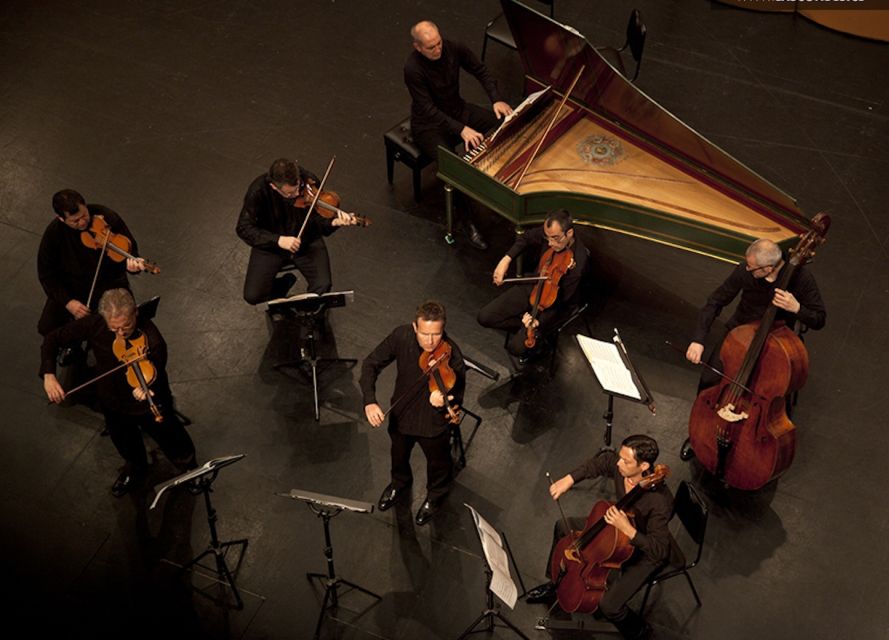
Venice gives you plenty of chances to admire its canals. This experience lets you hear the city instead. The main event is a Baroque concert at San Vidal Church, near the Accademia Bridge, performed by the Interpreti Veneziani ensemble. Vivaldi leads the program, with music by other major composers of the period.
I like two things right away: the ticket includes free entry to San Maurizio’s Music Museum, and the music takes place in historic churches rather than a modern concert hall. The main consideration is timing. The concert is listed as 80 minutes, but one account describes a performance closer to an hour and a half, so do not schedule a tight reservation immediately afterward.
Key points
- Hear Vivaldi near the Accademia Bridge: The concert takes place at San Vidal Church in Campo Santo Stefano.
- Visit a free music museum: San Maurizio Church lies on the route toward St. Mark’s Square.
- See 200 playable instruments: The collection covers instruments made from the 1500s through the 1900s.
- Explore the School of Stradivari: The museum explains Italian violin making and instrument craftsmanship.
- Expect a wide Baroque program: Music may include Vivaldi, Bach, Mozart, Albinoni, Tartini, Marais, and Boccherini.
- Plan around strict house rules: Large bags, photography, video, drinks, and audio recording are not allowed.
San Vidal Church and the sound of Venetian Baroque
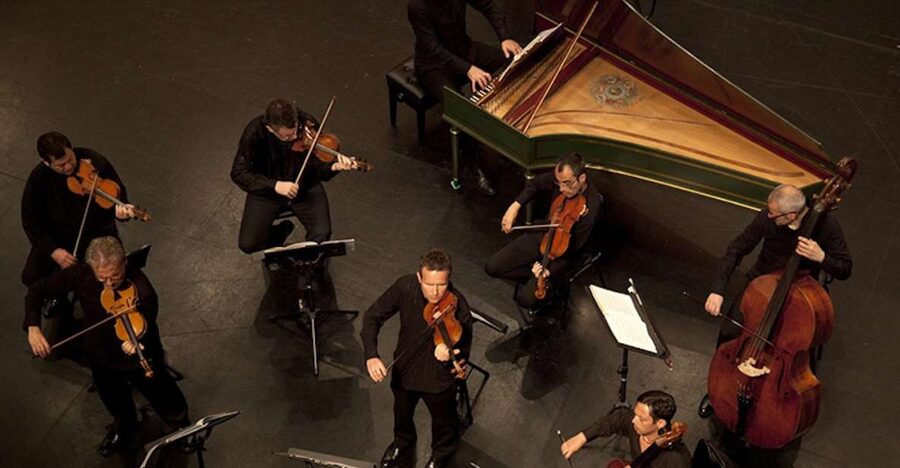
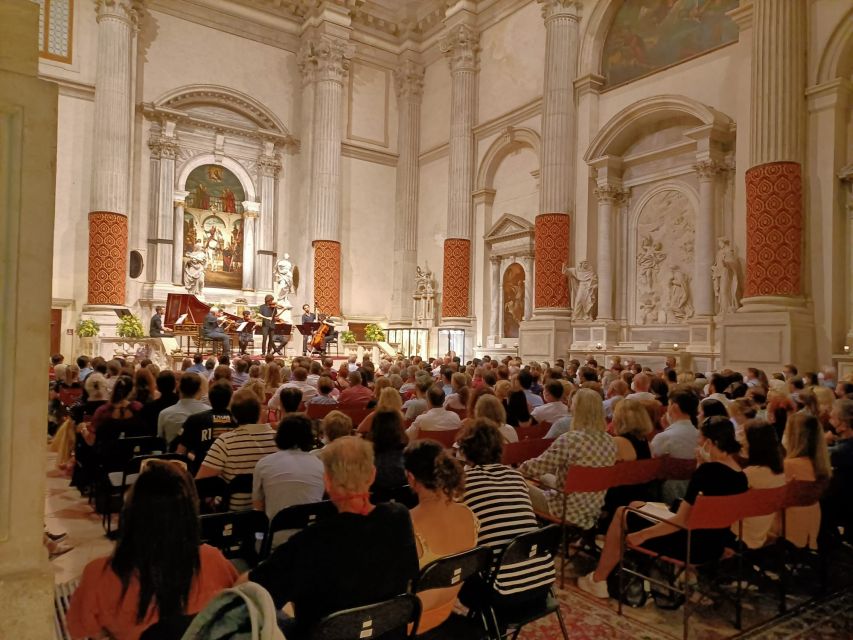
The concert begins at the Church of San Vidal, close to the Accademia Bridge in Campo Santo Stefano. That location is useful if you are already exploring the Accademia area, and it puts you within walking distance of Venice’s central sights.
San Vidal gives the performance a strong sense of place. You are not simply sitting in a neutral theater listening to recorded music or a touring orchestra. You are hearing live strings inside a historic Venetian church, in the same city where Antonio Vivaldi worked and where Baroque music shaped public life.
The program centers on Vivaldi, the composer best known for The Four Seasons. You may also hear pieces by Bach, Mozart, Albinoni, Tartini, Marais, and Boccherini. That mix helps you hear the differences between composers rather than treating Baroque music as one long, unchanging style.
The performers are the Interpreti Veneziani, an ensemble known here for its violin-focused performances. The program places special weight on virtuoso violin playing, so this is a good choice if you want the instrument to take the lead.
The setting also changes how you listen. Church acoustics can make string music sound full and ringing, though they may soften some small details. If you prefer a dry, highly controlled concert-hall sound, this may feel less precise. If you like music with a sense of occasion, the church setting is a major part of the appeal.
More Baroque architecture tours in Italy:
- Lecce: Baroque Architecture and Underground Walking Tour
★ 4.6 · 1,248 reviews - Interpreti Veneziani Ensemble Baroque Concert in Venice Ticket
★ 4.5 · 403 reviews - Borghese Gallery Max 6 People Tour: Baroque & Renaissance in Rome
★ 5.0 · 185 reviews
What the 80-minute evening actually gives you
The listed duration is 80 minutes. That is long enough for a serious concert but short enough to fit into an evening of sightseeing. You can see the major churches and squares of central Venice during the day, then return to Campo Santo Stefano for the performance.
Allow some flexibility. One account describes the concert as lasting about an hour and a half, despite the listed 80-minute duration. The safest approach is to avoid booking dinner, a train, or another timed activity immediately after the music.
The performance is the booked portion of the experience. The museum visit is separate in timing and can be made whenever you choose, according to the available arrangement. This gives you more freedom than a tightly packed guided tour. You can see San Maurizio before the concert, on another day, or while walking toward St. Mark’s Square.
The concert ends back at the meeting point, San Vidal Church. There is no hotel pickup or drop-off, so you need to make your own way through Venice. That is normal for a central city activity, but narrow lanes and confusing intersections can add time. Use the church location, rather than relying only on the name of the square, when planning your route.
San Maurizio’s free Music Museum
San Maurizio Church is located from San Vidal toward St. Mark’s Square. The museum admission is free, which adds real value to a ticket priced at $44.41 per person.
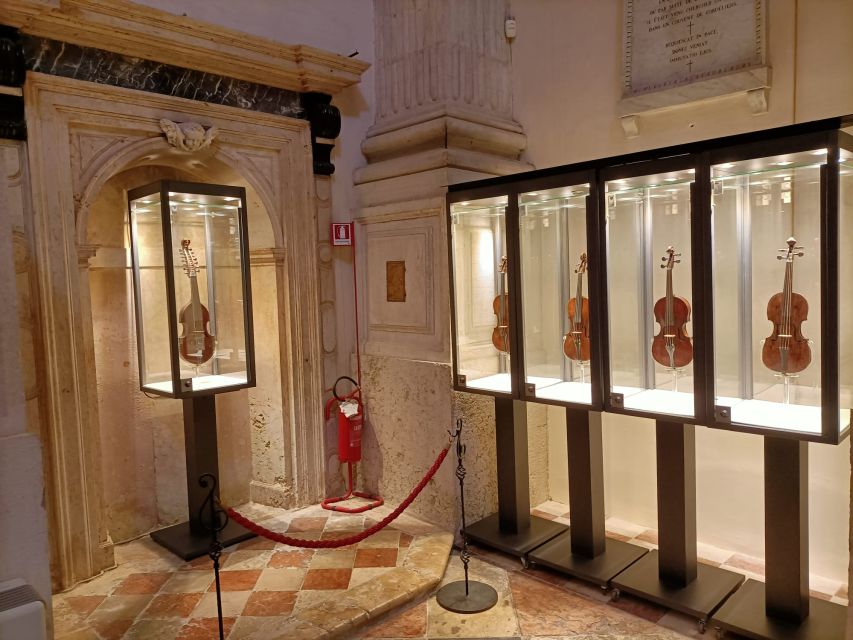
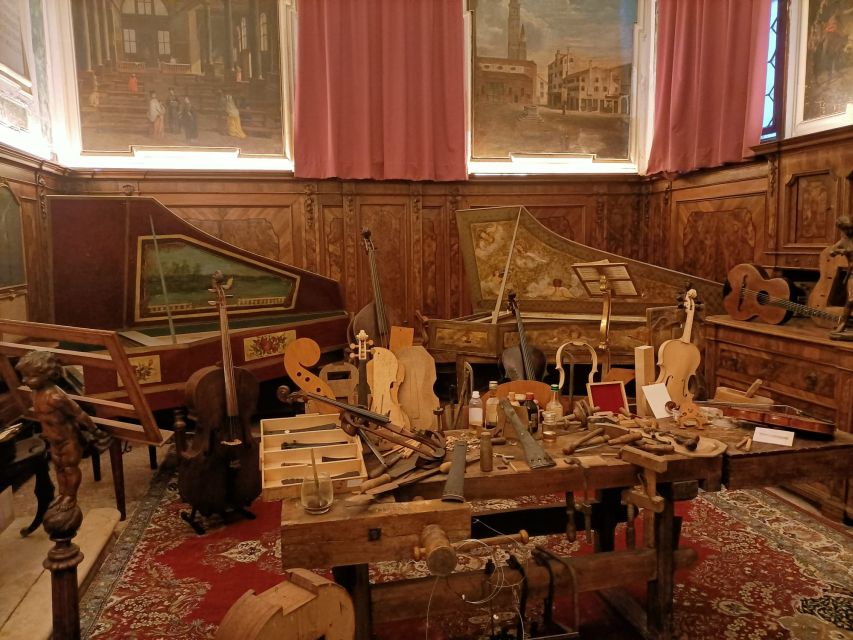
Do not treat the museum as a token extra. Its collection contains about 200 musical instruments, ranging from the 1500s to the 1900s. You can see the changing shape of Italian musical craftsmanship across several centuries, with instruments built for different sounds, uses, and performance styles.
The collection is especially useful before or after the concert because it gives you a visual link to what you hear. Instead of thinking only about the music as notes and melodies, you can look at the instruments themselves and consider how their materials and construction affect sound.
The museum also presents Italian violin making and the School of Stradivari. Stradivari’s name is familiar even to people who know little about classical music, but the display focuses on the craft behind the instrument. You can learn about the techniques used to make violins and see why careful construction matters to performers.
The wording around the collection promises instruments that are perfectly playable. That is an unusual feature for a museum display, where objects are often treated only as fragile artifacts. You should not expect to handle them, though. Touching the exhibits is forbidden, and the museum rules are strict.
Why the instrument collection matters
A concert can be enjoyable without any background in music. Still, the museum gives you a way to understand the physical side of the performance.
Violins are not interchangeable objects. Shape, wood, construction, age, and workmanship all influence how an instrument responds. The School of Stradivari display connects the concert to a long Italian tradition of violin making, helping you notice the relationship between the player and the instrument.
This is also a good stop for anyone interested in craft. The museum is not only about famous composers. It shows the work of the makers who built the tools that allowed composers and musicians to create their sound.
I would allow enough time to look closely rather than rushing through on the way to St. Mark’s Square. The collection covers several centuries, and a quick glance will not tell you much about how instruments changed. Since museum admission is free, you can return if your schedule allows, though the supplied information does not specify opening hours or a suggested visit length.
A few more architecture tours around Italy worth a look
- Musical masterpieces: The best of the Baroque concert
★ 5.0 · 17 reviews - Capuchins Crypt: Christmas Baroque Concert
★ 4.8 · 15 reviews - Capuchin Crypt Christmas Baroque Concert in Rome
★ 4.0 · 7 reviews - New Year’s Baroque Concert at Doria Pamphilj Palace
★ 5.0 · 2 reviews
The composers you may hear
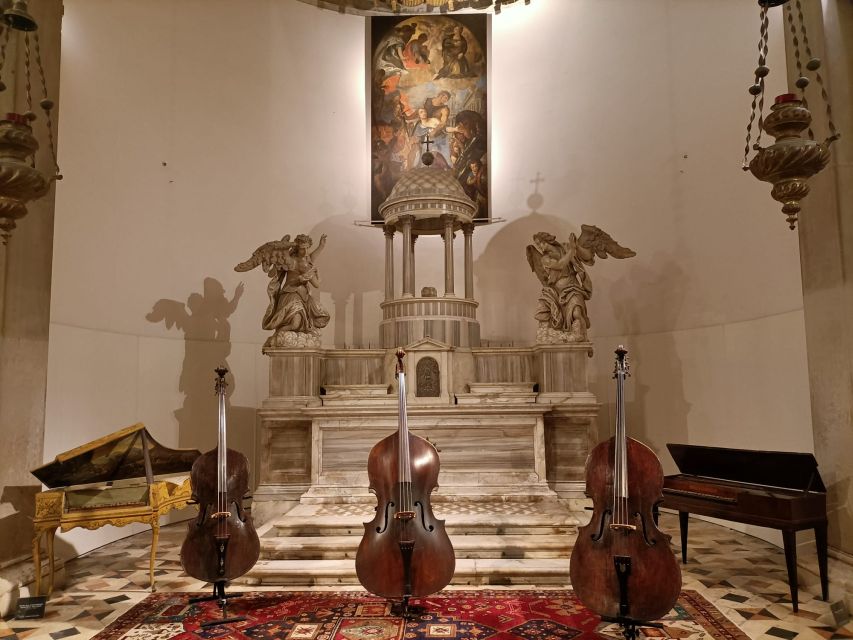
Vivaldi is the central name, and hearing his music in Venice gives the program a natural local connection. His music can be energetic, sharply rhythmic, and highly focused on the possibilities of the violin.
The program may also include Bach, whose writing often feels more structured and layered. Albinoni brings another Venetian connection, while Tartini is closely associated with violin virtuosity. Marais, Boccherini, and Mozart widen the range beyond Vivaldi and help show how string music developed across different places and periods.
You should not assume every composer will appear in every concert. The available information describes the musical range rather than a fixed piece-by-piece program. If one composer is your main reason for booking, check the concert details for your chosen date.
The focus on talented musicians and virtuoso violinists makes this better suited to someone who wants a real concert than to someone seeking a short musical interlude. The performance has enough intensity to hold the attention of a first-time classical listener, while experienced listeners will have the pleasure of hearing familiar composers in a distinctive setting.
One particularly useful detail is that the music is performed live on original instruments, according to the experience description. That gives the event a direct connection to the museum and its focus on historic instrument making. You are not only looking at old instruments during the day. You are hearing the kind of sound that this tradition is meant to produce.
A strong choice for first-time classical listeners
You do not need a background in Baroque music to enjoy this evening. The concert format is straightforward, and the program includes recognizable names and strong violin writing.
The setting also makes the experience easier to appreciate. You can focus on the music, then later connect it to what you saw in the museum. This simple sequence works well for someone who wants a cultural activity without joining a long walking tour or sitting through a lecture.
The enthusiastic reactions to the performance point to two clear strengths: the music and the energy of the musicians. One description praises the passion and precision of the playing, while another says the performance made roughly 90 minutes pass quickly. That suggests the concert has enough drive to appeal even if this is your first live classical performance.
I would still set realistic expectations. The ticket does not include a guided explanation of Venice, a hotel transfer, or a meal. You are paying mainly for the concert, with the museum as an added cultural stop. If you want a broader history tour, you will need to arrange that separately.
Practical details before you book
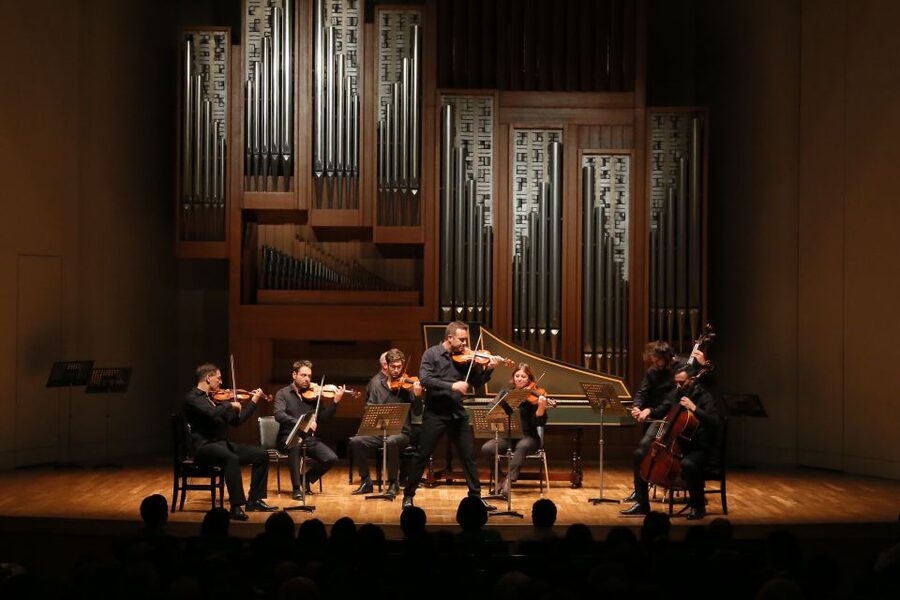
The price is $44.41 per person. Since museum admission is free, the value depends mainly on how much you want the live concert. For a performance in a historic church by a professional ensemble, the price is reasonable if music is one of your main interests in Venice.
The ticket also gives you flexibility because the museum visit is not tied to the concert time. You can fit it into a sightseeing route between San Vidal and St. Mark’s Square. That saves you from paying separately for a museum and makes the ticket more useful than a concert-only booking.
The meeting point is San Vidal Church in Campo Santo Stefano, near the Accademia Bridge. The museum is at San Maurizio Church, farther along toward St. Mark’s Square. Since Venice addresses can be difficult to follow, give yourself extra time to find the church.
The activity is wheelchair accessible. The host or greeter service is available in English, French, Italian, German, and Spanish. No specific guide names are provided, and the experience is centered on the musicians and the museum rather than on a named personal guide.
You can cancel up to 24 hours before the activity for a full refund, and the booking option allows you to reserve now and pay later. That is useful when your Venice schedule is still moving around.
Strict rules inside the churches and museum
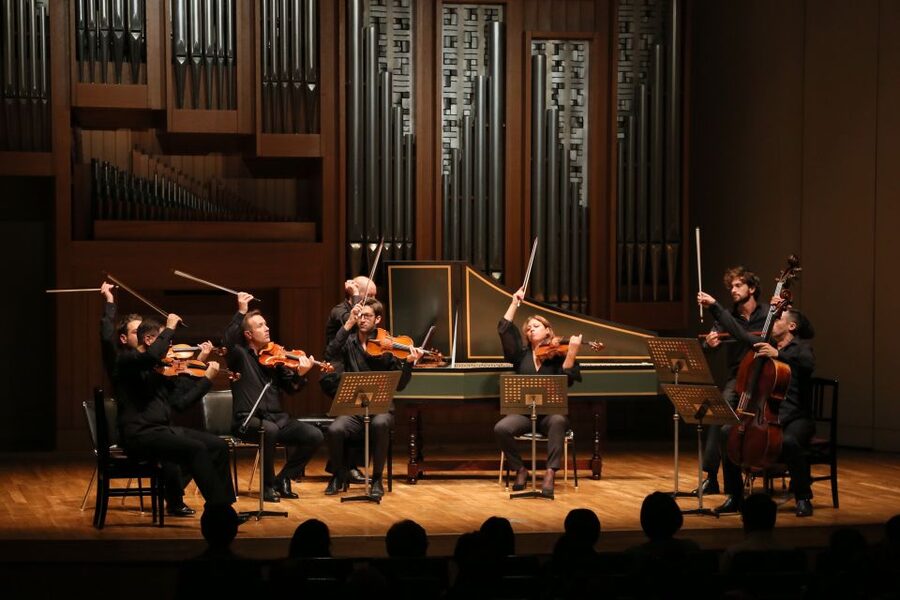
The restrictions are worth reading before you go. Cameras, photography, flash photography, video recording, and audio recording are not allowed. Selfie sticks are also forbidden.
Large bags and luggage are not allowed, so this is not a good activity to schedule while carrying suitcases. Smoking, drinks, alcohol, and drugs are prohibited. Pets cannot enter, although assistance dogs are allowed.
You cannot touch the exhibits, and unaccompanied minors are not permitted. These rules may feel strict, but they protect the instruments and keep the concert quiet. Put your phone away and plan to experience the performance without trying to document every moment.
The no-recording rule is especially important if you are used to filming short clips at cultural events. You will need to enjoy the music in the room and remember it afterward.
Who should book this Venice concert
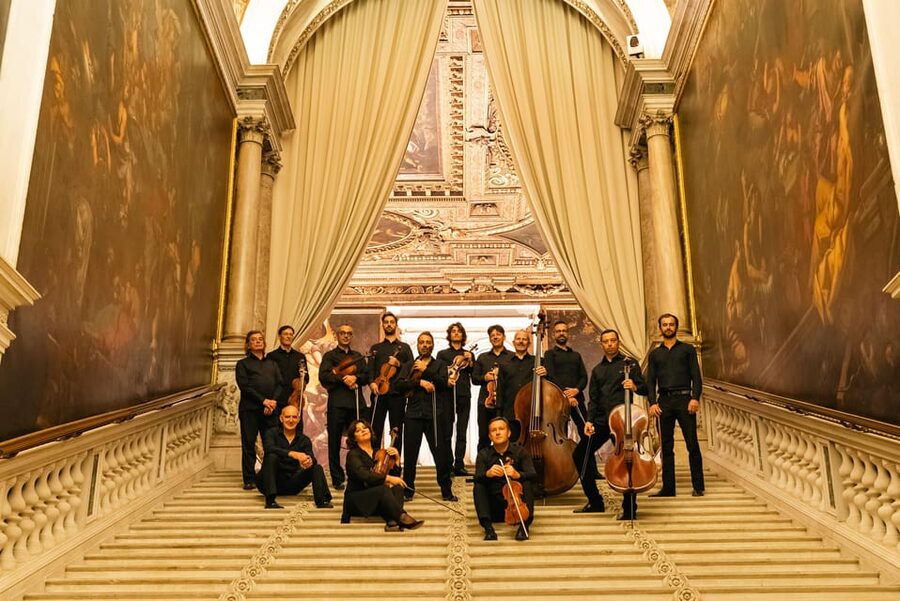
I would recommend this experience if you want an evening activity with a strong connection to Venice, especially if you enjoy violin music, historic churches, or traditional craftsmanship.
It suits first-time classical listeners because the program includes well-known composers and the live energy can make the music feel approachable. It also suits experienced listeners who want to hear Baroque music in a setting that feels connected to the city.
Families may enjoy it if everyone can sit quietly through the performance. Keep in mind that unaccompanied minors are not allowed, and the house rules leave little room for restless behavior, snacks, or phone use.
I would skip it if your main goal is a guided tour with detailed commentary, a flexible drop-in performance, or a short activity under an hour. The concert is the focus, and you need to plan around its fixed starting time.
Should you book the Vivaldi concert and museum?
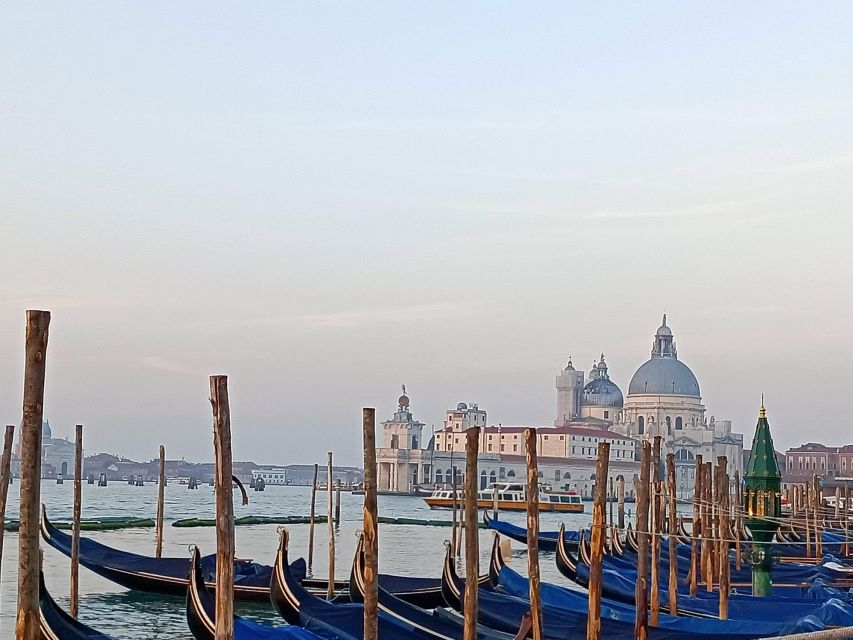
Book it if you want more than a quick photo stop in Venice. The combination of live Baroque music at San Vidal and a free museum devoted to instruments and Italian violin making gives you two connected ways to experience the city.
The strongest reason to choose it is the concert setting and the musicians’ energy. The best value comes from using the museum as part of your route rather than ignoring it. Visit San Maurizio before or after the performance, leave time for Venice’s slow streets, and do not schedule anything too close to the advertised end time.
At $44.41, this is not a bargain attraction for someone who has no interest in classical music. For a live Vivaldi-centered concert, a historic church setting, and free access to 200 instruments, it is a sensible cultural splurge.
FAQ
Where does the concert take place?
The concert takes place at the Church of San Vidal in Campo Santo Stefano, near the Accademia Bridge.
Where is the Music Museum?
The Music Museum is located in San Maurizio Church, on the route from San Vidal toward St. Mark’s Square.
How long does the experience last?
The listed duration is 80 minutes. One performance account describes the concert as lasting about an hour and a half, so leave extra time after the scheduled end.
Is admission to the Music Museum included?
Yes. Admission to the Music Museum is free.
Which composers may be included in the concert?
The program centers on Antonio Vivaldi and may also include Bach, Mozart, Albinoni, Tartini, Marais, and Boccherini.
Is the activity wheelchair accessible?
Yes, the activity is wheelchair accessible. The host or greeter service is available in English, French, Italian, German, and Spanish.
More Museum and Gallery Visits in Italy
- Florence: Duomo Museum Tour & Brunelleschi’s Dome Climb
★ 4.4 · 45 reviews - Duomo Museum & Baptistry: Cathedral Complex & Bell Tower
★ 4.5 · 42 reviews - Borghese Gallery Private Tour: The Greatest Baroque Masterpieces
★ 5.0 · 6 reviews - Florence: Brunelleschi’s Dome Climb & Cathedral Museum tour
★ 5.0 · 4 reviews
Just added around Italy
- Vicenza: discovering the city of Palladio by e-bike★ 5.0 · 4 reviews
- Vicenza: Palladian Architecture Private Walking Tour★ 3.3 · 3 reviews
- Turin: Art Nouveau Walking Tour with Coffee★ 5.0 · 11 reviews
- Vatican: Exclusive Baroque Evening With Aperitivo & Dinner★ 3.1 · 2 reviews
- Venice Music Project – Baroque Autumn – Season 2025★ 4.5 · 7 reviews
- Walking tour in Venice with an architect★ 5.0 · 16 reviews
- Palladio. A wonderful live tale through time&soul, from Ve/Pd/Vr★ 5.0 · 7 reviews
- Turin, Art Nouveau walking tour and coffee break★ 4.0 · 7 reviews
Baroque Architecture Tours, compared.
Lecce: Baroque Architecture and Underground Walking Tour
Read our review →
Train Exp. through the Alps (Royal Baroque Route from Nice)
Read our review →
Dresden: Tour of the Baroque Quarter with a Night Watchman
Read our review →
Interpreti Veneziani Ensemble Baroque Concert in Venice Ticket
Read our review →
Borghese Gallery Max 6 People Tour: Baroque & Renaissance in Rome
Read our review →
Concert at the Palais Schönborn-Batthyány by the Vienna Baroque Orchestra
Read our review →
Guided Walking Tour of Rome: Top Sights & Baroque Treasures
Read our review →
Noto, Modica and Ragusa: The Baroque Tour from Catania
Read our review →Browse the lists this tour appears in