
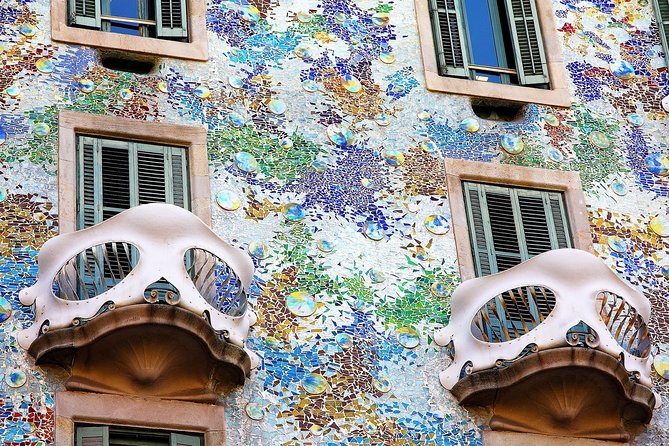
Review · BARCELONA
The wonders of architecture 2 hours on foot in Barcelona
Barcelona’s architecture tells the city’s story in quick, colorful chapters. In two hours, this walking tour links the medieval Barcelona Cathedral with the Palau de la Música Catalana, Plaça Catalunya, and the Modernista façades of the Eixample, ending at Gaudí’s Casa Batlló.
I like the small group limit of 10, which should make it easier to ask questions and hear the guide in busy streets. I also like the route’s range: you see Gothic stonework, Catalan Modernisme, bourgeois showpieces, and the urban divide between the old city and the Eixample. The main drawback is that most stops are exterior visits, with admission fees not included, and two hours allows only a brisk introduction.
Key points at a glance
- A compact architecture route: Walk from the medieval center to Passeig de Gràcia in about two hours.
- French-language guiding: The tour is designed for French-speaking visitors and is led by passionate guides, including Florence and Valérie.
- Only 10 people: The small maximum suits anyone who prefers conversation over a large group.
- Six notable stops: See Barcelona Cathedral, the Palau de la Música Catalana, Plaça Catalunya, Casa Lleó i Morera, Casa Amatller, and Casa Batlló.
- Strong local context: Expect stories about Catalan identity, founding myths, urban change, and the eccentric tastes of Barcelona’s wealthy families.
- Good value for a short orientation: At $29.67 per person, the price is reasonable if you want an informed introduction rather than a full museum tour.
From medieval Barcelona to Gaudí in two hours
The smartest feature of this route is its timeline. You begin in the old city, where Barcelona’s buildings are tied to medieval power and religious life, then walk toward the planned Eixample, where wealthy families competed through elaborate façades.
That change is more useful than a simple parade of famous buildings. You can see how Barcelona shifted from a tightly packed historic center to broad avenues filled with Modernista architecture. The guide’s job is to connect those changes, not just point at pretty windows.
The route starts at 10:30 a.m. at Plaça de Ramon Berenguer el Gran. From there, you finish on Passeig de Gràcia at Casa Batlló. This one-way design works well because you do not spend time doubling back.
The guide speaks French, and the tone is intended to be friendly and relaxed. Florence is named repeatedly in the supplied feedback, while Valérie is also mentioned as a guide for related visits. The comments describe Florence as warm, clear, humorous, flexible, and generous with restaurant suggestions and other advice for a stay in Barcelona.
That practical side matters. A good walking tour should help you understand what you are seeing, but it should also help you use the rest of your time in the city. Here, you may get suggestions that extend beyond architecture, especially if you ask.
A few more architecture tours around Barcelona worth a look
- Barcelona 2-Hour Gothic Walking Tour
★ 4.7 · 317 reviews - Guided Gaudí Trencadís Mosaic Workshop in Barcelona 2 Hours
★ 5.0 · 176 reviews - Gaudi’s Barcelona 2-Hour Segway Tour with a Live Guide
★ 4.9 · 67 reviews
Barcelona Cathedral and the medieval starting point
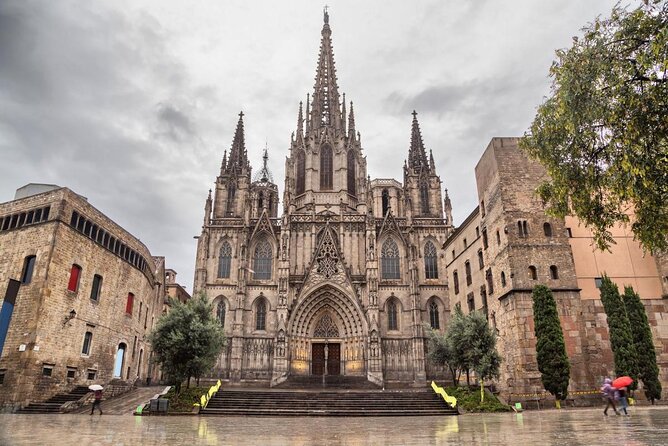
The first stop is Barcelona Cathedral, where you spend about 15 minutes discussing the building’s construction, details, and surrounding stories. The cathedral gives the tour a firm historical base before the Modernista buildings take over.
This is an exterior-focused stop, and admission is not included. The information provided does not promise an interior visit, so you should plan on looking closely at the outside unless your guide says otherwise.
Take a moment to study the façade rather than rushing straight to photographs. The stonework, vertical lines, and layered decoration establish a strong contrast with the fluid curves and bright ceramic surfaces you will see later.
The cathedral also places you in the old city, where streets and buildings feel more compact than the Eixample. That setting helps explain the city’s later expansion. You are not just looking at separate monuments. You are beginning to see the physical story of Barcelona.
The 15-minute stop is enough for useful orientation, but not enough for a detailed architectural study. If the cathedral is a major priority, allow separate time before or after the tour.
Palau de la Música Catalana and Catalan identity
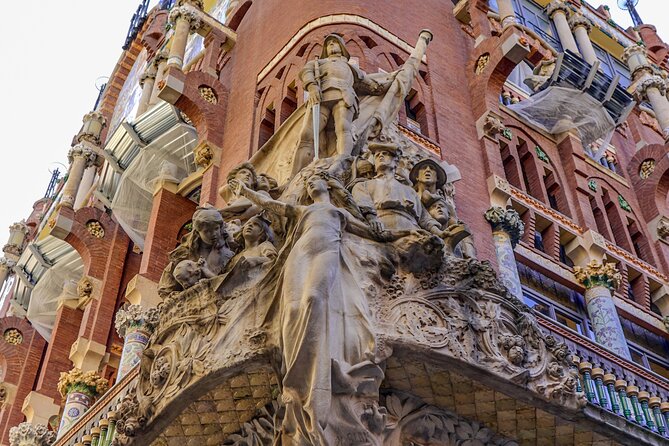
Next comes the Palau de la Música Catalana, another 15-minute stop. The focus is on its architecture, anecdotes, and the founding myths connected with Catalonia.
This building is especially important for understanding how architecture can carry political and cultural meaning. The route presents it not only as a decorative concert hall, but also as a place where ideas about Catalan identity are expressed through design and symbolism.
Admission is not included here either. The stop is best treated as an outdoor explanation unless your booking details specifically confirm an interior entry. If you want to see the concert hall inside, you should arrange that separately.
The guide’s storytelling is likely to be most useful at this point. The supplied comments repeatedly emphasize natural explanations, humor, and the ability to make Barcelona’s history understandable to different ages. One family described learning from Florence with both young children and older relatives, which suggests the presentation is not aimed only at architecture specialists.
Still, keep your expectations in check. Fifteen minutes gives you a helpful introduction, not a full concert-hall visit or a technical lecture on every design element.
Plaça Catalunya, where two Barcelonas meet
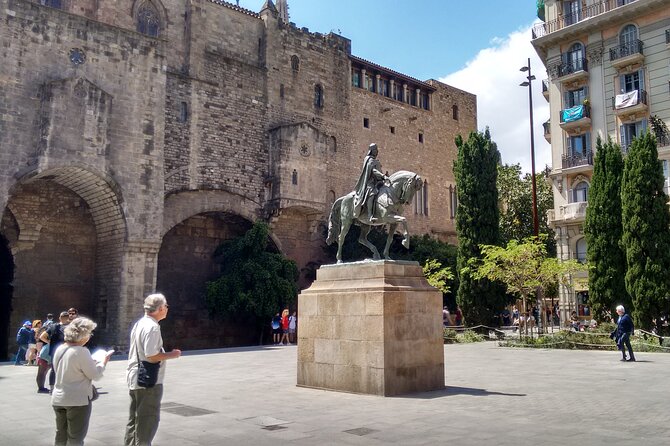
The route then reaches Plaça Catalunya, described as the border between the old city and the modern city. It is a short 15-minute stop, but its position makes it one of the most useful parts of the walk.
Here, the guide can explain the shift from medieval Barcelona to the orderly grid of the Eixample. The square is a natural pause between two forms of city planning, and it helps you understand why the next section feels wider, grander, and more formal.
This is also where the route’s reference to the Champs-Élysées in Barcelona begins to make sense. The comparison points toward the grand character of Passeig de Gràcia, the broad avenue that leads to several of the city’s best-known Modernista façades.
Plaça Catalunya itself is free to visit. Because it is an open public space, the stop should be easy for most people, though the group may be surrounded by city traffic and other pedestrians. Bring your attention back to the guide when moving through the square.
Same city, a completely different century:
- Barcelona: Sagrada Familia Entry Ticket with Audio Guide
★ 4.6 · 105,312 reviews - Barcelona: Casa Batlló Entry with Self-Audioguide Tour
★ 4.7 · 25,359 reviews - Barcelona in 1 Day: Sagrada Familia, Park Guell,Old Town & Pickup
★ 5.0 · 13,541 reviews - Barcelona: Sagrada Familia Skip-the-Line Entry Ticket & Tour
★ 4.8 · 12,789 reviews
Passeig de Gràcia and the competition of the wealthy
The walk continues along the grand avenue often compared with the Champs-Élysées. This part of Barcelona shows how the city’s wealthy families used apartment buildings to display taste, money, and social ambition.
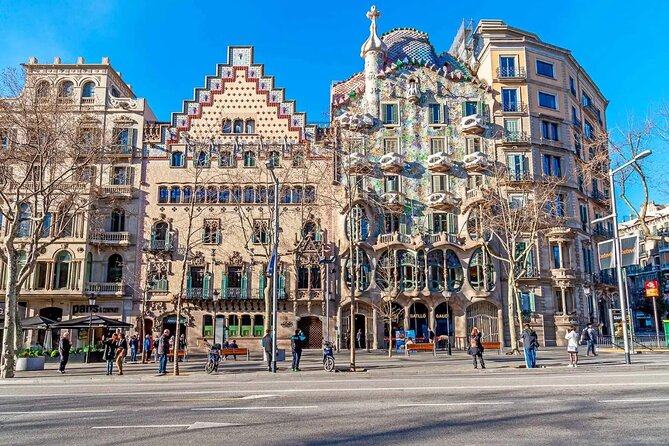
The route includes three buildings associated with the famous Illa de la Discòrdia, or Block of Discord: Casa Lleó i Morera, Casa Amatller, and Casa Batlló. They sit close enough together for the comparison to work well. You can look from one façade to another and see very different answers to the same question: how should a prosperous Barcelona family announce itself?
This section is one of the tour’s strongest features because it puts famous buildings into a rivalry. Instead of treating each structure as an isolated masterpiece, the guide can show how the façades compete through color, sculpture, balconies, rooflines, and unusual details.
Casa Lleó i Morera, a less familiar Modernista stop
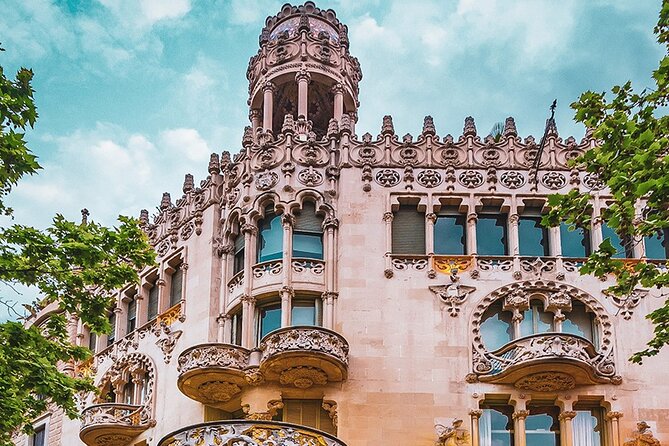
Casa Lleó i Morera receives about 10 minutes. It is a useful inclusion because many short Barcelona walks focus only on Gaudí and skip the other architects who shaped the city’s Modernisme.
The building is part of the same architectural contest as Casa Amatller and Casa Batlló, but its story can easily be missed if you are walking independently. The guide draws your eye to details that may not be obvious from street level and places the building within the social world of the Eixample.
Admission is not included, and the route does not promise entry. For most visitors, the value here lies in comparison. Once you have seen this façade, the next buildings become easier to read because you are looking for choices, not simply decoration.
The 10-minute limit keeps the walk moving, though anyone who loves ornate architectural details may wish for more time. Take photos quickly, then listen. The explanation is likely to be more useful than trying to record every carving.
Casa Amatller and the Catalan version of luxury
Casa Amatller gets another 10-minute stop. It forms the second part of the Block of Discord sequence and gives the guide a chance to explain how the building reflects the tastes and ambitions of its owners.
The tour description highlights the eccentricities of the bourgeoisie, and this is where that theme comes alive. These façades were not modest backdrops. They were public statements, shaped by the desire to be noticed in a newly expanding city.
You will likely appreciate the contrast between Casa Amatller and its neighbors more than the building alone. Look at the roofline, the surface treatment, and the way the façade differs from Gaudí’s work next door. The point is not to decide which building is best. It is to see that Barcelona’s Modernista identity came from several architects and several competing ideas.
Again, you are not paying for admission to an interior attraction. That keeps the tour affordable, but it also means the experience depends heavily on the guide’s explanation and your willingness to look carefully from the street.
Casa Batlló, the colorful finish
The final stop is Casa Batlló, where the tour spends about 15 minutes. Designed by Antoni Gaudí, it is the most instantly recognizable building on the route and a fitting finale.
The guide focuses on its shapes, colors, and unusual architectural details. You will have a chance to consider how Gaudí turned an urban apartment building into something that feels almost like a piece of sculpture.
Casa Batlló is also the endpoint, at Passeig de Gràcia 43. Finishing here is convenient if you want to continue along the avenue, find food, or visit another central attraction. The tour does not include admission, so an interior visit would require a separate ticket and additional time.
That limitation is worth noting. A 15-minute exterior explanation can help you see the building with new eyes, but it cannot replace a full visit. If Casa Batlló is one of your top Barcelona priorities, use this walk as an introduction and schedule the interior separately.
What the guides add beyond the buildings
The strongest theme running through the supplied comments is the quality of the human side of the tour. Florence is described as passionate, professional, friendly, punctual, and attentive to individual requests. Valérie is also praised for making unusual outings engaging during a short Barcelona stay.
The comments also point to a guide who adapts the route and conversation when possible. One private visit was described as going away from the usual path, while another focused on changing neighborhoods and new urban projects. Those details come from related Barcelona Autrement experiences, so you should not assume this exact architecture walk includes roof terraces or hidden side streets. They do suggest a guiding style that values personal contact and local context.
French speakers should find the format particularly appealing. The tour is made for explanations in French, with an emphasis on culture rather than a dry list of dates and architects.
Families may also find the pace workable. The route is short, and the 10-person maximum creates a more personal setting. Young children may not care about every architectural detail, but stories about unusual buildings, wealthy families, and strange shapes can hold attention better than a formal lecture.
Price, group size, and practical value
At $29.67 per person, this is a fair price for a two-hour guided walk with a maximum of 10 people. You are paying for interpretation, route planning, and the chance to ask questions, not for entry to the buildings.
I would call it good value if you are visiting Barcelona for the first time, speak French, and want a quick framework for the city’s architecture. It is less compelling if you already know the Gothic Quarter and Modernisme well, or if you want interiors included in the price.
The mobile ticket keeps the booking simple. Confirmation is sent within 48 hours, subject to availability, so do not wait until the last moment if your schedule is tight.
The meeting point is Plaça de Ramon Berenguer el Gran, and the walk ends at Casa Batlló. Public transportation is nearby, and most people can participate. Service animals are allowed.
Wear comfortable shoes, since this is a walking route with several stops and city streets between them. Barcelona’s weather matters here: the experience requires good weather. If poor weather forces cancellation, you are offered another date or a full refund.
You can cancel for a full refund up to 24 hours before the start time. Cancellations or changes made inside that 24-hour window are not refunded or accepted, so keep that deadline in mind.
Who should book this Barcelona architecture walk?
I would recommend it to French-speaking couples, families, and small groups who want an easy introduction to Barcelona’s architecture without spending half a day inside museums. It also suits repeat visitors who want a guide to connect familiar sights rather than simply photograph them.
The route is especially useful early in your stay. After two hours, you should have a better sense of the difference between the medieval center and the Eixample, and you will recognize why Casa Batlló, Casa Amatller, and Casa Lleó i Morera are best viewed together.
I would choose something else if you want a long technical discussion, extensive interior access, or a slow photography walk. The schedule is tight, most admissions are separate, and each stop receives only 10 to 15 minutes.
Should you book it?
Book this tour if you want a lively French-language introduction to Barcelona’s architecture, with a small group and a route that moves from cathedral stone to Gaudí curves. The best value comes from the guide’s stories, comparisons, and practical advice.
Skip it if you already have detailed plans for the same buildings or need guaranteed interior visits. For everyone else, the $29.67 price buys a useful first look at the city’s architectural story, plus a clear sense of where to spend more time afterward.
FAQ
How long does the architecture tour last?
The tour lasts approximately two hours.
What language is the tour conducted in?
The tour is conducted in French.
Where does the tour begin?
It begins at Plaça de Ramon Berenguer el Gran in Barcelona’s Ciutat Vella.
Where does the tour end?
It ends at Casa Batlló, at Passeig de Gràcia 43 in the Eixample.
What buildings are included?
The route includes Barcelona Cathedral, the Palau de la Música Catalana, Plaça Catalunya, Casa Lleó i Morera, Casa Amatller, and Casa Batlló.
Are entrance fees included?
Admission is not included for Barcelona Cathedral, the Palau de la Música Catalana, Casa Lleó i Morera, Casa Amatller, or Casa Batlló. Plaça Catalunya is free.
How many people can join the tour?
The activity has a maximum of 10 participants.
Just added around Barcelona
- Love in the Gothic Quarter Barcelona: Self-Guided Romantic Walk★ 4.5 · 9 reviews
- Walking tour of the Gothic Quarter of Barcelona + Cathedral★ 5.0 · 8 reviews
- Wine tasting with a view of the Sagrada Familia★ 4.5 · 13 reviews
- Visit to the Modernist houses of the Americans★ 5.0 · 2 reviews
- Barcelona Jewish & Gothic Tour★ 5.0 · 18 reviews
- Roman & Gotic & Gaudi in Barcelona: private walking tour★ 4.5 · 2 reviews
- Self-Guided Audio Tour-The Surrealist Barcelona of Dalí and Gaudí★ 3.5 · 8 reviews
- Barcelona Gaudi Tour: Sagrada Familia, Casa Batllo & Casa Mila★ 5.0 · 4 reviews
2-Hour Experiences, compared.
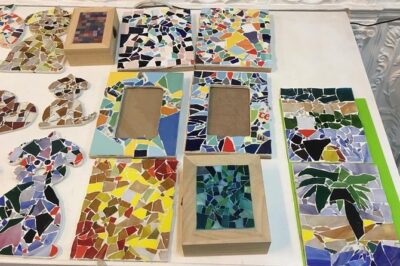
Guided Gaudí Trencadís Mosaic Workshop in Barcelona 2 Hours
Read our review →

Riga: 2-Hour History of Art Nouveau Walking Tour
Read our review →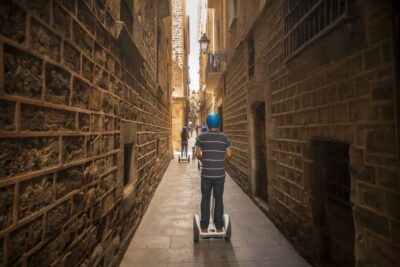
Gaudi’s Barcelona 2-Hour Segway Tour with a Live Guide
Read our review →
Browse the lists this tour appears in