
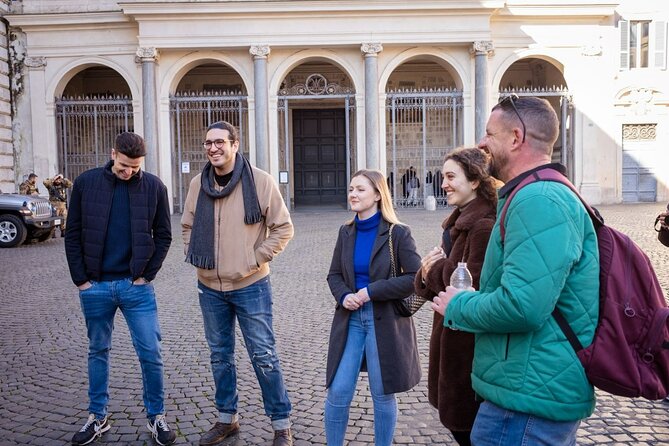
Review · BARCELONA
Private Barcelona Highlights: Gothic Quarter with a Local Guide
Barcelona’s old center is easy to lose yourself in, and that is both its charm and its nuisance. This two-hour guided walk takes you through the Gothic Quarter and into El Born, linking Roman ruins, Civil War scars, royal power, Catalan identity, and maritime history. You cover a lot of ground without spending the evening studying a map.
I like the range of stops, especially the small places you might pass without noticing, such as Casa de l’Ardiaca and Plaça de Sant Felip Neri. I also like the early evening start, which lets you use the tour as a gentle introduction to Barcelona before dinner. The main drawback is the price: at $180.22 per person, this is costly for a two-hour walk, and entrance fees for Barcelona Cathedral and Santa Maria del Mar are not included.
Key points at a glance
- Eleven stops in two hours: See major churches, squares, Roman remains, royal buildings, and El Born.
- A strong first-day orientation: The route helps you understand the center of Barcelona before exploring on your own.
- Stories beyond the grand sights: Learn about Picasso and Gaudí at Els 4 Gats, Catalan identity at Plaça de Sant Jaume, and the city’s Jewish quarter.
- Several guide styles: Past departures have featured Mariah, Darren, Lydia, Sara, Lindsay, Tamara, Vanessa, and others.
- Evening timing: The 6:00 pm start works well after a day of arrival or sightseeing.
- Extra costs matter: Cathedral and basilica admission are not part of the tour price.
A smart first walk through old Barcelona
The appeal here is not one single monument. It is the way the route connects different chapters of Barcelona in a short time. You begin near Plaça del Vuit de Març in Ciutat Vella and finish at the Basilica de Santa Maria del Mar, crossing the Gothic Quarter and continuing toward El Born.
That route gives you a useful mental map. You see where Roman Barcino once stood, where medieval religious and royal power gathered, where the former Jewish quarter was located, and how the city’s maritime past shaped El Born. If you are new to Barcelona, that context can make the rest of your visit easier.
The tour begins at 6:00 pm. That timing has practical value. You can spend the morning at another major sight, rest during the afternoon, then use the walk to get your bearings before choosing a restaurant. One person who took the tour soon after arriving found it useful for planning the following days. I agree with that approach: this works best near the start of a Barcelona stay.
The group can include up to 20 people. That is not the same feel as a one-to-one private walk, despite the title describing the experience as private. If you want a very intimate conversation with a guide, check the booking terms carefully. A group of 20 can also make it harder to hear in busy streets, and one participant specifically suggested a microphone and headphones.
More Gothic quarter walks in Barcelona:
- Barcelona all included: Sagrada, Park Güell, Montjuic & Gothic
★ 5.0 · 2,169 reviews - Barcelona Gothic Quarter Tapas & Taverns Food & Wine Tour
★ 5.0 · 1,470 reviews - Barcelona: Old Town and Gothic Quarter Walking Tour
★ 4.8 · 1,393 reviews
Els 4 Gats and the artistic side of Barcelona
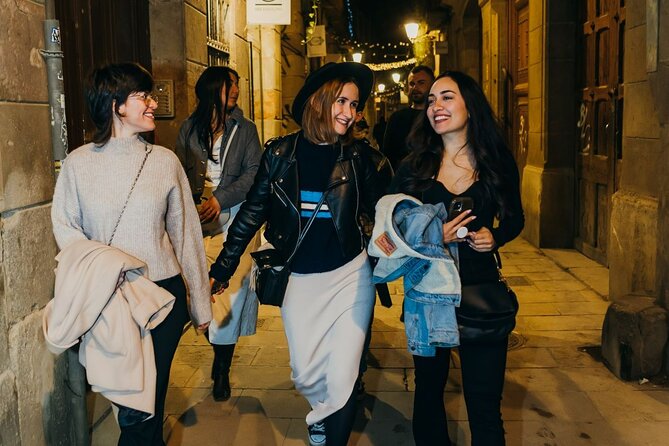
The first stop is Els 4 Gats, usually translated as The Four Cats. The restaurant occupies Casa Martí, an Art Nouveau building, and its importance comes from more than the building itself. It became part of Barcelona’s artistic story and was frequented by figures including Pablo Picasso and Antoni Gaudí.
You will spend about 10 minutes here, with no admission charge. That is enough for an introduction, not a full architectural inspection or meal. The stop works well because it sets up a useful theme: Barcelona’s old center is not only about medieval churches. It also played a role in the city’s modern artistic life.
Do not expect a Sagrada Família discussion here. The advertised route does not include the basilica, even from the outside. One booking misunderstanding centered on that point, so I would not count on any Sagrada Família content unless the provider confirms it directly.
A kiss, a cathedral, and the story of Eulalia
El Món Neix en Cada Besada is a large photo mural known in English as The World Begins With a Kiss. Its image represents freedom for many people in Barcelona and connects with an important day in Catalan history.
This is a quick photo and explanation stop. It adds a modern civic note before the route turns toward the Gothic Quarter’s older monuments. You get a reminder that local identity in Barcelona is not just something found in museums. It appears in public art, language, symbols, and neighborhood spaces.
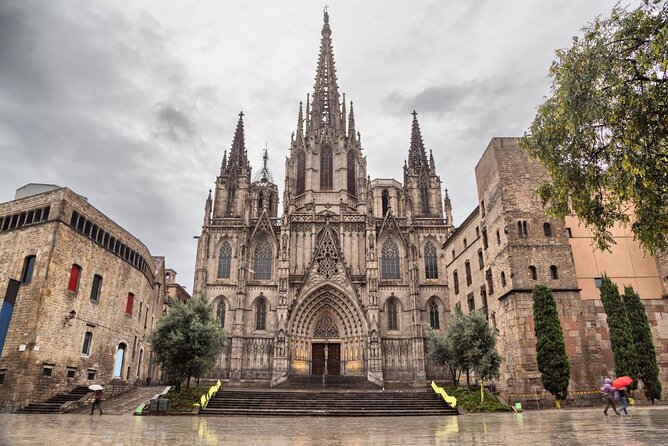
Barcelona Cathedral follows. It is the central church of the Barri Gòtic and is linked with Saint Eulalia, the city’s patron saint. The guide explains the cathedral’s place in the quarter and its religious story, but the admission ticket is not included.
That distinction matters. Ten minutes is enough to understand why the cathedral matters and to see its exterior, but it is not enough for a full interior visit. If you want to go inside, plan for a separate visit and budget for the admission charge. The same applies to Santa Maria del Mar later in the walk.
Roman Barcelona at Casa de l’Ardiaca
Casa de l’Ardiaca is one of the route’s more rewarding small stops. It takes you back to the first century BC, when Barcelona was the Roman colony of Barcino. The building contains remains of the Roman wall and arcades connected with the aqueducts that supplied water.
This is exactly the kind of place that can slip past you without a guide. The exterior does not announce the full story, and a short explanation helps you read the layers of the city. You are not simply looking at an old building. You are seeing traces of the street plan and infrastructure of Roman Barcelona.
The stop is free and lasts about 10 minutes. I would treat it as a compact history lesson rather than a long archaeological visit. The value comes from the connection between the surviving remains and the streets you are walking through.
More private architecture tours in Barcelona:
- Sagrada Familia & Gaudi Tour Private or Small Group with Tickets
★ 4.5 · 1,188 reviews - Barcelona: Sagrada Familia, Park Guell & Tapas Private Tour
★ 5.0 · 903 reviews - Park Guell and Sagrada Familia Private Tour with Hotel pick-up
★ 5.0 · 760 reviews - Barcelona 1.5h Private Old Town, Gothic & Ramblas Walking Tour
★ 5.0 · 318 reviews
Pont del Bisbe and the legends of the Gothic Quarter
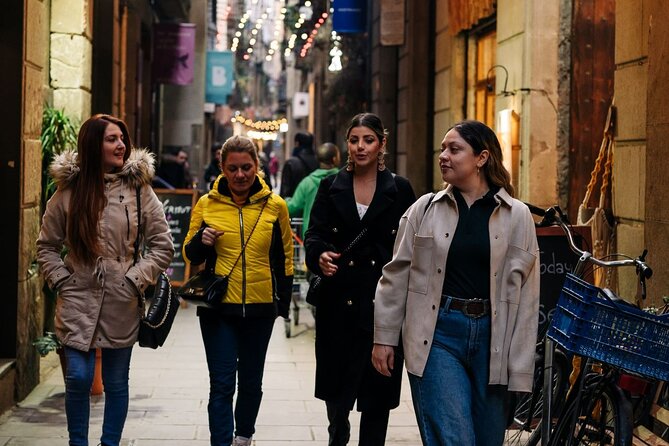
Pont del Bisbe, or Bishop’s Bridge, is one of the most photographed details in the Gothic Quarter. Its neo-Gothic design links buildings above the narrow street and comes with a well-known local legend.
The guide uses the bridge to explain how Barcelona mixes documented history with stories that have grown through local memory. That approach suits this district. The streets are old, but not every striking detail tells a simple or fully documented story.
The stop takes roughly 10 minutes and costs nothing. It is also a good place to listen closely, since the bridge is easy to photograph but much less interesting if you only see it as a decorative arch. The explanation gives it meaning.
Plaça de Sant Felip Neri and Barcelona’s difficult past
Plaça de Sant Felip Neri is small, quiet, and marked by the scars of Barcelona’s Civil War period. The damaged walls give the square a solemn mood that contrasts with the lively streets nearby.
This is one of the route’s strongest changes of pace. You move from architecture and legends to the effects of violence on an ordinary public place. The guide’s role is important here because the square does not explain its own history. Without context, you might notice the pockmarked walls but miss why they matter.
The stop is free and lasts about 10 minutes. It is worth allowing the guide to set the tone rather than treating it as just another photo stop. Families with children may want to prepare younger visitors for a more serious part of the walk.
El Call and the Jewish quarter
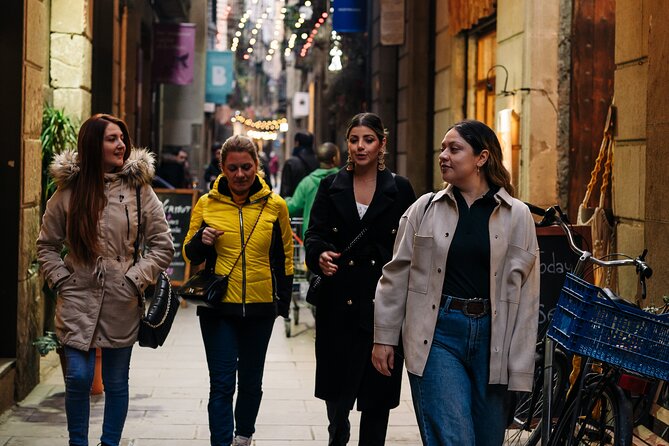
MUHBA El Call marks the former Jewish neighborhood of Barcelona. The stop offers a look at the area’s past, including an ancient synagogue and local legends.
The former Jewish quarter adds another layer to the city’s story. Medieval Barcelona was shaped by different religious and cultural communities, and El Call helps you see the old center as more than a collection of Christian monuments. The guide can also help you understand how a district that now looks like a maze of lanes once served a distinct community.
Again, the visit is brief and free. You should not expect a full museum tour or a long interior visit. Think of it as a focused introduction that may help you decide if you want to return for more on your own.
Plaça de Sant Jaume and Catalan public life
Plaça de Sant Jaume is one of the most important public squares in Barcelona. It is home to the seat of the Catalan government and City Hall, making it a useful place to discuss how the city and Catalonia are governed.
The square also connects with the story of Catalonia’s most beloved saint. That gives the guide a chance to link public institutions, local tradition, and regional identity in one setting.
I like this stop because it makes Barcelona’s political character easier to understand without turning the walk into a formal lecture. The square is open, central, and easy to revisit later. If you return on your own, you can take a closer look at the surrounding façades and watch the city’s public life unfold.
Plaça del Rei and the royal center
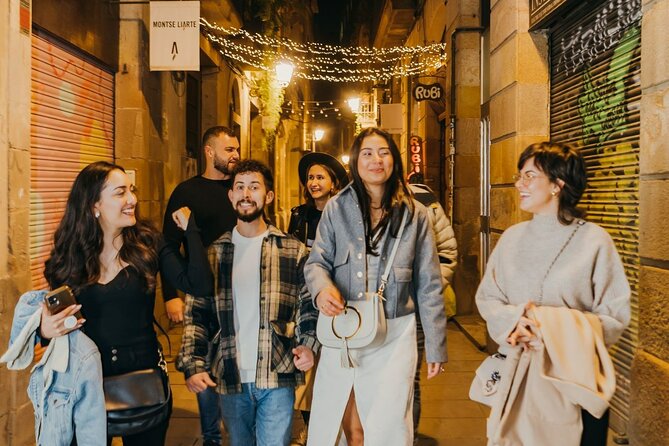
Plaça del Rei brings the route into Barcelona’s royal past. The imposing Royal Palace dominates the square, and the guide places it within the darker story of the Spanish Inquisition.
This is one of the grandest settings on the walk, but the subject is not purely ceremonial. The square represents authority, religion, and the use of power. A short explanation helps you see why the palace matters beyond its appearance.
The area also gives you a strong sense of the medieval city’s scale. Compared with the tight lanes around El Call and Plaça de Sant Felip Neri, the square opens up and feels formal. You get another free 10-minute stop, with no palace admission included.
Plaça de l’Àngel and the Saint Eulalia story
Plaça de l’Àngel, or Angel’s Square, once served as a center for grain trading. It is also connected with a story about a heavenly apparition during a procession for Saint Eulalia.
This stop shows how everyday commerce and religious tradition shared the same streets. Grain trading made the square useful to ordinary residents, while the story of Saint Eulalia gave it a place in the city’s spiritual memory.
The stop is short, so you will not get a long account of medieval trade. Still, it helps you understand how names and legends survive in the modern city. The square is another example of why a guided route can be more useful than simply walking from landmark to landmark.
Santa Maria del Mar and the move into El Born
The walk ends at the Basilica de Santa Maria del Mar in El Born. This church is closely tied to Barcelona’s maritime past and gives the tour a fitting finish. After spending most of the route in the Gothic Quarter, you reach a different part of the old city with its own character.
Admission is not included. The 10-minute stop can introduce the basilica’s importance, but it is not a substitute for going inside. If you want a fuller visit, check opening arrangements and admission details separately.
The ending point is practical. You finish at Plaça de Santa Maria, 1, in a district with places to eat and continue exploring. The tour does not provide a meal, but one guide was praised for offering suggestions about where to eat. Treat that as guide-dependent rather than a formal part of the experience.
Guide quality can shape the whole evening
The strongest praise centers on the guides’ storytelling, clear explanations, and ability to keep the group involved. Mariah is repeatedly described as lively and engaging, with humor that kept the walk moving. Darren was praised for answering questions, sharing practical tips, and even helping when a group arrived late. Lydia received strong marks for her stories about Catalan people and history.
Other guides named in the feedback include Sara, Lindsay, Tamara, Vanessa, Jordan, Rolene, Rossaline, Craig, and Tyson. You should not assume which person will lead your departure, but the range of names suggests that the tone can vary. Some guides lean toward jokes and myths, while others may offer a more direct history lesson.
That variation is worth noting. One participant felt a guide used language that was unsuitable around children and tried too hard to be funny. Another enjoyed Mariah’s humor but noted that some anecdotes might not have been fully factual. If you prefer careful historical detail, ask questions and treat legends as legends. If you enjoy a relaxed and social style, a lively guide may suit you well.
Is $180.22 a fair price?
At $180.22 per person, the tour is expensive for two hours, especially since the main church admissions are extra. You are paying for a guide, route planning, local context, and the convenience of seeing 11 places without navigating the narrow lanes yourself.
The value improves if you are short on time, visiting Barcelona for the first time, or traveling with people who would rather follow a planned route. A good guide can help you notice Roman remains, political symbols, neighborhood history, and small squares that are easy to miss. That is more useful than simply ticking off famous façades.
The price is harder to justify if you already know the Gothic Quarter well or prefer to explore at your own pace. You can see many of the exterior sights without paying for admission. Since the group may reach 20 people, also make sure the booking arrangement matches what you expect from the word private.
Who should book this Barcelona walk?
I would consider this tour a good fit for first-time visitors, couples who want a structured introduction, and families or small groups that prefer a guide to handle directions. It also works well as an arrival-day activity because the 6:00 pm start gives you a simple way to learn the center without committing to a full-day outing.
It suits you less if your main goal is the Sagrada Família, interior access to major churches, or a long museum visit. None of those is the focus here. This is an outdoor orientation walk with short stops and a broad sweep of Barcelona’s past.
Wear comfortable shoes and keep your attention on the guide in narrow streets. If hearing is important to you, ask about audio equipment before booking. The route is near public transportation, confirmation is provided at booking, and most people can take part.
Free cancellation is available up to 24 hours before the start time for a full refund. Changes or cancellations inside that window are not accepted and are not refunded.
Should you book it?
Book this walk if you want a fast, story-led introduction to Barcelona’s oldest center and value having someone connect the Roman, medieval, Jewish, Catalan, and maritime chapters. The route is broad, the evening timing is useful, and guides such as Mariah, Darren, Lydia, and Sara have brought strong energy to the experience.
Skip it if $180.22 feels too high for a two-hour outdoor walk, if you need Sagrada Família coverage, or if you want included entry to the cathedral and Santa Maria del Mar. For the right visitor, the main benefit is not admission access. It is learning how the old city fits together before you explore it on your own.
FAQ
How long does the Barcelona Gothic Quarter tour last?
The tour lasts approximately two hours.
What time does the tour begin?
The start time is 6:00 pm.
Where does the tour start?
The meeting point is Plaça del Vuit de Març in Ciutat Vella, Barcelona.
Where does the tour finish?
The tour ends at the Basilica de Santa Maria del Mar, Plaça de Santa Maria, 1, in Ciutat Vella.
Are cathedral and basilica admission fees included?
No. Admission to Barcelona Cathedral and Santa Maria del Mar is not included in the tour price.
How many people can join the tour?
The activity has a maximum group size of 20 people.
Can I cancel for a full refund?
Yes. You can cancel at least 24 hours before the local start time for a full refund. Cancellations or changes made less than 24 hours before the tour are not refunded or accepted.
Just added around Barcelona
- Love in the Gothic Quarter Barcelona: Self-Guided Romantic Walk★ 4.5 · 9 reviews
- Wine tasting with a view of the Sagrada Familia★ 4.5 · 13 reviews
- Walking tour of the Gothic Quarter of Barcelona + Cathedral★ 5.0 · 8 reviews
- Visit to the Modernist houses of the Americans★ 5.0 · 2 reviews
- Barcelona Jewish & Gothic Tour★ 5.0 · 18 reviews
- Roman & Gotic & Gaudi in Barcelona: private walking tour★ 4.5 · 2 reviews
- Self-Guided Audio Tour-The Surrealist Barcelona of Dalí and Gaudí★ 3.5 · 8 reviews
- Barcelona Gaudi Tour: Sagrada Familia, Casa Batllo & Casa Mila★ 5.0 · 4 reviews
Gothic Quarter Tours, compared.
Barcelona all included: Sagrada, Park Güell, Montjuic & Gothic
Read our review →
Barcelona Gothic Quarter Tapas & Taverns Food & Wine Tour
Read our review →
Barcelona: Gothic Quarter Ghosts and Legends Walking Tour
Read our review →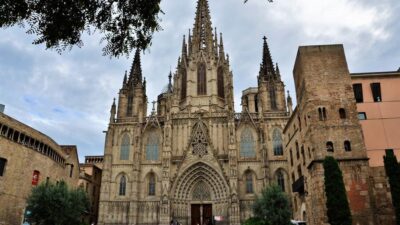
Barcelona: Old Town and Gothic Quarter Walking Tour
Read our review →
Barcelona Old Town & Gothic Quarter Small Group Tour
Read our review →
Ramblas, Old Town, Gothic and Gaudi Architecture Walking Tour
Read our review →
Barcelona: El Born and Gothic Quarter Wine & Tapas Bar Tour
Read our review →
Kids and Family Gothic Quarter Walking Tour in Barcelona
Read our review →Browse the lists this tour appears in