
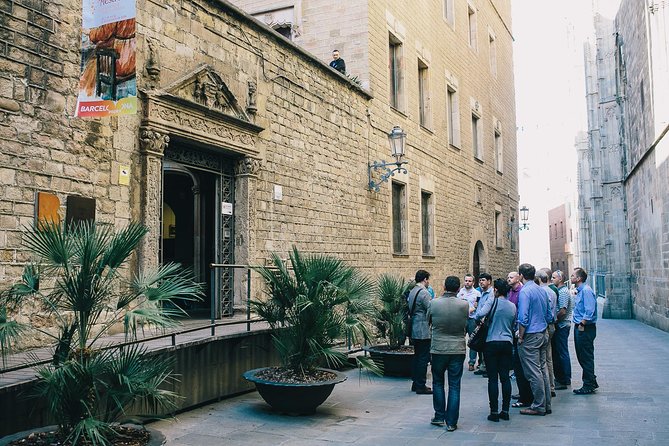
Review · BARCELONA
Gothic Quarter Insights & Tapas Experience
Barcelona’s Gothic Quarter is best understood on foot, where Roman columns, medieval palaces, narrow lanes, and small public squares appear one after another. This tour links the main sights with stories that help you understand how Barcino became Barcelona. I especially like the ancient Temple of Augustus and the quiet Plaça de Sant Felip Neri, two places that are easy to miss when you explore alone.
I also like the small-group format, limited to 20 people, and the simple finish: one pintxo and one drink with the group. Guides named in past tours include Ariana, Leah, Núria, and Maria, and the strongest feedback consistently praises the guides for making architecture and local history easy to follow. The main drawback is that this is an outdoor walking overview, not a series of full museum or church visits, and the narrow streets can be confusing at the meeting point.
Key points at a glance
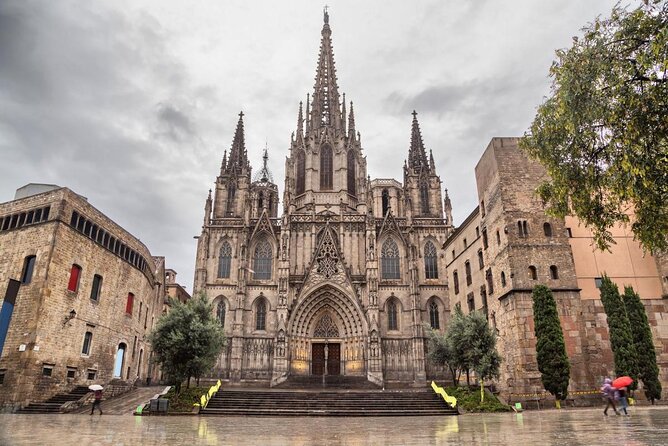
- Roman Barcelona in plain sight: See the ancient city wall at Plaça Nova and four surviving columns from the Temple of Augustus.
- A well-planned medieval route: Walk from the cathedral area through Plaça del Rei, Santa Maria del Mar, and Carrer de Montcada.
- One pintxo and one drink included: The food stop gives you a taste of local bar culture, but it is not a full meal.
- Useful early-visit orientation: The 3:30 pm start works well if you want to learn the quarter before exploring it on your own.
- Maximum group of 20: Small enough for questions, though the narrow streets may still make it hard to stay close to the guide.
- Comfortable shoes matter: Expect about two and a half hours on foot, with many photo stops and no hotel pickup.
Why this Gothic Quarter walk works
The Gothic Quarter can feel like a maze, even when you have a map. One lane may lead to a Roman wall, another to a Gothic church, and a third to a quiet square marked by scars from the past. This tour gives you a clear route and a guide to explain the changes.
The timing is useful. Starting at 3:30 pm gives you something substantial to do after lunch, and the tour ends back at the meeting point near the cathedral area. If you are staying in Ciutat Vella or arriving from a cruise, this can be an easy first look at the old center. One person specifically used the tour as a quick introduction after arriving from a cruise ship, which is a sensible use of the afternoon.
The guides speak English, Spanish, French, and Italian according to the tour details, although the included guide information specifically names English, Spanish, and French. Check your selected language when booking. Past guides mentioned by name include Ariana, Leah, Núria, and Maria. The best guides on this kind of walk do more than recite dates. They explain why a square looks the way it does and how Roman, medieval, and modern Barcelona overlap.
More Gothic quarter walks in Barcelona:
- Barcelona all included: Sagrada, Park Güell, Montjuic & Gothic
★ 5.0 · 2,169 reviews - Barcelona Gothic Quarter Tapas & Taverns Food & Wine Tour
★ 5.0 · 1,470 reviews - Barcelona: Old Town and Gothic Quarter Walking Tour
★ 4.8 · 1,393 reviews
Plaça Nova and the first look at Barcino
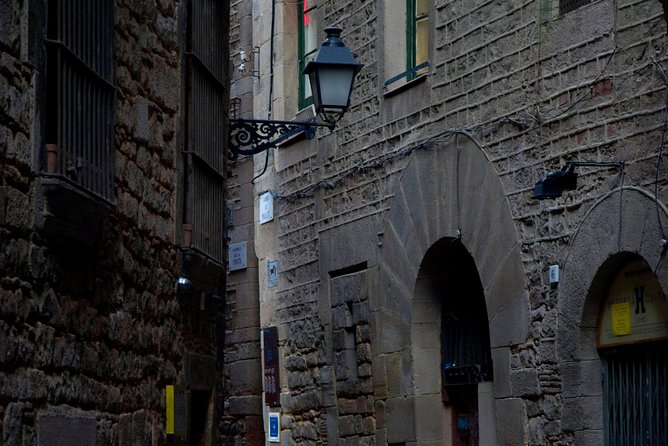
The tour begins at Lamaro Hotel Barcelona, at Av. de la Catedral, 7. From there, you move toward Plaça Nova, where seven large letters spell Barcino. Joan Brossa created the display, using six bronze letters and one aluminum letter.
This is a smart opening stop. Barcino was one of the main ancient names for the Roman colony that became Barcelona, and the letters sit close to the remains of the old Roman city wall. You get an immediate lesson in how the city connects its ancient past with modern public art.
You spend about 10 minutes here. Admission is free, and the stop is mainly about orientation and explanation rather than a long visit. Have your camera ready, since the letters make a striking contrast with the old stonework.
Barcelona Cathedral and the old episcopal center
The next stop is the cathedral area, listed as Catedral de Barcelona. The material here refers to the old episcopal center and the way new buildings rose within the Roman walls. Plaça Nova itself was created in the 14th century after water was channeled toward Collserola and buildings in front of the Roman gateway were demolished.
The listed stop lasts only about five minutes. That tells you what to expect: an exterior explanation rather than a full cathedral tour. You will not be paying a separate admission fee for this guided stop, and the tour does not promise entry into the cathedral.
This brief pause is still useful because it helps you read the area around the Portal del Bisbe, the old Roman gateway. Look up as you walk. The quarter is full of layered construction, and the guide can point out where the medieval city used Roman foundations and walls.
Casa de l’Ardiaca and a Renaissance courtyard
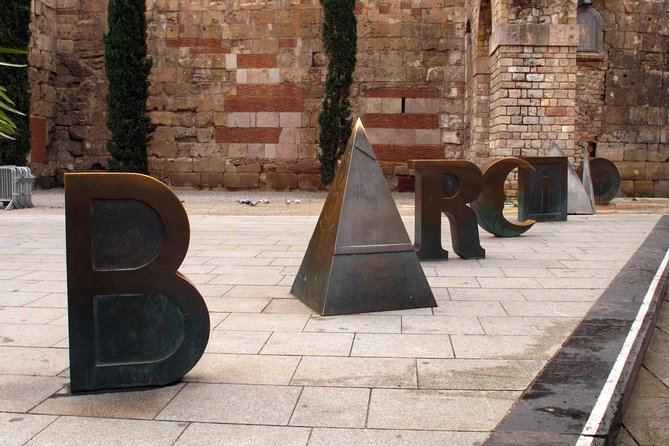
Casa de l’Ardiaca was tied to Barcelona’s church hierarchy from the 12th century onward. The building changed over time, including alterations in the early 16th century that connected it with the dean’s residence. Its central courtyard and Renaissance decorations sit alongside the original Gothic elements.
You have about 10 minutes here. The most appealing detail is the contrast between the building’s formal courtyard, its Gothic beginnings, and its later Renaissance touches. A staircase leads toward an upper terrace described as having a Romeo and Juliet style balcony.
This stop rewards visitors who like architectural details rather than only famous landmarks. It also shows why a guide helps in this quarter. Without context, Casa de l’Ardiaca can look like another handsome old building. With an explanation of its changing use, the structure becomes part of the city’s long development.
Same city, a completely different century:
- Barcelona: Sagrada Familia Entry Ticket with Audio Guide
★ 4.6 · 105,312 reviews - Barcelona: Casa Batlló Entry with Self-Audioguide Tour
★ 4.7 · 25,359 reviews - Barcelona in 1 Day: Sagrada Familia, Park Guell,Old Town & Pickup
★ 5.0 · 13,541 reviews - Barcelona: Sagrada Familia Skip-the-Line Entry Ticket & Tour
★ 4.8 · 12,789 reviews
Plaça de Sant Felip Neri, a quiet change of mood
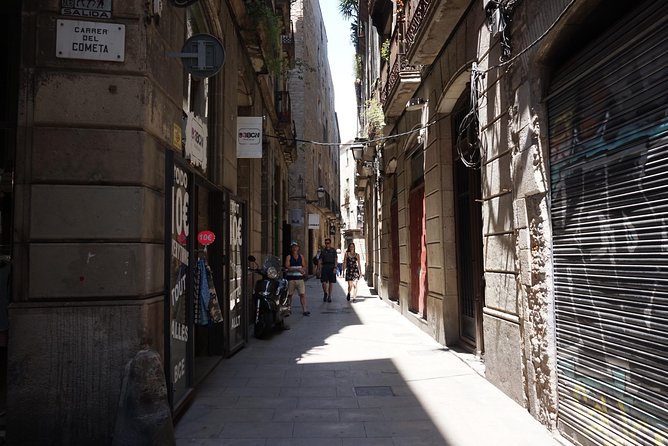
The narrow lanes open into Plaça de Sant Felip Neri, one of the route’s most atmospheric stops. A small fountain sits in the center, with the Baroque church of Sant Felip Neri overlooking the square. Former guild buildings associated with shoemakers and coppersmiths line the area.
You spend around 10 minutes here. The square is compact, so the guide’s story matters more than the amount of time. This is a place to pause, look closely, and listen.
I would not rush this stop. The Gothic Quarter is often pictured as a succession of grand churches and palaces, but small spaces like this give you a better sense of its street life and old trades. The surrounding lanes also show why you should wear shoes with good support. The route is not a strenuous hike, but the paving and frequent turns call for comfort.
Placeta del Pi and the old church cemeteries
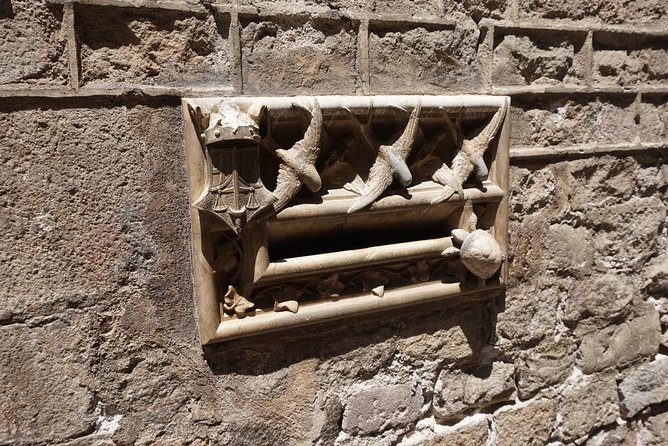
Placeta del Pi is grouped around a Gothic basilica and two small squares. The spaces were once cemeteries beside the 14th-century church. Today, painters and artisans use the squares to display their work.
The stop lasts about 10 minutes and is another chance to see how Barcelona repurposed old religious spaces. You can look at the basilica, the surrounding squares, and the way the public areas frame the church.
This is also a good place to ask questions. The tour is designed as a group experience, so the guide may need to keep the pace moving, but the group size of up to 20 people should leave room for a few quick questions. If you prefer long, quiet visits inside churches, this itinerary may feel too brief. If you want a well-paced introduction, the timing works.
Plaça del Rei and medieval royal power
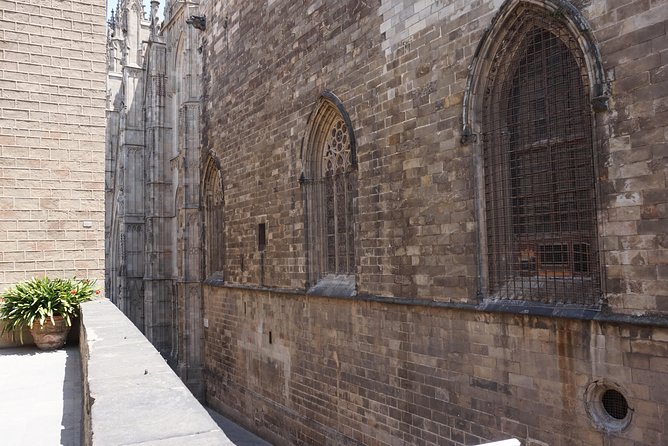
Plaça del Rei is one of the route’s major historical stops. The square contains the Palau Reial Major and nearby buildings that form one of Barcelona’s clearest medieval architectural groups.
Allow about 10 minutes with the guide. The value here is not simply seeing a handsome square. It is learning how royal power, religious authority, and civic life occupied the same compact center. The buildings enclose the square and create a sense of calm that contrasts with the busy streets outside.
This stop can be especially useful if you plan to return to the area later. A guide can give you the basic story first, then you can explore the surrounding museums and buildings at your own pace. The tour itself does not include paid admissions, so plan on seeing the sights from the route rather than treating this as a museum package.
The Temple of Augustus and Roman Barcelona
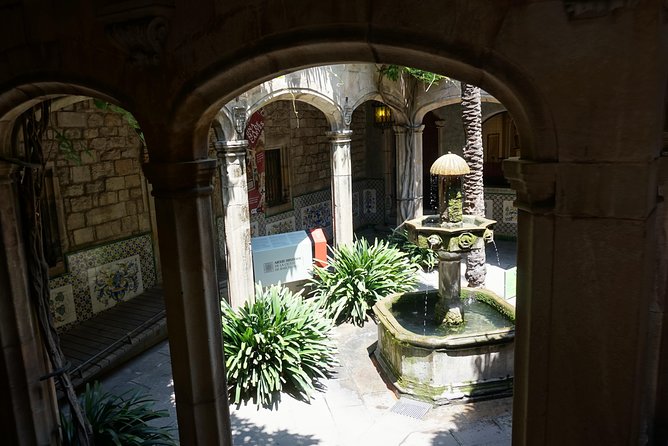
Inside a small medieval courtyard on Carrer Paradís are four columns from the Temple of Augustus. They are more than 2,000 years old and are among the most surprising sights on the walk.
This is one of my favorite parts of the route because the setting is so unexpected. You enter an ordinary-looking part of the Gothic Quarter and find substantial Roman remains tucked inside. The columns make the age of Barcelona tangible without requiring a long museum visit.
The tour allows about 10 minutes here. That is enough for the guide to explain the site and for you to take photographs, but not enough for an extended archaeological visit. The stop works best as part of the larger story: the medieval quarter did not replace Roman Barcelona completely. It grew around it.
Santa Maria del Mar and the people’s cathedral
The Basilica of Santa Maria del Mar is described as the real cathedral of the old town because local people helped found and build it during the medieval period. It is a major example of Catalan Gothic architecture and a key sight in the Born and Gothic Quarter area.
You spend about 10 minutes here. As with the other churches on the route, the tour details do not promise interior entry. You should think of this as an exterior and historical introduction, not a full basilica visit.
The stop is still valuable because Santa Maria del Mar gives you a different feel from the cathedral near the starting point. Its connection with neighborhood builders and medieval civic life adds a human side to the architecture. If the basilica interests you, you can return later with more time.
Carrer de Montcada and the final stretch
Carrer de Montcada is the last listed stop. It is considered Barcelona’s main area for medieval civic architecture and runs from the Romanesque Marcus Chapel toward Plaça del Born. The street was once continuous, but Carrer Princesa divided it in the 19th century.
Its name comes from the Montcada family, which received land in the 12th century after supporting King Ramon Berenguer IV during the conquest of Majorca. This is the kind of detail that gives a street a political and family story, not just an architectural label.
The route allows about 10 minutes here. Carrer de Montcada also makes a good bridge to later independent exploring. You will have a clearer idea of where the medieval civic buildings sit and why the street is important.
Pintxo, drink, and the social side of the tour
The experience includes one pintxo and one drink. The food and drink are served as the finishing touch, and past groups have enjoyed ending with beer or another drink and a small bite.
A pintxo is not the same as a full tapas meal. It is a small serving, often presented as a bite associated with a drink. If you are hungry, plan another meal afterward. If you want a modest taste of local bar culture and a chance to talk with the group, the stop is well judged.
This final pause is more useful than a snack handed out during the walk. You can ask the guide follow-up questions, compare notes with other people, and decide which sights deserve a second visit. The social part matters, especially if you are exploring Barcelona alone or want an easy way to meet people without committing to a long evening activity.
Price, pace, and practical value
At $54.06 per person, the tour is priced above a basic self-guided walk but includes a professional guide, a pintxo, and a drink. Since every listed sightseeing stop has free admission, you are mainly paying for the route, the explanations, and the convenience of having the old quarter organized for you.
I think the price makes the most sense if this is your first visit to Barcelona or your first day in the Gothic Quarter. A good guide can save you from wandering past the Roman columns or missing the quieter squares. It is less compelling if you already know the quarter well or want extended time inside the cathedral, basilica, or museums.
The advertised length is about two hours and 30 minutes. Past tours have sometimes lasted a little longer, so do not schedule a tight appointment immediately afterward. The group can include up to 20 people. That is far more manageable than a large city tour, though you still need to stay close when the group turns into narrow lanes.
The meeting point is near Plaça Nova and Barcelona Cathedral. No hotel pickup or drop-off is included. Public transportation is nearby, and the tour ends back at the meeting point. Confirmation is provided at booking, and service animals are allowed. Most people can take part, but comfortable shoes are specifically advised.
One practical warning: the starting area can become crowded, especially when street events or markets are being set up. A past group had trouble finding the guide after arriving a few minutes late. A red umbrella was used as a meeting signal on one tour, but you should rely on the current booking instructions and arrive early rather than count on that detail.
Who should book this afternoon walk
I would choose this tour if you want a clear introduction to Barcelona’s oldest center, prefer learning through stories, and enjoy walking at an easy pace. It suits families, couples, solo visitors, and anyone who wants a social activity without spending an entire day on a bus.
It is also a good fit for history and architecture fans who want Roman, medieval, and later Barcelona explained in one route. The mix of major sights and small squares keeps the walk from becoming a simple checklist.
I would skip it if you want a food-focused tour, extensive church interiors, or a private guide who can set the pace entirely around your interests. The one pintxo and one drink are pleasant additions, but they do not replace dinner. Also, the tour is conducted on foot, so anyone who dislikes city walking should consider that carefully.
Should you book it?
Book this Gothic Quarter experience if you want to get your bearings early and understand why Barcelona’s old center looks so layered. The Temple of Augustus, Plaça de Sant Felip Neri, Plaça del Rei, and Santa Maria del Mar give you a strong range of sights in one afternoon.
The best value comes from the guide’s storytelling, not from admission tickets. Choose it early in your visit, wear comfortable shoes, arrive before 3:30 pm, and leave room afterward for more food or a return visit to the place that catches your eye.
FAQ
Where does the Gothic Quarter tour start?
It starts at Lamaro Hotel Barcelona, Av. de la Catedral, 7, Ciutat Vella, 08002 Barcelona, Spain.
What time does the experience begin?
The tour starts at 3:30 pm.
How long does the walking tour last?
It lasts approximately two hours and 30 minutes.
Where does the tour end?
The activity ends back at the meeting point.
What languages are available?
The tour is offered in English, Spanish, French, and Italian according to the tour highlights. The included guide information specifically lists English, Spanish, and French.
What food and drink are included?
One pintxo and one drink are included. Additional food and drinks are not included unless specified.
Are admission tickets included?
The listed stops have free admission. The experience does not specify paid entry into Barcelona Cathedral, Santa Maria del Mar, or other interiors.
How large is the group?
The tour has a maximum of 20 people.
Can I cancel for a full refund?
Yes. You can cancel at least 24 hours before the local start time for a full refund. Changes or cancellations made less than 24 hours before the start time are not accepted for a refund.
Just added around Barcelona
- Love in the Gothic Quarter Barcelona: Self-Guided Romantic Walk★ 4.5 · 9 reviews
- Walking tour of the Gothic Quarter of Barcelona + Cathedral★ 5.0 · 8 reviews
- Wine tasting with a view of the Sagrada Familia★ 4.5 · 13 reviews
- Visit to the Modernist houses of the Americans★ 5.0 · 2 reviews
- Barcelona Jewish & Gothic Tour★ 5.0 · 18 reviews
- Roman & Gotic & Gaudi in Barcelona: private walking tour★ 4.5 · 2 reviews
- Barcelona Gaudi Tour: Sagrada Familia, Casa Batllo & Casa Mila★ 5.0 · 4 reviews
- Self-Guided Audio Tour-The Surrealist Barcelona of Dalí and Gaudí★ 3.5 · 8 reviews
Gothic Quarter Tours, compared.
Barcelona all included: Sagrada, Park Güell, Montjuic & Gothic
Read our review →
Barcelona Gothic Quarter Tapas & Taverns Food & Wine Tour
Read our review →
Barcelona: Gothic Quarter Ghosts and Legends Walking Tour
Read our review →
Barcelona: Old Town and Gothic Quarter Walking Tour
Read our review →
Barcelona Old Town & Gothic Quarter Small Group Tour
Read our review →
Ramblas, Old Town, Gothic and Gaudi Architecture Walking Tour
Read our review →
Barcelona: El Born and Gothic Quarter Wine & Tapas Bar Tour
Read our review →
Kids and Family Gothic Quarter Walking Tour in Barcelona
Read our review →Browse the lists this tour appears in