
Review · LECCE
Discovering Lecce
Lecce is a city where Roman ruins and theatrical Baroque decoration share the same few streets. This two-hour walk with Lorenzo, a Lecce native with an art background, gives you a useful first look at both sides of the city, with stories about architecture, religion, war, and local life.
I like the easy pace and the small maximum group of 15. I also like the thoughtful coffee break, often paired with cake and Caffè Leccese, a sweet iced almond coffee. The main drawback is that the churches and museums are viewed from outside, and entrance fees are not included.
Key points to know before you book
- Lorenzo brings art and local history together: He explains Lecce’s Baroque buildings in clear English, with humor and plenty of local detail.
- Four central sights fit into two hours: The route links Piazza del Duomo, the Roman Theater, Piazza Sant’Oronzo, and Basilica di Santa Croce.
- The tour is built around outdoor viewing: You see the major façades and archaeological remains, but church and museum entry tickets cost extra.
- A coffee break adds local flavor: Coffee or tea is included, and the stop may include cake and Caffè Leccese.
- The group is capped at 15 people: That keeps the walk more personal than a large city tour.
- It is a strong first-day introduction: At $35.09, you are paying for a guide who helps you understand what you are seeing, not for admission tickets.
Why Lecce makes such a good walking-tour city
Lecce rewards slow looking. Its old center is compact, and the pale local stone takes on a soft, almost honey-colored look as you move between narrow streets and broad squares. The city’s Baroque style is not limited to one church or palace. It shapes doorways, balconies, columns, statues, cornices, and entire public spaces.
That can also make Lecce hard to read on your own. At first, you may see a lot of carved stone without knowing which details matter. Lorenzo’s value is his ability to connect the decoration to the city’s politics, Catholic faith, military fears, and artistic habits.
The walk lasts about two hours and covers four main stops. It begins near the Accademia di Belle Arti on Via Giuseppe Libertini and finishes at Basilica di Santa Croce on Via Umberto I. The route is suited to most people who can take a city walk, and service animals are allowed.
Because the group can include no more than 15 people, you should have a fair chance to hear the explanations and ask a question. That matters here. Baroque façades are full of small symbols, and a guide can point out details you might pass without noticing.
Other buildings people go to see in Italy:
- Florence: Cathedral & Brunelleschi’s Dome Ticket & Audio App
★ 4.4 · 6,973 reviews - Florence: Brunelleschi’s Dome Climb Entry Ticket & Duomo
★ 4.5 · 3,815 reviews - Florence: Brunelleschi’s Dome Reserved Entry Ticket & Duomo
★ 4.6 · 2,216 reviews
Piazza del Duomo, Lecce’s Baroque stage
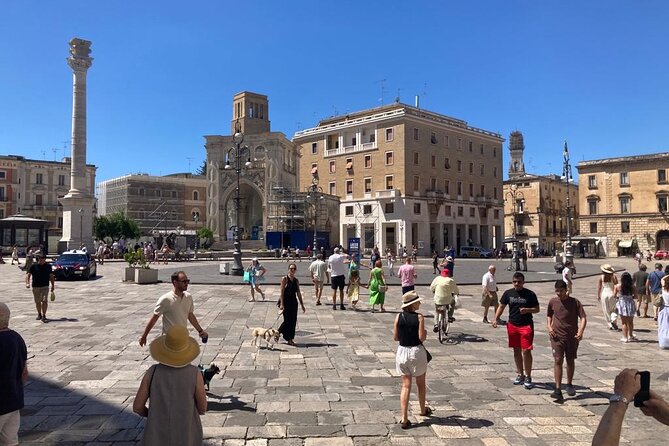
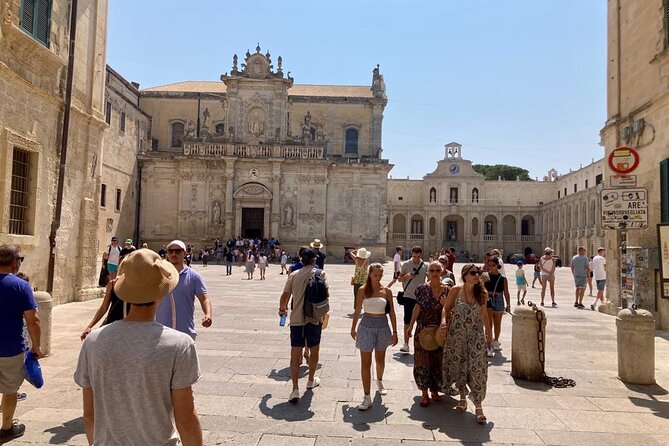
The tour begins at Piazza del Duomo, one of Lecce’s most striking spaces. The square feels enclosed and theatrical, almost like a stage set designed for church power and civic display. It was reshaped in the Baroque period, and each side presents another carefully planned architectural view.
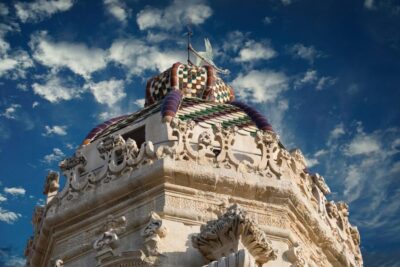
The late 17th-century bell tower rises above the square, built by Giuseppe Zimbalo. Its majolica dome gives the tower a distinctive finish, while its height helps you understand how strongly the church shaped Lecce’s skyline.
The Cathedral faces the square with a façade filled with visual cues. A balustrade carries the statue of Sant’Oronzo, the city’s protector, while flowers, angels, and pointed forms fill the surface below. This is not a quiet or restrained style. It was meant to catch the eye and express faith through abundance.
You also see the Episcopio, or bishop’s palace, with its portico and propylaea. Across the square, Palazzo del Seminario has rusticated stonework and an eclectic Baroque character linked to Giuseppe Cino. Lorenzo’s art background is particularly useful here because he can help you separate the work of different architects and explain how the square functions as a complete composition.
The visit is outdoors and lasts about 20 minutes. That is enough time to understand the layout and take in the main façades, but not enough for a detailed interior visit. Admission is not included, so plan this stop as an introduction rather than a full cathedral tour.
The Roman Theater and Lecce’s older layers
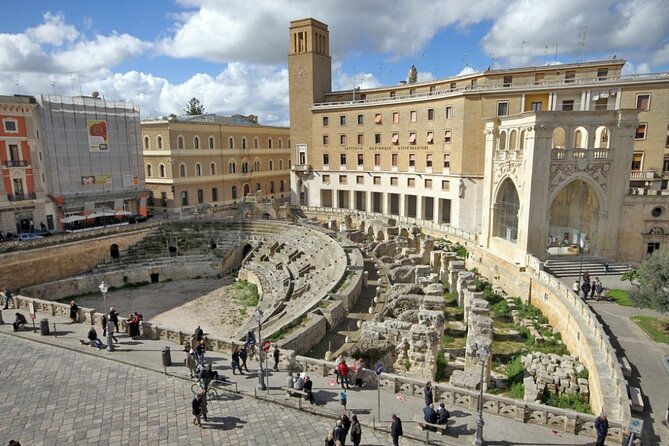
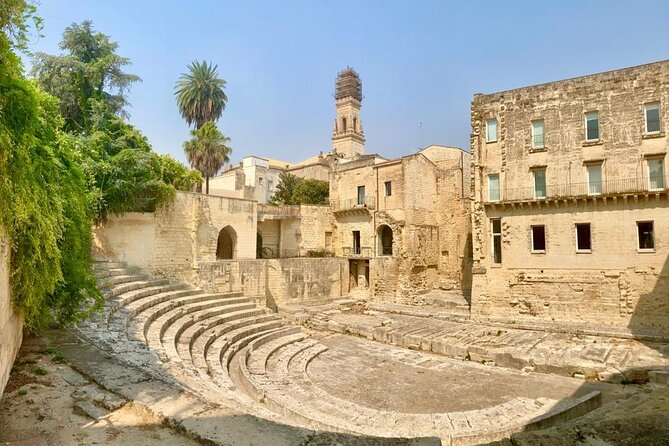
After the Duomo, the route shifts from church architecture to ancient Rome. The Roman Theater dates from the Augustan age and was buried for centuries before excavation brought it back into view in the 19th century.
Today, you look down toward the ancient performance space, including the orchestra and proscenium. Baroque gardens and terraces frame the remains, creating a striking contrast between Roman stone and later city design.
This is a short stop, about 15 minutes, but it adds an important layer to the walk. Lecce is not only a Baroque city. Its later buildings sit above and around a much older Roman past, and the theater helps you picture the scale of public life in the ancient city.
The theater is viewed from outside, and an admission ticket is not included. If ancient sites are your main interest, you may want to ask about visiting the theater separately. On this walk, its role is to show you how Lecce’s history reaches far beyond the 17th and 18th centuries.
Piazza Sant’Oronzo and the half-revealed amphitheater
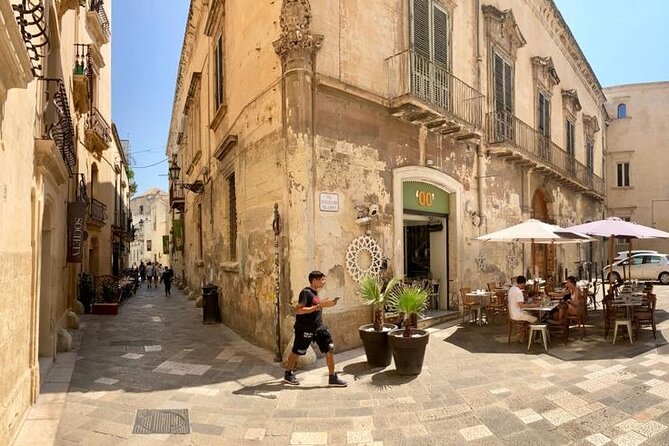
Piazza Sant’Oronzo is the city’s central gathering place and one of the most rewarding stops on the route. The square was once known as Piazza dei Mercadanti, or the Merchants’ Square, and it still carries traces of different periods in Lecce’s past.
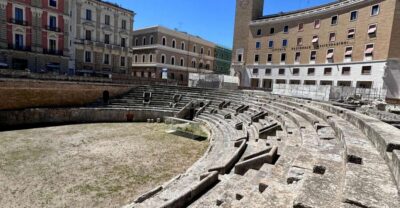
The Roman Amphitheater is the main draw. Only part of it has been exposed, so you see ancient seating and stonework set among later buildings. That partial view is useful because it shows how Roman remains are not isolated in a museum. They are part of the working city, surrounded by Baroque, Art Nouveau, Rationalist, and Venetian-influenced architecture.
Nearby, Palazzo del Sedile recalls the square’s civic role. It served as a place for city assemblies and now hosts exhibitions. The adjoining Church of Saint Mark adds another architectural note and reflects the historical influence of Venice on Lecce.
This stop lasts around 20 minutes and is free. I like that the tour does not treat the amphitheater as a single disconnected ruin. Instead, you see it as one piece of a changing urban center. Lorenzo can also help explain how the square’s religious, commercial, civic, and archaeological roles overlap.
For photographers, this is likely one of the most varied parts of the walk. You can frame ancient Roman stone against later façades, then turn toward the church and civic buildings. The only limitation is that the tour does not include a formal archaeological-site entry.
Same city, a completely different century:
- Lecce: Baroque Architecture and Underground Walking Tour
★ 4.6 · 1,248 reviews - Florence Skip-the-Line Duomo Tour with Guide & Brunelleschi Dome
★ 5.0 · 1,176 reviews - Florence: Duomo Area Tour and Brunelleschi Dome Climb Ticket
★ 4.7 · 1,169 reviews - Florence: Brunelleschi’s Dome Climb and Duomo Complex Pass
★ 4.4 · 1,068 reviews
Santa Croce and Lecce’s grand Baroque finish
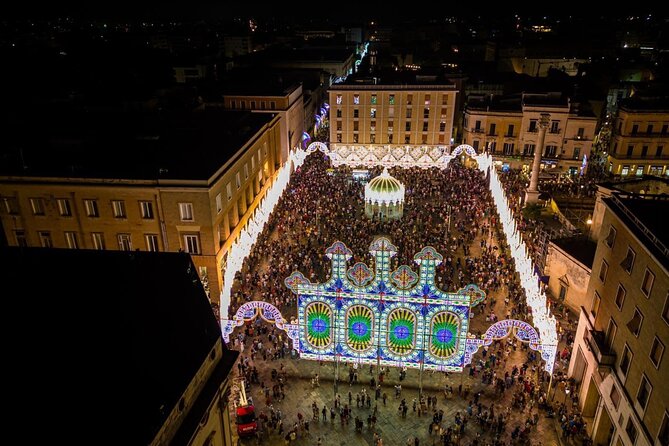
The walk ends at Basilica di Santa Croce, one of Lecce’s most elaborate Baroque façades. It is a fitting final stop because the building gathers many themes from the tour: religious symbolism, political conflict, artistic competition, and the theatrical use of stone.
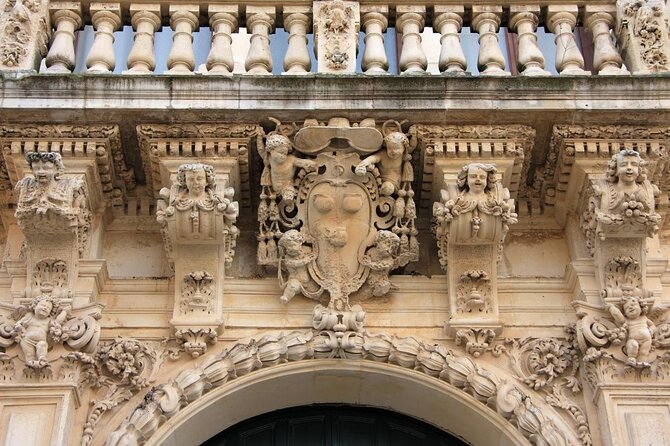
The façade is associated with the Christian victory at the Battle of Lepanto, and its decoration presents that victory through a dense field of symbols. You will see a surface designed to hold your attention, with figures, ornament, and carved details competing for your eye.
This is where a guide’s explanation matters most. Without context, the façade can look like an overwhelming mass of decoration. With some background, you can begin to read its religious message and understand why Lecce’s Baroque style is so expressive.
The stop is listed at about 20 minutes and takes place outside. Entrance to the basilica is not included. Since the tour finishes here, you can choose to continue with an interior visit afterward if the church is open and you decide the additional ticket is worthwhile. The tour itself does not promise or include that visit.
The coffee break and local flavor
Coffee or tea is included, and the walk may include a stop at 00 Doppiozero. The break has been paired with cake and Caffè Leccese, an iced sweet almond coffee associated with the area.
This is more than a convenient pause. A short café stop gives you a chance to rest, ask Lorenzo follow-up questions, and try something local without committing to a full meal. Several comments about the experience point to the snack as a welcome bonus, especially because the walk stays relaxed rather than rushing from one monument to the next.
The exact timing of the break is not specified, so you should not treat it as a full breakfast or brunch. Think of it as coffee and a small sweet during the tour. If you need a substantial meal, plan that separately.
What Lorenzo adds to the experience
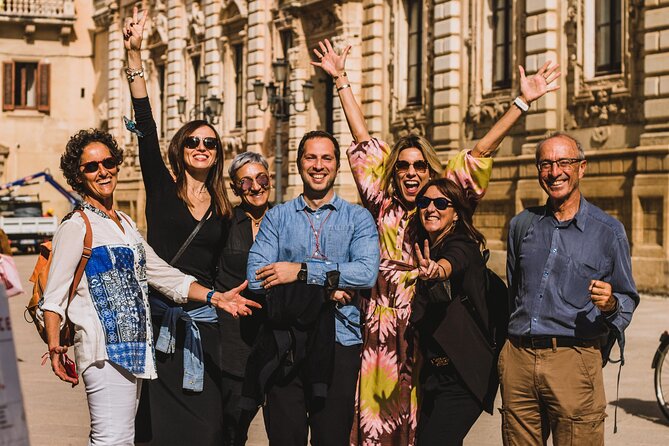
The strongest part of this tour is the guide. Lorenzo is repeatedly described as animated, friendly, funny, and passionate about Lecce. He uses humor without turning the walk into a comedy routine, and he explains complicated subjects in a way that is easy to follow.
His background in art helps when the focus turns to Baroque architecture. He can explain not only what a building looks like, but also why its decoration was used and how religion shaped public art. He also covers medieval Catholicism, Roman archaeology, Lecce’s wars, and local culture.
I would choose this walk if you want a human introduction rather than a checklist of monuments. Lorenzo has been praised for speaking with each member of the group and for making the experience feel personal even when the group is not private.
The tour is offered in English. The comments about his English describe it as clear, which is important when the subject involves architectural terms and long historical sequences. He also uses storytelling, making it easier to remember the difference between a Roman amphitheater, a Roman theater, a cathedral square, and a Baroque church façade.
What the $35.09 price really covers
At $35.09 per person, this is a reasonable price for a two-hour guided introduction to central Lecce. You are paying for the guide’s time, interpretation, and route planning, plus coffee or tea. The group limit of 15 gives the price more value than a large coach-style sightseeing experience.
The price does not include entrance tickets to churches or museums. That keeps the base cost low, but it also means you should budget extra if you want to go inside. Most of the scheduled viewing is outdoors, so this tour works best as an orientation walk rather than a complete cultural admission package.
I see the value in booking it near the start of your stay. You can use the walk to decide which places deserve a return visit, then explore the interior spaces at your own pace. The route also finishes at Santa Croce, placing you in a useful part of the historic center for further wandering.
The activity is often booked well ahead, with an average lead time of 49 days. If your dates are fixed, booking early makes sense, especially since the group size is limited.
Who should book this Lecce walk
I recommend it most for first-time visitors who want context before exploring alone. It is also a good match if you enjoy architecture, religious art, archaeology, and stories about how cities change over time.
You will get the most from it if you are happy with outdoor sightseeing and do not need every monument to include an interior visit. The tour suits people who prefer an easy pace, clear explanations, and time for questions.
Families and mixed-age groups may also find the format manageable, since the walk is short and includes a break. Most people can participate, and service animals are allowed. Still, you should be ready for regular walking through the city center and for weather exposure.
This may not be the right choice if you want a private tour, a long archaeological visit, or a church-focused experience with included admissions. It is also weather-dependent. Poor weather can lead to a new date or a full refund, and the tour requires a minimum number of participants.
Cancellation is free up to 24 hours before the start time. Changes or cancellations inside that window are not accepted, and the amount paid is not refunded.
My verdict on Discovering Lecce
Book this tour if you want to understand why Lecce looks the way it does. The route is short, central, and sensibly paced, while Lorenzo adds the local voice and art background that make the buildings easier to read.
The best reasons to choose it are Lorenzo’s storytelling, the mix of Roman and Baroque sights, and the useful coffee stop. Keep your expectations clear: the main churches and museums are seen from outside, and tickets cost extra.
For $35.09, this is a strong first look at Lecce, especially if you plan to return to Santa Croce, the cathedral, or another site after the walk. It gives you enough context to explore with more purpose, without taking up half a day.
FAQ
How long does Discovering Lecce last?
The tour lasts approximately two hours.
What sights are included in the walking route?
The route includes Piazza del Duomo, the Roman Theater of Lecce, Piazza Sant’Oronzo, and Basilica di Santa Croce.
Where does the tour begin?
It begins at the Accademia di Belle Arti di Lecce, Via Giuseppe Libertini 3, Lecce.
Where does the tour finish?
The tour ends at Basilica of the Holy Cross, Via Umberto I 1, Lecce.
Is the tour offered in English?
Yes. The experience is offered in English.
Are entrance tickets included?
No. Entrance tickets to churches and museums are not included. The listed stops are primarily outdoor visits, and Piazza Sant’Oronzo is free.
Is coffee included?
Yes. Coffee and/or tea are included. The experience may also include cake and Caffè Leccese at 00 Doppiozero.
How large is the tour group?
The maximum group size is 15 people.
What happens if the weather is poor or the minimum group size is not reached?
If poor weather cancels the tour, you will be offered another date or a full refund. If the minimum number of participants is not reached, you will be offered another date or experience, or a full refund.
Just added around Italy
- Vicenza: discovering the city of Palladio by e-bike★ 5.0 · 4 reviews
- Vicenza: Palladian Architecture Private Walking Tour★ 3.3 · 3 reviews
- Turin: Art Nouveau Walking Tour with Coffee★ 5.0 · 11 reviews
- Vatican: Exclusive Baroque Evening With Aperitivo & Dinner★ 3.1 · 2 reviews
- Venice Music Project – Baroque Autumn – Season 2025★ 4.5 · 7 reviews
- Walking tour in Venice with an architect★ 5.0 · 16 reviews
- Palladio. A wonderful live tale through time&soul, from Ve/Pd/Vr★ 5.0 · 7 reviews
- Turin, Art Nouveau walking tour and coffee break★ 4.0 · 7 reviews
Lecce Architecture Tours, compared.
Lecce: Baroque Architecture and Underground Walking Tour
Read our review →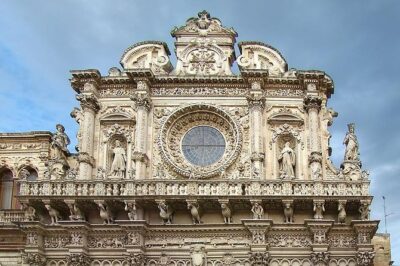
Lecce: Baroque and Underground Tour – Private Tour
Read our review →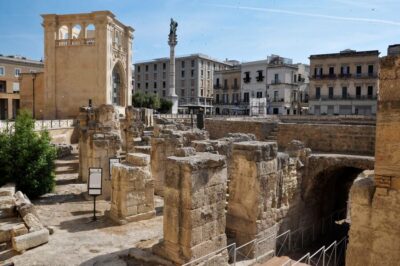
Browse the lists this tour appears in