
Review · BARCELONA
Barcelona Private Walking Tour: Legends, Myths & Old Streets
Barcelona’s oldest streets hold far more than pretty stonework. On this private evening walk, you move from Roman Barcino to the Civil War, from the former Jewish Quarter to Catalan political life, with stories tied to places such as Plaça del Rei and the ancient city walls.
I like the personal format and the route’s range. You can ask questions without holding up a large group, and the 6 pm start gives you a useful bridge between sightseeing and dinner. Guides such as Jordan, Tamara, Sara, Rolene, and Vanesa have been praised for clear storytelling, humor, and practical restaurant tips.
The main consideration is price: $178.02 per person is a serious sum for two hours, especially if you are traveling alone or as a couple. Also, the Jewish Quarter portion may feel brief, and entry to Barcelona Cathedral and Santa Maria del Mar is not included.
Key points to know before booking
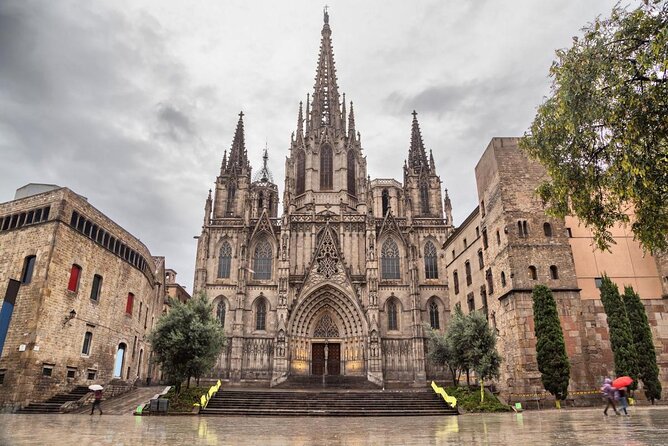
- A private route through two historic districts: Walk from the Gothic Quarter toward El Born with only your own group and guide.
- Eleven compact stops: See Roman remains, medieval squares, political landmarks, churches, and quiet lanes in roughly two hours.
- Story-led sightseeing: Expect tales of Roman Barcelona, Catalan independence, the Inquisition, the Civil War, plague, and local saints.
- A useful 6 pm schedule: Finish near Santa Maria del Mar, a practical location for dinner in El Born.
- Strong guide focus: Guides including Jordan, Tamara, Sara, Rolene, Vanesa, and George have been praised for warmth, humor, and clear explanations.
- Bring sensible walking gear: Wear good shoes, carry water, and eat beforehand if you tend to get hungry on foot.
Why this private Barcelona walk works
The best reason to take this tour is not simply to see the Gothic Quarter. You can walk these lanes alone and admire the stone arches, but it is easy to miss the layers under your feet. A guide connects the visible remains to the events that shaped Barcelona.
The route covers the Gothic Quarter and continues toward El Born. That gives you more than a quick look at one district. You get royal Barcelona, Roman Barcelona, Jewish Barcelona, religious Barcelona, and modern Catalan identity in one compact outing.
The private setup matters. Your guide can answer questions about architecture, customs, food, politics, or local history without following a fixed script for a large crowd. If one place catches your attention, you have more freedom to pause. The experience is designed for families, couples, or friends who want their own guide rather than a standard public walk.
The tour has earned a 5 out of 5 score from 19 ratings, with a 100 percent recommendation figure. More important than the number is the pattern behind it: the strongest praise centers on the guides’ delivery. Jordan is described as engaging and funny, Tamara as personable and well prepared, and Sara as attentive to the whole group while answering questions. Rolene, Vanesa, George, Mariya, Mariah, and Jamie are also named positively for their energy, explanations, or ability to point out details that are easy to miss.
More architecture walks in Barcelona:
- Barcelona: Old Town and Gothic Quarter Walking Tour
★ 4.8 · 1,393 reviews - Ramblas, Old Town, Gothic and Gaudi Architecture Walking Tour
★ 5.0 · 723 reviews - Kids and Family Gothic Quarter Walking Tour in Barcelona
★ 5.0 · 465 reviews
Starting beside the Roman city gate
Meet at the Barcino Sculpture on Plaça Nova at 6 pm. The location places you near the old entrance to the Gothic Quarter, a fitting beginning for a walk about Barcelona’s earliest layers.
The first scheduled stop is Els 4 Gats, the famous restaurant inside Casa Martí. Its modernist setting and links with artists such as Pablo Picasso and Antoni Gaudí give your guide a natural way to explain Barcelona’s creative life around the turn of the twentieth century.
You spend about ten minutes here, and admission is free. Do not expect a full restaurant visit or a long architectural tour. This is an exterior stop and an introduction to the city’s artistic side, useful for setting the tone before the route turns toward politics, religion, and older history.
A kiss that carries a political message
El Món Neix en Cada Besada, translated as The World Begins With a Kiss, is a photo-mosaic made from thousands of images. From a distance, it appears to be a simple kiss. Up close, it carries a story connected with the struggle for Catalan independence and freedom.
This is one of the route’s more unusual stops. It is not a major medieval monument, yet it gives your guide a chance to explain how Catalan identity appears in public art and daily city life.
You have about ten minutes here, with no admission charge. Bring your camera, but pay attention to the explanation. The point is not only the photograph. It is the political meaning placed inside an ordinary public artwork.
Barcelona Cathedral and the story of Santa Eulalia
Barcelona Cathedral is the Gothic Quarter’s main cathedral and is dedicated to Santa Eulalia, the city’s patron saint. The stop connects the building to the story of her death under Roman rule.
The tour allows around ten minutes at the cathedral. That is enough for an outside explanation and a look at the setting, but it is not enough for a slow interior visit. Admission is not included, so you should treat entry as an optional extra rather than part of the advertised walking price.
This is an important distinction when comparing the tour with longer church visits. You receive context from your guide, but the experience is primarily a street walk. If you want to study the cathedral’s interior, chapels, cloister, or artworks, plan separate time and budget.
More private architecture tours in Barcelona:
- Sagrada Familia & Gaudi Tour Private or Small Group with Tickets
★ 4.5 · 1,188 reviews - Barcelona: Sagrada Familia, Park Guell & Tapas Private Tour
★ 5.0 · 903 reviews - Park Guell and Sagrada Familia Private Tour with Hotel pick-up
★ 5.0 · 760 reviews - Barcelona 1.5h Private Old Town, Gothic & Ramblas Walking Tour
★ 5.0 · 318 reviews
Casa de l’Ardiaca and Barcelona’s Roman bones
Beside the cathedral, Casa de l’Ardiaca brings the Roman period into view. Here you can see remains of the old Roman wall and aqueducts, tucked into a much later part of the city.
This is exactly the sort of place that benefits from a guide. The remains are not presented as one grand ruin with a clear entrance. They are fragments woven into the modern city. Without explanation, you might walk past them as old masonry.
The ten-minute stop is free. It offers a concise look at Barcino, the Roman settlement that helped shape the street plan and position of the old center. You will not receive a full archaeological visit, but the guide can show how Roman Barcelona still sits beneath the medieval city.
The Pont del Bisbe and a Gothic Quarter mystery
The Pont del Bisbe is a neo-Gothic bridge spanning a narrow street near the cathedral. Its carved details and dramatic appearance make it one of the most photographed corners of the district.
The bridge also carries mysterious legends, which gives the guide room to move beyond dates and building styles. This is one reason the tour’s format works better for people who enjoy stories rather than a list of monuments.
Expect roughly ten minutes here, with no ticket required. The space is small, so this is more about seeing the bridge, hearing its tale, and understanding its place in the surrounding streets than lingering in a large plaza.
Plaça Sant Felip Neri and the weight of the Civil War

Plaça Sant Felip Neri is one of the Gothic Quarter’s quietest and most affecting squares. Its past includes a sombre episode from the Spanish Civil War, and the guide explains the event in the setting where it is remembered.
The mood changes here. After the art, saints, and medieval stonework, this stop brings the city’s twentieth-century pain into the walk. You may find the square more powerful because it is so restrained. There is no grand museum display to direct your reaction. The story comes from the guide and the place itself.
The stop lasts about ten minutes and is free. Allow the guide to set the pace. This is not a spot for a rushed photograph and immediate conversation. The experience is stronger when you take in the square quietly.
El Call, Barcelona’s former Jewish Quarter
El Call was once Barcelona’s Jewish district. The route includes the MUHBA El Call area, an ancient synagogue, local legends, and stories about the city’s treatment of Jewish communities during the plague.
This is a valuable part of the tour because it widens the usual Gothic Quarter story. Medieval Barcelona was not only royal, Christian, or Roman. El Call adds another community and another difficult chapter to the city’s past.
There is one important limitation. The scheduled stop is about ten minutes, and the synagogue may be viewed from the outside rather than explored as a full interior visit. If the Jewish Quarter is your main reason for booking, ask in advance how much time your guide can give it and whether entry is possible on your date.
That concern matters because the route covers many stops in only two hours. You receive an introduction to El Call, but not a detailed study of every surviving feature.
Plaça de Sant Jaume and Catalan public life
Plaça de Sant Jaume is the political center of the Gothic Quarter. It houses Barcelona City Hall and the seat of the Catalan government, making it a useful place to connect the old city with present-day Catalan identity.
The square also helps explain why Barcelona’s past remains politically active. Stories about language, culture, independence, and local government are not sealed away in museums. They continue to shape the city’s public spaces.
You spend about ten minutes here, free of charge. Since the square is an important meeting place and civic setting, the guide’s explanation is more useful than simply taking a quick picture of the surrounding facades.
Plaça del Rei and the darker royal past
Plaça del Rei is one of the Gothic Quarter’s most impressive medieval settings. The former Royal Palace provides the backdrop for a discussion of one of the darker periods in Spanish history.
This is a stop where the city’s grandeur and cruelty sit close together. Royal architecture can look polished and noble, but the stories attached to power are not always comfortable. Your guide brings that tension into focus through the history of the palace and the Spanish Inquisition.
The visit is free from the street, and the schedule allows about ten minutes. Museums and interiors around the square may require separate admission, so do not assume the walking price covers every nearby attraction.
Plaça de l’Àngel and a saint’s procession
Plaça de l’Àngel tells the story of Santa Eulalia’s procession and a heavenly apparition that led to the square’s name changing from Wheat Square.
This is a small detail, but it shows how Barcelona’s street names can preserve old religious stories. You are not simply moving between famous monuments. The guide uses a public square to explain how legend, faith, and city geography became linked.
The stop is free and lasts around ten minutes. It is another reminder that the route is built around interpretation. On your own, you might register the name and move on. With the guide, the name becomes part of a larger story about the city.
Ending at Santa Maria del Mar in El Born
The walk ends at the Basilica de Santa Maria del Mar in El Born. This imposing church reflects Barcelona’s maritime past and gives the route a fitting final landmark.
El Born shifts the feel of the walk away from the tight lanes of the Gothic Quarter. Ending here also makes practical sense. Several people have found that a two-hour finish works well before dinner, and guides have offered restaurant suggestions that helped shape the rest of the evening.
Admission to the basilica is not included. The guide can explain its role and setting, but you should budget extra time and money if you want to go inside. The ten-minute stop is best understood as part of the walking tour rather than a complete church visit.
What the $178.02 price buys you
At $178.02 per person, this is not a bargain public walking tour. The value depends on how many people are in your private group and how much you care about personal attention.
For a family or group of friends, the price may make more sense because the guide is reserved for your party. You can ask questions, adjust the pace, and focus more on subjects that matter to you. Group discounts may also be available, so check the final price for your party rather than judging the cost only by the individual figure.
For one or two people, the price is harder to justify if you want only a quick orientation. A large public walk can cover similar ground for less. This private experience earns its higher cost through flexibility, direct conversation, and the chance to avoid a rigid group schedule.
The route’s broad coverage also has a tradeoff. Eleven stops in about two hours means each place receives a short explanation. You get a strong introduction, not a slow academic tour.
Practical advice for a better evening
Wear good walking shoes. The advice is especially useful here because the route passes through old streets and includes many stops close together. Carry water, and eat before starting if you do not enjoy walking hungry.
The 6 pm start is one of the experience’s best practical features. You can spend the day on larger sights, then use this walk to understand the old center before dinner. The finish at Santa Maria del Mar places you near El Born, which makes it easy to continue your evening without crossing the city.
Confirmation arrives when you book, and a mobile ticket is provided. The starting point is near public transportation, and the operator states that most people can participate. This is a private activity, so only your group joins the guide.
Free cancellation is available if you cancel at least 24 hours before the start time. Changes or cancellations inside that period are not accepted for a refund, and the cut-off uses Barcelona local time.
Who should book this Barcelona tour
I would choose this walk if you want a first look at the old center with a guide who can connect small details to major events. It suits families, couples, friends, and first-time visitors who prefer conversation over a scripted crowd.
It also works for return visitors who have already seen the obvious sights but want stories about Roman remains, Catalan politics, the former Jewish Quarter, the Civil War, and local legends.
I would hesitate if your priority is entering every major church, spending long periods at museums, or studying El Call in detail. The cathedral and basilica require extra admission, and the Jewish Quarter section may be brief.
Should you book it?
Book this tour if your group values a private guide, direct questions, and a lively overview of Barcelona’s oldest districts. The strongest part is the human delivery, with guides such as Jordan, Tamara, Sara, Rolene, George, and Vanesa praised for humor, care, and clear storytelling.
Skip it if $178.02 per person feels too high for a two-hour orientation or if you want lengthy interior visits. If you do book, arrive ready to walk, wear sensible shoes, bring water, and ask at the start for extra attention to the topics that interest you most.
FAQ
How long does the Barcelona private walking tour last?
The tour lasts approximately two hours.
What time does the tour begin?
The listed start time is 6:00 pm.
Where does the tour start?
The meeting point is the Barcino Sculpture at Plaça Nova, 40, in Barcelona’s Ciutat Vella.
Where does the tour end?
The tour ends at Basílica de Santa Maria del Mar, Plaça de Santa Maria, 1, in Ciutat Vella.
Is this a private tour?
Yes. Only your group participates in the private activity.
Is Barcelona Cathedral admission included?
No. Admission to Barcelona Cathedral is not included in the tour price.
Is admission to Santa Maria del Mar included?
No. Admission to the Basilica de Santa Maria del Mar is not included.
Can most people take part?
The provided tour information says that most people can participate. The route is a walking experience, so good shoes and water are recommended.
What is the cancellation policy?
You can cancel for a full refund up to 24 hours before the start time. Cancellations or changes made less than 24 hours before the start are not accepted for a refund.
Just added around Barcelona
- Love in the Gothic Quarter Barcelona: Self-Guided Romantic Walk★ 4.5 · 9 reviews
- Walking tour of the Gothic Quarter of Barcelona + Cathedral★ 5.0 · 8 reviews
- Wine tasting with a view of the Sagrada Familia★ 4.5 · 13 reviews
- Visit to the Modernist houses of the Americans★ 5.0 · 2 reviews
- Barcelona Jewish & Gothic Tour★ 5.0 · 18 reviews
- Roman & Gotic & Gaudi in Barcelona: private walking tour★ 4.5 · 2 reviews
- Self-Guided Audio Tour-The Surrealist Barcelona of Dalí and Gaudí★ 3.5 · 8 reviews
- Barcelona Gaudi Tour: Sagrada Familia, Casa Batllo & Casa Mila★ 5.0 · 4 reviews
Walking Tours, compared.
The Official Art Deco Walking Tour by The Miami Design Preservation League
Read our review →
Barcelona: Gothic Quarter Ghosts and Legends Walking Tour
Read our review →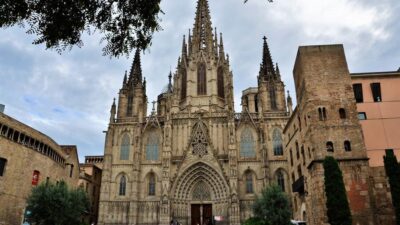
Barcelona: Old Town and Gothic Quarter Walking Tour
Read our review →
Lecce: Baroque Architecture and Underground Walking Tour
Read our review →
Chicago in a Day: Food, History & Architecture Walking Tour
Read our review →
Ramblas, Old Town, Gothic and Gaudi Architecture Walking Tour
Read our review →
Chicago’s Secret Interiors Architectural Walking Tour
Read our review →Browse the lists this tour appears in