
Review · BARCELONA
Barcelona Jewish & Gothic Tour
Barcelona’s old Jewish Quarter is easy to miss. Its lanes sit in the heart of the Gothic Quarter, yet the most telling clues are often below street level, behind unassuming doors, or tucked into medieval stonework. This private tour brings those traces together, from the ancient synagogue and mikvah to the narrow routes used by a community that lived here for roughly 600 years.
I like the strong Jewish focus and the way it connects scholars, merchants, families, and religious life to the wider Gothic city. I also like the personal touch of guides such as Ella and Eyal, whose clear storytelling and local family connections help turn old names and stones into human stories. The main consideration is the $171 price per person, which makes the tour a serious purchase for solo visitors or couples, though the private format and included entrance fees may make better sense for a small group.
Key points to know before you book
- The ancient synagogue anchors the tour: Plan on about two hours of guided exploration around Barcelona’s oldest Jewish sites.
- You see the city beneath the city: A medieval mikvah, kosher ovens, hidden courtyards, and passageways reveal daily Jewish life.
- The story reaches beyond religion: Nahmanides, Catalan markets, Gothic buildings, legends, and shared city life all enter the conversation.
- It is a private four-hour walk: Your group gets a guide’s full attention rather than a standard large-group script.
- Ella and Eyal have earned special praise: Their warmth, clear explanations, and storytelling are a major part of the experience.
- Meet in Plaça de Sant Jaume: Look near the entrance of Conesa Entrepans for a guide wearing a Barcelona Dreaming hat.
Why Barcelona’s Jewish Quarter deserves a closer look
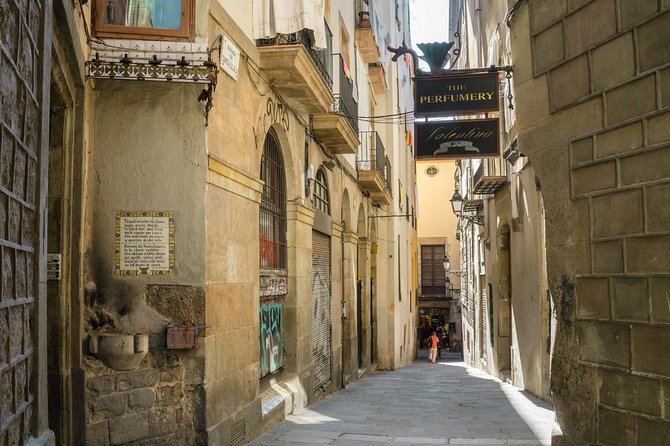
If you have already seen the main Gothic Quarter sights, this tour gives you a different way to read the same streets. The Jewish story is not placed in a separate museum. It is built into the lanes, walls, courtyards, religious buildings, and commercial spaces around you.
The community existed in Barcelona for about six centuries before the expulsion of 1492. That long span matters. You are not looking at a brief episode or a footnote to the city’s medieval story. You are following generations who studied, traded, worshiped, raised families, and helped shape Barcelona.
The tour also gives attention to the relationship between Jewish and non-Jewish Catalan communities. Markets, streets, and civic life were shared. That broader view keeps the experience from becoming a simple list of dates and persecutions. You get a sense of a working medieval city, with different communities living alongside one another, sometimes comfortably and sometimes under pressure.
I especially value the attention to ordinary details. A kosher oven tells you more about daily life than a long list of rulers. A narrow passageway can raise questions about privacy, safety, and worship. A carved symbol in stone gives you a physical link to people whose names may otherwise remain distant.
More Gothic quarter walks in Barcelona:
- Barcelona all included: Sagrada, Park Güell, Montjuic & Gothic
★ 5.0 · 2,169 reviews - Barcelona Gothic Quarter Tapas & Taverns Food & Wine Tour
★ 5.0 · 1,470 reviews - Barcelona: Old Town and Gothic Quarter Walking Tour
★ 4.8 · 1,393 reviews
Starting at Plaça de Sant Jaume
The meeting point is near Conesa Entrepans in Plaça de Sant Jaume, one of the central squares of the Gothic Quarter. Your guide waits close to the sandwich shop entrance and wears a hat marked with the Barcelona Dreaming logo.
This is a sensible place to begin because you are already inside the old city. There is no hotel pickup, so plan to reach the square on your own. Give yourself enough time to find the exact meeting point, especially if you are arriving from another part of Barcelona.
The tour is offered in English, Hebrew, or Spanish. Since it is a private group, you can ask for clarification and spend more time on subjects that matter to you. That is useful here. Jewish history can involve religious terms, medieval politics, family life, and changing interpretations of place. A private setting gives the guide room to adjust the pace.
Two hours around the ancient synagogue
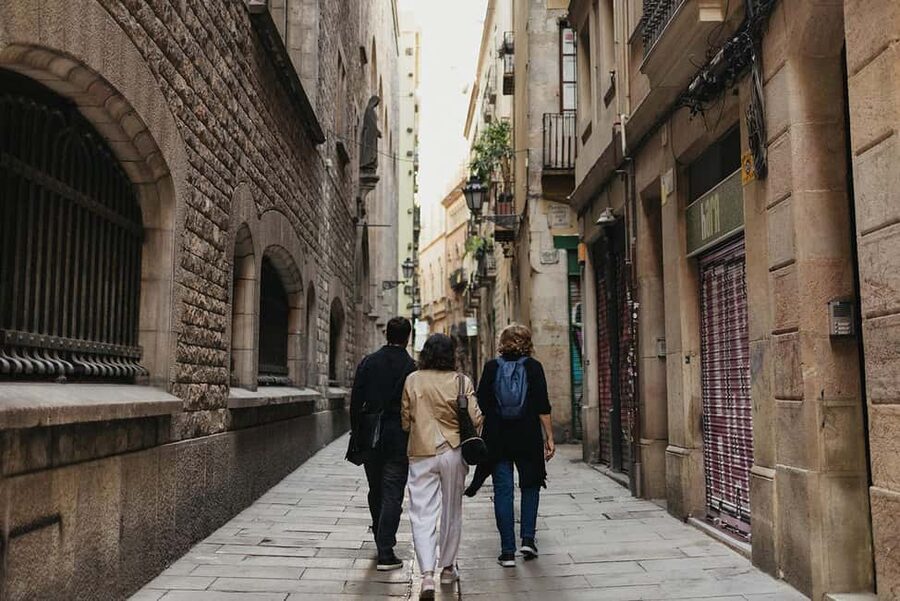
The ancient synagogue is the main historical stop, with about two hours set aside for guided walking and exploration. That long portion of the tour tells you something about its importance. This is not a quick photo stop before rushing to the next attraction.
Expect the guide to use the synagogue and nearby streets as a base for explaining how the Jewish Quarter worked. You will hear about religious practice, study, family life, commerce, and the pressure placed on Jews as conditions changed. The focus is not only on famous people. The buildings and streets help show how a whole community functioned.
Nahmanides, also known as Ramban, receives special attention. His biblical commentaries had a lasting effect on Jewish thought, and his connection to Barcelona gives the city an important place in Jewish intellectual history. I like that the tour links his ideas to the actual streets where medieval rabbis debated and taught. You are not simply memorizing a famous name. You are considering the city that produced and supported that intellectual life.
The ancient synagogue is also a reminder that appearance can mislead. Barcelona’s Gothic streets have been altered over time, and important Jewish spaces may not look obvious from outside. Your guide helps separate what you can see from what has been covered, adapted, or forgotten.
Beneath the Gothic streets: mikvahs, ovens, and escape routes
The medieval mikvah is one of the most unusual promised sights. It lies below a modern building, a sharp contrast between present-day Barcelona and the remains of medieval religious life. The mikvah was used for ritual bathing, and its survival gives the tour a physical, below-street dimension.
You will also hear about kosher ovens where families baked bread for Shabbat. This kind of detail makes the past easier to picture. Religious practice was not limited to the synagogue. It was part of the rhythm of homes, meals, preparation, and weekly family life.
The narrow passageways add another layer. They point to the ways Jews practiced their faith and moved through the neighborhood under difficult conditions. The tour presents these routes as part of a larger story of survival, not as theatrical props. That distinction matters. Barcelona’s Jewish past deserves care, especially when discussing secrecy, danger, and the eventual expulsion.
Look closely at the stonework as you walk. The tour includes symbols carved into stone that preserve traces of the community’s presence. Some details may be easy to pass without a guide. This is one of the strongest reasons to choose a specialist tour rather than simply wandering the quarter with a general city guide.
Same city, a completely different century:
- Barcelona: Sagrada Familia Entry Ticket with Audio Guide
★ 4.6 · 105,312 reviews - Barcelona: Casa Batlló Entry with Self-Audioguide Tour
★ 4.7 · 25,359 reviews - Barcelona in 1 Day: Sagrada Familia, Park Guell,Old Town & Pickup
★ 5.0 · 13,541 reviews - Barcelona: Sagrada Familia Skip-the-Line Entry Ticket & Tour
★ 4.8 · 12,789 reviews
Plaça Catalunya and the changing city
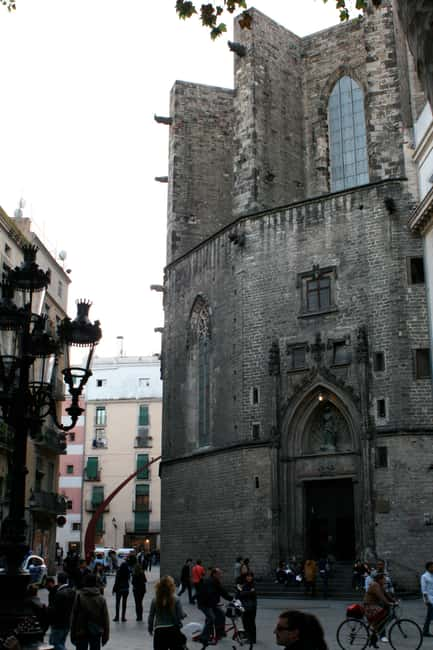
Plaça Catalunya appears on the route as a guided sightseeing stop. It is a much more open and modern-feeling space than the tight medieval lanes, so the contrast is useful.
Here, the guide can help you place the old Jewish Quarter within Barcelona’s larger growth. The tour is not confined to one enclosed neighborhood. It shows how the medieval city relates to the wider modern center, even when the most important Jewish traces are concentrated around the Gothic streets.
The supplied timing lists a very long duration for this stop, but the total tour is clearly four hours, so treat Plaça Catalunya as a brief part of the walk rather than a separate half-day visit. That is worth knowing if you are planning other activities afterward.
Els Quatre Gats and the city’s cultural layers
Els Quatre Gats is included as a 15-minute sightseeing stop. The restaurant and café are linked to Barcelona’s artistic and social life, giving the guide a chance to move from medieval Jewish history toward the city’s later cultural identity.
This is not presented as a Jewish heritage site. Its value comes from contrast. Barcelona has accumulated many layers, and the tour places them in one walk: medieval Jewish life, Gothic architecture, Catalan traditions, and later artistic culture.
A short stop here should suit you if you like connections between different periods. If you want every stop to focus only on Jewish history, this portion may feel less central. The guide’s skill matters because the stop works best when it helps you understand Barcelona as a changing city rather than a collection of unrelated sights.
Plaça Nova and Barcelona Cathedral
Plaça Nova and Barcelona Cathedral bring you back into the heart of the Gothic Quarter. Each stop lasts about 15 minutes, so expect explanation and orientation rather than a long interior visit.
Plaça Nova offers another chance to see how the old Jewish neighborhood sits within the surrounding medieval city. The cathedral provides a grand Gothic counterpoint to the smaller, more concealed Jewish sites. I like this pairing because it shows two kinds of historical evidence: monumental architecture that dominates the skyline, and modest spaces that require careful looking.
The guide’s architectural comments are important here. You will learn how buildings, courtyards, and streets can reveal the way a city was organized. You may also hear local legends and folk stories that are rarely included in a basic sightseeing circuit.
Do not expect the cathedral stop to replace a full cathedral tour. Its role here is to connect the Jewish Quarter with the Gothic setting around it. If the cathedral is a top priority for you, set aside separate time for a more detailed visit.
Plaça Reial and La Boqueria
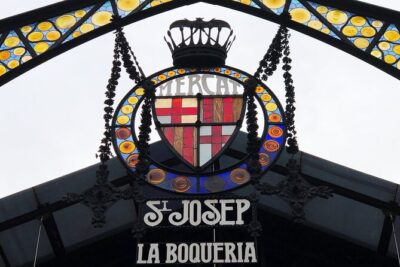
The route continues to Plaça Reial, another 15-minute sightseeing stop, then La Boqueria, where about 20 minutes are scheduled. These places shift the emphasis toward public life, food, trade, and the continuing importance of markets in Barcelona.
That connection is useful. The Jewish community did not exist apart from the city. Its members were merchants, workers, scholars, and neighbors. Public spaces help explain how communities met, traded, and interacted.
La Boqueria is not a dedicated Jewish heritage site, so you should see it as a closing example of Barcelona’s commercial life rather than the central purpose of the tour. It also makes a practical endpoint for the broader city story. You have moved from hidden religious spaces to major public places, seeing how private belief and public commerce could occupy the same city.
Food and drinks are not included. You may be tempted to stop for a snack at the market, but the tour itself remains a walking history experience rather than a food tour.
What makes the private format worth the price
At $171 per person, this is not a casual budget walk. I would compare it with the cost of booking a private guide for four hours, then consider that entrance fees for all visitors are included.
The value improves for a small group because the private price buys personal attention. You can ask about Nahmanides, medieval Jewish practice, architecture, family history, or local legends without waiting for a large group to move on. You can also tell the guide what interests you most.
The guide is the main reason to book this rather than simply reading about the quarter. Ella has been singled out for making both Gothic and Jewish history clear and engaging. Eyal has been praised for warmth, strong stories, and a meaningful presentation of both neighborhoods. You cannot assume which guide you will receive, but these names are worth requesting when you book if availability allows.
The local connection is another benefit. The experience is led by a guide described as having family roots in Barcelona’s Jewish quarter. That does not replace historical evidence, but it can add a personal sense of place and help connect the past to the city today.
Walking comfort, access, and timing
The tour lasts four hours and involves walking through historical sites. Comfortable shoes are essential. The old center is made for close exploration, but the tour is still a substantial block of time on foot.
The experience is listed as wheelchair accessible. If you use a wheelchair, it is sensible to confirm the exact route and site access when arranging your starting time, since individual historic buildings can have different layouts.
Starting times vary, so check availability before booking. The tour returns to the Conesa Entrepans meeting point in the Gothic Quarter, which makes it easier to plan lunch or another central Barcelona activity afterward.
Free cancellation is available up to 24 hours before the tour for a full refund. You can also reserve now and pay later, useful if your Barcelona schedule is still changing.
Who will get the most from this tour
I would recommend it most to visitors with a strong interest in Jewish heritage, medieval Barcelona, religious history, or architecture. It also suits people who have already seen the main Gothic sights and want a more focused way to understand the quarter.
Families and small groups may appreciate the private format because the guide can adjust explanations and answer questions. Hebrew-speaking visitors may value the Hebrew-language option, while English and Spanish speakers have the same choice in their own languages.
I would think twice if you want a fast overview of Barcelona or dislike walking tours centered on historical detail. The tour spends serious time on the ancient synagogue and Jewish Quarter. It is not designed as a quick checklist of major city attractions.
Should you book the Barcelona Jewish and Gothic Tour?
Book it if you want the Gothic Quarter to make more sense, not just look old. The medieval mikvah, kosher ovens, carved symbols, synagogue, and stories of Nahmanides offer details you are unlikely to notice on your own.
The $171 price is easiest to justify for a private group that values a personal guide and included entrance fees. Solo visitors may find it expensive, while couples and families can get better value from the shared attention.
I would request Ella or Eyal if possible, wear comfortable shoes, and allow the full four hours. This is a thoughtful choice for anyone who wants Barcelona’s Jewish past treated as a living part of the city rather than a forgotten side note.
FAQ
How long is the Barcelona Jewish and Gothic Tour?
The tour lasts four hours.
What language can the guide speak?
The tour is available in English, Hebrew, or Spanish.
Is the tour private?
Yes. It is offered as a private group walking tour.
Where does the tour begin?
Meet at Plaça de Sant Jaume, next to Conesa Entrepans. Your guide waits near the shop entrance and wears a hat with the Barcelona Dreaming logo.
Does the tour visit an ancient synagogue?
Yes. The ancient synagogue is a major stop, with about two hours of guided walking and exploration scheduled around it.
Can I see a medieval mikvah?
Yes. The experience includes the medieval mikvah located below a modern building.
Are entrance fees included?
Yes. Entrance fees for all visitors are included.
Is food included?
No. Food and drinks are not included.
Is the tour wheelchair accessible?
Yes. The activity is listed as wheelchair accessible.
Can I cancel for a refund?
Yes. You can cancel up to 24 hours in advance for a full refund.
Just added around Barcelona
- Love in the Gothic Quarter Barcelona: Self-Guided Romantic Walk★ 4.5 · 9 reviews
- Walking tour of the Gothic Quarter of Barcelona + Cathedral★ 5.0 · 8 reviews
- Wine tasting with a view of the Sagrada Familia★ 4.5 · 13 reviews
- Visit to the Modernist houses of the Americans★ 5.0 · 2 reviews
- Barcelona Jewish & Gothic Tour★ 5.0 · 18 reviews
- Roman & Gotic & Gaudi in Barcelona: private walking tour★ 4.5 · 2 reviews
- Barcelona Gaudi Tour: Sagrada Familia, Casa Batllo & Casa Mila★ 5.0 · 4 reviews
- Self-Guided Audio Tour-The Surrealist Barcelona of Dalí and Gaudí★ 3.5 · 8 reviews
Gothic Quarter Tours, compared.
Barcelona all included: Sagrada, Park Güell, Montjuic & Gothic
Read our review →
Barcelona Gothic Quarter Tapas & Taverns Food & Wine Tour
Read our review →
Barcelona: Gothic Quarter Ghosts and Legends Walking Tour
Read our review →
Barcelona: Old Town and Gothic Quarter Walking Tour
Read our review →
Barcelona Old Town & Gothic Quarter Small Group Tour
Read our review →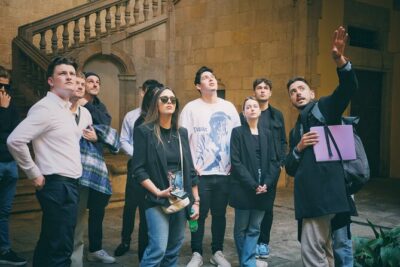
Ramblas, Old Town, Gothic and Gaudi Architecture Walking Tour
Read our review →
Barcelona: El Born and Gothic Quarter Wine & Tapas Bar Tour
Read our review →
Kids and Family Gothic Quarter Walking Tour in Barcelona
Read our review →Browse the lists this tour appears in