
Review · BARCELONA
Barcelona Gothic WalkingTour: Roman Walls & Hidden Courtyard
Barcelona’s old center is best understood at walking speed, one stone clue at a time. This two-hour tour runs from a Roman aqueduct through cathedral legends, royal courtyards, the Jewish quarter, and Civil War scars before ending with a bit of local luck. The mix of Roman, medieval, and modern history gives the walk real range.
I like the way the tour focuses on people, stories, and small architectural details instead of drowning you in dates. I also like the practical route: Barcelona Cathedral, King’s Square, the Temple of Augustus, and Saint Philip Neri all appear in a compact circuit. The main consideration is pace. Narrow lanes, frequent stops, and many historical layers can make two hours feel full, especially if you want long visits inside buildings.
Key points at a glance
- Roman aqueduct start and finish: Begin and end near one of Barcelona’s oldest visible traces.
- Cathedral and royal history: Learn about the former home of the Counts of Barcelona and Kings of Aragon.
- Jewish quarter details: Find one of Europe’s oldest synagogues in the narrow medieval streets.
- Civil War evidence: See damage still visible at the Church of Saint Philip Neri.
- A lucky final stop: Touch the turtle fountain beside Barcelona’s oldest palm tree.
- Flexible booking: The $26 price includes a two-hour guided walk, with English and Russian tours, free cancellation up to 24 hours before departure, and private groups available.
Roman aqueducts and the first clues to Barcelona
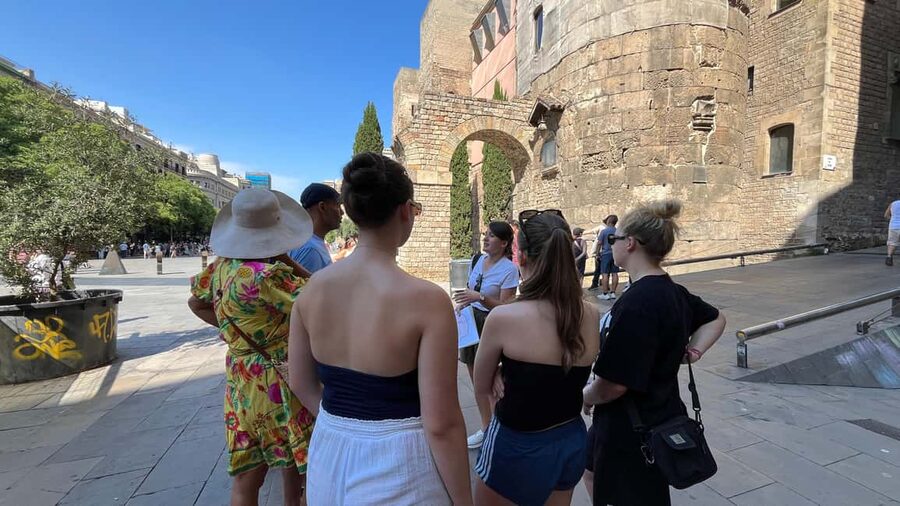
The meeting point is the Roman Aqueduct. Look for a guide wearing a Tres Gatos logo shirt. This is a useful place to begin because it immediately gives you a sense of the Gothic Quarter’s main trick: medieval streets sit on top of much older Barcelona.
The tour also returns here at the end, so the route forms a simple loop. You do not need to arrange transport between sights, and you spend the full two hours on foot in the old center.
The aqueduct is more than a photo stop. It sets up the story of Roman Barcelona, then lets the guide show how later generations built around, over, and beside earlier structures. I would arrive a few minutes early. In a dense old quarter, finding a guide by a logo is easier when you are not rushing in from another appointment.
Wear shoes with good support. The walk is wheelchair accessible, but the Gothic Quarter’s narrow streets and historic surfaces can still make comfort important. The supplied advice is sensible: bring comfortable shoes, a sun hat, and sunscreen.
More Gothic quarter walks in Barcelona:
- Barcelona all included: Sagrada, Park Güell, Montjuic & Gothic
★ 5.0 · 2,169 reviews - Barcelona Gothic Quarter Tapas & Taverns Food & Wine Tour
★ 5.0 · 1,470 reviews - Barcelona: Old Town and Gothic Quarter Walking Tour
★ 4.8 · 1,393 reviews
Barcelona Cathedral, where legends meet stone
The next major stop is Barcelona Cathedral, where you receive a guided explanation of the building and its mysteries. The tour is not simply a quick outside look. It is designed to help you notice the layers of meaning in one of the quarter’s most imposing landmarks.
You can expect stories about the cathedral’s role in the old city, along with details that are easy to miss when you visit alone. The emphasis is on legends, architectural clues, and the human stories attached to the building. That approach suits this neighborhood, where a plain doorway or worn wall can carry as much interest as a grand facade.
The tour data does not promise a full interior admission or time to explore every chapel, so do not book it expecting an extended cathedral visit. Think of this stop as a guided orientation. If you want a quiet look inside afterward, leave room in your schedule for a separate visit.
That is one of the tour’s strengths. You get context before deciding which places deserve more of your own time. The guide can point out what to revisit, while you avoid spending your first hour in Barcelona staring at details without knowing their meaning.
King’s Square and the royal heart of the quarter
King’s Square, or Plaça del Rei, brings the medieval political story into focus. This was the setting for the former residence of the Counts of Barcelona and the Kings of Aragon, so the stop connects architecture with power rather than treating the Gothic Quarter as a collection of pretty streets.
The square has the kind of scale that makes old Barcelona easier to picture. After the tight lanes, you reach an open space where royal buildings and stone walls show how important this part of the city once was. The guide’s job here is to explain how the square functioned and why it mattered.
I like this part of the route because it gives the walk a clear backbone. Roman remains explain the city’s beginnings. The cathedral shows religious power. King’s Square brings in the ruling house and the political life of medieval Barcelona.
You will probably stand for much of the explanation, so this is another reason to wear practical shoes. The tour does not present a long break, and the two-hour format favors steady movement over leisurely sitting.
The executioner’s house and La Casa de l’Ardiaca
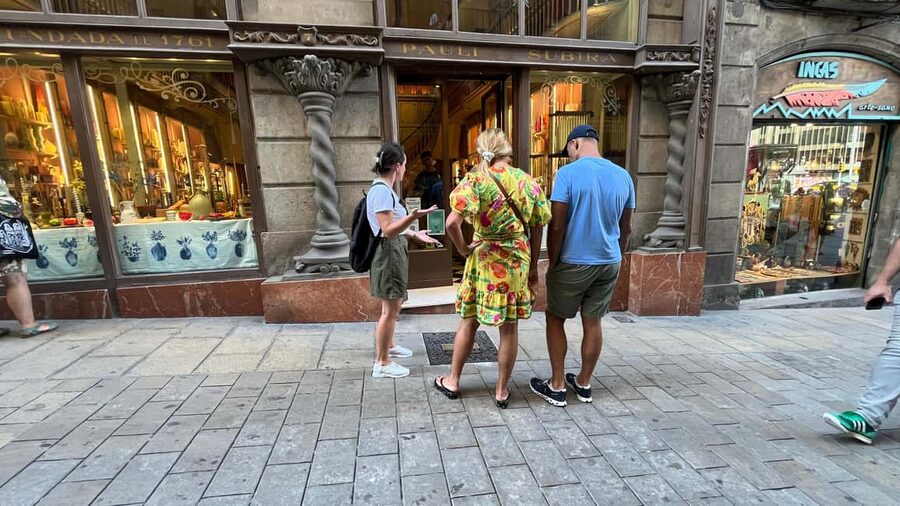
The Antigua Casa del Verdugo Municipal adds a darker note. Its name refers to the municipal executioner’s former house, and the stop opens a window onto the less polished side of old city life. This is the kind of detail that can disappear if you only follow Barcelona’s major monuments.
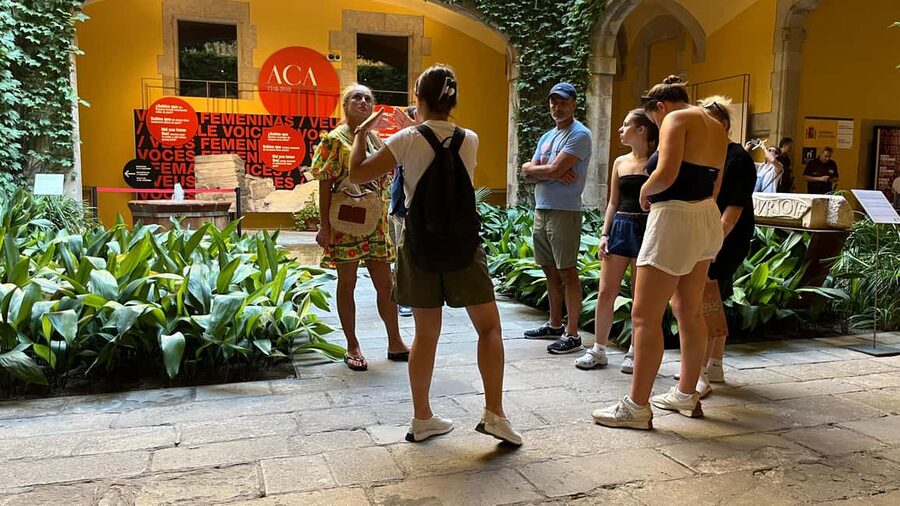
From there, the walk continues to La Casa de l’Ardiaca. The building is tied to the church administration and helps show how religious and civic authority were woven together in the Gothic Quarter. You are not just looking at isolated facades. You are tracing the people and institutions that shaped daily life inside the walls.
These stops are especially useful for anyone who prefers social history to a list of construction dates. The tour’s storytelling style, as described by the guide feedback, favors real lives and unusual details. Guides Vicky and Egor have been singled out by name for friendly, clear presentations, though your guide may be someone else.
The main tradeoff is that short stops cannot cover every building in full. You get a well-chosen sample, not a museum-level examination of each site. For most first-time visitors, that is a fair exchange.
Same city, a completely different century:
- Barcelona: Sagrada Familia Entry Ticket with Audio Guide
★ 4.6 · 105,312 reviews - Barcelona: Casa Batlló Entry with Self-Audioguide Tour
★ 4.7 · 25,359 reviews - Barcelona in 1 Day: Sagrada Familia, Park Guell,Old Town & Pickup
★ 5.0 · 13,541 reviews - Barcelona: Sagrada Familia Skip-the-Line Entry Ticket & Tour
★ 4.8 · 12,789 reviews
Temple of Augustus and the Roman layer below
At the Temple of Augustus, the Roman story returns in a more direct way. This stop helps you see that the Gothic Quarter is not medieval from top to bottom. Ancient remains are folded into the modern city, sometimes in locations you would pass without a guide.
The value here is the connection between the opening aqueduct and the rest of the walk. You start with Roman infrastructure, move through medieval religion and royalty, then meet another Roman reminder before entering the Jewish quarter and Civil War sites. The route keeps circling back to the idea that Barcelona was built in layers.
The stop is also a good example of why a guided walk works better than a simple map. A map can tell you where the temple is. A guide can explain why the surviving columns matter and how they fit into the older city around them. The precise amount of time spent at the site depends on the group and guide, but it is part of the guided route rather than a separate excursion.
Plaça de Sant Jaume and the city’s public stage
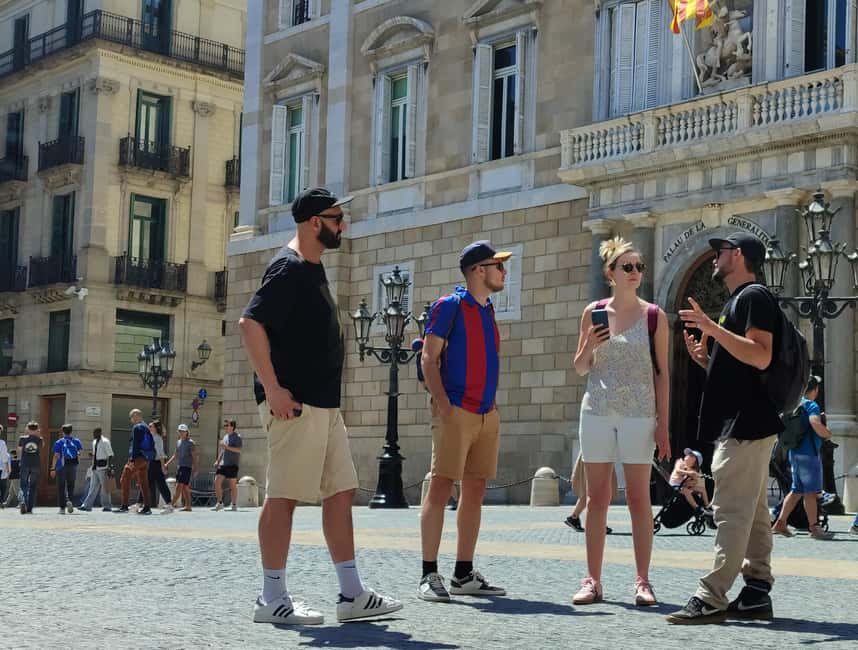
Plaça de Sant Jaume is one of the key civic spaces on the route. It gives you a wider view after the narrow lanes and shows where public life, government, and ceremony intersect.
This is a useful pause in the walking story. The tour has moved from private religious spaces and royal residences into a square designed for the city to gather. Your guide can connect the buildings and streets to Barcelona’s changing political life without turning the stop into a lecture packed with dates.
The square also helps with orientation. The Gothic Quarter can feel like a maze on your first visit. By this point, you have walked enough of it to understand how the streets link together, and the open space gives you a moment to reset before the more intimate lanes of the Jewish quarter.
The ancient Jewish quarter and one of Europe’s oldest synagogues
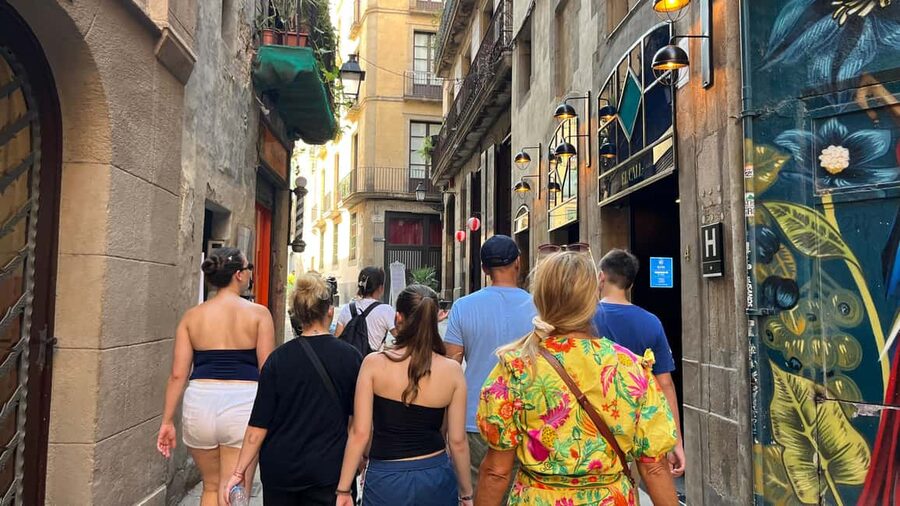
The Jewish quarter is one of the most meaningful parts of the walk. Its narrow streets preserve traces of a community that once lived and worked in the center of Barcelona. The tour includes one of Europe’s oldest synagogues, giving you a chance to connect the surviving architecture with the people who used these streets.
This stop calls for respectful attention. The story is not only about age or unusual buildings. It is also about community, faith, displacement, and the way old neighborhoods can be partly erased or absorbed into later city life.
The guide’s storytelling style matters here. A string of dates would make the quarter feel remote. Personal stories and architectural details can make the past easier to grasp without pretending that the difficult parts were simple.
Do not expect a long independent exploration of every lane. The route has several more stops, and the synagogue visit is presented as part of a walking tour rather than a separate, extended museum visit. Still, this is one of the places where a guide adds real value. Without context, you might walk past a narrow entrance and never realize what it represents.
Saint Philip Neri and the scars of the Civil War
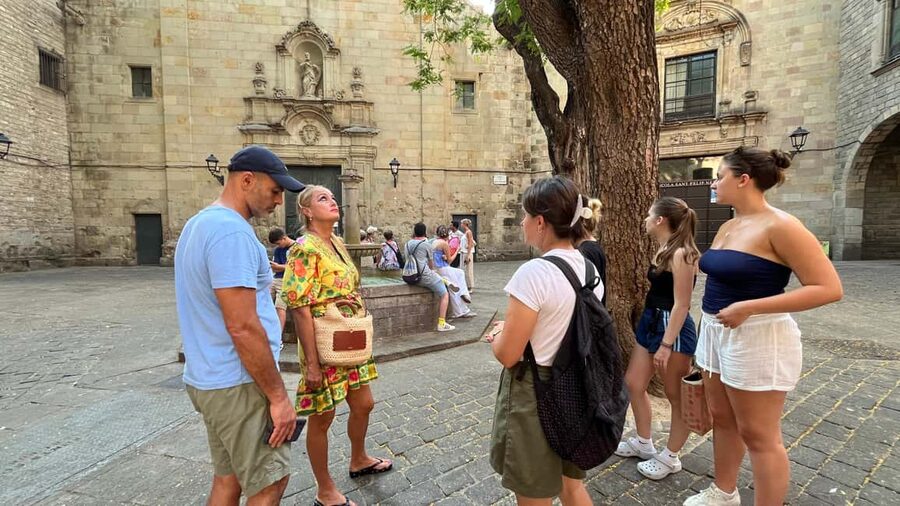
The Church of Saint Philip Neri shifts the tour from medieval history to the Spanish Civil War. Here, you see traces of the violence still marked on the church, and the guide explains the tragic events connected with the site.
This is an important change of tone. The Gothic Quarter is often sold through romance, stone alleys, and medieval mystery. Saint Philip Neri reminds you that the neighborhood also carries painful modern history. The scars are not decorative. They ask you to look closely and listen carefully.
I appreciate this inclusion because it keeps the tour from turning Barcelona’s past into a fairytale. You get Roman remains and royal squares, but also evidence of loss and conflict. That wider time span makes the quarter feel like a living part of the city rather than a preserved stage set.
The subject may not suit anyone seeking a light sightseeing stroll. The guide presents tragic events, and this is a serious part of the route. Still, it gives the tour emotional range and helps explain why looking closely at old walls can matter.
Bishop’s Bridge and the Gothic Quarter’s small surprises
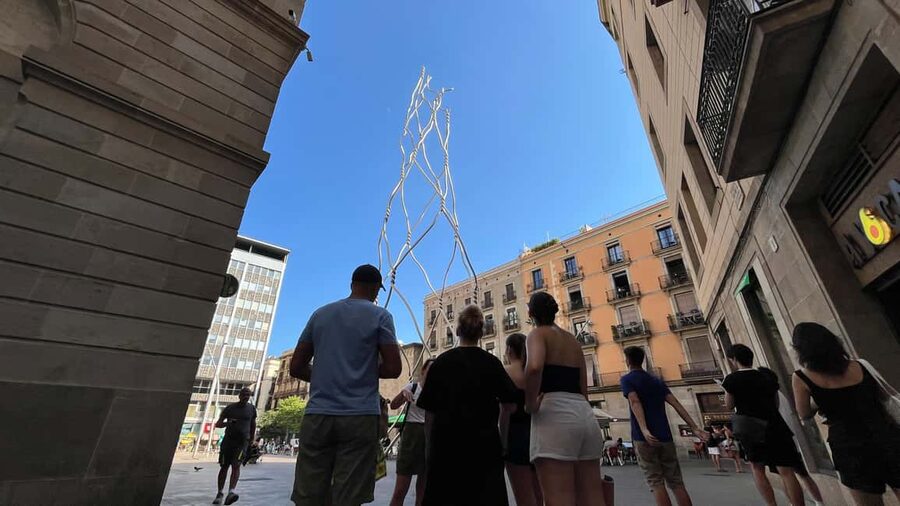
Bishop’s Bridge is one of the tour’s most recognizable stops and a good place for the guide to point out details you could easily miss. The quarter is full of architectural flourishes, narrow passages, and visual puzzles. A guide who knows where to look can turn a short crossing into a story.
This is also where the tour’s Easter egg approach pays off. You are encouraged to notice small features rather than only the major landmarks. That suits the Gothic Quarter, where the best moments often come from looking above eye level, checking a side wall, or noticing how two buildings meet.
The bridge is close to several important sites, but the route does not simply rush from monument to monument. It uses the spaces between them to explain how the quarter fits together. That makes the walk feel less like a checklist.
The lucky ending at Barcelona’s oldest palm tree
The final stop brings a lighter note. You finish at a house featuring Barcelona’s oldest palm tree, then touch the turtle fountain for good luck. It is a small ritual, but a memorable way to end a tour filled with war, religion, royal power, and ancient remains.
I like this ending because it gives the walk a human touch. You have spent two hours hearing about rulers, communities, and tragedies. Finishing with a simple local custom lets you leave with something playful to do, not just a head full of dates.
The exact wording of the attraction can be confusing, so keep the key idea in mind: the tour ends at the old palm tree and turtle fountain, not at another major museum or cathedral visit. The route then returns to the Roman Aqueduct meeting area.
Is $26 a fair price for two hours?
At $26 per person, this is a reasonable price for a guided introduction to one of Barcelona’s most layered districts. You are paying for a live guide, a carefully connected route, and explanations at places that can be difficult to understand on your own.
The value is strongest if this is your first time in Barcelona, or if you have only a short stay. One walk covers Roman remains, the cathedral, royal history, the Jewish quarter, Civil War evidence, and several smaller sites. A self-guided visit could cover the same streets, but it would require research and a clear route.
The price is less compelling if you want long interior visits or plenty of free time at each stop. Two hours goes quickly, and the experience is built around movement and interpretation. If you prefer to sit with one monument for an hour, book the walk as an introduction and return later.
The option to reserve now and pay later helps if your Barcelona plans are still changing. Free cancellation up to 24 hours before departure also gives you some flexibility. English and Russian tours are available, and private groups can be arranged for a more personal format.
Who should book this Gothic Quarter walk?
I would recommend it to first-time visitors, short-stay visitors, and anyone who likes architecture explained through human stories. It also suits people who usually avoid tours but still want a clear introduction to a complicated old center. The direct, conversational style described by past participants is a good fit if you dislike memorized speeches and endless dates.
Families with older children may appreciate the variety, from Roman columns to a lucky fountain. People with a strong interest in Jewish history, the Spanish Civil War, or medieval Barcelona will find several worthwhile starting points for further visits.
You should think twice if you dislike walking, serious historical subjects, or a schedule with frequent stops. The tour is wheelchair accessible, but the old quarter’s narrow streets and historic setting still make comfortable preparation important. Bring sun protection, and do not expect the pace of a private museum visit.
Should you book it?
Book this tour if you want Barcelona’s Gothic Quarter to make sense quickly. For $26, you get a broad, story-led route that links Roman Barcelona to the medieval court, the Jewish community, the Civil War, and a cheerful local good-luck custom.
Skip it only if you already know the quarter well or want a long, quiet visit inside the Cathedral or synagogue. Otherwise, it is a smart first walk, especially when you have only two days in the city. Meet the Tres Gatos guide at the Roman Aqueduct, wear sensible shoes, and let the small clues do some of the work.
FAQ
How long is the Barcelona Gothic Quarter walking tour?
The tour lasts two hours and returns to the Roman Aqueduct meeting area.
Where does the tour meet?
The meeting point is the Roman Aqueduct. Look for a guide wearing a Tres Gatos logo shirt.
What languages are available?
The tour is offered with a live guide in English or Russian.
Is the tour wheelchair accessible?
Yes, the activity is listed as wheelchair accessible.
What should I bring?
Bring comfortable shoes, a sun hat, and sunscreen.
Can I cancel or pay later?
You can cancel up to 24 hours in advance for a full refund. You can also reserve your place and pay later.
Just added around Barcelona
- Love in the Gothic Quarter Barcelona: Self-Guided Romantic Walk★ 4.5 · 9 reviews
- Walking tour of the Gothic Quarter of Barcelona + Cathedral★ 5.0 · 8 reviews
- Wine tasting with a view of the Sagrada Familia★ 4.5 · 13 reviews
- Visit to the Modernist houses of the Americans★ 5.0 · 2 reviews
- Barcelona Jewish & Gothic Tour★ 5.0 · 18 reviews
- Roman & Gotic & Gaudi in Barcelona: private walking tour★ 4.5 · 2 reviews
- Self-Guided Audio Tour-The Surrealist Barcelona of Dalí and Gaudí★ 3.5 · 8 reviews
- Barcelona Gaudi Tour: Sagrada Familia, Casa Batllo & Casa Mila★ 5.0 · 4 reviews
Gothic Quarter Tours, compared.
Barcelona all included: Sagrada, Park Güell, Montjuic & Gothic
Read our review →
Barcelona Gothic Quarter Tapas & Taverns Food & Wine Tour
Read our review →
Barcelona: Gothic Quarter Ghosts and Legends Walking Tour
Read our review →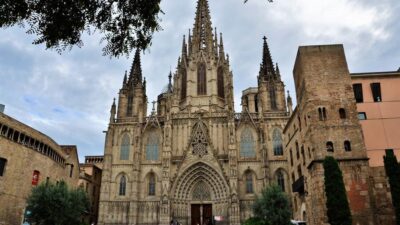
Barcelona: Old Town and Gothic Quarter Walking Tour
Read our review →
Barcelona Old Town & Gothic Quarter Small Group Tour
Read our review →
Ramblas, Old Town, Gothic and Gaudi Architecture Walking Tour
Read our review →
Barcelona: El Born and Gothic Quarter Wine & Tapas Bar Tour
Read our review →
Kids and Family Gothic Quarter Walking Tour in Barcelona
Read our review →Browse the lists this tour appears in