
Review · BARCELONA
Barcelona Gothic Quarter’s Deepest Secrets & Sangria
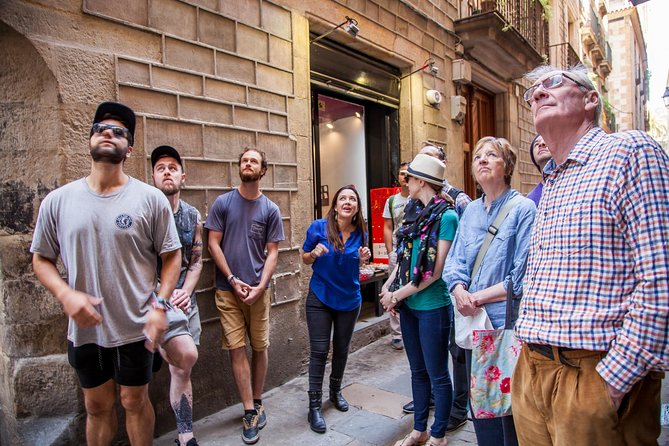
Barcelona’s old center is best understood on foot, and this tour goes well beyond the cathedral postcard view. You’ll follow narrow lanes from Plaça de Catalunya through the Gothic Quarter, past Roman walls, Civil War scars, old Jewish streets, artists’ haunts, and quiet squares that are easy to miss alone. The walk ends near the water with sangria and time for questions.
I like the small group limit of 15, since tight lanes and crowded squares are much easier to manage when your guide can hear your questions. I also like the mix of famous sights and odd, memorable details, including Picasso’s connection to an old art school, the story behind Plaça George Orwell, and the thirteen geese associated with Barcelona Cathedral.
The main thing to consider is the amount of walking and the broad route. In roughly three hours, you see many places from the outside rather than touring each one, and cathedral or church admission is not included. The sangria is part of the price, but other food and drinks are not.
Key points to know before you book
- Roman Barcelona in the modern city: See sections of the original Roman walls and ancient ruins tucked among present-day streets.
- Stories beyond the standard route: The walk includes the Jewish Quarter, Civil War history, Picasso connections, Plaça Felip Neri, and George Orwell Square.
- Small groups make a difference: With no more than 15 people, it is easier to stay together and ask questions.
- Several guide styles: Juliana, Valentina, Sabrina, Daniel, and Angelina are among the guides named in the tour’s feedback.
- A useful first-day activity: You finish with practical Barcelona advice and a better sense of how the old center fits together.
- Sangria near Port Vell: The included drink gives the walk a relaxed finish, though meals and additional orders cost extra.
Why this walk works well in Barcelona
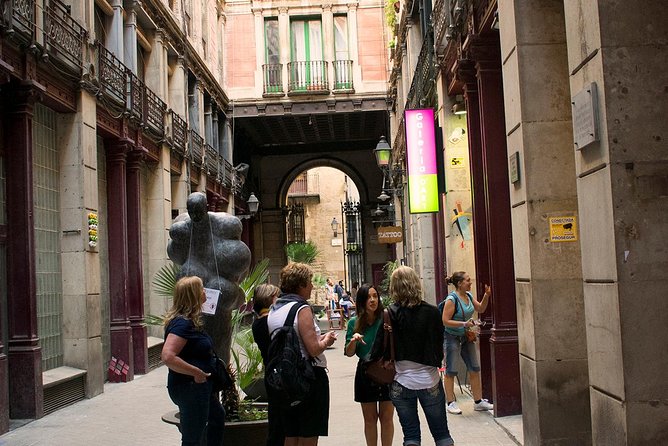
Barcelona’s Gothic Quarter can feel confusing at first. Streets twist, church towers appear suddenly, and a Roman wall may be built into a later medieval structure without an obvious sign. I find a local guide especially useful here because the quarter rewards close attention more than grand views.
This is not simply a checklist of major buildings. The route connects Barcelona’s Roman beginnings with its medieval religious and commercial life, then moves into the city’s political conflicts, artistic identity, and relationship with the sea. That range gives you a working framework for the city rather than a pile of disconnected dates.
The experience is offered in English and lasts about three hours. It begins at Café Zurich beside Plaça de Catalunya and ends at Port Vell, so you move through the center rather than returning to the starting point. That one-way design is handy if you plan dinner or an evening walk near the harbor.
I would schedule it early in your stay. You’ll learn where Las Ramblas leads, how the old lanes connect to the waterfront, and which squares deserve a return visit. Several guide comments also point to practical help with planning other activities, which can be useful when you are still getting oriented.
More Gothic quarter walks in Barcelona:
- Barcelona all included: Sagrada, Park Güell, Montjuic & Gothic
★ 5.0 · 2,169 reviews - Barcelona Gothic Quarter Tapas & Taverns Food & Wine Tour
★ 5.0 · 1,470 reviews - Barcelona: Old Town and Gothic Quarter Walking Tour
★ 4.8 · 1,393 reviews
Starting at Plaça de Catalunya and Las Ramblas
The meeting point at Café Zurich, at Plaça de Catalunya, is a sensible place to begin. The square sits between the newer Eixample district and the older city, so it gives your guide a natural place to explain how Barcelona expanded beyond its medieval walls.
The opening introduction takes about 15 minutes. Use this time to settle in, check that you can hear your guide, and ask about the pace. The group can include up to 15 people, though some departures may be smaller.
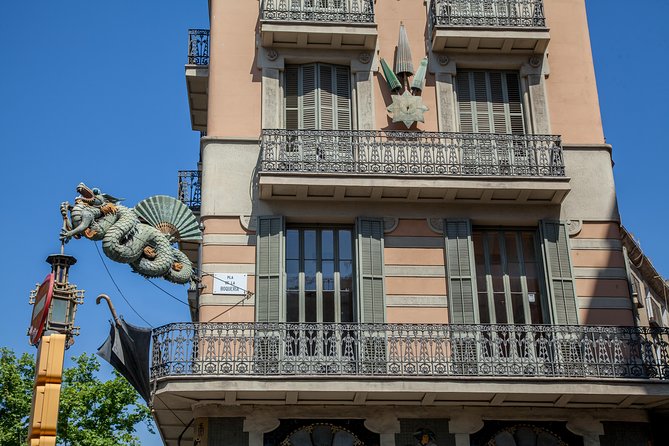
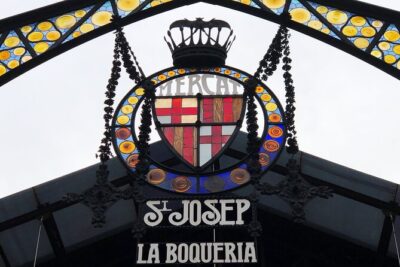
From there, the route reaches Las Ramblas, Barcelona’s best-known promenade. The stop is brief, about 15 minutes, and works mainly as an introduction to the street’s role in city life. You’ll also be near La Boqueria Market, one of the central attractions named as part of the wider walk.
Do not expect a full market visit or a long stop at every famous point. This experience covers a wide area, so some places serve as reference points while the guide spends more time on the quarter’s less obvious corners.
Carrer Petritxol and the churches of the old city
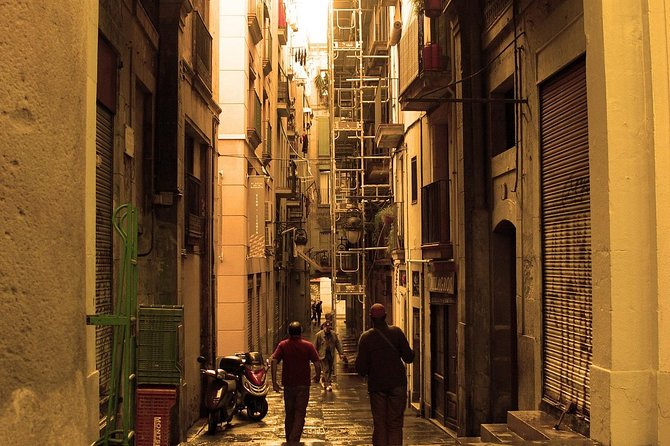
Carrer Petritxol is a short but appealing stop. Known as one of Barcelona’s sweetest streets, it adds a food and neighborhood angle to a tour that otherwise leans heavily toward history. The lane is also a good reminder that the Gothic Quarter is not an open-air museum. People still live, eat, shop, and work among the old stone buildings.
The walk then reaches the Basilica of Santa Maria del Pi. The church is one of the Gothic landmarks on the route, but admission is not included. In practice, you should expect to see the exterior unless you choose to pay separately or enter during permitted visiting hours.
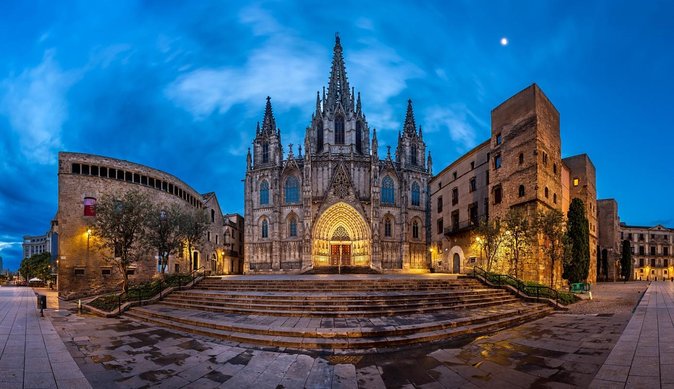
The same applies to Barcelona Cathedral. The cathedral is a major stop, but the stated tour price does not cover admission. The guide can explain the building, its setting, and the surrounding streets, yet you should not assume the tour includes a full interior visit.
That distinction matters if you want a detailed look inside. You could use the tour as an introduction, then return independently for the cathedral and Santa Maria del Pi if opening hours and admission arrangements suit your plans.
One memorable detail tied to the cathedral is its thirteen geese. The story gives the building a human scale and offers the sort of small fact that helps you remember the place after the tour has ended.
Roman walls, archives, and the old Jewish Quarter

The Roman remains are among the strongest reasons to choose this walk. Sections of the ancient wall and other ruins appear within the later city, often in places you could pass without noticing. The guide helps you separate the Roman layer from the medieval one and understand how the city changed over time.
The Archivo Histórico de la Ciudad de Barcelona is another brief stop. It relates to the Crown of Aragon and adds political context to the city’s role in the wider region. The visit is listed as free, but the itinerary does not promise an extended interior tour.
The Jewish Quarter gives the route another change of focus. Narrow streets and old religious sites carry stories that do not always appear on a standard first-time walk. The tour also identifies the synagogue as part of the area’s history, though entrance is not listed as included.
I appreciate this section because it shows how several communities and periods occupied the same small patch of ground. You do not need to memorize every date. Pay attention to the street pattern, the fragments of old walls, and the way the guide explains what survived, what changed, and what was later reconstructed.
Same city, a completely different century:
- Barcelona: Sagrada Familia Entry Ticket with Audio Guide
★ 4.6 · 105,312 reviews - Barcelona: Casa Batlló Entry with Self-Audioguide Tour
★ 4.7 · 25,359 reviews - Barcelona in 1 Day: Sagrada Familia, Park Guell,Old Town & Pickup
★ 5.0 · 13,541 reviews - Barcelona: Sagrada Familia Skip-the-Line Entry Ticket & Tour
★ 4.8 · 12,789 reviews
Plaça Sant Jaume and the politics of Barcelona
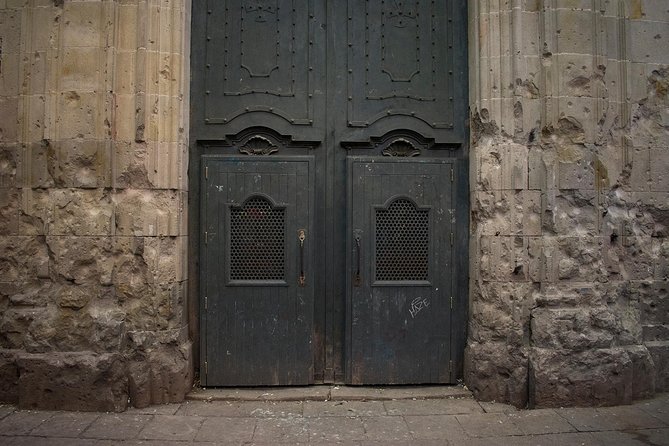
Plaça Sant Jaume is the city’s government square and a useful place to discuss Barcelona’s political identity. The stop is short, about five minutes, but the square carries more weight than its timing suggests.
The route then moves to Plaça Sant Felip Neri, one of the most affecting places in the quarter. Here the subject turns to the Spanish Civil War. The square’s quiet appearance can make the story feel even more direct, especially after the livelier streets nearby.
This is where the tour’s title promise about darker secrets makes sense. The experience does not treat the Gothic Quarter as a decorative medieval backdrop. It also looks at violence, political conflict, religious history, and the marks those events left behind.
The short listed stop does not mean the subject is necessarily superficial. A good guide can use a few details to give the square meaning, but the exact amount of discussion will depend on the group and the guide. If Civil War history is your main interest, ask questions while you are there.
Art, Picasso, Miró, Gaudí, and George Orwell
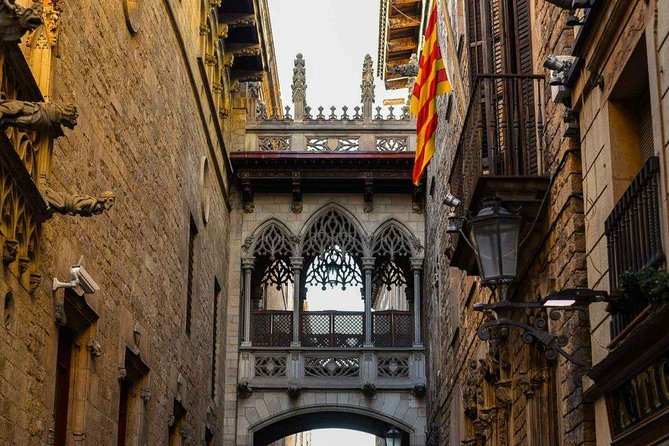
Barcelona’s art story appears throughout the route. The Royal Artistic Circle of Barcelona is included in the walk, with a connection to one of Gaudí’s early works. The nearby school of applied arts is associated with Picasso, Miró, and Dalí, and the route identifies Picasso as a student there.
These are quick stops, not museum visits. You will not receive a full art-history lecture or see every major work connected to these figures. What you gain is a better sense of how artists were linked to the streets, schools, and institutions of central Barcelona.
A particularly appealing detail is the reference to actual Picasso art in the area. It gives you something concrete to look for rather than treating the artist as a distant name from a textbook. The route also points out Miró’s place of birth, adding another personal connection to the city.
Plaça George Orwell, often called Plaça Tripi, shifts the subject to modern political and social history. The square’s connection with George Orwell and the Spanish Civil War makes it a useful counterpoint to the churches and Roman remains earlier in the walk.
I like this variety. You can move from ancient stone to medieval religion, then to modern politics and twentieth-century art without leaving the old center. The danger is that the pace may feel brisk if you want to linger at each subject, so think of the outing as an introduction with several invitations to explore later.
Toward Barceloneta and the waterfront
The final stretch heads toward Barceloneta, where the story turns to Barcelona’s beach, port, and relationship with the sea. This gives the route a satisfying change of scenery after hours among narrow lanes.
The itinerary includes the Pailebot Santa Eulalia, a historic vessel connected with a story about the torture of Barcelona’s patron saint. The stop is very short, listed at four minutes, so expect an explanation rather than time aboard the ship.
Ending at Port Vell makes practical sense. You are positioned near the waterfront, Barceloneta, and restaurants rather than being left in the middle of the old quarter. It also gives the tour a natural closing point, moving from the enclosed medieval city to the open harbor.
The final sangria is included. It is meant to be enjoyed with conversation, questions, and the guide’s recommendations. One especially useful aspect of the drink stop is the chance to ask about food, neighborhoods, and other places to visit while the route is still fresh in your mind.
You should budget separately for tapas, paella, snacks, or extra drinks. The included sangria is not a full meal, even though some departures may take place at a local eatery where you can order more.
Guide quality and the small-group advantage
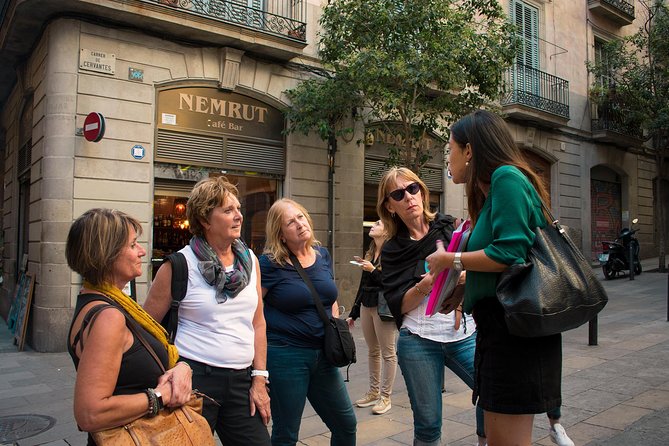
The strongest pattern in the feedback is the guide’s storytelling. Juliana is repeatedly described as warm, energetic, and especially strong on Barcelona’s past and culture. Valentina also receives praise for clear explanations and a friendly manner, while Sabrina and Daniel are singled out for making the walk engaging and easy to follow.
Angelina is noted for handling a large number of questions, which tells you something useful about the format. This is not meant to be a silent march behind a flag. The small group makes room for conversation, and that matters in a neighborhood where many details are easy to miss.
A group of no more than 15 is still large enough to feel social, but far more manageable than a big city walk. You spend less time waiting for people to cross streets or gather around a doorway. You also have a better chance of asking about a place that catches your eye.
In some cases, the departure may be much smaller. One booking had only two participants, and the guide adapted the walk to that setting. You should not assume a private tour, but a light booking period can produce a very personal experience.
The guides also appear willing to adapt. One pair had a special request accommodated, and several guide comments describe help with planning other activities. That does not guarantee a custom itinerary, but it suggests you should speak up if you have a specific interest.
Price, pace, and what you really receive
At $65.33 per person, this is not the cheapest way to stroll through the Gothic Quarter. You can walk Las Ramblas, Plaça Sant Jaume, and the cathedral area for free. The price is easier to justify if you want context, navigation help, a small group, and a drink at the end.
The value comes from interpretation and time saved. Instead of pausing at every corner to figure out what you are looking at, you get a route that joins Roman ruins, medieval churches, the Jewish Quarter, Civil War sites, art history, and the waterfront.
The main tradeoff is breadth over depth. A three-hour walk covering this many places cannot provide a full visit to each church, museum, market, or historic building. If you prefer one building explored room by room, book a focused cathedral or museum visit instead.
You should also wear comfortable shoes. The experience is entirely on foot, includes many stops, and passes through old streets where the surface and width may vary. The tour is suitable for most people, but anyone who dislikes extended walking should think carefully about the pace.
Confirmation arrives at booking, public transportation is nearby, and free cancellation is available up to 24 hours before the start time. Changes or cancellations inside that window are not accepted, and the activity may be moved or refunded if its minimum group size is not reached.
Who should book this Gothic Quarter walk?
I would choose this experience for a first full day in Barcelona, especially if you want the old center to make sense before exploring it alone. It also suits curious families, couples, and solo visitors who like history delivered through stories rather than long formal lectures.
It is a good match if you want:
- A broad introduction to Barcelona’s old center
- Roman, medieval, Jewish, Civil War, and art-related history in one outing
- A guide who can answer questions and offer practical suggestions
- A small group instead of a large city tour
- A relaxed drink at the end near Port Vell
I would hesitate if you want extensive interior visits, a museum-centered experience, or a slow photographic walk. The route moves at a steady pace, and the short stops mean you must accept that some sights will be introductions rather than complete visits.
Should you book Barcelona Gothic Quarter’s Deepest Secrets & Sangria?
Book it if you want the Gothic Quarter explained by someone who can connect its Roman foundations, medieval streets, political conflicts, artists, and waterfront in one walk. The small group, strong guide feedback, and included sangria make the $65.33 price reasonable for an orientation tour.
I would schedule it near the start of your stay and return later to the cathedral, churches, market, or museums that catch your interest. That is the best way to use this experience: let it show you what is there, then spend your own time going deeper where your curiosity leads.
FAQ
Where does the tour start?
It starts at Café Zurich, Plaça de Catalunya, 1, in Barcelona’s Eixample district.
Where does the tour end?
The experience ends at Port Vell in the Ciutat Vella area.
How long does the tour last?
The activity lasts approximately three hours.
Is sangria included?
Yes. Traditional sangria is included as part of the experience. Additional food and drinks are not listed as included.
Are admission tickets to the cathedral and churches included?
No. Admission to Santa Maria del Pi and Barcelona Cathedral is not included. The route also includes several free outdoor stops.
What is the maximum group size?
The tour has a maximum of 15 people.
Can I cancel for a full refund?
Yes, if you cancel at least 24 hours before the scheduled start time. Cancellations or changes made less than 24 hours in advance are not accepted for a refund.
Just added around Barcelona
- Love in the Gothic Quarter Barcelona: Self-Guided Romantic Walk★ 4.5 · 9 reviews
- Walking tour of the Gothic Quarter of Barcelona + Cathedral★ 5.0 · 8 reviews
- Wine tasting with a view of the Sagrada Familia★ 4.5 · 13 reviews
- Visit to the Modernist houses of the Americans★ 5.0 · 2 reviews
- Barcelona Jewish & Gothic Tour★ 5.0 · 18 reviews
- Roman & Gotic & Gaudi in Barcelona: private walking tour★ 4.5 · 2 reviews
- Self-Guided Audio Tour-The Surrealist Barcelona of Dalí and Gaudí★ 3.5 · 8 reviews
- Barcelona Gaudi Tour: Sagrada Familia, Casa Batllo & Casa Mila★ 5.0 · 4 reviews
Gothic Quarter Tours, compared.
Barcelona all included: Sagrada, Park Güell, Montjuic & Gothic
Read our review →
Barcelona Gothic Quarter Tapas & Taverns Food & Wine Tour
Read our review →
Barcelona: Gothic Quarter Ghosts and Legends Walking Tour
Read our review →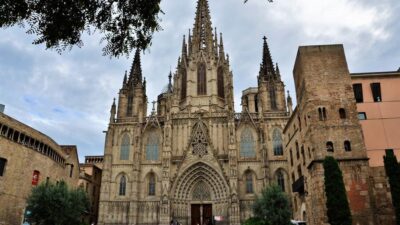
Barcelona: Old Town and Gothic Quarter Walking Tour
Read our review →
Barcelona Old Town & Gothic Quarter Small Group Tour
Read our review →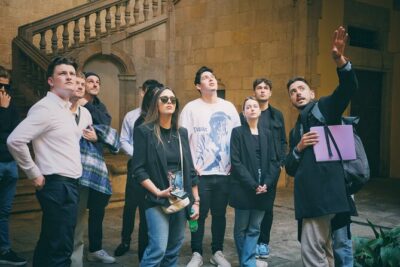
Ramblas, Old Town, Gothic and Gaudi Architecture Walking Tour
Read our review →
Barcelona: El Born and Gothic Quarter Wine & Tapas Bar Tour
Read our review →
Kids and Family Gothic Quarter Walking Tour in Barcelona
Read our review →Browse the lists this tour appears in