
Review · ROME
Rome: Caravaggio and Baroque Art Private Guided Tour
Caravaggio’s Rome is best understood inside working churches, not behind museum glass. This private walk takes you from the shadowy drama of The Conversion of St. Paul to the theatrical churches and fountains that shaped Baroque Rome. Santa Maria del Popolo and the Contarelli Chapel are the artistic heart of the route.
I like the private format, since your guide can set the pace and explain why Caravaggio’s light feels so startling in person. I also like the walk’s range: you get major paintings, government palaces, the Pantheon, Bernini, and Borromini in one compact route. The main drawback is the amount of walking and the need to cover your shoulders and knees inside churches.
Key points to know
- Caravaggio’s major Roman paintings: See The Crucifixion of St. Peter, The Conversion of St. Paul, The Life of St. Matthew, and Madonna of the Pilgrims in their original churches.
- A private three-hour walk: The tour is limited to your private group, with an art historian guide speaking English or Italian.
- A strong finish in Piazza Navona: End among Bernini’s Fountain of the Four Rivers and Borromini’s Sant’Agnese in Agone.
- More than paintings: Pass Palazzo Madama, Giustiniani Palace, Montecitorio Palace, and the Pantheon while learning how Rome’s historic buildings are used today.
- Useful practical detail: Meet by the obelisk in Piazza del Popolo, arrive 10 to 15 minutes early, and wear comfortable shoes.
- A good choice for serious art lovers: The $158.60 per-person price makes the most sense for people who want close guidance rather than a broad, inexpensive city walk.
Why Caravaggio belongs in the churches of Rome
Caravaggio’s paintings have a force that is easy to miss in a crowded gallery. In Rome, you see them where they were meant to be seen: on chapel walls, surrounded by stone, candles, architecture, and the quiet business of worship.
His gift was not simply painting dark scenes. He made light behave like a physical force. A face appears from blackness. A hand catches the eye. A rough foot or dusty garment may receive as much attention as a saint’s halo. Your guide will connect this sharp visual style to Caravaggio’s unsettled years in Rome, when his fame grew alongside a reputation for quarrels and trouble.
The route gives you a useful contrast between Caravaggio’s direct, human drama and the grander visual language of the Baroque. Bernini uses movement and theatrical design. Borromini bends architecture into restless shapes. Caravaggio often needs only a beam of light and a single decisive gesture.
That contrast is one reason I find this tour more satisfying than a narrow list of paintings. You are not only seeing famous works. You are watching Rome’s artistic character change from one church to the next.
More Baroque architecture tours in Rome:
- Borghese Gallery Max 6 People Tour: Baroque & Renaissance in Rome
★ 5.0 · 185 reviews - Guided Walking Tour of Rome: Top Sights & Baroque Treasures
★ 5.0 · 155 reviews - Rome’s Baroque Art Walking Tour: Who Killed Caravaggio?
★ 5.0 · 27 reviews
Starting at Piazza del Popolo and Santa Maria del Popolo
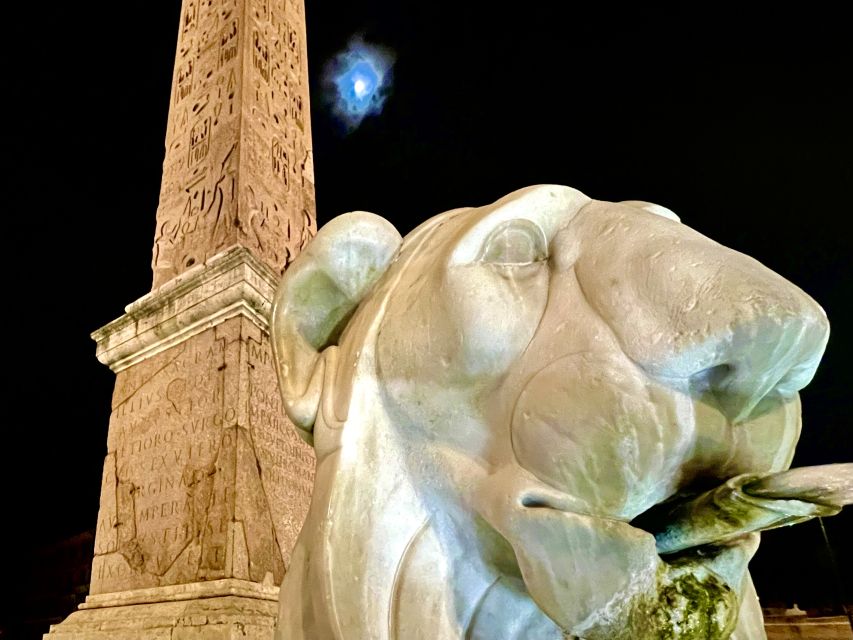
Meet your guide beside the obelisk in the center of Piazza del Popolo. The square is easy to recognize, but it is large, so allow time to find the exact meeting point and arrive 10 to 15 minutes before departure. Your guide will carry a sign with your name.
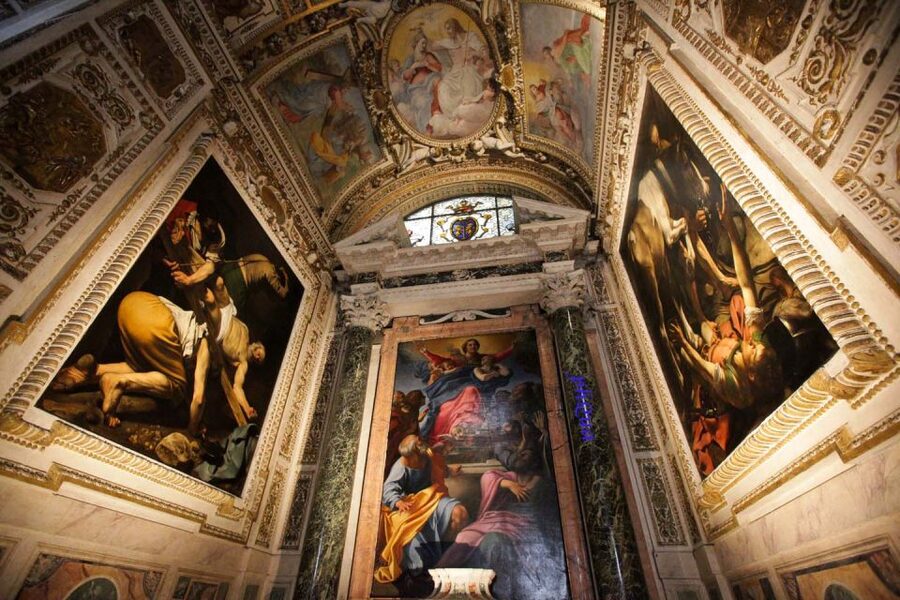
The first proper stop is the Church of Santa Maria del Popolo. Two Caravaggio paintings make this one of the most important stops on the walk: The Crucifixion of St. Peter and The Conversion of St. Paul.
The first shows Peter at the moment of his execution. Caravaggio avoids a polished, heroic scene. Instead, the painting brings you close to the physical strain of the men lifting the cross. The second captures Paul’s conversion with dramatic economy. A powerful shaft of light isolates the fallen figure, turning a sudden religious experience into something almost startlingly physical.
You have about 15 minutes inside the church, in addition to a short guided visit in the square. That is enough for a focused explanation, but not enough for a leisurely study of every detail. If these two works are your main reason for booking, listen closely and use the time well.
Following Caravaggio through central Rome
After Santa Maria del Popolo, the walk passes several places connected with Caravaggio’s Roman life. Palazzo Madama is now the seat of the Italian Senate, while Giustiniani Palace houses Senate offices. You will see these buildings from the outside rather than enter them.
This part of the walk adds context rather than another major painting. Caravaggio’s story becomes easier to follow when you can place him in the streets and civic center of Rome. The guide also discusses Montecitorio Palace, another important government building with an active present-day role.
I appreciate this pause from church interiors. It keeps the tour from becoming a sequence of paintings with no connection to the city. You also get a glimpse of how Rome layers modern government onto historic architecture.
Do not expect an architectural tour of each palace. These are pass-by stops, so the value depends on the guide’s storytelling and your interest in Caravaggio’s life. The private format helps here, since you can ask for more detail if a building or episode catches your attention.
The Contarelli Chapel and the Life of St. Matthew
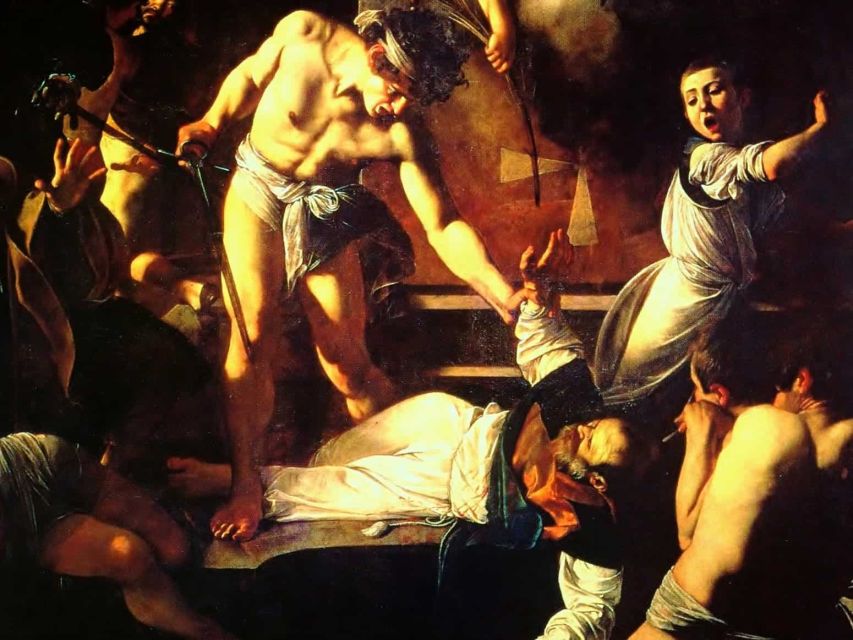
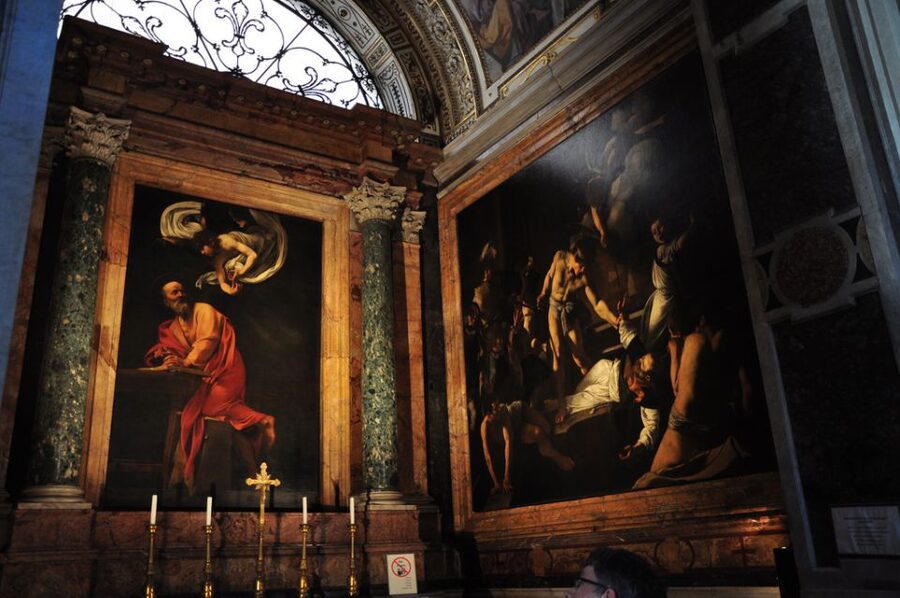
The Church of St. Louis of the French holds the tour’s central Caravaggio experience. In the Contarelli Chapel, you see The Life of St. Matthew, a group of paintings that helped establish his reputation in Rome.
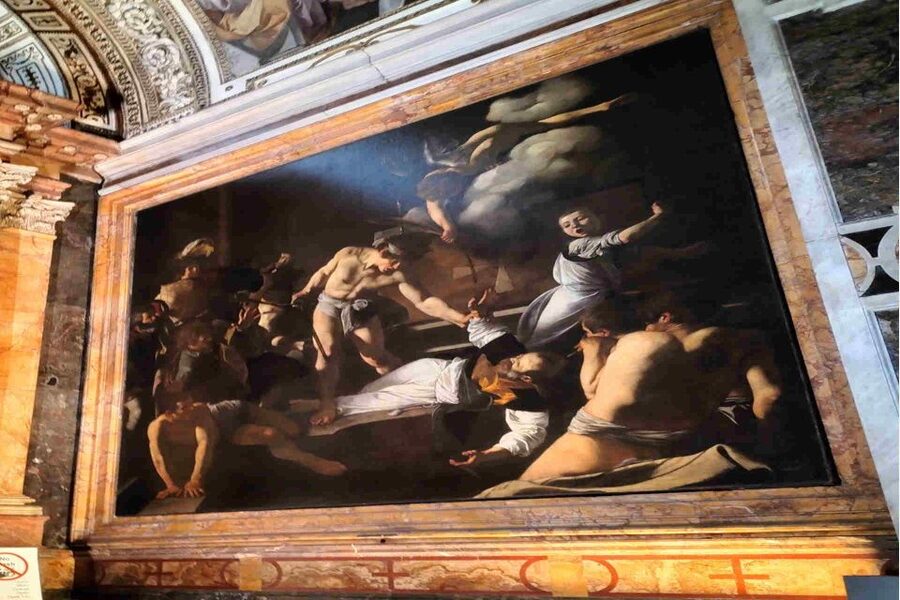
The chapel’s paintings show how Caravaggio turned a religious commission into an encounter with ordinary people. The Calling of St. Matthew places the sacred event in a setting that feels close to daily life. The figures wear contemporary clothing, and the action is shaped by a beam of light that guides your eye across the scene.
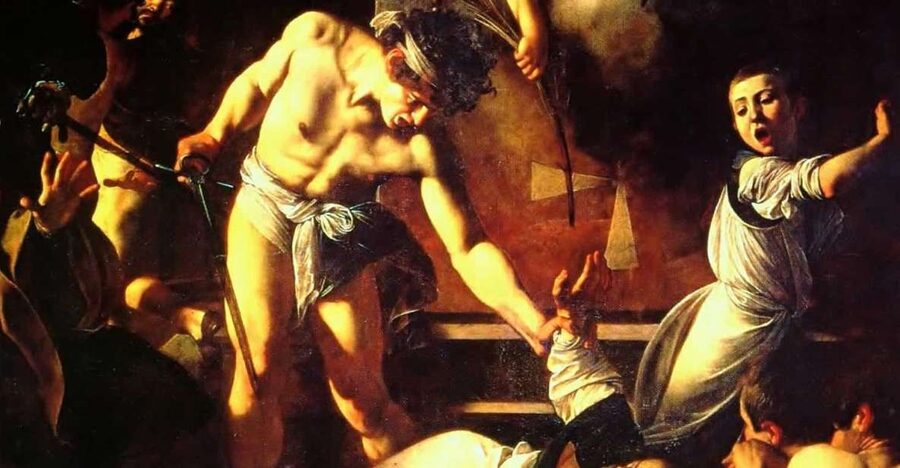
The Martyrdom of St. Matthew is more crowded and violent, while St. Matthew and the Angel creates a different mood. Together, the works show an artist testing how much natural gesture, rough texture, and emotional tension a sacred scene could hold.
You are scheduled to spend about 20 minutes here. This is one of the places where an art historian guide matters. Without context, you can admire the lighting and drama. With guidance, you can understand the commission, the arrangement of the chapel, and the way Caravaggio’s choices challenged more formal religious art.
The church setting is also part of the experience. You are not looking at a reproduction in a museum. The paintings remain in the chapel for which they were made, and the surrounding architecture frames the work in a way that changes how you read it.
More private architecture tours in Rome:
- City Walk with Architect: Private walking tour of Rome
★ 5.0 · 22 reviews - Rome Baroque: Fountains and Squares Private Walking Tour
★ 5.0 · 7 reviews - Borghese Gallery Private Tour: The Greatest Baroque Masterpieces
★ 5.0 · 6 reviews - Private Personalized Architecture Tour of Rome with an Architect
★ 5.0 · 5 reviews
Madonna of the Pilgrims at Sant’Agostino
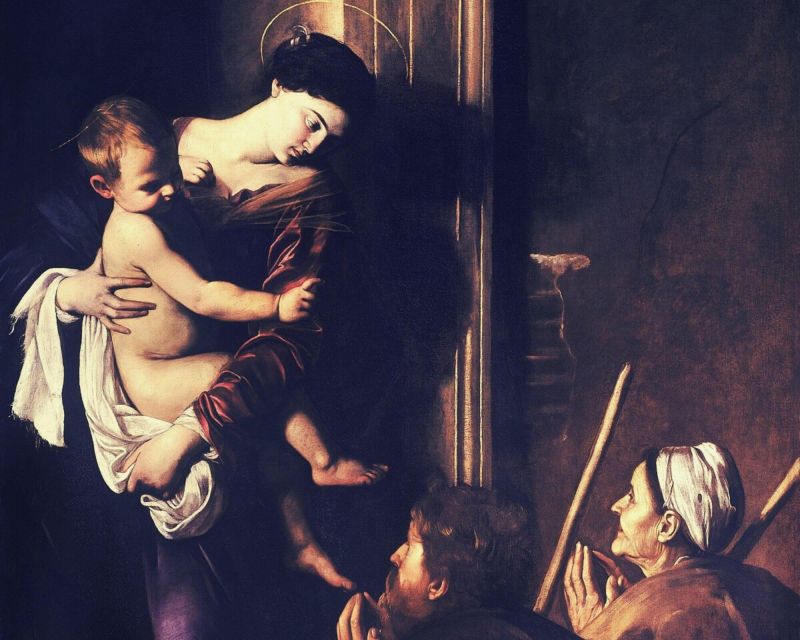
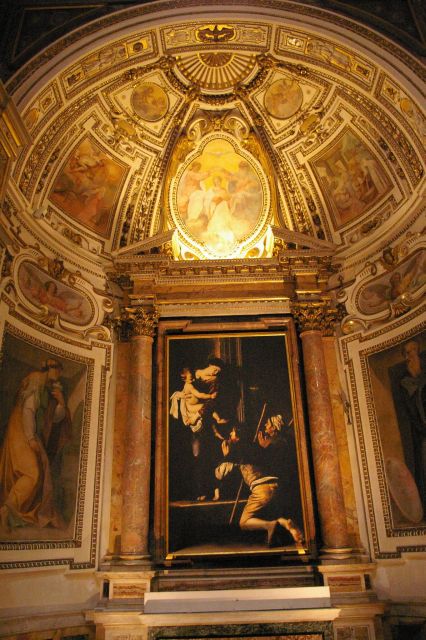
The Basilica of St. Augustine provides a shorter but memorable stop. Here you see Madonna of the Pilgrims, also called Madonna di Loreto.
Caravaggio’s Madonna is striking because the pilgrims appear worn and humble. Their feet are dirty, their clothing is plain, and they approach Mary with the awkward posture of ordinary people. This lack of polish was part of the painting’s power. Caravaggio placed real human bodies and faces at the center of a sacred scene.
The painting also shows his skill at making a simple encounter feel charged. Mary appears at the doorway with the child, and the pilgrims look upward from below. The arrangement is direct, intimate, and far removed from an idealized religious image.
The guided visit lasts about 15 minutes. That is enough for the central ideas, though you may want to return later if you want more time with the painting. The basilica is near several other major sights, so its location is useful for independent exploring after the tour.
The optical tricks of Sant’Ignazio
The Church of St. Ignatius of Loyola changes the mood again. This is a Baroque church known for its grand decorative program and architectural illusion.
The church’s ceiling creates the impression of a much larger structure through painted perspective. Baroque artists often used illusion to make architecture appear to open into the heavens. Here, your guide can explain how the painted space and real space work together.
You spend around 15 minutes in the church. It is not a Caravaggio stop, but it belongs on the route because it shows the wider artistic world that followed him. Caravaggio made viewers believe in the physical truth of a scene. Baroque decorators at Sant’Ignazio use paint and perspective to make stone seem to dissolve.
This is a good point for comparing artistic methods. Caravaggio pulls you into a moment through light and human presence. Sant’Ignazio tries to lift your eyes beyond the building itself.
Passing the Pantheon before Piazza Navona
The Pantheon is a pass-by stop, with about 10 minutes for an explanation. You will not have a dedicated interior visit as part of this schedule, but the guide shares its story while leading you through the center of Rome.
The Pantheon helps connect the tour’s Baroque churches to the older Roman city beneath them. Its massive form, ancient origins, and later religious use make it one of Rome’s clearest examples of buildings being given new lives over time.
The short stop also helps with orientation. You are moving toward Piazza Navona, and the walk between the Pantheon and the square is one of the most pleasant central routes in Rome. Expect city streets, other historic façades, and the usual pedestrian activity. Comfortable shoes are not optional here.
Bernini, Borromini, and the drama of Piazza Navona
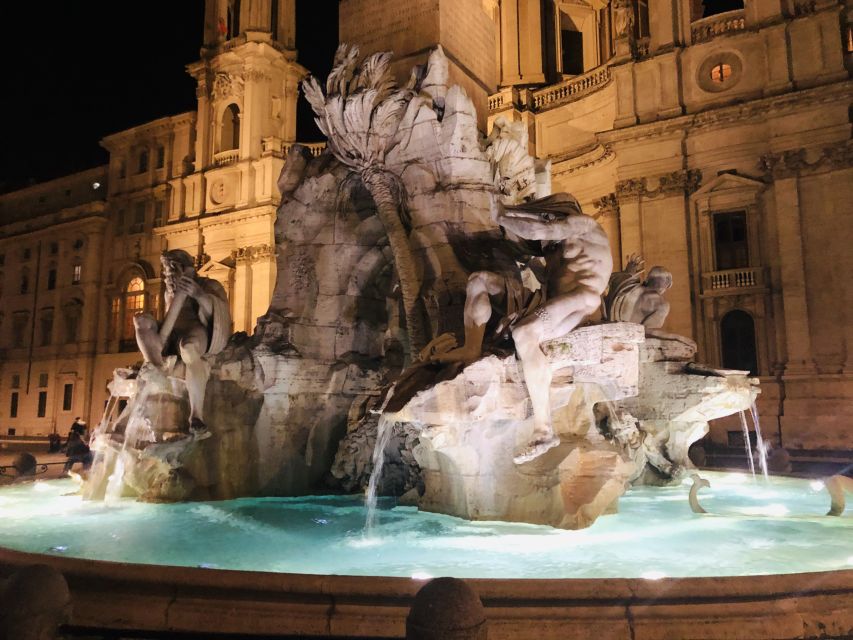
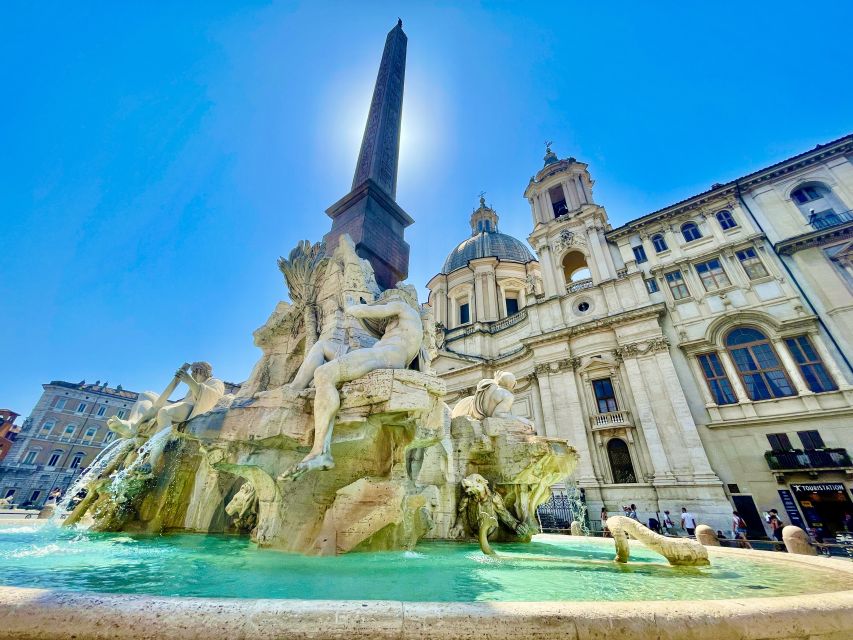
The tour ends in Piazza Navona, one of Rome’s finest open-air Baroque settings. The square gathers architecture, sculpture, fountains, and layers of rivalry in one place.
Bernini’s Fountain of the Four Rivers receives a guided visit of about 10 minutes. Its four monumental figures represent major rivers from different parts of the world, arranged around a tall obelisk. Water, stone, twisting bodies, and movement give the fountain a theatrical energy that is very different from Caravaggio’s concentrated scenes.
Across the square, the façade of Sant’Agnese in Agone brings Borromini into the story. The church’s design has a more tense and intricate character. Your guide explains the famous artistic rivalry between Bernini and Borromini, giving you a lively human angle on the competitive world of Baroque Rome.
You also hear about the final chapter of Caravaggio’s life in Rome. His career here ended in trouble and uncertainty, and the story gives a darker edge to an otherwise celebratory art walk.
The listed finish is Piazza Navona. The meeting information also describes the activity as ending back at the meeting point, so I would confirm the exact finish when you book. Either way, Piazza Navona is a useful place to continue your day, with central Rome close at hand.
What the $158.60 price means
At $158.60 per person, this is not a budget sightseeing walk. The price is easier to justify if you are traveling as a couple or a small private group and want a guide focused on art rather than a general overview of Rome.
You are paying for three things: a private walking format, an art historian guide, and privileged skip-the-line admission. The private setting is especially useful in churches, where the best questions often come from your own interests. You can ask about technique, religious symbolism, architecture, or Caravaggio’s personal story without waiting behind a large group.
The tour also covers a lot in three hours. Four important Caravaggio paintings or cycles are at the center, with Baroque architecture and major public buildings filling out the route. If you tried to arrange this yourself, you would need to plan the church locations, opening access, and order of visits.
Still, the price may feel high if you mainly want to see the paintings quickly. The stops are short, and food, drinks, hotel pickup, and drop-off are not included. I would choose it for a focused art morning or afternoon, not as a general introduction to Rome.
Walking, clothing, and timing
This is a moderate walking tour through central Rome. Wear shoes that can handle several hours on city streets, and avoid planning a demanding activity immediately afterward if you prefer a slower pace.
Church dress rules matter. Shoulders and knees must be covered, so shorts, short skirts, and sleeveless shirts are not allowed. Bring a passport or identity card as requested, and dress for comfort while still meeting the requirements for places of worship.
The tour lasts three hours, with starting times depending on availability. It is offered in English or Italian and requires at least two people per booking. Headsets are supplied only for groups larger than eight, though a private group of that size would be unusual enough that you should check the arrangements when booking.
The order of visits can change because of logistics or unexpected closures. That flexibility is sensible in Rome, where churches and public buildings can have changing access. The essential stops are planned around Caravaggio and Baroque Rome, but you should not treat every minute-by-minute detail as fixed.
Who should book this Caravaggio tour
I would recommend this experience to you if Caravaggio is a major reason for your Rome visit, or if you already know you prefer churches and art to broad sightseeing. It suits couples, families with older children, and small private groups who want a guide to connect paintings with the streets around them.
It is also a good choice if you have only a few days in Rome. The route places several central sights in one organized walk, while keeping Caravaggio at the center instead of treating him as one name among many.
I would hesitate if you dislike walking, want long periods of quiet viewing, or prefer to explore at no fixed pace. The tour moves briskly, and some stops are pass-bys or last only 10 to 15 minutes.
One especially useful point: Emilio is identified as an outstanding guide in the feedback connected with this experience. You cannot assume he will lead every departure, but if Emilio is assigned to your group, you can expect the Caravaggio story to receive particularly strong attention.
Should you book it?
Book this tour if you want to see Caravaggio in the Roman churches where his paintings belong, with a private guide who can explain both the art and the artist’s difficult life. The Contarelli Chapel, Santa Maria del Popolo, and Sant’Agostino make the experience worthwhile for serious art lovers.
Skip it if the price is outside your budget or if you want a slower, self-guided day. For the right visitor, the private access, focused route, and combination of Caravaggio, Bernini, Borromini, and central Rome make the cost reasonable.
FAQ
How long does the Caravaggio and Baroque art tour last?
The tour lasts three hours. Starting times depend on availability when you book.
Where does the tour begin?
The meeting point is in Piazza del Popolo, next to the obelisk in the middle of the square. Your guide will have a sign with your name.
Where does the tour end?
The listed finish is Piazza Navona. The meeting information also says the activity ends back at the meeting point, so confirm the exact finishing location when booking.
Which languages are available?
The live guide is available in English or Italian.
Is this a private tour?
Yes. It is offered as a private group walking tour, with a minimum of two people per booking.
Which Caravaggio paintings will I see?
The route includes The Crucifixion of St. Peter and The Conversion of St. Paul at Santa Maria del Popolo, The Life of St. Matthew in the Contarelli Chapel, and Madonna of the Pilgrims at Sant’Agostino.
Is skip-the-line admission included?
Privileged skip-the-line admission is included. Headsets are provided only for groups of more than eight people.
What should I wear?
Wear comfortable shoes and clothing that covers your shoulders and knees. Shorts, short skirts, and sleeveless shirts are not allowed in the places of worship on the route.
Can I cancel the booking?
You can cancel up to 24 hours in advance for a full refund. A reserve-now-and-pay-later option is also available.
Just added around Rome
- Vatican: Exclusive Baroque Evening With Aperitivo & Dinner★ 3.1 · 2 reviews
- Rome Pantheon Highlights From Ancient Rome to Baroque★ 5.0 · 5 reviews
- Borghese Gallery Private Tour: The Greatest Baroque Masterpieces★ 5.0 · 6 reviews
- Private Baroque Tour: Discover Bernini & Caravaggio’s Best Works★ 5.0 · 3 reviews
- Private Personalized Architecture Tour of Rome with an Architect★ 5.0 · 5 reviews
- New Year’s Baroque Concert at Doria Pamphilj Palace★ 5.0 · 2 reviews
- Rome Baroque: Fountains and Squares Private Walking Tour★ 5.0 · 7 reviews
- Musical masterpieces: The best of the Baroque concert★ 5.0 · 17 reviews
Baroque Architecture Tours, compared.
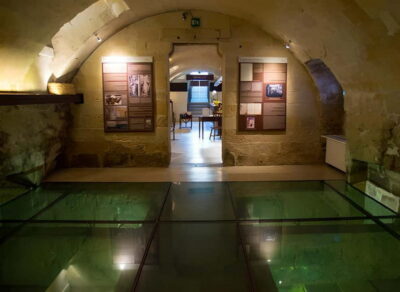
Lecce: Baroque Architecture and Underground Walking Tour
Read our review →
Train Exp. through the Alps (Royal Baroque Route from Nice)
Read our review →
Dresden: Tour of the Baroque Quarter with a Night Watchman
Read our review →
Interpreti Veneziani Ensemble Baroque Concert in Venice Ticket
Read our review →
Borghese Gallery Max 6 People Tour: Baroque & Renaissance in Rome
Read our review →
Concert at the Palais Schönborn-Batthyány by the Vienna Baroque Orchestra
Read our review →
Guided Walking Tour of Rome: Top Sights & Baroque Treasures
Read our review →
Noto, Modica and Ragusa: The Baroque Tour from Catania
Read our review →Browse the lists this tour appears in