
Review · LECCE
Lecce Unveiled: 2-Hour Guided Baroque Adventure
Lecce’s best trick is how easily it puts Roman ruins, carved Baroque stone, and centuries of religious history within one walkable center. This tour gives you that contrast in a compact route, from the Basilica of Santa Croce to the Roman Amphitheater and Theater. I like the clear mix of ancient and Baroque sights, and I like that the guide also brings in Lecce’s Jewish past rather than treating the city as a parade of pretty church fronts.
The main drawback is time. The experience is described as both a 2-hour tour and a 1.5-hour activity, so you should confirm the exact length when booking. The Jewish museum stop may also feel brief, and the tour is not suited to people with mobility impairments.
Key points to know before you book
- Santa Croce sets the tone: Expect elaborate Baroque stonework, dense sculpture, and plenty of details to point out.
- Roman and Baroque Lecce share the same route: The Amphitheater and Theater appear alongside churches, palaces, and civic buildings.
- Jewish history is part of the story: The guide introduces Lecce’s Jewish community, though the museum portion can be short.
- Luigi is one named guide: He has been praised for showing Lecce in a way that helps you connect with the city.
- The walk is compact but full: The listed duration is about 1.5 hours, while the tour title calls it 2 hours, so check the start and finish times.
- Small groups make the most sense: Private and small-group formats are available, useful for questions and a more personal pace.
Why Lecce works so well as a walking tour
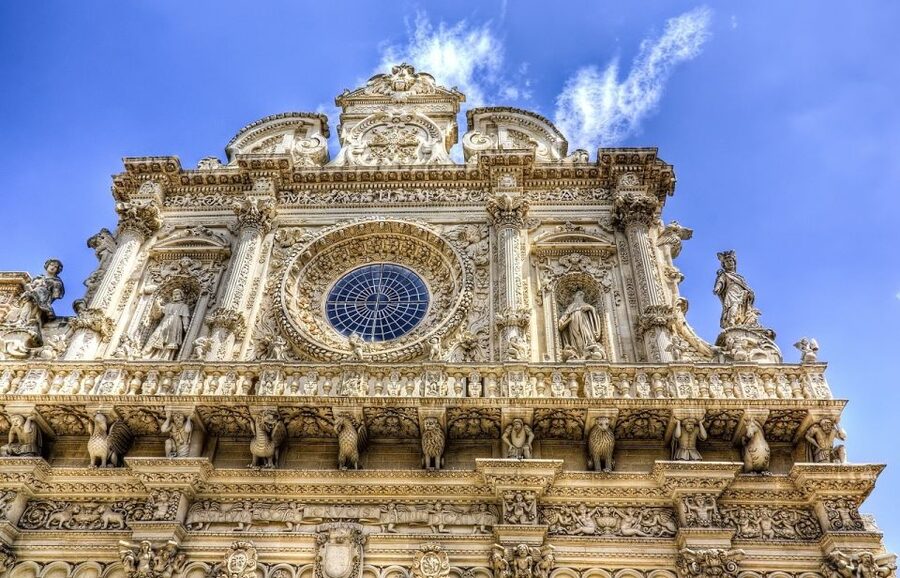
Lecce is often called the Florence of the South, though the comparison can mislead you if you expect another Florence. Lecce has its own look, shaped by warm local limestone and an especially decorative form of Baroque architecture. Facades curl, twist, and fill almost every spare patch of stone with leaves, angels, columns, and carved figures.
The city also rewards a guide because its sights are packed together but not always easy to read. A church may look like a handsome old building at first glance, while a Roman ruin can sit partly below modern street level. You get more from the walk when someone explains how the city changed from Roman settlement to medieval center to Baroque showcase.
I like the tour’s basic idea for a first visit. It does not confine you to one era. Instead, you move between Roman Lecce, religious Lecce, civic Lecce, and the story of its Jewish community. That gives you a useful map of the city before you return to explore at your own pace.
The route is in Lecce’s historic center, and the meeting point can vary by the option you choose. Check your confirmation carefully, especially if you book a private format rather than a standard small group.
More Baroque architecture tours in Italy:
- Lecce: Baroque Architecture and Underground Walking Tour
★ 4.6 · 1,248 reviews - Interpreti Veneziani Ensemble Baroque Concert in Venice Ticket
★ 4.5 · 403 reviews - Borghese Gallery Max 6 People Tour: Baroque & Renaissance in Rome
★ 5.0 · 185 reviews
Santa Croce and the city’s Baroque signature
The Basilica of Santa Croce is the visual high point of the walk. Its facade is famous for its crowded decoration, with sculpted forms layered across the pale stone. A guide can help you look beyond the overall effect and notice how the carvings are arranged and why this church matters to Lecce’s identity.
This is the kind of stop where a short explanation adds real value. Without context, you may simply see an ornate church. With context, the facade becomes a display of local skill, religious ambition, and the distinctive stonework that made Lecce famous.
Do not expect a long private study of every carving. The tour has many stops, and the time is limited. Still, Santa Croce gives you an immediate sense of why Lecce is known for Baroque architecture. It is a strong opening because the building is visually memorable and sets up the style you will see elsewhere.
The tour also connects the church area to the history of Lecce’s Jewish community. That is an important choice. The city’s story is not only about churches and Roman monuments, and the Jewish heritage segment adds a human and social layer to what could otherwise be a purely architectural walk.
Church of Jesus and Lecce’s religious center
The Church of Jesus continues the religious side of the route. Its facade is ornate, and its interior is described as lavish. You will see another example of how much visual energy Lecce put into sacred buildings.
The useful thing here is comparison. After Santa Croce, you can begin to notice differences in facade design and interior decoration instead of treating every church as the same. The guide’s role is to give you enough background to understand why these buildings were made so richly.
Church visits can depend on local operating conditions, religious services, or other changes. The itinerary may be adjusted for weather or operational reasons, but the stated number and quality of visits are meant to be maintained. That flexibility is worth keeping in mind if one exact interior is important to you.
Piazza Sant’Oronzo, the Sedile, and the Roman Column
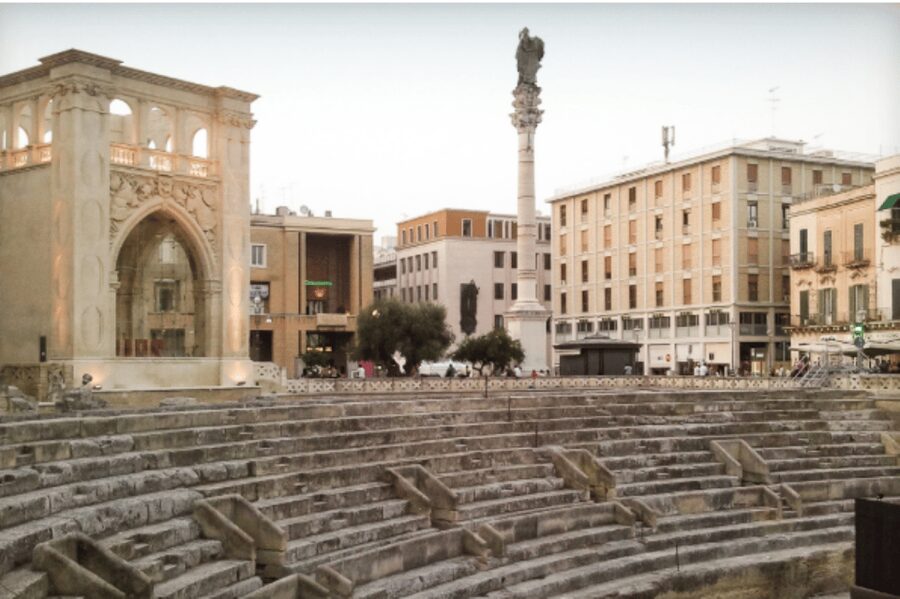
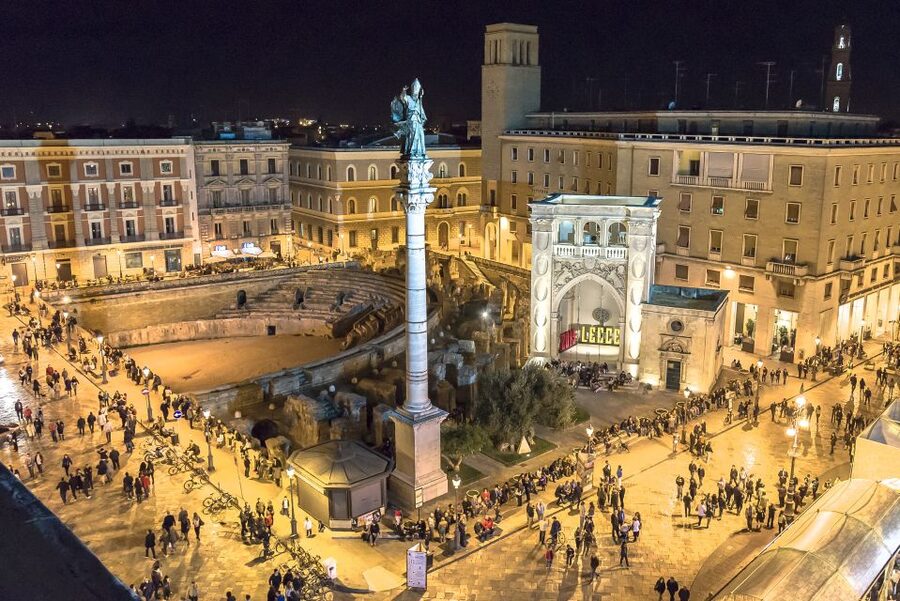
Piazza Sant’Oronzo is the civic heart of the walk. It gives you a broader view of Lecce, with historic buildings surrounding an open public space and the column dedicated to Saint Oronzo, the city’s patron saint.
This is a good place to pause and connect the city’s religious and civic life. The square is not simply a backdrop for photographs. It helps explain how Lecce organized public space around faith, government, and local identity.
Nearby, the Sedile offers another change of mood. This historic building represents civic power, so it moves the story away from churches and into the world of public administration. It is a smaller stop than the major basilica, but that is part of its appeal. You get a reminder that old cities are made from ordinary civic buildings as well as grand monuments.
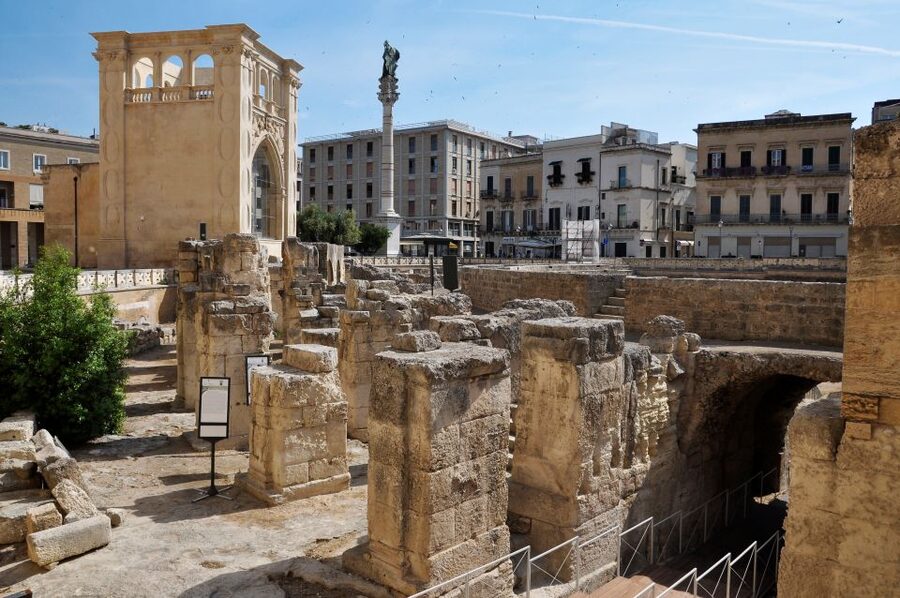
The Roman Column adds a further layer. Lecce’s Roman past is not sealed away in a separate archaeological park. It appears in the middle of the present-day center, alongside later buildings and public life. I find that kind of contrast more useful than seeing ancient ruins in isolation because it shows how the city kept building over its own past.
A few more architecture tours around Italy worth a look
- Barcelona 2-Hour Gothic Walking Tour
★ 4.7 · 317 reviews - Guided Gaudí Trencadís Mosaic Workshop in Barcelona 2 Hours
★ 5.0 · 176 reviews - Miami: 2-Hour Art Deco Bike Tour
★ 4.6 · 155 reviews - Riga: 2-Hour History of Art Nouveau Walking Tour
★ 4.8 · 118 reviews
The Roman Amphitheater and Theater
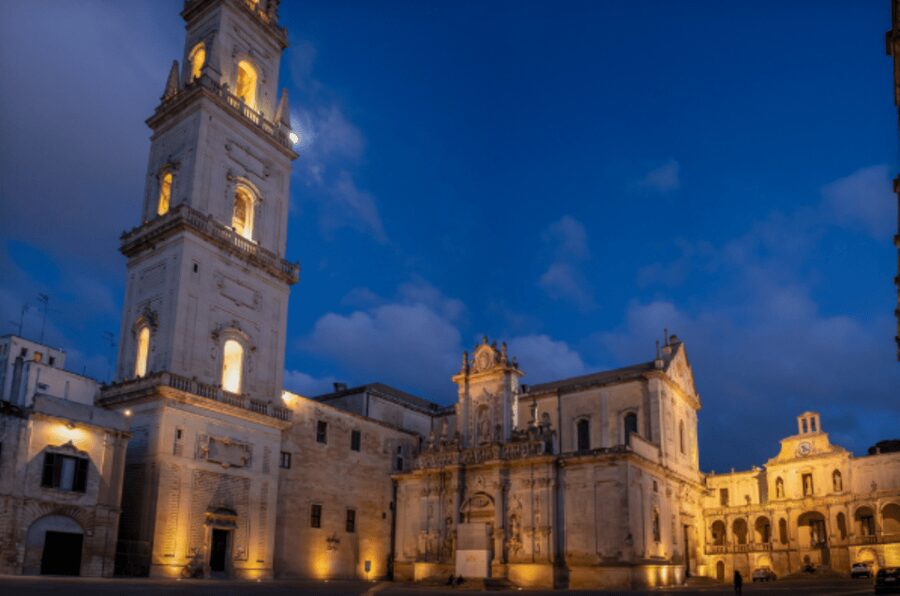
The Roman Amphitheater is likely to be one of the tour’s most striking stops. Ancient spectacles once took place here, and the remains offer a clear physical link to Lecce’s Roman period. Even a short explanation can help you picture the scale and public role of the structure.
The Theater provides a different Roman setting. It was used for cultural events, so it adds another angle to Roman urban life. Together, the Amphitheater and Theater show that Lecce was not a minor roadside settlement. It had public venues designed for large audiences and shared entertainment.
These ruins also make the tour more than a Baroque architecture walk. If your interest is split between ancient history and later European art, this combination gives you a useful sample of both without requiring a separate excursion.
The tradeoff is depth. A 1.5-hour route cannot offer the same archaeological detail as a specialist site visit. You will get orientation, historical explanation, and a look at the remains, but not a long technical study of Roman construction or excavation. For most first-time visitors, that is a fair exchange. You can decide later if one site deserves a longer return visit.
Corso Vittorio Emanuele and the final palace stops
The route continues along Corso Vittorio Emanuele, where elegant historic palaces show Lecce’s residential and institutional side. The street leads you away from isolated monuments and into the city’s built fabric.
The Seminary is among the buildings included along this stretch. Its presence helps you see how religious institutions shaped the street plan and the appearance of the historic center. You are not simply checking off a church, a ruin, and a square. You are watching the pieces of Lecce fit together.
The tour ends at the Episcopio, the bishop’s palace. This closing stop returns to architecture and church power, but on a different scale from Santa Croce. A palace gives you another way to understand the city’s religious institutions, through formal spaces and architectural detail rather than a basilica’s public worship setting.
Ending here makes sense because the route has moved through several parts of Lecce’s identity: Roman public life, civic authority, Jewish heritage, religious art, and the palaces of local power. The final impression is not just that Lecce is decorative. It is that many layers remain visible in a very small area.
The Jewish heritage portion deserves attention
The Jewish history included in the route is one of its more unusual features. Lecce is often presented through its Baroque churches and Roman remains, so learning about the Jewish community gives you a wider and more honest picture of the city.
The available information does not promise a long museum visit, and one account specifically found the Jewish museum portion short. Set your expectations accordingly. You should see it as an introduction rather than a full specialist tour of Jewish Lecce.
That short segment still matters. A good city walk should explain not only who built the grandest buildings, but also which communities lived, worshiped, traded, and adapted within the same streets. If this part of Lecce interests you most, ask the guide how much time the itinerary allows and consider returning independently if more material is available.
How much the $53 price buys you
At $53 per person, the tour is priced as a guided introduction to central Lecce rather than a full-day cultural program. The value depends on what you want from a first visit.
I think the price makes more sense if you choose a small group or private option and use the guide actively. Ask questions about the Baroque style, the Roman remains, the Jewish community, and the buildings you pass between major stops. A silent walk through the same streets would cost less, but it would also leave you to decode a complicated city on your own.
The price does not include food or drinks. That is not a major issue for a short city-center walk, since you can arrange refreshments before or after, but you should not expect a tasting element or a built-in break.
There is one practical price warning. One booking experience found that buying locally appeared less expensive than booking online, with a cited difference between 25 euros and $75 Canadian. Prices can change, and the formats may not have been identical, so compare the exact duration, group type, and inclusions before paying. At the listed $53 rate, look closely at what is available on your chosen date.
Timing, walking comfort, and group size
The tour is listed as lasting 1.5 hours, while its title describes a 2-hour adventure. That difference is small but important if you are planning a train, meal, museum visit, or another timed activity. Check the current start and end details before booking.
Comfortable shoes are essential. The route covers several historic-center sights, and the experience is built around walking rather than riding between monuments. Large bags and luggage are not allowed, so arrive with only what you need for the walk.
The experience is not suitable for people with mobility impairments. That is worth taking seriously, since a compact route can still include uneven historic streets, standing time, and movement between several locations.
English and Italian tours are available. Private and small-group options can give you more room to ask questions and may make the pace easier to manage, though the precise format depends on the option selected. If you want the most personal experience, choose the smallest group you can reasonably afford.
Video recording is not allowed. Bring your attention instead of planning to film the route. Photography rules are not otherwise detailed, so follow the guide’s instructions at churches and other active religious sites.
Who should choose this Lecce walk
I would choose this tour if I had limited time in Lecce and wanted a strong first orientation. It covers the city’s main visual themes without sending you out of the historic center, and the Roman ruins keep the experience from becoming a church-only route.
It also suits you if you enjoy seeing how different periods overlap. You get Baroque facades, Roman public buildings, civic architecture, Jewish heritage, and religious palaces in one compact program.
The tour is less suitable if you want a slow architectural study. You will not have unlimited time at Santa Croce, the Jewish museum, or the Roman sites. An independent return visit may be necessary if you want detailed museum time or long photography stops.
The guide can make a real difference. Luigi is one named guide associated with the experience, and his bright manner and ability to explain Lecce’s history have been singled out in the available feedback. Guide assignments can vary, so book this for the route and format rather than assuming a particular person.
The provider is Martulli Viaggi, based in Matera. English and Italian are the available languages, and cancellation is flexible up to 24 hours before the start for a full refund. You can also reserve now and pay later, which helps if your Apulia plans are still shifting.
Should you book Lecce Unveiled?
Book it if you want a concise, guided introduction to Lecce that combines Baroque churches with Roman ruins and does not ignore the city’s Jewish past. The route is especially useful early in your stay, when you want to understand the center before exploring on your own.
Think twice if you need step-free access, dislike standing and walking, or want a long museum visit. Also confirm the real duration and meeting point, since the information gives both 1.5 hours and 2 hours and says the meeting place can vary.
For many visitors, the strongest reason to go is the range of the route. In a short walk, you can move from Santa Croce’s carved facade to the Roman Amphitheater, then through civic squares and historic palaces. That is a lot of Lecce in a small package, provided you are happy with an introduction rather than an exhaustive study.
FAQ
How long does the Lecce tour last?
The activity information lists a duration of 1.5 hours, while the tour title describes it as a 2-hour experience. Check the exact duration and start time for your selected option.
What languages are available?
The tour is available in English and Italian.
Is the tour private or shared?
Private and small-group options are available. The exact format depends on the option you book.
What sights are included?
The route includes the Basilica of Santa Croce, Church of Jesus, Piazza Sant’Oronzo, the Sedile, the Roman Column, the Roman Amphitheater, the Roman Theater, Corso Vittorio Emanuele, the Seminary, and the Episcopio.
Is food included?
No. Food and drinks are not included.
What should I bring?
Wear comfortable shoes. Luggage and large bags are not allowed, and video recording is not permitted.
Can I cancel the booking?
You can cancel up to 24 hours in advance for a full refund. A reserve-now-and-pay-later option is also available.
Just added around Italy
- Vicenza: discovering the city of Palladio by e-bike★ 5.0 · 4 reviews
- Vicenza: Palladian Architecture Private Walking Tour★ 3.3 · 3 reviews
- Vatican: Exclusive Baroque Evening With Aperitivo & Dinner★ 3.1 · 2 reviews
- Turin: Art Nouveau Walking Tour with Coffee★ 5.0 · 11 reviews
- Venice Music Project – Baroque Autumn – Season 2025★ 4.5 · 7 reviews
- Walking tour in Venice with an architect★ 5.0 · 16 reviews
- Palladio. A wonderful live tale through time&soul, from Ve/Pd/Vr★ 5.0 · 7 reviews
- Turin, Art Nouveau walking tour and coffee break★ 4.0 · 7 reviews
Baroque Architecture Tours, compared.
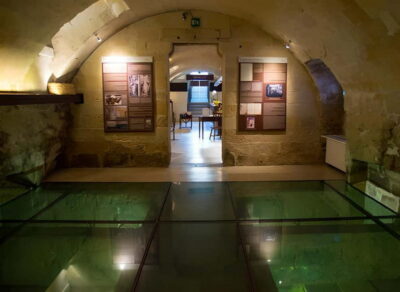
Lecce: Baroque Architecture and Underground Walking Tour
Read our review →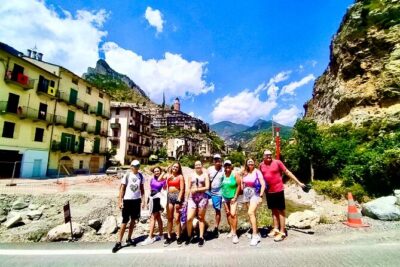
Train Exp. through the Alps (Royal Baroque Route from Nice)
Read our review →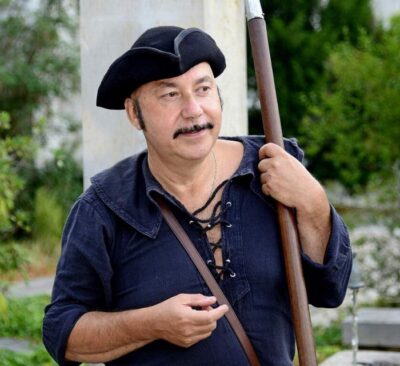
Dresden: Tour of the Baroque Quarter with a Night Watchman
Read our review →
Interpreti Veneziani Ensemble Baroque Concert in Venice Ticket
Read our review →
Borghese Gallery Max 6 People Tour: Baroque & Renaissance in Rome
Read our review →
Concert at the Palais Schönborn-Batthyány by the Vienna Baroque Orchestra
Read our review →
Guided Walking Tour of Rome: Top Sights & Baroque Treasures
Read our review →
Noto, Modica and Ragusa: The Baroque Tour from Catania
Read our review →Browse the lists this tour appears in