
Review · MIAMI
Award-winning Art Deco & Neon Lights Walking Tour
Miami Beach starts with a surprise: much of it is man-made, and Biscayne Bay was once a shallow swamp. This tour uses those facts as a doorway into the city’s stranger story, then follows the trail through Art Deco buildings, neon signs, old hotels, movie locations, and places most people pass without noticing.
I like the way Damian connects architecture to psychology, showing how color, curves, and signs helped create a fantasy of glamour. I also like the access to historic lobbies and semi-public spaces, where the stories feel more personal than they do from a sidewalk. The main consideration is the 150-minute English-language walk, which may feel long if you want only a quick look at Ocean Drive.
Key points to know before booking
- Miami Beach has a man-made origin story: Learn how a former swamp became one of Florida’s best-known resort districts.
- Damian leads as a local historian and preservationist: His approach links buildings with politics, crime, film, design, and popular culture.
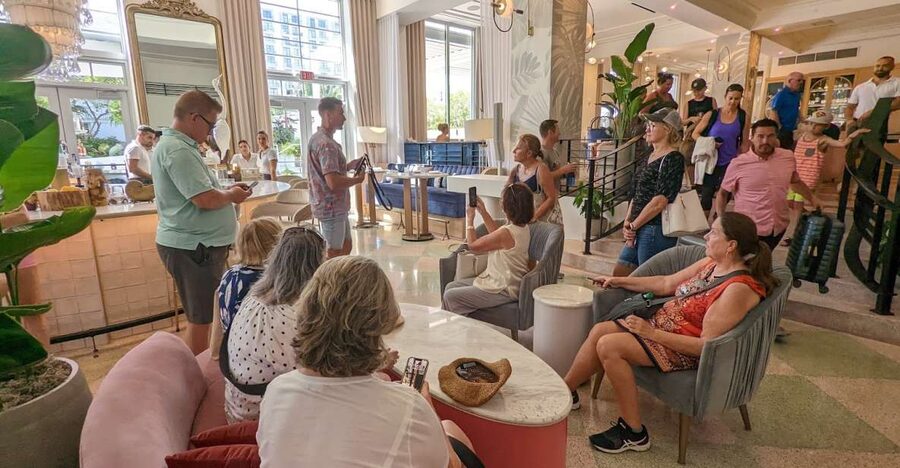
- The tour goes beyond the street: You may enter historic hotel lobbies, unusual corridors, obscure interiors, and other semi-public spaces.
- Neon gets its own history lesson: Signs are treated as design, technology, and part of Miami Beach’s public image.
- Movie fans get extra context: Miami Vice, Scarface, and Birdcage locations appear as part of the city’s film story.
- The $49 price buys time and access: At two and a half hours, this is a proper history walk rather than a quick photo stop.
Miami Beach before the pastel buildings
The usual picture of Miami Beach is simple: pastel facades, palm trees, neon, and Ocean Drive. Damian’s tour begins by complicating that picture.
The city’s modern identity depends on land that was shaped, drained, filled, and developed. Biscayne Bay was once a shallow swamp, and Miami Beach is largely man-made. That background matters because it explains why this place can feel both natural and carefully staged. The tropical image was not simply found here. It was built.
You also get the city’s human stories. Muhammad Ali became world boxing champion for the first time in Miami Beach. Crime scenes once made international headlines. Speakeasies, hotel scandals, and changing fashions left their marks on the streets.
I like this broad starting point because it keeps the walk from becoming a parade of pretty facades. You are not only learning when a building was built. You are asking why this city was created, who it was meant to attract, and how it built its public image.
More Art Deco tours in Miami:
- The Official Art Deco Walking Tour by The Miami Design Preservation League
★ 5.0 · 1,580 reviews - Miami South Beach Art Deco Walking Tour
★ 5.0 · 1,039 reviews - Miami Beach Food and Art Deco Walking Tour
★ 4.5 · 245 reviews
Reading the Art Deco code on Ocean Drive
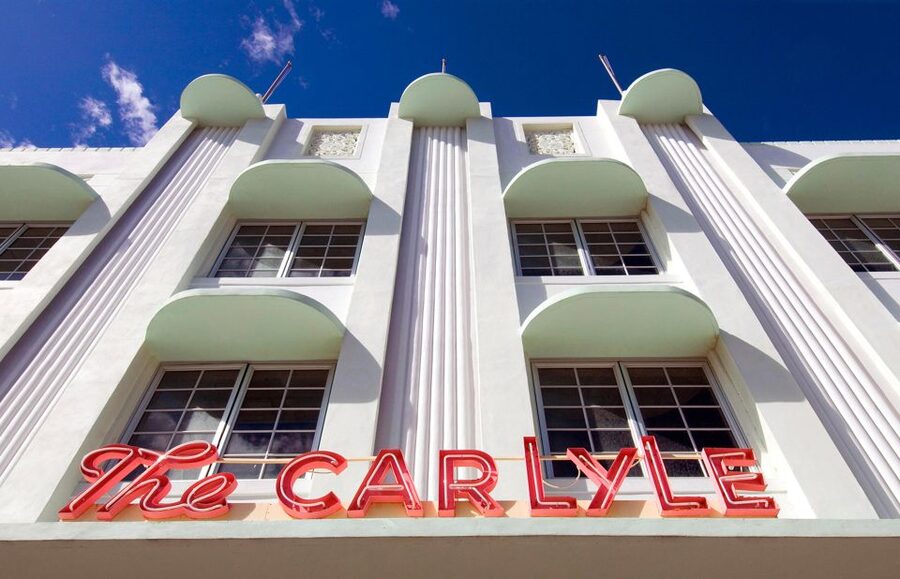
Art Deco is easy to recognize and easy to misunderstand. You see rounded corners, strong lines, porthole windows, decorative details, and bright paint. But the point of the tour is to help you read those features rather than simply photograph them.
Damian explains the significance of Art Deco and the way its design could shape a mood. A building might use symmetry, curved forms, geometric decoration, and bold color to suggest speed, optimism, cleanliness, or glamour. Those choices were not random decoration. They helped sell Miami Beach as a modern escape.
This is where the tour earns its place beside a basic sightseeing stroll. You learn to look for clues that are easy to miss when you are focused on the beach or the next restaurant. Art Deco becomes a visual language, and the facades begin to tell you how the city wanted to be seen.
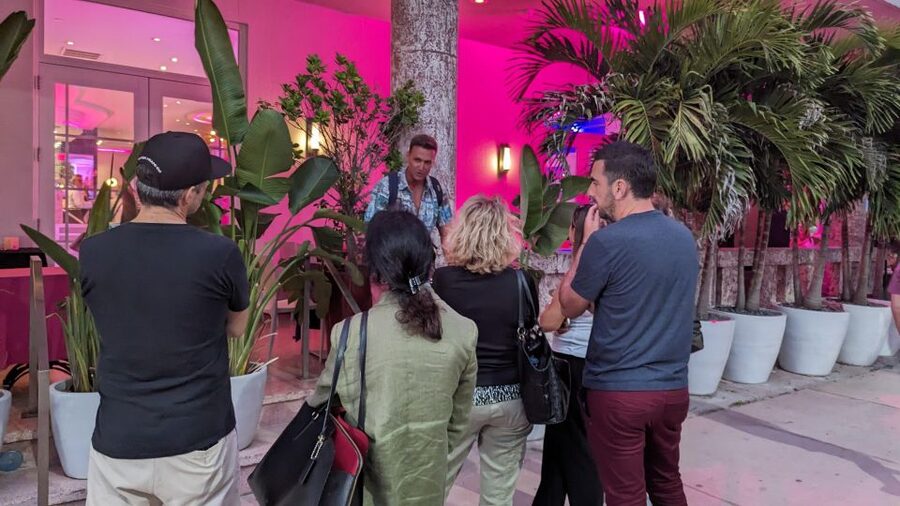
The walking route centers on the heart of Miami Beach, but the appeal is not limited to famous buildings. The host points out architecture that sits in plain sight and explains details that a plaque may leave out. A quick stop can open into a story about development, tourism, design, or a person linked to the building.
Expect a fair amount of looking up, pausing, and listening. If you prefer to move constantly, the steady discussion may feel slow. If you like understanding what you are seeing, the pace gives the buildings time to make sense.
Hotel lobbies and spaces most people miss
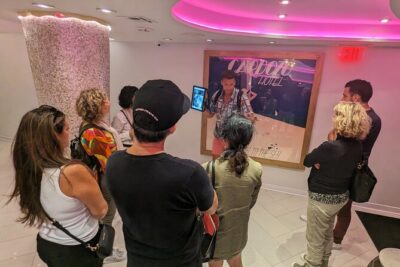
One of the tour’s strongest features is access to historic hotel lobbies and other semi-public areas. These spaces offer a different view of Miami Beach than the main street does.
A facade gives you the public face of a hotel. The lobby can show you how the property wanted people to feel once they entered. Materials, lighting, decoration, corridors, and room layouts all helped create a sense of escape. Damian uses these interiors to add another layer to the Art Deco story.
The experience may include peculiar corridors, obscure lobbies, rooftop terraces, and tucked-away spaces with views or unusual tales. The exact stops can vary, and access to semi-public places depends on what is open and available during the walk. That uncertainty is part of the appeal, but it also means you should not treat every mentioned space as a guaranteed private visit.
You should also arrive ready to follow instructions in working hotels. These are not museum rooms reserved for the tour. Guests, staff, and hotel operations continue around you. That makes the setting feel authentic, but it calls for courtesy and attention.
For me, these interiors add real value to the $49 cost. You are not paying only to hear facts while standing on a sidewalk. You are being shown how the city’s buildings functioned as designed environments.
Neon as design, technology, and theater
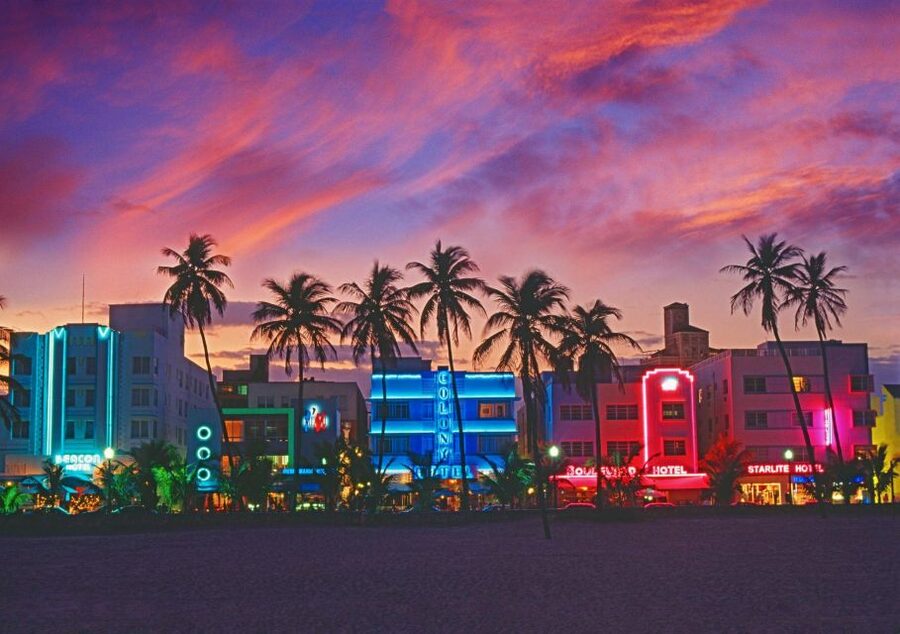
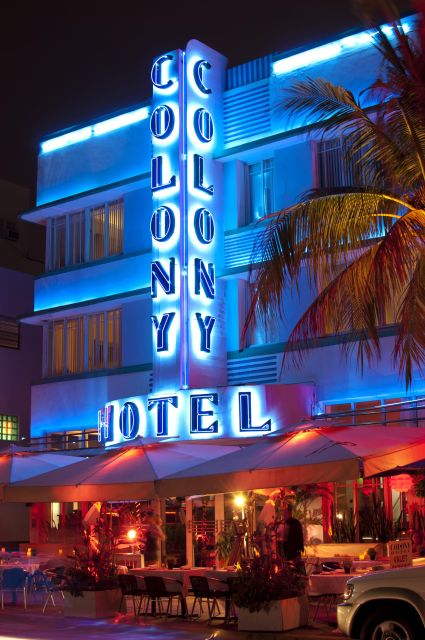
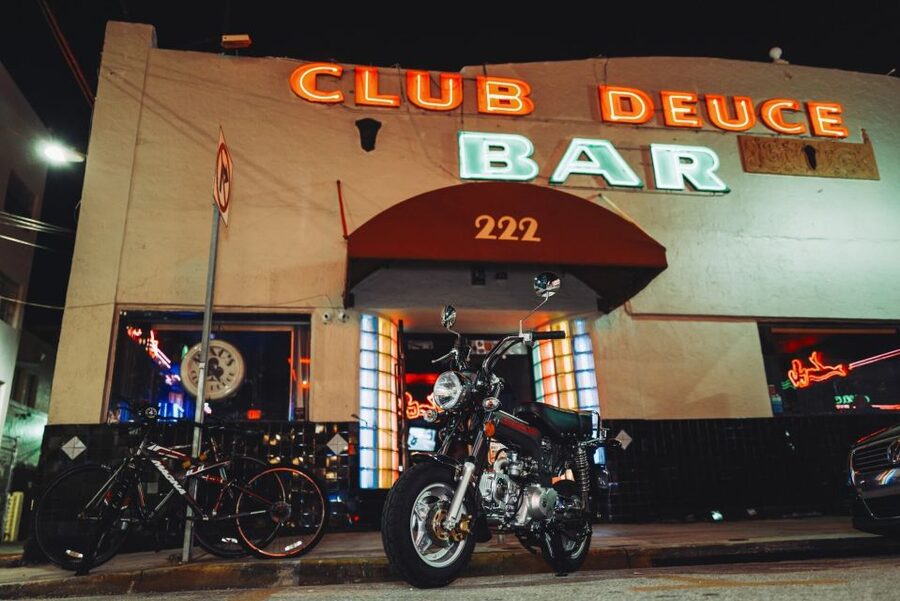
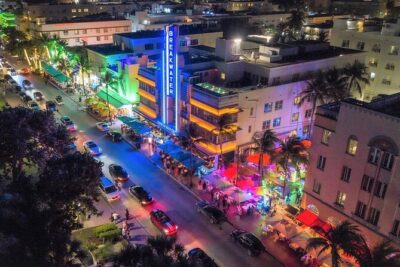
The neon portion is more than a search for bright signs. Neon helped Miami Beach turn nighttime into part of its identity.
A neon sign has a practical job, but it also creates mood. Its color, shape, size, and position can make a hotel appear glamorous, playful, modern, or mysterious. Damian explains the history and magic glow of neon, tying signs to the wider story of tourism and entertainment.
This part should appeal to photographers, design fans, and anyone who enjoys the visual side of the city. You get a reason to look beyond the sign’s name and ask how it works within the street. The glow is part of the architecture and part of the sales pitch.
The tour also helps explain why neon remains so closely tied to Miami Beach. The city’s image depends on the meeting of sunlight and artificial light. Daytime brings color and form. After dark, signs reshape the same streets into something more theatrical.
Since the tour lasts 150 minutes, you have time for context rather than a rushed list of signs. Still, the tour is conducted in English, so you need enough English to follow a detailed talk about architecture, history, and wordplay.
More architecture walks in Miami:
- Award-winning Art Deco & Neon Lights Walking Tour in Miami Beach
★ 5.0 · 150 reviews - Award-winning Art Deco & History Walking Tour in Miami Beach
★ 5.0 · 138 reviews - Miami Art Deco Private Walking Tour
★ 5.0 · 48 reviews - Award-winning Art Deco & History Walking Tour
★ 5.0 · 28 reviews
Miami Vice, Scarface, and the movie version of the city
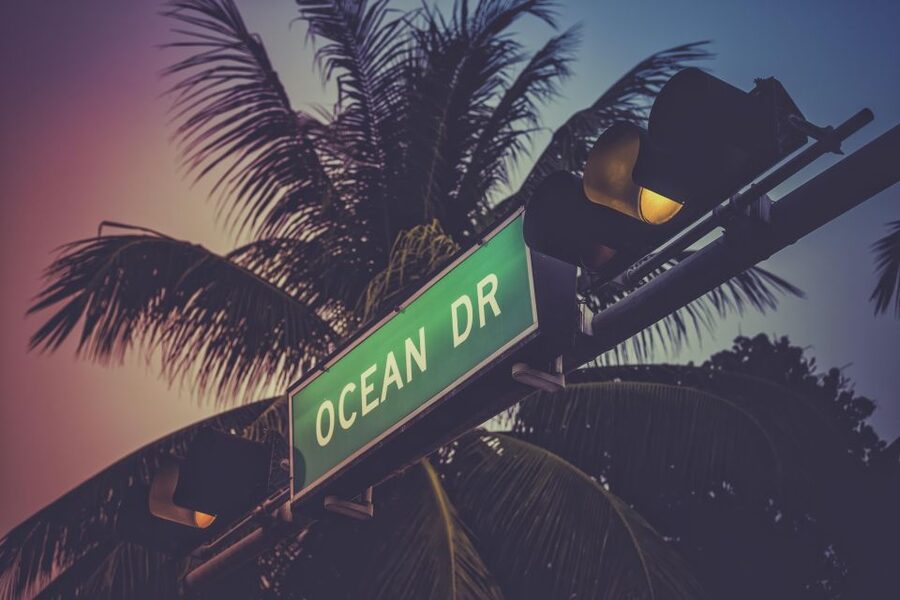
Miami Beach has long served as a film and television backdrop. This tour connects real locations with the city’s screen image, including Miami Vice, Scarface, and Birdcage.
That connection is useful because movies often turn ordinary places into symbols. A hotel, street, lobby, or restaurant can gain a new identity once it appears on screen. Damian explains where popular productions used the city and how those scenes added to Miami’s public mythology.
Film trivia also breaks up the architecture talk. You might be studying a building’s curves one moment and learning how it appeared in a famous scene the next. That mix helps the walk appeal to people who are not already Art Deco fans.
You should keep your expectations clear. This is not presented as a studio tour, a screening, or a dedicated film-location excursion. Movies and television are one part of a wider story that includes design, local history, crime, and culture.
I like that balance. Film references can make a place easier to remember, but the tour does not rely on celebrity names alone. The screen connection becomes a way to understand how Miami Beach was packaged for audiences around the world.
Crime stories, speakeasies, and the city’s less polished side
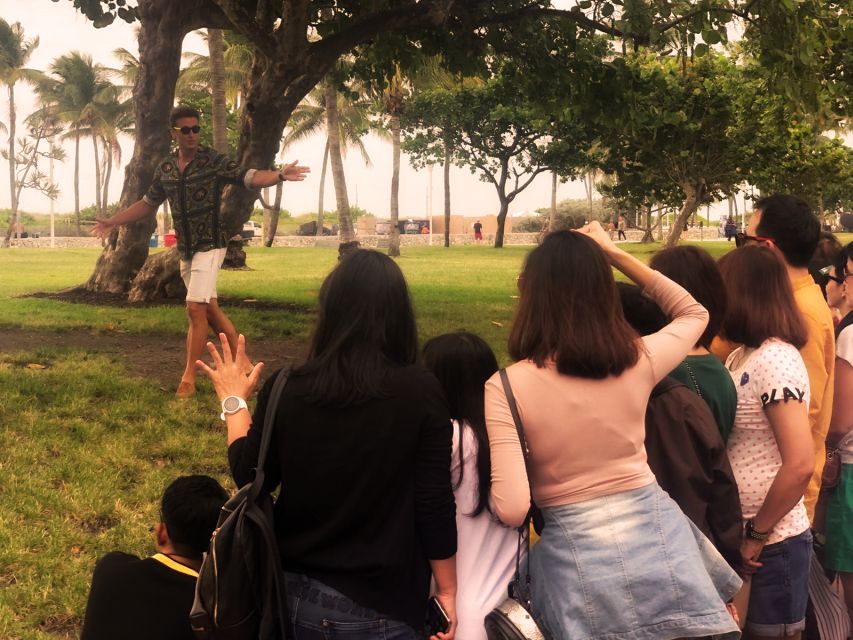
The tour does not treat Miami Beach as a spotless postcard. It includes crime scenes that once captured world attention, speakeasies with their own stories, scandals, and lesser-known episodes from the city’s past.
These subjects give the buildings a sharper edge. A lobby is no longer just a decorative room. A hotel can become part of a crime story, a political moment, or a changing social scene. A quiet corner can carry more history than its appearance suggests.
Damian’s storytelling style, as described by the tour information, links the dots between architecture and historical events. That approach is important. You are not simply collecting isolated facts. You are learning how a city’s buildings, businesses, visitors, and public image affected one another.
The tone also includes quirky facts and movie trivia, so the walk is not a solemn lecture. You get serious history alongside odd details and entertaining stories. That mix should work well if you want substance without spending two and a half hours in an academic mood.
Still, anyone looking for a strictly architectural tour should know that the subject matter wanders widely. Art Deco is the anchor, but the route also touches crime, boxing, film, nightlife, tourism, and local development.
Why the guide makes the difference
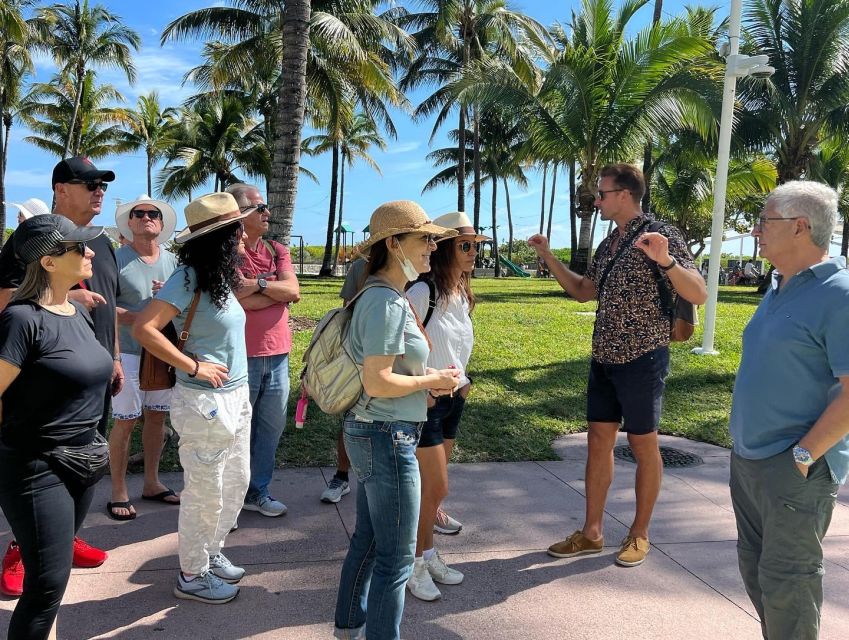
A walking tour like this depends heavily on the person leading it. Damian is presented as a local historian and preservationist who has spent time uncovering the city’s less obvious stories.
The most useful part of his role is interpretation. Dates and names are easy to find. It is harder to explain why a design choice mattered, how a neighborhood changed, or how a film location became part of Miami’s identity.
The tour’s strongest praise focuses on Damian’s storytelling and ability to connect architecture with historical events. He is also described as someone who brings personal energy to the subject. That matters because the material covers a lot of ground in 150 minutes.
You should expect a talk-heavy experience. There will be stops, explanations, and time to inspect details. The guide’s hand map adds another practical touch. It is personally assembled for the tour and gives you something to use after the walk when you want to revisit a building or understand the route.
A private tour is not specified, so do not assume you will receive a one-on-one experience. The useful question is not group size, which is not provided, but whether you enjoy learning in a guided group setting.
What the two and a half hours are worth
The price is $49 per person. That is more than a casual self-guided walk, so the value depends on how much you want from the visit.
If all you want is a quick look at the Art Deco District and a few neon signs, you can see plenty without booking a tour. The paid experience becomes more worthwhile if you want the reasons behind the details, entry to historic lobbies and semi-public spaces, film connections, and stories that are not obvious from the street.
The 150-minute duration is a good sign for anyone who dislikes rushed sightseeing. Damian has room to explain the city’s origins, Art Deco design, neon, film sites, crime stories, and local personalities. The tradeoff is time. You need to set aside two and a half hours and stay engaged throughout.
The handmade guide map adds modest value, especially if you plan to keep exploring Miami Beach afterward. The free cancellation policy up to 24 hours before the tour and the reserve-now, pay-later option also reduce the risk of booking ahead. Starting times vary, so check availability when you choose your date.
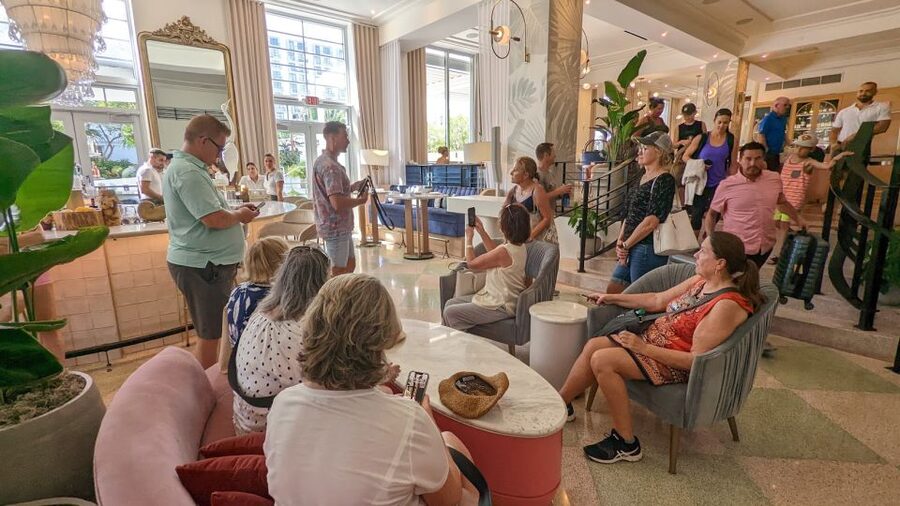
The meeting point is inside The Betsy Hotel, near the concierge desk. Enter from Ocean Drive, not Collins Avenue. That small instruction matters because using the wrong entrance could waste time before the walk even begins.
Who will enjoy this Miami Beach walk most
I would choose this tour if you like places to come with a story. It suits people who enjoy architecture but also want film trivia, local characters, crime tales, and odd facts.
It is a good match for:
- First-time visitors who want a strong introduction to Miami Beach
- Repeat visitors who have already seen the main facades
- Architecture and design fans
- Movie and television fans
- History-minded people who prefer stories to dates alone
- Curious visitors who like entering lobbies and seeing less obvious spaces
It may be less suitable if you want a short, highly visual photo walk. It may also disappoint if you expect every stop to be a private or behind-closed-doors visit. The access is to historic hotel lobbies and other semi-public areas, so the experience remains tied to real working places.
The tour is in English only. Because the guide covers design psychology, local development, and layered historical stories, a basic ability to follow detailed English conversation will make a big difference.
Practical details before you reserve
Plan to arrive at The Betsy Hotel’s Ocean Drive entrance and look for Damian near the concierge desk. Do not enter from Collins Avenue, since the meeting instructions specifically direct you to Ocean Drive.
The tour lasts 150 minutes and costs $49 per person. Starting times depend on availability. You can cancel up to 24 hours ahead for a full refund, and you can reserve now while paying later.
Wear whatever lets you walk and stand comfortably for two and a half hours. The information describes a walking tour, but it does not give a specific distance, step count, or accessibility details, so contact the provider if those points affect your plans.
Bring your attention, not just your camera. The best parts depend on noticing small design details, listening to connections between locations, and following the guide into spaces you might otherwise pass by.
Should you book the Art Deco and Neon Lights Walking Tour?
Book it if you want Miami Beach explained rather than merely photographed. The combination of Art Deco, neon, hotel interiors, film locations, crime stories, and the city’s man-made beginnings gives you a fuller picture than a simple Ocean Drive stroll.
The strongest reason to choose it is Damian’s interpretive approach. He connects buildings to mood, history, movies, and public image, making the city easier to read after the tour ends.
Skip it if you want a brief overview, a private tour, or a walk focused only on architecture. For everyone else, $49 is a fair price for 150 minutes of guided context and access to places that are easy to miss on your own.
FAQ
Where does the tour meet?
Meet Damian in the lobby of The Betsy Hotel near the concierge desk. Enter from Ocean Drive, not Collins Avenue.
How long does the tour last?
The tour lasts 150 minutes, or two and a half hours.
How much does the tour cost?
The price is $49 per person.
What language is the tour offered in?
The live guided tour is offered in English.
Who leads the tour?
The tour is led by Damian, a local historian and preservationist.
What will I learn about Art Deco?
You will learn about the significance of Art Deco and how architectural details, color, curves, and design choices shaped Miami Beach’s image and mood.
Does the tour include hotel interiors?
It includes access to historic hotel lobbies and other semi-public spaces. Access to particular spaces can depend on what is open during the tour.
Are movie locations part of the tour?
Yes. The tour includes Miami Beach locations connected with Miami Vice, Scarface, and Birdcage.
Does the tour discuss neon signs?
Yes. You will learn about the history of neon and its role in Miami Beach’s visual identity.
Can I cancel for a refund?
You can cancel up to 24 hours in advance for a full refund. You can also reserve now and pay later.
Just added around Miami
- South Beach Food Tour- Culinary & Art Deco & History★ 5.0 · 22 reviews
- Miami Beach Art Deco Segway Tour★ 4.5 · 17 reviews
- Miami: History through Architecture Private Tour with Transport★ 5.0 · 9 reviews
- Miami Beach Art Deco Bike Tour★ 5.0 · 6 reviews
- Miami Beach Bar Tour: Art Deco & Neon Lights by Local Historian★ 5.0 · 5 reviews
- Miami Beach Art Deco Private Tour With Cocktails★ 5.0 · 10 reviews
- Self-Guided Audio Tour – Miami Art Deco★ 3.0 · 7 reviews
- Miami Beach like a Local with Food & Drinks Tasting★ 5.0 · 8 reviews
Art Deco Tours, compared.
The Official Art Deco Walking Tour by The Miami Design Preservation League
Read our review →
Guided 10am Morning Art Deco Walk From Napier Art Deco Trust
Read our review →
Award-winning Art Deco & Neon Lights Walking Tour in Miami Beach
Read our review →
Browse the lists this tour appears in