
Review · LECCE
Lecce: Baroque and Underground Tour – Private Tour
Lecce’s most unusual feature is its mix of golden Baroque stone and buried history. In two hours, this private walk links grand churches and Roman ruins with the city’s underground Jewish museum, giving you a useful first look at Lecce without a long bus ride or a large group.
I like the personal format, which lets you ask about architecture, local legends, food, or daily life as you walk. I also like the route’s range: Santa Croce, Sant’Oronzo Square, the Roman amphitheater, the cathedral, and several central neighborhoods all fit into one outing. The main caution is the underground museum. It may be fascinating if you enjoy archaeology and layered local history, but it felt too long and dull for one small private group according to one low rating.
Key points at a glance
- Private English-speaking guide: Only your group takes part, with guides including Anna, Max, and Elise mentioned by name in the feedback.
- Roman and Baroque Lecce together: See the amphitheater and Roman Column beside churches covered in ornate Lecce Baroque decoration.
- A useful first visit: The walk covers the city center in about two hours, making it a strong orientation on a first day.
- Underground Jewish Museum included: This adds a less familiar chapter to Lecce’s past and gives the tour more range than a standard church walk.
- Flexible conversation: You can shape the visit around art, architecture, history, local stories, food, or neighborhood recommendations.
- Easy central finish: The tour begins near Santa Croce and ends at Lecce Cathedral in Duomo Square.
Why Lecce makes a good private walking tour
Lecce is compact enough to explore on foot, yet its sights belong to several different periods. You can look from the Roman amphitheater to a richly carved church facade, then walk into a square shaped by bishops, merchants, and civic officials. Without some explanation, that jumble can feel like a parade of beautiful buildings.
A private guide gives the city a thread. Instead of simply ticking off churches, you can ask why local stone was used, how the old city was organized, or which details on a facade deserve a closer look. Guides named Anna, Max, and Elise received especially warm praise for clear explanations, lively storytelling, and an easy manner in English.
The tour is also a practical way to get your bearings. It begins at Infotab, 18 Via Umberto I, at 10:30 in the morning, then finishes at the Cathedral of Maria Santissima Assunta and Sant’Oronzo in Duomo Square. Since the starting and ending points differ, you get a short cross-section of central Lecce rather than a simple loop around one monument.
The 4.7 rating from 85 ratings, with 95 percent recommending the experience, suggests a reliable overall standard. Still, the value depends on your group. A couple or family that enjoys questions and conversation will get more from a private guide than people who prefer to wander silently with an audio guide.
More Baroque architecture tours in Italy:
- Lecce: Baroque Architecture and Underground Walking Tour
★ 4.6 · 1,248 reviews - Interpreti Veneziani Ensemble Baroque Concert in Venice Ticket
★ 4.5 · 403 reviews - Borghese Gallery Max 6 People Tour: Baroque & Renaissance in Rome
★ 5.0 · 185 reviews
Santa Croce and Lecce’s carved Baroque style
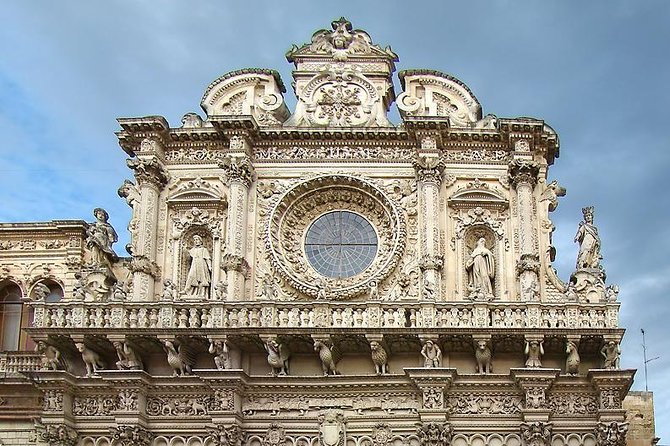
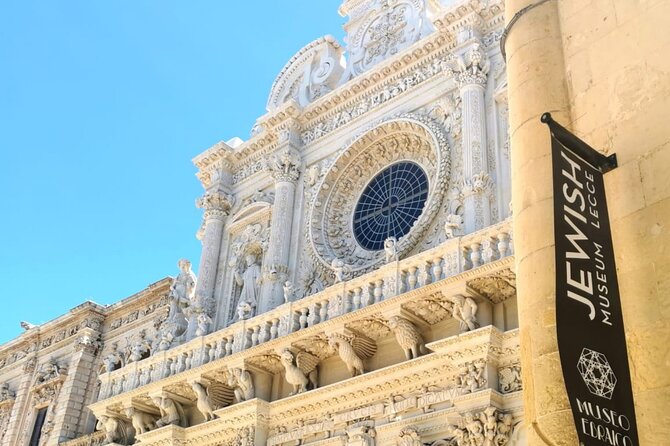
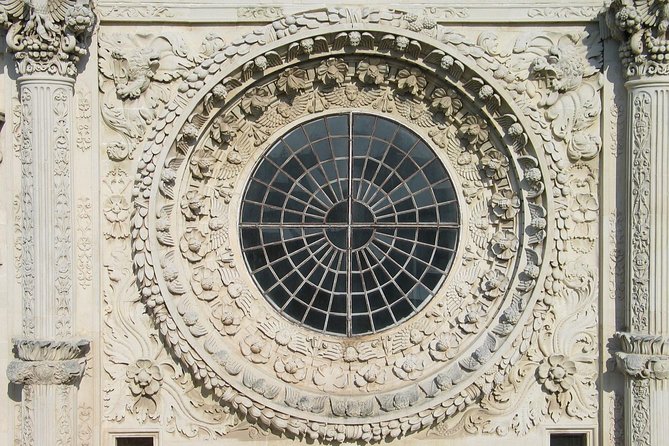
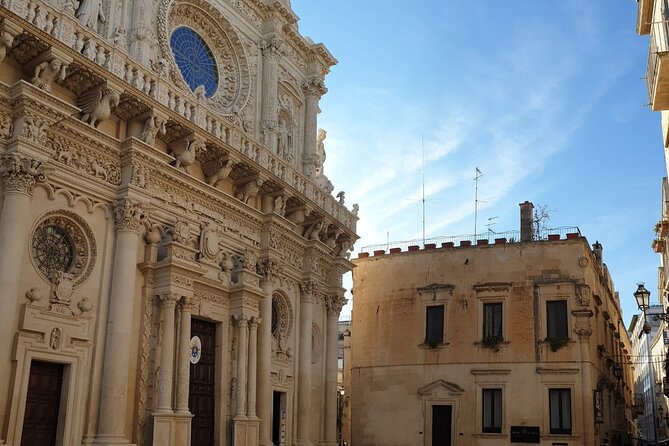
Santa Croce Church is the dramatic opening stop. Its facade is packed with carved details, figures, plants, animals, and unusual decorative forms. This is the moment when Lecce’s local style begins to make sense, because the church is not just a place of worship. It is also a showcase of stone carving.
I like having a guide here because the facade can overwhelm you. A good explanation helps separate the religious symbols from the playful or symbolic details, and it gives you a way to read the building rather than simply photograph it. Anna was repeatedly praised for explaining Lecce’s art and architecture in a clear, personal way, while Max was described as engaging and fun.
The tour does not promise a long interior visit at every church. That matters if you want a slow look at paintings, chapels, or altars. Its purpose is broader: you see major buildings, understand their place in the city, and keep moving through the historic center.
Sant’Oronzo Square and the Roman amphitheater
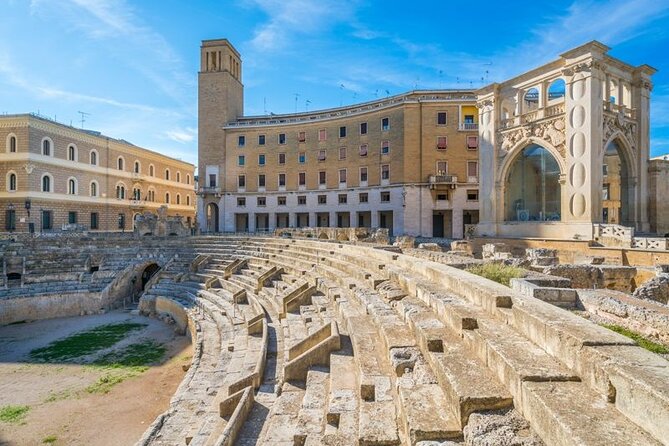
From the church district, the walk reaches Sant’Oronzo Square, one of Lecce’s main urban spaces. Here, the Roman Column and amphitheater bring the ancient city into view. The amphitheater is a strong contrast with Santa Croce: instead of carved stone curling across a facade, you see the remains of a Roman entertainment venue built for a much older city.
The Roman Column helps connect Lecce with the wider Roman world. The amphitheater, partly below the present street level, also reminds you that modern Lecce was built over earlier layers. Your guide can explain how Roman remains sit beside later civic buildings without making the history feel like a list of dates.
The Old Town Hall, called the Sedile, adds another civic note to the square. Its presence helps show that Lecce was shaped not only by churches and bishops, but also by local government and public life.
I particularly like this section for first-time visitors. It gives you strong photographs, a clear sense of scale, and an immediate lesson in Lecce’s unusual combination of ancient ruins and ornate later architecture. If you want a detailed archaeological tour of the amphitheater itself, two hours may feel brief. The stop works better as part of a wide city introduction.
Saint Irene Church and the quieter streets
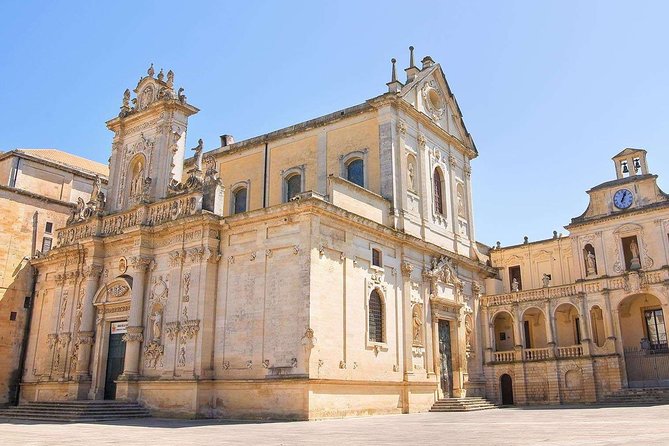
Saint Irene Church takes you away from the most obvious center of Sant’Oronzo Square. This shift matters because the experience is not limited to the city’s headline monuments. You walk through several neighborhoods and see how the grand architecture fits into ordinary streets and public spaces.
The route is fully on foot, so you should expect a steady city walk rather than a seated lecture. The activity information says most people can participate, and it is near public transportation, but no exact walking distance is provided. Wear comfortable shoes and keep the pace in mind if your group includes anyone who finds extended standing or uneven historic streets difficult.
This is also a good point to ask about local life. One guide offered suggestions for gelato, dinner, local specialties, dessert, and caffè leccese. Those tips can be useful after the tour, especially because a private conversation allows you to explain what sort of meal or café you want instead of accepting a generic list.
More private architecture tours in Italy:
- City Walk with Architect: Private walking tour of Rome
★ 5.0 · 22 reviews - Private Tour: Venice Art and Architecture Walking Tour
★ 4.0 · 22 reviews - Baroque Noto private walking tour
★ 4.5 · 15 reviews - Rome: Caravaggio and Baroque Art Private Guided Tour
★ 4.4 · 11 reviews
Duomo Square and Lecce’s religious center
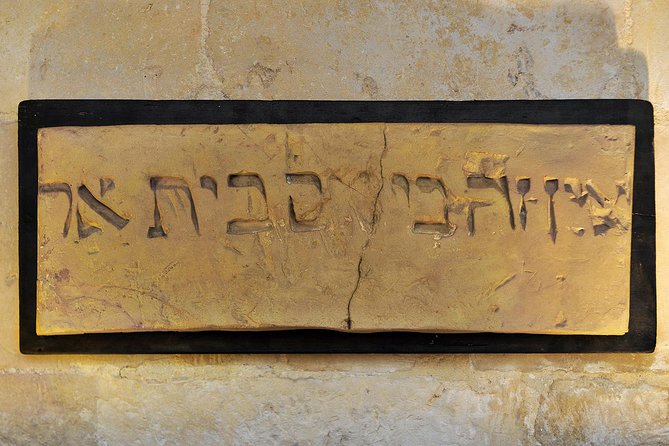
Duomo Square is one of Lecce’s most impressive spaces. It gathers the Cathedral, the Archbishop’s Residence, the Seminary, and the Bell Tower into a contained architectural setting. The square feels different from Sant’Oronzo because it is more enclosed and ceremonial, with the buildings working together rather than appearing as separate sights along a busy route.
The Cathedral of Maria Santissima Assunta and Sant’Oronzo is the tour’s finishing point. The guide covers the cathedral and the surrounding complex, giving you a useful explanation of how religious authority shaped the city. The Archbishop’s Residence and Seminary are not random additions. Together, they show how a cathedral district functioned as a center of administration, education, and worship.
The Bell Tower gives the square a strong vertical focus. The tour does not state that you climb it, so do not book this expecting a tower visit or a city panorama. The value here is the setting and the explanation of the buildings around you.
One practical advantage is the final location. Ending at the cathedral leaves you in one of Lecce’s best areas for continuing on foot, taking photographs, finding a café, or returning to a building that caught your attention. The route also works well before an afternoon of independent exploring because you finish with the city’s layout already in your head.
The Underground Jewish Museum and the tour’s one real question mark
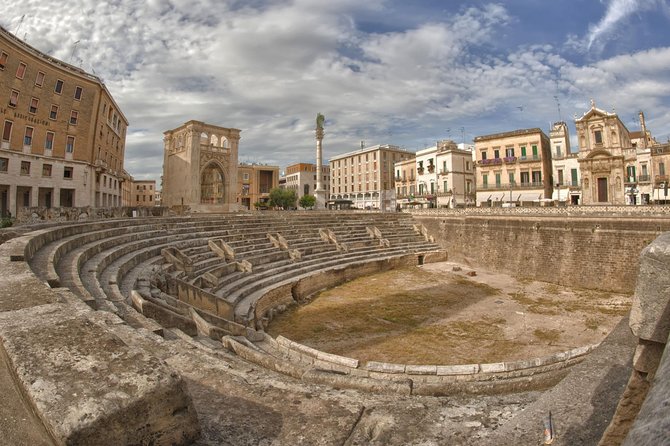
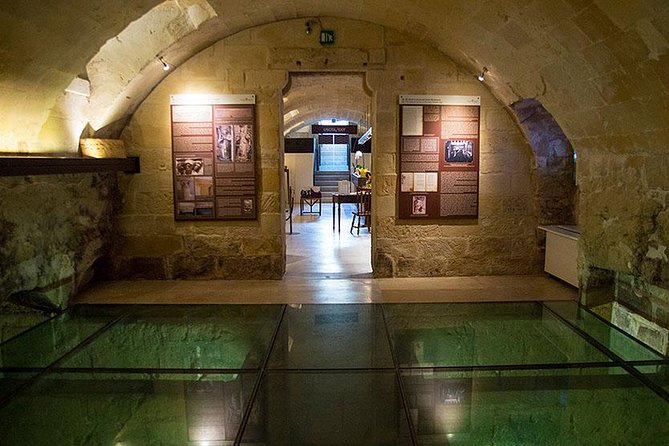
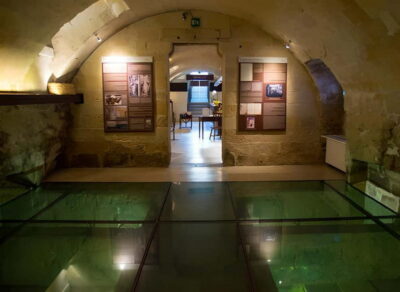
The Underground Jewish Museum gives this walk a less predictable ending. It adds a chapter that is easy to miss if you only follow Lecce’s famous Baroque facades. A guide can help place the underground site within the city’s changing religious and urban story, rather than treating it as a separate curiosity.
I like the idea of including this stop because it broadens the tour. You are not seeing only the monuments most often photographed. You are also being asked to think about communities and periods that left a quieter mark on the city.
But this is the part to consider carefully. One rating of two stars described the underground portion as overly long and lacking appeal for that particular private group. That does not mean you will have the same reaction, but it does point to a genuine difference in taste. If you enjoy archaeology, religious history, and spaces below street level, you may find it worthwhile. If your priority is sculpture, churches, and open-air city views, you may prefer a shorter explanation here.
Because this is a private tour, you can ask the guide to adjust the emphasis. The advertised feature is customization around your interests, so tell the guide early if the underground museum is a high priority or simply something you want covered briefly. The two-hour schedule makes that conversation important.
What the private format is worth at $120.68 per person
At $120.68 per person, this is not the cheapest way to see Lecce. The price makes more sense for a small group that values direct attention. If several people share the booking, the private format can be better value than paying separate admission or joining a large group where questions are limited.
The price also buys efficiency. In roughly two hours, you cover churches, civic buildings, Roman remains, the cathedral complex, and the underground museum. You do not need to plan a route, identify the best order, or stop every few minutes to check a map.
Group discounts are available, though the amount is not specified. Since the tour is private, ask about the discount when comparing the total cost for your party. A larger family or group of friends may find the per-person price easier to justify than a solo visitor.
The main thing you are paying for is interpretation, not transportation. There is no coach, transfer, or long-distance travel built into the experience. The tour stays in central Lecce and moves by foot. That is a strength if you want the city itself under your feet, but it means the value depends heavily on the guide’s ability to explain what you are seeing.
The guides and the quality of the explanation
The strongest praise centers on the guides’ warmth, clarity, and storytelling. Anna is described as especially effective with art, architecture, local legends, and practical food advice. Max is praised for making the history entertaining and for giving a good first introduction to Lecce. Elise is described as passionate and engaging.
That matters because the same route can feel either lively or flat. Santa Croce and the cathedral are visually powerful, but a guide who only recites dates will not make the details memorable. The best version of this tour seems to balance documented history with stories and legends, while still explaining the buildings accurately.
The English option is important for international visitors. The feedback specifically describes Anna’s English as very good, and the overall experience is offered in English. If precise discussion of architecture is central to your plans, you can use the private format to ask for more detail about styles, symbols, and construction.
One low rating complained about a guide’s limited historical detail, but that comment appears to concern Turin rather than Lecce and does not match this route. I would not use it as a meaningful criticism of this experience. The more relevant caution is that guide quality can shape a walking tour, so request a guide focused on architecture or history if that is your main interest.
Timing, meeting point, and practical planning
The meeting point is Infotab, Lecce Walking Tours, at Via Umberto I, 18. The start time is 10:30 am. Build in extra time to find the office and reach the central area, especially if you are arriving by car. One person specifically advised allowing at least another half hour to find parking.
The tour ends at the cathedral in Duomo Square, not back at the starting point. That is convenient for continued sightseeing, but it is worth remembering if you leave luggage, a car, or another booking near Via Umberto I. The route is near public transportation, and most people can take part.
Mobile tickets make access simple, and service animals are allowed. Confirmation is sent within 48 hours of booking, subject to availability. Free cancellation is available if you cancel at least 24 hours before the local start time. Changes or cancellations inside that window are not accepted for a refund.
The tour is scheduled for about two hours. Allow a little extra time if you want to ask many questions, take photographs, or pause at the churches. The stated duration is approximate, so do not schedule a train, meal, or timed entry immediately afterward.
Who will get the most from this Lecce walk
I would choose this tour for a first visit, especially if you have only a day in Lecce and want a strong orientation before exploring alone. It suits couples, families, and friends who enjoy asking questions and changing the conversation as they go.
It is also a good fit if architecture matters to you. Santa Croce, the cathedral complex, the Sedile, and Saint Irene Church give you plenty to study, while the Roman amphitheater and column prevent the tour from becoming a church-only circuit.
Food-minded visitors can benefit from the local recommendations offered during the walk. Ask about gelato, dinner, regional specialties, dessert, and caffè leccese before you finish. Those suggestions are not a formal tasting, but they can make the rest of your day easier to plan.
I would hesitate if you want a slow, specialist study of every interior. The tour has a lot to cover in two hours, and the underground museum may not appeal to everyone. You might also prefer an independent walk if you dislike fixed meeting times or would rather spend an hour at one church.
Should you book it?
Book this private Lecce tour if you want the city explained in a compact, flexible walk. The best reasons are the mix of Roman remains and Baroque churches, the central route, the English-speaking guides, and the chance to ask for food or architecture advice along the way.
Think twice if $120.68 per person feels high for a two-hour walk, or if the Underground Jewish Museum does not interest you. Before starting, tell your guide what matters most and ask for the underground section to match your level of interest.
For a first-time visit, I think the route earns its place as an orientation. You finish at the cathedral with a clearer sense of Lecce’s streets, monuments, and competing layers of the past, ready to explore more on your own.
FAQ
How long is the Lecce Baroque and Underground Tour?
The tour lasts approximately two hours.
What time does the tour start?
The listed start time is 10:30 am.
Where does the tour begin?
It begins at Infotab, Lecce Walking Tours, at Via Umberto I, 18, 73100 Lecce.
Where does the tour end?
It ends at the Cathedral of Maria Santissima Assunta and Sant’Oronzo in Duomo Square.
Is the tour private?
Yes. Only your group takes part in the activity.
Is the tour offered in English?
Yes. English is the listed language.
What sights are included?
The route includes Santa Croce Church, Sant’Oronzo Square, the Old Town Hall or Sedile, the Roman Column, the Roman amphitheater, Saint Irene Church, Duomo Square, the Archbishop’s Residence, the Seminary, the Bell Tower, the Cathedral, and the Underground Jewish Museum.
How much does the tour cost?
The listed price is $120.68 per person. Group discounts are available, though the discount amount is not specified.
Can I cancel the booking?
You can cancel for a full refund up to 24 hours before the experience start time. Cancellations or changes made less than 24 hours before the start are not accepted for a refund.
Just added around Italy
- Vicenza: discovering the city of Palladio by e-bike★ 5.0 · 4 reviews
- Vicenza: Palladian Architecture Private Walking Tour★ 3.3 · 3 reviews
- Turin: Art Nouveau Walking Tour with Coffee★ 5.0 · 11 reviews
- Vatican: Exclusive Baroque Evening With Aperitivo & Dinner★ 3.1 · 2 reviews
- Venice Music Project – Baroque Autumn – Season 2025★ 4.5 · 7 reviews
- Walking tour in Venice with an architect★ 5.0 · 16 reviews
- Palladio. A wonderful live tale through time&soul, from Ve/Pd/Vr★ 5.0 · 7 reviews
- Turin, Art Nouveau walking tour and coffee break★ 4.0 · 7 reviews
Baroque Architecture Tours, compared.
Lecce: Baroque Architecture and Underground Walking Tour
Read our review →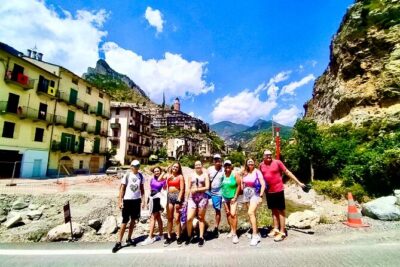
Train Exp. through the Alps (Royal Baroque Route from Nice)
Read our review →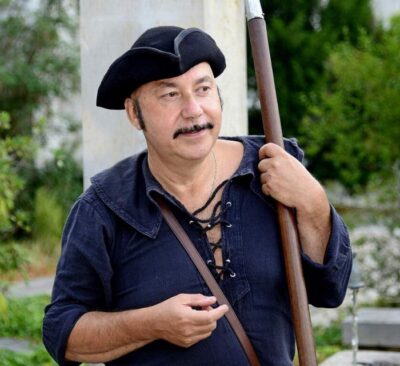
Dresden: Tour of the Baroque Quarter with a Night Watchman
Read our review →
Interpreti Veneziani Ensemble Baroque Concert in Venice Ticket
Read our review →
Borghese Gallery Max 6 People Tour: Baroque & Renaissance in Rome
Read our review →
Concert at the Palais Schönborn-Batthyány by the Vienna Baroque Orchestra
Read our review →
Guided Walking Tour of Rome: Top Sights & Baroque Treasures
Read our review →
Noto, Modica and Ragusa: The Baroque Tour from Catania
Read our review →Browse the lists this tour appears in