
Review · ITALY
Martina Franca: a gem among Baroque and Rococo style with bocconotti tasting
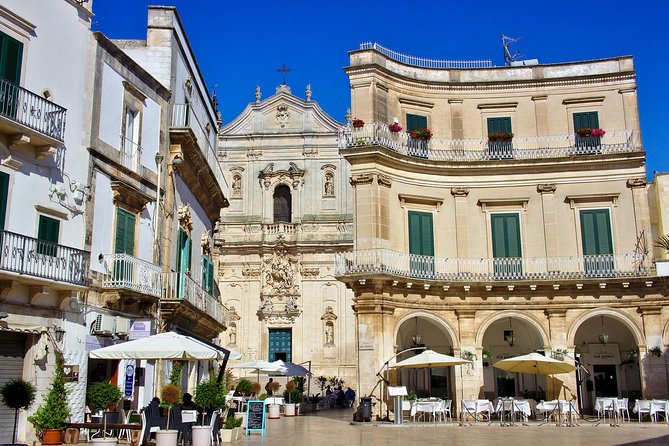
Martina Franca’s best feature is how much history fits into a short, walkable route. In about two hours, you move from the town gate and Piazza XX Settembre to Palazzo Ducale, a Baroque basilica, narrow whitewashed lanes, and several handsome public squares.
I like the balance here: you get architectural detail without spending half a day in a museum, and the bocconotti tasting adds a real local flavor rather than another quick photo stop. I also like that this is a private activity, so your group can focus on the parts of Martina Franca that interest you most.
The main drawback is the price, $127.34 per person for roughly two hours. It makes the most sense for a small group that values a private guide and structured sightseeing. If you only want a quick look at the old town, you may find the cost high.
Key points to know before booking
- A compact private walking tour: Your group alone takes part, with a local guide leading the route.
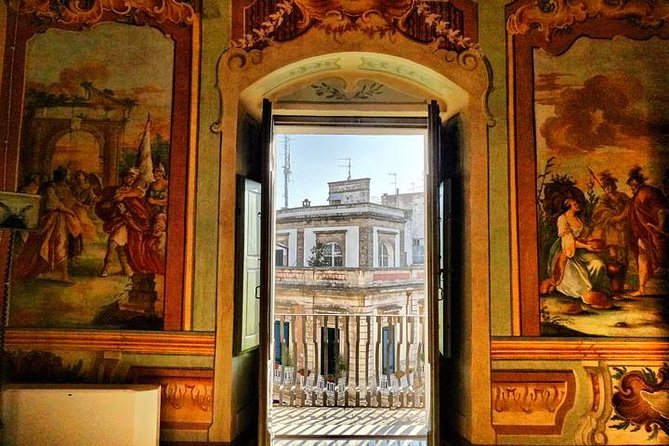
- Palazzo Ducale is a central stop: Expect eighteenth-century frescoes and formal rooms rather than a long museum visit.
- San Martino Basilica brings the strongest Baroque detail: The tour includes a look inside its ornate interior.
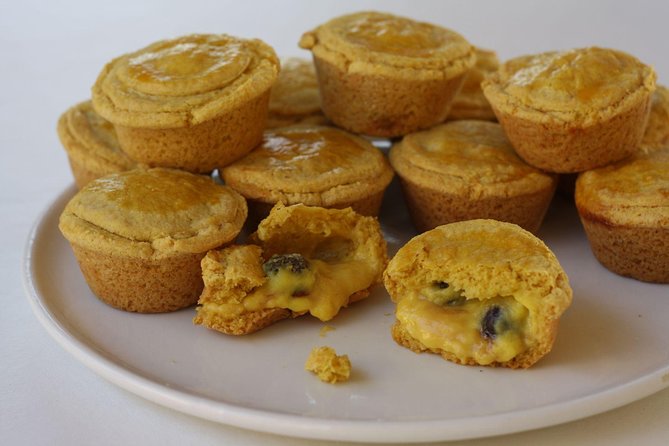
- Bocconotti are part of the route: You’ll taste short pastry filled with cream and jam.
- The walk covers several connected sights: Piazza XX Settembre, Piazza Roma, Piazza del Plebiscito, Immaculate Square, and San Domenico all fit into the itinerary.
- You must arrange your own transport: The tour begins and ends at Piazza XX Settembre in Martina Franca.
Why Martina Franca works so well on foot
Martina Franca is one of the main towns of the Itria Valley, and its old center has the kind of scale that suits a guided walk. The route moves through lanes and squares instead of sending you between distant attractions by vehicle.
That matters because the town’s appeal is not limited to one famous building. The pleasure comes from seeing how Baroque and Rococo details appear across gateways, churches, civic buildings, fountains, and pale stone streets.
The old town is also easy to read in stages. You begin at Piazza XX Settembre and Gate Santo Stefano, move toward Piazza Roma and Palazzo Ducale, then continue to Piazza del Plebiscito and the Basilica of San Martino. The last part takes you to Immaculate Square, the chapel of St. Nicholas of the Greeks, and San Domenico.
I like this progression because it gives you a sense of Martina Franca as a living town, not simply a string of monuments. The walk also keeps the pace moving. Two hours is long enough to add context and short enough to fit before lunch, dinner, or another Itria Valley stop.
More Baroque architecture tours in Italy:
- Lecce: Baroque Architecture and Underground Walking Tour
★ 4.6 · 1,248 reviews - Interpreti Veneziani Ensemble Baroque Concert in Venice Ticket
★ 4.5 · 403 reviews - Borghese Gallery Max 6 People Tour: Baroque & Renaissance in Rome
★ 5.0 · 185 reviews
Starting at Piazza XX Settembre and Gate Santo Stefano
The meeting point is Piazza XX Settembre, at P.za XX Settembre, 74015 Martina Franca. This is also where the activity ends, so you do not need to plan a second pickup point across town.
The route begins near Gate Santo Stefano, one of the old entrances into Martina Franca. Starting at a town gate is useful because it gives the walk a clear threshold: from the open square, you pass toward the historic center and its smaller streets.
Your guide leads the walk, and the activity may be operated in more than one language. No individual guide name is provided, so do not book expecting a named specialist. The more useful point is that this is a private tour, meaning only your group participates.
That private setup can make a difference in a town where small lanes and compact interiors are part of the experience. You are not trying to keep up with a large crowd, and you can ask for clarification as the guide explains the buildings.
Piazza Roma, the Dolphin Fountain, and Palazzo Ducale
From the starting area, the route continues to Piazza Roma. Here you see the Fountain of the Dolphins and Palazzo Ducale, one of the tour’s main architectural stops.
The fountain gives the square a formal focal point, while Palazzo Ducale brings the grandest civic architecture on the route. The palace is noted for its particular eighteenth-century frescoes and stately rooms. Those details make this more than an exterior photo stop, although the information provided does not specify how many rooms you enter or how much time is spent inside.
I would pay attention to the contrast between the palace’s formal spaces and the lanes that follow. Martina Franca’s Baroque style is not only about decoration. It also appears in the way public buildings frame squares and create a sense of ceremony.
If you have limited time in the Itria Valley, Palazzo Ducale helps justify choosing a guided tour rather than wandering without a plan. A guide can point out the frescoes and explain what you are seeing while you are still in front of it. Without that context, the palace might look simply like another attractive stone building.
The whitewashed lanes of the old town
After Piazza Roma, the tour heads into the alleys of the old town. This is where the walk becomes less formal and more atmospheric.
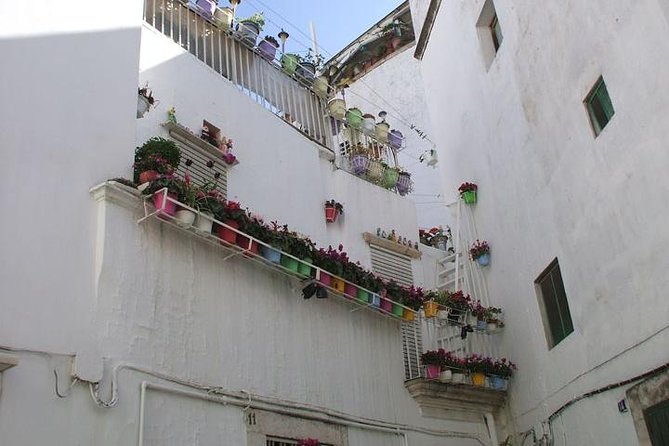
The lanes are described as whitewashed, with the kind of small-scale streets that make Martina Franca feel different from a large Italian city. You will pass between old buildings and move from one compact public space to another. The route itself is part of the attraction, not just a way to reach the next church.
A guided walk is especially useful here because the visual details can be easy to miss. Doorways, corners, façades, and small architectural changes often make more sense when someone identifies them as part of the town’s Baroque and Rococo character.
The clearest praise for this portion of the experience focuses on an engaging, lively explanation through the small alleys. That is the sort of guiding you want here: not a long lecture, but a clear sense of where you are and why the streets look as they do.
The route is still a walking tour, so wear comfortable shoes. The data does not give a step count or a detailed surface description, but the itinerary repeatedly emphasizes narrow alleys and movement on foot. If you prefer to avoid walking, this is not the right format.
A few more architecture tours around Italy worth a look
- Rione Sanità tour among baroque, revival, street art & food
★ 4.8 · 59 reviews - Rione Sanità Tour among Baroque, Revival, Street Art & Food
★ 5.0 · 48 reviews - Best of Bologna in one day : Food, architecture, art and history
★ 5.0 · 27 reviews - Sorrento: Gothic-Baroque Art Tour & Free local Tasting
★ 5.0 · 16 reviews
Piazza del Plebiscito and San Martino Basilica
The next major stop is Piazza del Plebiscito, home to the Baroque basilica dedicated to St. Martin. This church is presented as an exceptional example of Baroque architecture and is likely the visual high point of the route.
The tour includes the basilica’s interior, not just a view from outside. That is important because Baroque architecture often reveals its full effect indoors, where decoration, altar design, and painted or sculpted details work together.
The itinerary also includes the building of the University and the Clock Tower in this area. These stops broaden the picture beyond church architecture. You see religious, civic, and public buildings gathered around the same part of town.
I like that the basilica visit comes after the palace and old-town walk. By this point, you have already seen the town’s street pattern and civic spaces, so the church feels like part of a larger town story rather than an isolated monument.
The tour description does not promise a long interior visit, reserved seating, or special access. You should think of this as a guided look at the basilica during a walking route, not a dedicated church tour.
Bocconotti, the sweet stop that changes the pace
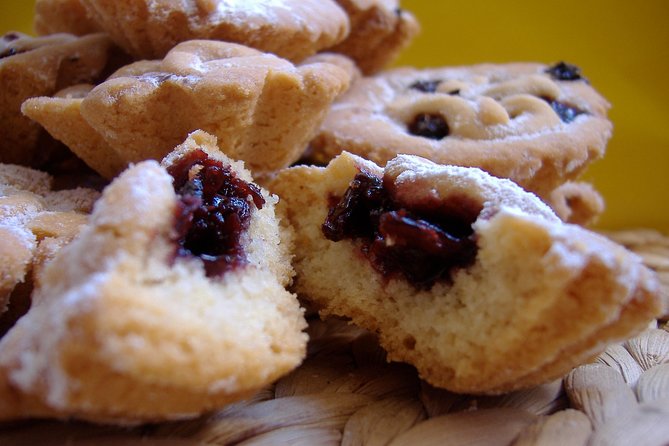
At some point during the walk, you stop for a tasting of bocconotti. These are small short pastries filled with cream and jam.
This is a modest food experience, but it adds welcome variety to a tour focused on architecture. After several buildings and squares, a local pastry gives you something to taste and remember. It also helps connect the town’s sightseeing with everyday food culture.
The tasting is included in the price, along with the local guide. The information does not identify the bakery, the number of pastries, or whether you can choose the filling, so you should not expect a full food tour.
I would treat the bocconotti as a pleasant sample, not a meal. If you are booking around lunchtime, plan to eat separately. One useful local detail is that cafés may close around lunchtime, so do not assume you can find a coffee or snack exactly when the walking tour ends.
A separate food note may help shoppers who want to explore beyond this tasting. The local butcher Romanelli is associated with capocollo, a cured meat, and advice on storing it. That is not listed as part of this activity, and it should not be confused with the included bocconotti tasting. Still, it points to the wider food culture you can seek out in Martina Franca.
The same practical caution applies to the town’s famous Tripoli coffee. It is a local name worth knowing, but the tour does not promise a coffee stop.
Immaculate Square, the Greek chapel, and San Domenico
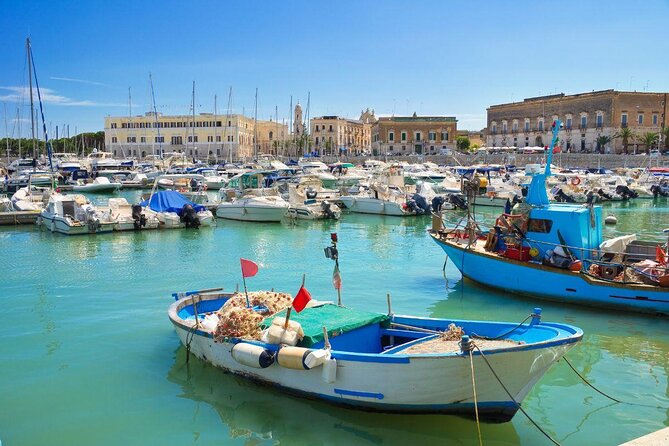
The final section takes you to Immaculate Square and its famous esedra. An esedra is a curved architectural feature that gives a square a more finished, theatrical shape. In a Baroque town, that sort of framing detail matters because it shows how public space was designed for visual impact.
The route also includes the chapel of St. Nicholas of the Greeks. The name reflects a distinct religious and cultural thread within the town, though the available information does not provide further details about the chapel’s interior or history.
The final church is San Domenico. Including it at the end gives the walk one more religious building after San Martino Basilica, allowing you to compare different church façades and settings within the old center.
Because the tour returns to Piazza XX Settembre, you finish where you started. That is convenient if you have parked nearby or are connecting with public transportation. No transport between attractions is included, but none is needed for the stated route.
What the $127.34 price means
At $127.34 per person, this is not a bargain-priced orientation walk. The value depends on your group size and how much you want a private guide.
For one person or a couple, the cost is a serious consideration for a two-hour activity. For a larger private group, the same price may feel more reasonable if the group wants its own guide rather than joining strangers.
The package includes the guide and bocconotti tasting. It does not include transportation to or from attractions, though the listed route is on foot and begins and ends in Martina Franca. There is no indication of additional entrance fees, so confirm the final booking details if access inside any building is important to you.
I see the price as paying mainly for interpretation and convenience. Martina Franca can certainly be walked independently, but a guide helps turn a pleasant stroll into a clear route with architectural context. If you already know the town or enjoy researching churches and palaces on your own, you may prefer to save the money.
Who should book this walk
This experience suits you if you want a short introduction to Martina Franca with a fixed route and a local guide. It is a good fit for first-time visitors to the town, architecture fans, couples, families, and small groups who prefer a private activity.
It also works well if you are building a day around the Itria Valley and want a focused town visit rather than a full-day excursion. The two-hour length leaves room for your own meal, shopping, or independent wandering.
The walk may be less suitable if you want a major food tour, extensive palace access, or a slow photographic outing. The bocconotti tasting is a single pastry stop, and the itinerary covers many sights in a short period.
Most people can participate, according to the activity details, and the starting point is near public transportation. Still, the narrow old-town alleys and walking format mean you should be comfortable on foot.
The published rating is 4.7 from three reviews, with the strongest praise directed at the lively guide presentation and well-kept town. That matches the tour’s main strength: it gives you an organized look at Martina Franca without turning the visit into a long, heavy history lesson.
Booking, timing, and cancellation
Confirmation is provided at booking, and the activity uses a mobile ticket. The experience lasts about two hours and ends back at Piazza XX Settembre.
Free cancellation is available if you cancel at least 24 hours before the local start time. Cancellations or changes made less than 24 hours before the start are not accepted for a refund.
The tour is booked, on average, 23 days ahead. That is not a guarantee that every date sells out, but it is a useful reason to reserve early if your itinerary is fixed, especially if you want a private guide in a particular language.
Should you book the Martina Franca walk?
Book this tour if you want the main sights arranged into a compact private route, with a guide to explain the Baroque and Rococo buildings and a small pastry tasting to break up the sightseeing.
I would especially consider it if Martina Franca is unfamiliar to you and you have only a few hours. The combination of Palazzo Ducale, San Martino Basilica, old-town lanes, public squares, and bocconotti gives you a well-rounded first look.
Skip it if $127.34 per person feels steep for two hours, or if you prefer to explore independently. In that case, use the route as your own outline: start at Piazza XX Settembre, continue through Palazzo Ducale and Piazza del Plebiscito, then finish around Immaculate Square and San Domenico.
FAQ
Where does the Martina Franca tour begin?
The tour begins at Piazza XX Settembre, P.za XX Settembre, 74015 Martina Franca TA, Italy.
Where does the tour end?
The activity ends back at the meeting point in Piazza XX Settembre.
How long does the walking tour last?
The tour lasts approximately two hours.
Is transportation included?
No. Transportation to and from attractions is not included. The stated itinerary is a walking route through Martina Franca.
What food is included?
The tour includes a tasting of bocconotti, a short pastry filled with cream and jam.
Can I cancel for a full refund?
Yes. You can cancel at least 24 hours before the experience start time for a full refund. Changes or cancellations made less than 24 hours before the start are not accepted.
Just added around Italy
- Vicenza: discovering the city of Palladio by e-bike★ 5.0 · 4 reviews
- Vicenza: Palladian Architecture Private Walking Tour★ 3.3 · 3 reviews
- Turin: Art Nouveau Walking Tour with Coffee★ 5.0 · 11 reviews
- Vatican: Exclusive Baroque Evening With Aperitivo & Dinner★ 3.1 · 2 reviews
- Venice Music Project – Baroque Autumn – Season 2025★ 4.5 · 7 reviews
- Walking tour in Venice with an architect★ 5.0 · 16 reviews
- Palladio. A wonderful live tale through time&soul, from Ve/Pd/Vr★ 5.0 · 7 reviews
- Turin, Art Nouveau walking tour and coffee break★ 4.0 · 7 reviews
Baroque Architecture Tours, compared.
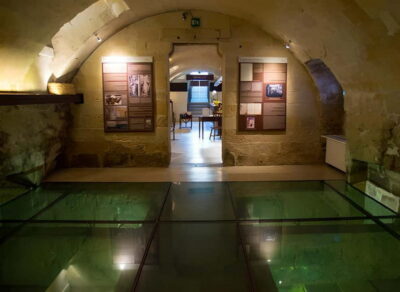
Lecce: Baroque Architecture and Underground Walking Tour
Read our review →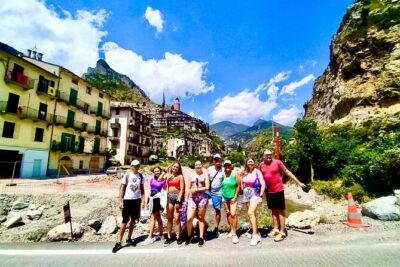
Train Exp. through the Alps (Royal Baroque Route from Nice)
Read our review →
Dresden: Tour of the Baroque Quarter with a Night Watchman
Read our review →
Interpreti Veneziani Ensemble Baroque Concert in Venice Ticket
Read our review →
Borghese Gallery Max 6 People Tour: Baroque & Renaissance in Rome
Read our review →
Concert at the Palais Schönborn-Batthyány by the Vienna Baroque Orchestra
Read our review →
Guided Walking Tour of Rome: Top Sights & Baroque Treasures
Read our review →
Noto, Modica and Ragusa: The Baroque Tour from Catania
Read our review →Browse the lists this tour appears in