
Review · BARCELONA
Gothic Quarter – Private Tour
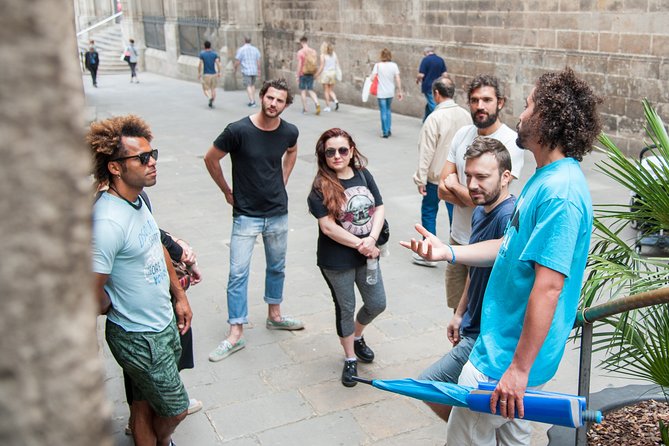
Barcelona’s Gothic Quarter is best understood on foot, one narrow lane and old stone wall at a time. This private walk traces the city from Roman Barcino to modern Catalonia, with stops at Roman tombs, Jewish Quarter alleys, Gothic churches, royal courtyards, and the famous Rambla. Patrick and Carlos are praised for strong storytelling, humor, and the ability to answer questions about history and local politics.
I like two things right away: the private format lets you set the pace, and the route includes details you could easily miss alone, from bomb damage at Sant Felip Neri to the odd symbols on the Bishop’s Bridge. The main drawback is that this is a walking tour with no transport, and the meeting point at Plaça de Catalunya can be hard to find unless you confirm the exact spot in advance.
Key points at a glance
- Two thousand years in about two and a half hours: Roman Barcino, medieval Barcelona, the Crown of Aragon, and modern Catalonia all appear along the route.
- A genuinely private walk: Only your group takes part, so you can ask questions, pause, or adjust the pace.
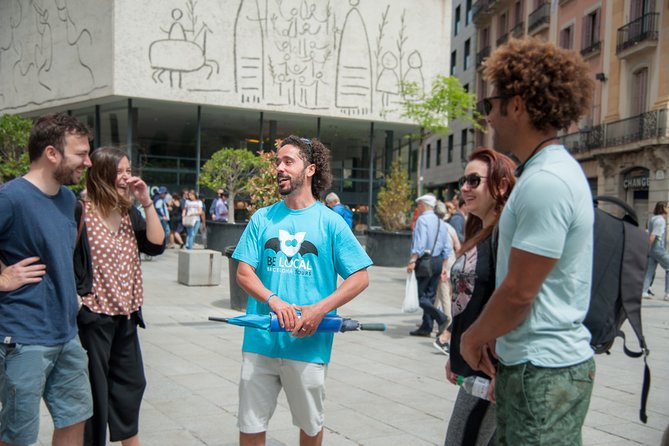
- Guides with personality: Patrick is praised for humor and historical storytelling, while Carlos is noted for energy, flexibility, and family-friendly explanations.
- More than the postcard sights: You’ll see Roman outdoor tombs, Jewish Quarter lanes, Civil War damage, and tucked-away Roman temple remains.
- Pickup near Plaça de Catalunya: Your guide can meet you within 0.5 kilometers of the square, but you should agree on a precise landmark.
- Strong value for history fans: At $66.52 per person, the price is easiest to justify for a small group that wants personal attention rather than a large scheduled walk.
Starting at Plaça de Catalunya and walking into old Barcelona
The tour begins at Plaça de Catalunya, the broad central square where the modern Eixample meets the older Ciutat Vella. It is a practical launch point, but not the easiest place to meet someone. The square is large, and one person had trouble finding the guide for about 15 minutes despite having received instructions shortly before the walk.
I would confirm the meeting details before you leave your hotel. Ask where the guide will wait and what company card or identifying sign to look for. Pickup is available if you choose a location within 0.5 kilometers of Plaça de Catalunya, and the guide carries a company card.
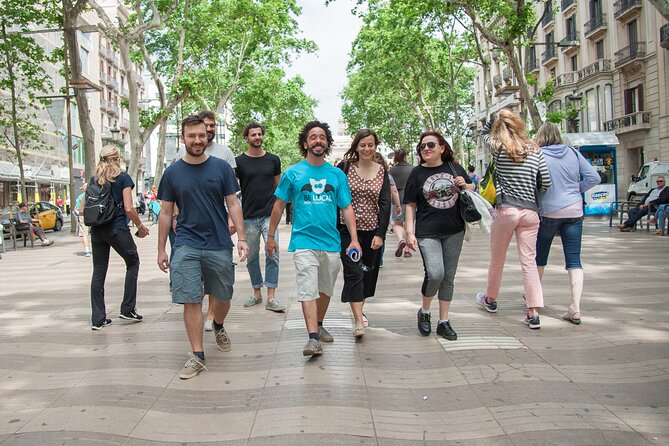
From here, the route moves toward the Rambla, Barcelona’s famous tree-lined avenue. The Rambla is not simply a shopping street. It has long been one of the city’s main public stages, linking the central square with the old port area and the historic quarters on either side.
A guide adds value here by placing the avenue in the story of Barcelona rather than treating it as a quick photo stop. You can expect street activity and crowds, but the real focus is the older city just beyond it.
More Gothic quarter walks in Barcelona:
- Barcelona all included: Sagrada, Park Güell, Montjuic & Gothic
★ 5.0 · 2,169 reviews - Barcelona Gothic Quarter Tapas & Taverns Food & Wine Tour
★ 5.0 · 1,470 reviews - Barcelona: Old Town and Gothic Quarter Walking Tour
★ 4.8 · 1,393 reviews
The Gothic Quarter’s narrow lanes and layered past
The Gothic Quarter is the heart of the walk. Its lanes are tight, irregular, and often confusing, which is exactly why a private guide helps. You are not just following a route between landmarks. You are learning how Barcelona grew over Roman foundations and through medieval religious, commercial, and political power.
The quarter contains buildings from several periods, including medieval churches and palaces, later renovations, and neo-Gothic additions. That mix can fool the eye. A building may look ancient while parts of it are much newer, and a guide can explain those layers as you move.
This is also where the private format earns its keep. You can stop when a question comes up, ask about Catalan identity or Spanish politics, and spend more time on the places that interest your group. The guides Patrick and Carlos are repeatedly praised for answering questions rather than rushing through prepared remarks.
Roman tombs and the earliest Barcelona
One of the most striking stops is the old imperial burial site with rows of Roman outdoor tombs. These tombs are tied to the ancient city of Barcino and offer a rare, visible reminder that Barcelona began long before its medieval streets took shape.
The appeal is visual as much as historical. You are standing among ancient burial monuments in an ordinary city setting, not inside a distant archaeological park. That contrast makes the Roman period easier to grasp. The city did not replace its past in one clean sweep. Later Barcelona grew around it.
The route also includes remains of the Roman temple of Barcino, tucked into a corner that is easy to miss without local direction. The temple remains are especially useful for understanding the scale and importance of the Roman settlement. On your own, you might walk past the entrance or see only fragments. The guide connects those stones to the larger Roman plan of the city.
If Roman history interests you, this portion may be the strongest reason to book. Patrick, in particular, is praised for explaining Barcelona from Roman times onward, while keeping the information lively rather than turning the walk into a lecture.
Carrer Petritxol and the taste of old Barcelona
Carrer Petritxol is one of the quarter’s most charming streets. It is known for traditional churrerías and details that preserve the feel of older Barcelona. This is a pleasant change of rhythm after the heavier Roman and political history.
The street also gives the guide a chance to point out everyday culture, not just grand monuments. Pastry and chocolate recommendations came up often in the guiding style described for this tour. If you want local food suggestions, ask directly. You may not have a formal tasting included, but you can leave with ideas for a later snack.
Keep in mind that the walk does not include transport or stated food tastings. Any churros, chocolate, or pastry stop is something you would pay for separately unless your guide tells you otherwise.
More private architecture tours in Barcelona:
- Sagrada Familia & Gaudi Tour Private or Small Group with Tickets
★ 4.5 · 1,188 reviews - Barcelona: Sagrada Familia, Park Guell & Tapas Private Tour
★ 5.0 · 903 reviews - Park Guell and Sagrada Familia Private Tour with Hotel pick-up
★ 5.0 · 760 reviews - Barcelona 1.5h Private Old Town, Gothic & Ramblas Walking Tour
★ 5.0 · 318 reviews
Santa Maria del Pi and Catalan Gothic design
The route visits a remarkable fourteenth-century church, Santa Maria del Pi, a fine example of Catalan Gothic architecture. Its position in the Gothic Quarter makes it an important stop, but its value is not only architectural.
Catalan Gothic buildings tend to favor a strong, spacious interior rather than a forest of delicate vertical elements. The church helps show how local Gothic design differs from the simplified picture many people carry of medieval Europe. Your guide can explain how the church fits into the neighborhood and the city’s religious life.
The exact amount of interior access can depend on opening conditions, services, or other restrictions, so treat the stop as a guided look at the church and its setting rather than a guaranteed extended visit inside. The tour’s published duration is approximately two hours and 30 minutes, so the pace needs to keep moving.
The old Jewish Quarter and medieval lanes
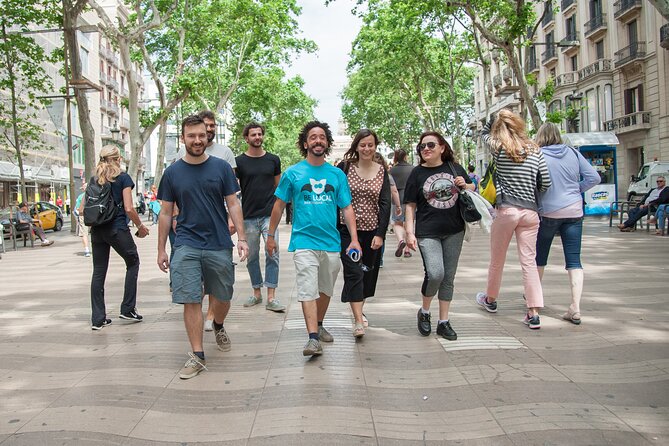
The Call, Barcelona’s former Jewish Quarter, is one of the most atmospheric parts of the route. Its narrow alleys preserve a medieval feel, and the area once housed a substantial Jewish community.
This stop needs careful explanation. The lanes alone do not tell you enough about the people who lived and worked here, or about the changes that later reshaped the quarter. A local guide can provide the missing context and help you see the neighborhood as a community rather than a collection of picturesque stone walls.
I especially like this part for visitors who want more than architectural sightseeing. The Gothic Quarter’s story includes different faiths, communities, and forms of power. The Call makes that human side more visible.
Sant Felip Neri and the scars of war
Sant Felip Neri Square is one of the most memorable pauses on the route. It is a quiet, beautiful space with a Baroque church, but the walls still carry marks from bombings during the Spanish Civil War.
The square works because its beauty and its painful history sit together. You can see why people are drawn to it, yet the damaged façade keeps the story from becoming a simple postcard scene. Ask your guide to explain the bombing history and how the square has been interpreted over time.
This is also a good example of the tour’s wider approach. It does not stop at famous buildings. It points out physical evidence of events that shaped modern Barcelona and Spain.
The Bishop’s Bridge and its strange symbols
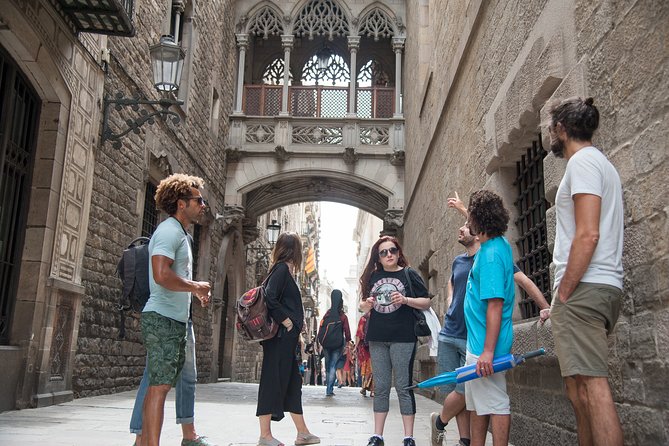
The neo-Gothic Bishop’s Bridge is one of the quarter’s most photographed details. Its design is elaborate, and its history includes curious, disturbing symbols that have fueled plenty of speculation.
The bridge is a useful lesson in how Barcelona’s old quarter combines genuine medieval remains with later neo-Gothic work. Its appearance suggests a distant past, but its story is more complicated. A guide can explain what is old, what is later, and why the bridge became such a recognizable part of the neighborhood.
This is one of the stops where Patrick’s humor may appeal to you. The walk is serious about history, but it does not treat every stone as a solemn museum object. Several descriptions of his guiding style emphasize comic timing and quirky facts, including details that held the attention of younger family members.
Royal power at the old palace
The old medieval palace connected with the Government of Catalonia represents Barcelona’s political past. The route also reaches the Gothic and neo-Gothic Plaça del Rei, home to the former Royal Palace of the Kings of Aragon and the Chapel of Santa Ágata.
These sites help explain how Barcelona functioned as a seat of power. You can read the square as an architectural stage: royal authority, religious ceremony, and government all gathered in one place.
Plaça del Rei is also a useful pause in the walk because its enclosed setting feels different from the narrow lanes. The old palace and chapel give the guide a natural place to explain the Crown of Aragon and the role of Barcelona in regional history.
You should not expect a full museum visit to every building in the square. The tour is primarily an outdoor walking experience, and entrance fees or transport are not included in the published price.
Barcelona Cathedral and the final stretch
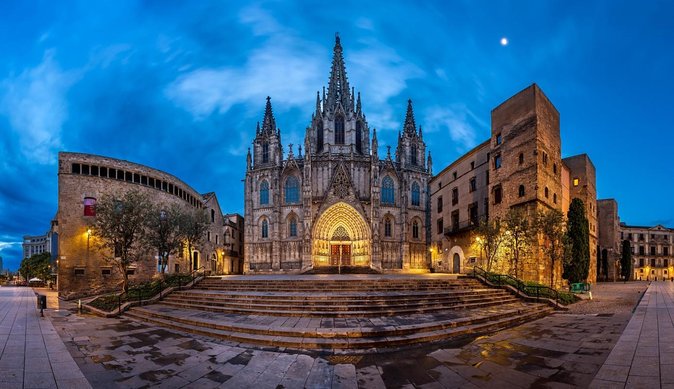
The Cathedral of Santa Creu and Santa Eulalia is the grand finish. Its façade is neo-Gothic, while the structure beneath it belongs to the medieval period. That contrast sums up much of the Gothic Quarter: old foundations, later rebuilding, and layers of changing taste.
The cathedral is one of the city’s major churches, so it can be busy around the entrance and surrounding streets. Your guide can help you read the building as more than an impressive façade, pointing out its place in the quarter and its many connected stories.
The route ends at Sant Jaume Square, with the listed end point near Pl. de Correus in Ciutat Vella. Because the walk ends in the old center rather than returning to Plaça de Catalunya, you can continue sightseeing, stop for food, or use nearby public transport. Transport back to your hotel is not included.
What $66.52 buys you
At $66.52 per person, the value depends heavily on the size of your group. Since the tour is private, the cost buys exclusive guiding rather than a seat in a large group. For two people, it is a bigger outlay than a standard shared walking tour. For a family or small group, the difference can be easier to justify.
You are paying for about 2.5 hours with an experienced local guide, an English-language walk, and the freedom to ask questions or adjust the pace. The tour does not include transport, food, or stated admission fees, so budget separately for those needs.
The rating is 4.9 from 89 reviews, with 99 percent recommending the experience. The strongest pattern is not one single landmark. It is the guide’s delivery. Patrick is praised for historical detail, humor, patience, and good pacing. Carlos is described as energetic, flexible, and able to keep both adults and young people involved.
The private structure also matters for mobility. One guide adjusted the pace for a person moving more slowly, and the group format allows you to ask for a calmer walk. Still, this is a walking experience through old streets, so you should be comfortable with a substantial period on foot.
Who will get the most from this walk
I would choose this tour if you want Barcelona’s old center explained in one connected story. It suits first-time visitors especially well, and several people wished they had taken it on their first day. That timing makes sense: the guide can help you understand the city before you explore the quarter alone.
History fans will get the most detail, particularly those interested in Roman Barcelona, medieval politics, the Crown of Aragon, Catalan culture, and the Spanish Civil War. Families can also do well with the tour because the storytelling includes humor and unusual facts rather than only dates and names.
You may prefer another option if you want extensive cathedral interiors, a food-focused walk, or a tour that includes transport. You should also think twice if narrow streets, steady walking, or a busy city center will make the experience tiring.
The tour is offered in English, service animals are allowed, and it is close to public transportation. Most people can participate, but the practical question is less about formal access and more about your comfort with walking for two and a half hours.
Should you book the Gothic Quarter private tour?
Book it if you want a personal introduction to Barcelona’s oldest center and value a guide who can explain the connections between Roman ruins, Jewish lanes, Gothic churches, royal power, and modern Catalonia. The private format, flexible pace, and strong record for guides such as Patrick and Carlos make it especially useful for families, first-time visitors, and history-minded couples.
I would not book it expecting a transport-inclusive sightseeing package or a formal food tour. Confirm the Plaça de Catalunya meeting point carefully, wear comfortable shoes, and leave room in your schedule for the walk to run close to its full 2.5 hours. For the right group, $66.52 per person is a fair price for a focused, personal look at the part of Barcelona that is easiest to misunderstand on your own.
FAQ
How long does the Gothic Quarter private tour last?
The tour lasts approximately two hours and 30 minutes.
What is the price of the tour?
The listed price is $66.52 per person.
Is the tour private?
Yes. Only your group participates in the activity.
What language is the tour offered in?
The tour is offered in English.
Where does the tour begin?
The listed starting point is Plaça de Catalunya in Barcelona.
Is pickup available?
Yes. Pickup is offered from a location chosen by you if it is within 0.5 kilometers of Plaça de Catalunya.
Where does the tour end?
The listed end point is near Pl. de Correus in Ciutat Vella, close to Sant Jaume Square.
Is transportation included?
No. Transportation is not included.
What sights are included?
The route includes the Rambla, Roman outdoor tombs, the former Jewish Quarter, Carrer Petritxol, Santa Maria del Pi, Sant Felip Neri Square, the Bishop’s Bridge, the old medieval palace, Roman temple remains, Plaça del Rei, the Chapel of Santa Ágata, and Barcelona Cathedral.
Can I cancel for a full refund?
Yes, if you cancel at least 24 hours before the experience starts. Changes or cancellations made less than 24 hours in advance are not accepted for a refund. If poor weather causes the tour to be canceled, you will be offered another date or a full refund.
Just added around Barcelona
- Love in the Gothic Quarter Barcelona: Self-Guided Romantic Walk★ 4.5 · 9 reviews
- Walking tour of the Gothic Quarter of Barcelona + Cathedral★ 5.0 · 8 reviews
- Wine tasting with a view of the Sagrada Familia★ 4.5 · 13 reviews
- Visit to the Modernist houses of the Americans★ 5.0 · 2 reviews
- Barcelona Jewish & Gothic Tour★ 5.0 · 18 reviews
- Roman & Gotic & Gaudi in Barcelona: private walking tour★ 4.5 · 2 reviews
- Self-Guided Audio Tour-The Surrealist Barcelona of Dalí and Gaudí★ 3.5 · 8 reviews
- Barcelona Gaudi Tour: Sagrada Familia, Casa Batllo & Casa Mila★ 5.0 · 4 reviews
Gothic Quarter Tours, compared.
Barcelona all included: Sagrada, Park Güell, Montjuic & Gothic
Read our review →
Barcelona Gothic Quarter Tapas & Taverns Food & Wine Tour
Read our review →
Barcelona: Gothic Quarter Ghosts and Legends Walking Tour
Read our review →
Barcelona: Old Town and Gothic Quarter Walking Tour
Read our review →
Barcelona Old Town & Gothic Quarter Small Group Tour
Read our review →
Ramblas, Old Town, Gothic and Gaudi Architecture Walking Tour
Read our review →
Barcelona: El Born and Gothic Quarter Wine & Tapas Bar Tour
Read our review →
Kids and Family Gothic Quarter Walking Tour in Barcelona
Read our review →Browse the lists this tour appears in