
Review · BARCELONA
Barcelona & Gothic to Modern. Regular Tour
Barcelona’s past and present meet on this thoughtful walking tour, which uses Enric Miralles as a way to read the city. You move from Roman Barcelona and the medieval quarters to post-Franco planning, the Olympics, and the controversial urban changes around el forat de la vergonya.
I like the tour’s serious historical range, and I like that it takes you beyond famous façades to the political and social forces behind them. Guides such as Pia bring architectural training, teaching experience, and personal links to some of the buildings into the walk.
The main caution is pace and level. This is not a light introduction filled with quick facts. Some people may find the three hours dense, especially younger visitors or anyone with little interest in architecture.
Key points to know before you book
- Roman ruins to modern Barcelona: The route connects the Temple of Augustus, medieval churches, post-Franco planning, Olympic Barcelona, and recent urban change.
- Four major stops: Santa Caterina Market, Santa Maria del Mar, Barcelona Cathedral, and MUHBA Temple d’August anchor the walk.
- An architect’s way of seeing: You’ll study materials, structure, urban decisions, and the forces that shaped each quarter.
- Pia may lead the walk: Past outings with Pia have been praised for clear explanations, local recommendations, and an ability to adjust the level for non-specialists.
- Small-group format: The regular tour accepts a maximum of 20 people, which matters when the guide is explaining details in busy old-city streets.
- Useful practical setup: The tour is in English, starts at 10:30 a.m., lasts about three hours, and includes a mobile ticket and architecture microguide.
Reading Barcelona through Enric Miralles
The central idea here is simple but powerful: a city is not just a collection of attractive buildings. Its architecture reflects religion, politics, money, planning rules, social conflict, and changing ideas about public space.
Enric Miralles provides the lens. The tour does not only point out his work. It uses his approach to help you notice how Barcelona was made, altered, repaired, and sometimes argued over.
That makes this different from a standard Gothic Quarter walk. You will still see churches, Roman remains, and old streets, but the guide asks you to look at what sits behind the postcard view. Why was a building placed there? What did the city need at that point? Who gained space, and who lost it?
The route crosses several periods. You begin in Roman Barcelona, move through the Carolingian era and the medieval city, then reach the post-Franco period, Olympic Barcelona, and the urban changes linked to el forat de la vergonya, or the hole of shame.
This long view gives the walk its value. A three-hour outing cannot explain every corner of Barcelona, but it can give you a framework for understanding the old city during the rest of your visit.
More Gothic quarter walks in Barcelona:
- Barcelona all included: Sagrada, Park Güell, Montjuic & Gothic
★ 5.0 · 2,169 reviews - Barcelona Gothic Quarter Tapas & Taverns Food & Wine Tour
★ 5.0 · 1,470 reviews - Barcelona: Old Town and Gothic Quarter Walking Tour
★ 4.8 · 1,393 reviews
Starting at Plaça Nova and the Roman city
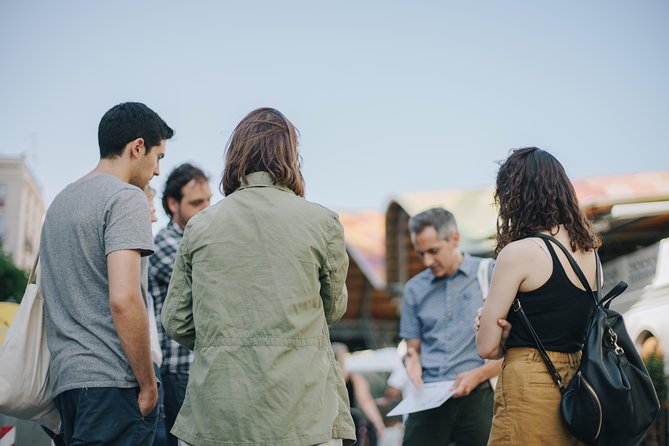
Meet at the Barcino sculpture on Plaça Nova, near the Cathedral in Ciutat Vella. The start point is important because it places you near the old Roman center, where Barcelona’s earliest urban lines remain part of the modern city.
The MUHBA Temple d’August is one of the listed stops. Its columns offer a direct link to Roman Barcelona, but the larger lesson is how Roman planning continued to shape later streets and buildings.
You may find the opening more analytical than theatrical. The guide is likely to establish a timeline and explain how the city changed over many centuries before moving into the medieval quarters.
That approach rewards people who enjoy seeing connections. A Roman foundation is not treated as an isolated relic. It becomes part of the explanation for why Barcelona developed as it did.
The meeting point can be crowded, with several tours starting in the same general area. Arrive early enough to locate the Barcino sculpture and identify your guide. One previous group had trouble finding the right outing because roughly eight tours were gathering nearby.
Santa Maria del Mar and the medieval city
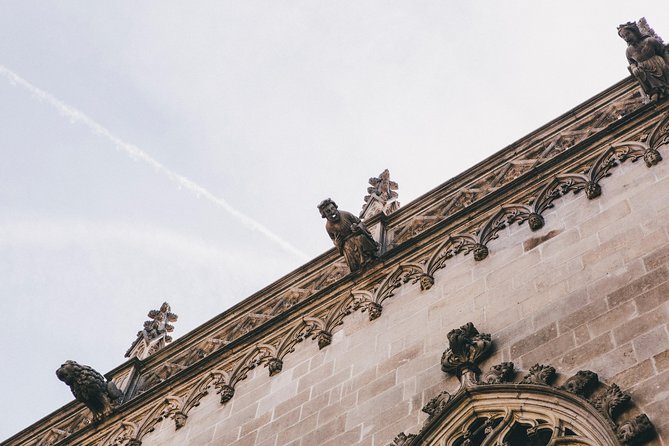
The Basilica de Santa Maria del Mar brings the walk into the medieval world and the La Ribera quarter. Its scale and design make it one of the most impressive buildings on the route, but the guide’s focus goes beyond admiration.
Here you can expect discussion of the social and religious forces that shaped medieval Barcelona. The church is not simply a beautiful Gothic building. It reflects the people, institutions, and ambitions of the period in which it was built.
This is where the tour’s mix of architecture and politics becomes useful. You are encouraged to look at structure, proportion, and space while also asking what the building meant to the city around it.
Santa Maria del Mar is also a good test of the guide’s teaching style. A trained architect may point out details that are easy to miss on your own. For someone already interested in design, those observations can change the way you look at the basilica.
For someone expecting a short sightseeing stop, the discussion may feel long. The tour is designed to explain rather than simply photograph, so you should be ready to spend time listening in each area.
Barcelona Cathedral and the layers of power
The Catedral de Barcelona adds another major religious building, this time near the old Roman and civic center. The contrast between the Cathedral and Santa Maria del Mar helps show that Gothic Barcelona was not one single architectural story.
The guide connects buildings with the religious and political conditions of their time. That is one of the most useful parts of the experience for people who do not have an architecture background. You do not need to identify every style or remember every architect to understand why the city changed.
Pia has been especially effective with mixed groups, explaining complex ideas in clear English and adjusting the level for people who are not specialists. One small group even received help with Italian translations for a member who needed it.
That said, the guide’s strength is detailed explanation, not a scripted comedy routine. If you prefer fast storytelling and a long list of dates, this may feel more like a university class on foot.
The Cathedral stop also reinforces the main theme of the walk: Barcelona’s buildings make more sense when you see them as products of changing power. Religion, civic identity, wealth, and urban control all leave marks on the old city.
Same city, a completely different century:
- Barcelona: Sagrada Familia Entry Ticket with Audio Guide
★ 4.6 · 105,312 reviews - Barcelona: Casa Batlló Entry with Self-Audioguide Tour
★ 4.7 · 25,359 reviews - Barcelona in 1 Day: Sagrada Familia, Park Guell,Old Town & Pickup
★ 5.0 · 13,541 reviews - Barcelona: Sagrada Familia Skip-the-Line Entry Ticket & Tour
★ 4.8 · 12,789 reviews
Santa Caterina Market and Miralles’ modern intervention
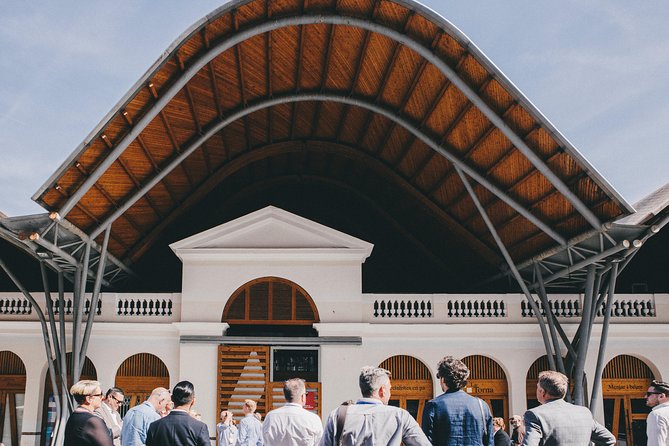
The walk ends at Mercado de Santa Caterina, a fitting place to finish. This is where the tour shifts from studying old buildings to examining modern work and the methods associated with Miralles.
Santa Caterina Market is especially useful because it is part of daily city life, not just a monument. The market’s design asks you to think about how a modern building can respond to an old neighborhood while still changing the space around it.
The experience includes fieldwork at the market. That means the guide uses the building and its setting to check the ideas discussed earlier, including the ways Miralles observed places, materials, movement, and existing urban conditions.
One especially interesting detail is that a guide on some outings has worked on one of the buildings visited. That kind of professional connection can give the discussion a practical edge, though the regular tour may not always be led by the same person.
The market is also where the route feels most connected to present-day Barcelona. You are no longer looking only at heritage. You are considering how cities make decisions now, and how modern architecture can create debate as well as admiration.
The story of el forat de la vergonya
The final part of the route includes el forat de la vergonya, a phrase translated as the hole of shame. It refers to a contested urban space in the old city and brings social conflict into the tour’s architectural discussion.
This is important because it keeps the walk from presenting Barcelona’s redevelopment as a simple success story. The city has gained attractive public spaces and major new buildings, but urban change can also displace communities, remove familiar places, or create conflict over who controls land.
The guide uses this episode to show that architecture is tied to real lives. Plans on paper can look neat. Streets and neighborhoods are less tidy.
You may find this section more meaningful than a basic explanation of building styles. It gives you a way to understand why some modern projects are praised, while others carry anger and political memory.
The tour does not treat architecture as decoration. It treats it as a public decision with consequences. That is the strongest reason to choose this walk over a standard old-city orientation.
How the three-hour format feels
Three hours is long enough to create a connected story but short enough to fit into a morning. The 10:30 a.m. start leaves the rest of the day open for museums, food, shopping, or further wandering.
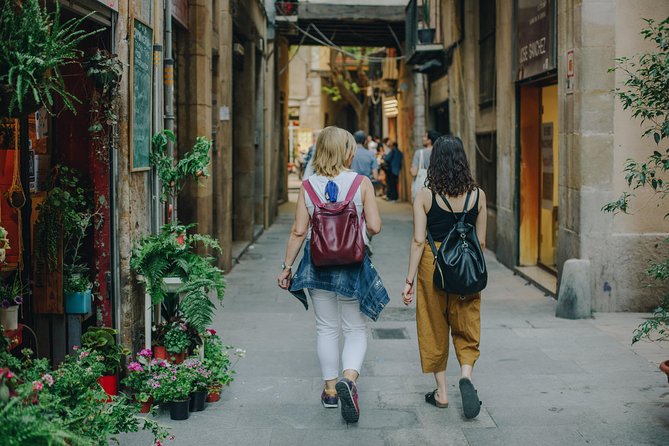
The route is on foot through the Gothic and La Ribera quarters. Expect frequent stops rather than a nonstop walk. You will spend time listening, looking closely, and discussing what the buildings reveal.
A group limit of 20 people is helpful. Larger groups can make architectural details hard to see and questions harder to ask. Even so, the old city can be crowded, and you should stay alert at the meeting point and during transitions.
The tour is offered in English. Previous sessions with Pia have worked well for people from different backgrounds, including those who were not architects. Her explanations have also included charts and local recommendations, which can make the timeline easier to follow.
The format is not ideal for everyone. A family with mixed interest levels may find the pace demanding. One teenager and one parent in a previous group enjoyed the material, while two others wanted the walk to end sooner.
Who will get the most from this walk
I would choose this tour if you want to understand Barcelona rather than simply collect photos of its most famous buildings.
It suits:
- People who like architecture, design, and urban planning.
- First-time visitors who want a strong framework for the old city.
- Repeat visitors who have already walked the Gothic Quarter and want to see it differently.
- Students, journalists, writers, and anyone interested in how cities change.
- Non-specialists who enjoy detailed explanations and asking questions.
- People who want to connect medieval buildings with modern social and political issues.
It may not suit you if you want a relaxed stroll with only short comments at each stop. It is also a weaker match if your group has a wide gap in attention or if younger members are not interested in buildings and city planning.
You do not need formal architectural training. You do need curiosity and patience. The strongest sessions make difficult ideas understandable, but the subject itself remains detailed.
The guide can make or break the experience
Pia receives the strongest personal praise in the supplied information. She is described as an architect and university-level architecture lecturer who can explain Barcelona’s development through history, sociology, and design.
Her best qualities are practical for this type of outing. She has been able to adjust explanations to a non-expert group, answer detailed questions, add local suggestions, and connect individual buildings to broader events.
That combination matters. A guide can know a great deal and still make a poor teacher. Here, the most favorable accounts describe clear communication as well as strong subject knowledge.
Still, you should understand the style before booking. The guide may speak in an academic way and cover many names, periods, and ideas. The experience is closer to an architecture seminar with a walking route than to a casual sightseeing performance.
The provider’s stated aim is to make architectural ideas available to the general public, not only to specialists. The tour appears to work best when you meet it halfway by asking questions and looking closely rather than waiting for constant entertainment.
Value, timing, and practical details
No price is supplied here, so I cannot judge the exact cost. The value depends on what you want from a guided walk.
If you only want to identify the Cathedral, Santa Maria del Mar, and the market, you can see those places without a specialist. If you want to understand how Roman planning, medieval power, modern redevelopment, and Miralles’ methods fit together, the guide adds something you would be unlikely to build quickly on your own.
The architecture microguide is a useful extra. It gives you something to refer to after the walk, especially if the tour prompts you to buy books or continue studying Barcelona’s buildings.
The tour uses a mobile ticket and has a maximum of 20 people. It is near public transportation, service animals are allowed, and most people can participate. The information does not provide a detailed accessibility assessment, so contact the provider directly if you need specific mobility information.
Confirmation arrives at booking. Free cancellation is available until 24 hours before the 10:30 a.m. start time. A late cancellation or change is not refundable, and poor weather or failure to reach the minimum group size can lead to a new date or full refund.
Should you book Barcelona Gothic to Modern?
Book it if you want a serious, well-connected look at Barcelona’s architecture and urban story. The route covers more than the usual Gothic Quarter highlights, and the move from Roman ruins to Santa Caterina Market gives the morning a clear shape.
I would especially recommend it early in your stay. The ideas about streets, buildings, and redevelopment can sharpen your eyes for the rest of Barcelona.
Skip it if your group wants a quick, highly visual walk with little listening. This tour asks for concentration, and its detailed style will not suit every age or personality.
For curious visitors, though, it offers real value. You leave with more than a list of monuments. You gain a method for looking at the city, asking who shaped it, why it changed, and what those choices mean today.
FAQ
Where does the tour start?
The tour starts at the Barcino sculpture at Plaça Nova, 40, in Barcelona’s Ciutat Vella district.
What time does the tour begin?
The scheduled start time is 10:30 a.m.
How long does the tour last?
The walk lasts approximately three hours.
In what language is the tour offered?
The tour is offered in English.
What places are included on the route?
The listed stops are Mercado de Santa Caterina, Basilica de Santa Maria del Mar, Catedral de Barcelona, and MUHBA Temple d’August.
Where does the tour finish?
The activity ends back at the meeting point.
How many people can join the regular tour?
The group has a maximum of 20 people.
Is an architecture background required?
No. Most people can participate, and the tour is intended to make architectural ideas accessible. It does use detailed explanations, so an interest in architecture, design, history, or city planning will help.
What happens if the weather is poor?
The experience requires good weather. If it is canceled because of poor weather, you will be offered another date or a full refund.
Just added around Barcelona
- Love in the Gothic Quarter Barcelona: Self-Guided Romantic Walk★ 4.5 · 9 reviews
- Walking tour of the Gothic Quarter of Barcelona + Cathedral★ 5.0 · 8 reviews
- Wine tasting with a view of the Sagrada Familia★ 4.5 · 13 reviews
- Visit to the Modernist houses of the Americans★ 5.0 · 2 reviews
- Barcelona Jewish & Gothic Tour★ 5.0 · 18 reviews
- Roman & Gotic & Gaudi in Barcelona: private walking tour★ 4.5 · 2 reviews
- Self-Guided Audio Tour-The Surrealist Barcelona of Dalí and Gaudí★ 3.5 · 8 reviews
- Barcelona Gaudi Tour: Sagrada Familia, Casa Batllo & Casa Mila★ 5.0 · 4 reviews
Gothic Quarter Tours, compared.
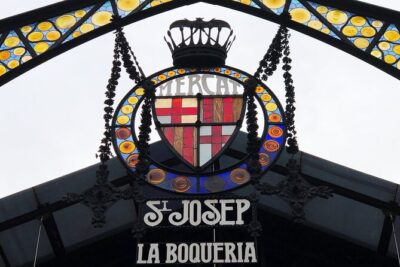
Barcelona all included: Sagrada, Park Güell, Montjuic & Gothic
Read our review →
Barcelona Gothic Quarter Tapas & Taverns Food & Wine Tour
Read our review →
Barcelona: Gothic Quarter Ghosts and Legends Walking Tour
Read our review →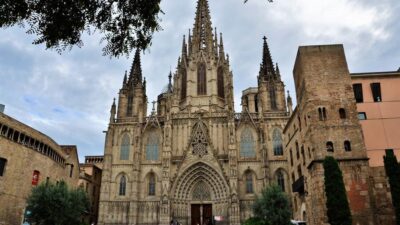
Barcelona: Old Town and Gothic Quarter Walking Tour
Read our review →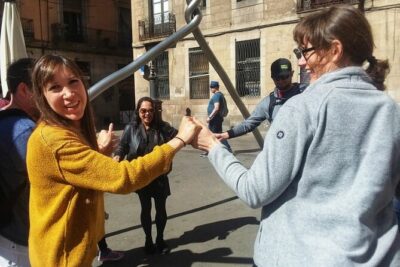
Barcelona Old Town & Gothic Quarter Small Group Tour
Read our review →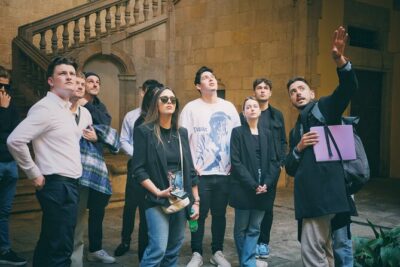
Ramblas, Old Town, Gothic and Gaudi Architecture Walking Tour
Read our review →
Barcelona: El Born and Gothic Quarter Wine & Tapas Bar Tour
Read our review →
Kids and Family Gothic Quarter Walking Tour in Barcelona
Read our review →Browse the lists this tour appears in