
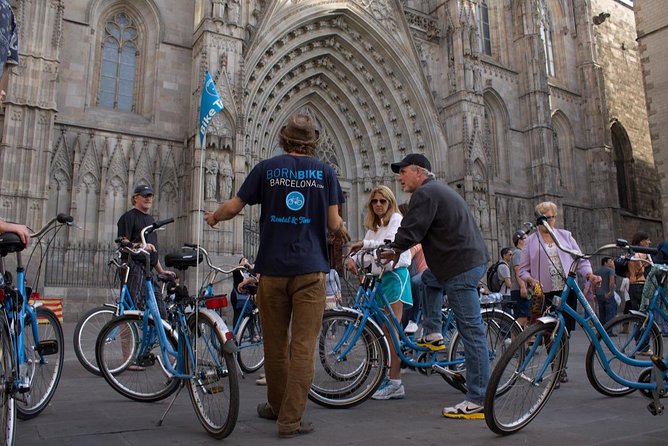
Review · BARCELONA
Historical and Modernist Bike Tour Barcelona
Barcelona makes more sense from a bicycle. This 3-hour city tour links the narrow lanes of the Gothic Quarter and El Born with Gaudí’s grand modernist façades, giving you a quick look at two very different sides of the city. I like the mix of major sights and older streets, and I like that guides such as Morgane, Ernesto, and Thomas have used photos, stories, and tailored routes to bring the stops to life. The main drawback is time: most stops last about 10 minutes, so you will see the exteriors and get an overview rather than tour the interiors.
I especially like that the tour includes the bike, helmet, bottled water, and guide, so the $43.55 price covers the main practical needs. I also like the small group limit of 15 people, which should make street riding and questions easier than on a large bus tour. You should be comfortable cycling in city streets, and note that admission to Museu Picasso, Sagrada Família, Casa Milà, and Casa Batlló is not included.
Key points
- Two Barcelonas in one ride: Compare the medieval Gothic Quarter and El Born with Gaudí’s modernist buildings.
- A useful first-day orientation: The route gives you a visual map of central Barcelona before you explore the sights in depth.
- Stories backed by photos: Guides may use images to explain architectural details that are easy to miss from the street.
- Small-group cycling: The tour accepts no more than 15 people, with at least four required per booking.
- Major stops are exterior visits: You pause at the city’s landmarks, but entrance tickets are separate.
- Flexible guiding style: Past guides including Morgane, Ernesto, Thomas, and the company owner have adapted routes for different abilities and interests.
Why a bike is a smart way to see central Barcelona
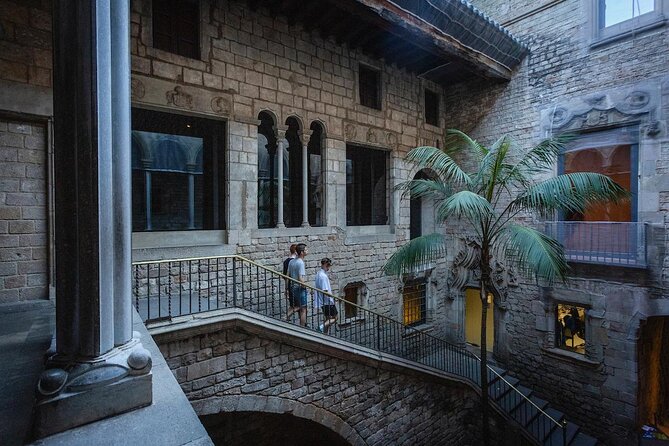
Barcelona’s historic center can feel confusing on foot. The Gothic Quarter folds streets into one another, while El Born mixes old stone buildings, squares, churches, shops, and cultural sites. A bike lets you cover more ground without spending the whole morning walking between districts.
This route also gives you a useful contrast. In the Gothic Quarter, you focus on medieval streets and older civic spaces. Around the Eixample, you shift to the broad avenues and imaginative façades linked with Antoni Gaudí. That change in scale is one of the best reasons to choose this tour instead of a simple landmark circuit.
You are not signing up for a museum-heavy outing. The format is closer to a guided city introduction, with short stops, explanations, and time to look around. If you want detailed interior visits, you will need to return later and buy separate tickets. If you want help understanding how Barcelona fits together, this format is much more useful.
The group size matters here. A maximum of 15 people is not the same as a private ride, but it is small enough for a guide to answer questions and keep an eye on the group. A minimum of four people is required for a booking, and the guide may be multilingual, though the experience is offered in English.
More segway and bike architecture tours in Barcelona:
- Barcelona e-Bike Tour: Gaudí & Old Town Small Group
★ 5.0 · 769 reviews - Barcelona: Old Port and Gothic Quarter Guided Segway Tour
★ 4.9 · 185 reviews - Barcelona Bike tour, Gaudí houses or beach bike or eBike tour
★ 5.0 · 140 reviews
Starting in the Gothic Quarter at Carrer de la Marquesa
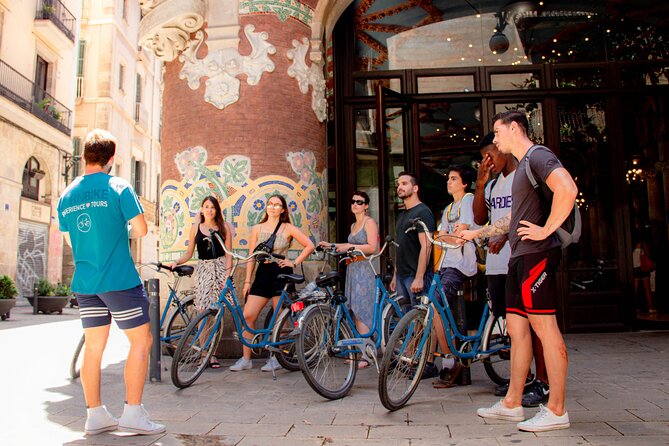
The meeting point is Carrer de la Marquesa, 1, in Ciutat Vella. This puts you near the historic center and close to the early parts of the route. The activity returns to this same meeting point, which makes planning the rest of your day easier.
The first stop is the Gothic Quarter, or Barri Gòtic. You have about 10 minutes here, with no admission fee. That short pause is enough for an introduction to the district’s medieval character, but not enough for a full walk through every lane or major building.
I would treat this stop as an orientation rather than a complete visit. Listen for the guide’s explanation of how the old center developed, then mark places you want to revisit on foot. The bike gives you a quick first look, while a later solo walk lets you slow down and examine the details.
The cycling format also helps you understand distance. Barcelona’s central districts are close on a map, but their streets feel quite different. Moving between them with a guide gives you a sense of how the old quarters connect.
Museu Picasso and the artistic side of El Born
The route pauses for about 10 minutes at Museu Picasso. The museum ticket is not included, so this is an exterior stop and a chance to learn where the museum fits into the Born district.
That distinction is important. Picasso’s museum deserves far more time than a short bike-tour stop, especially if you want to study the collection. You can use this moment to note its location, hear the guide’s comments, and decide if you want to return independently.
The value here is context. A guide can connect the museum with the surrounding old quarter and explain why El Born is a useful place to think about Barcelona’s artistic and cultural life. You get a quick introduction without spending your tour standing in a ticket line or walking through galleries while trying to keep pace with a group.
Some guides have brought photographs to show how places and buildings look from different angles. That is a practical touch. From a bicycle, you often see a façade for only a few moments, so a photograph can help the guide point out a feature you might otherwise miss.
Santa Maria del Mar and the old Born quarter
The Basilica of Santa Maria del Mar receives another 10-minute stop. Admission is listed as free for the tour, so you can see the exterior without paying an additional ticket as part of this visit.
This church is one of the route’s strongest historical pauses because it anchors the Born district in a very visible way. You are not just passing through a fashionable central neighborhood. You are seeing a place where Barcelona’s older streets, religious buildings, and public spaces meet.
The stop is brief, so I would not expect a full explanation of the basilica or enough time to explore every interior detail. Still, the pause gives the guide a clear landmark around which to explain El Born. It also breaks up the ride with a quieter look at stonework and scale.
From there, the route continues through El Born and Passeig del Born. Both stops are free and last about 10 minutes. Passeig del Born gives you a broader public space after the tighter streets of the Gothic Quarter. That change helps you see how the district opens up and how old and modern city life share the same setting.
More architecture bike tours in Barcelona:
- Barcelona: Sagrada Familia or City Tour by Bike or eBike
★ 4.8 · 928 reviews - Barcelona eBike Small Group Tour with entrance to Sagrada Familia
★ 5.0 · 133 reviews - barcelona: Gaudi Highlights eBike tour
★ 4.8 · 59 reviews - Barcelona Gaudi Guided Small Group E Bike Tour
★ 5.0 · 53 reviews
El Born Centre and the city’s layered past
The El Born Centre de Cultura i Memòria is another 10-minute stop with no admission fee listed. The name signals its role as a cultural and memory center, and its place on the route adds another layer to the Born visit.
You should think of this as a short introduction, not a full cultural-center visit. The guide can point out why the building matters and how it fits into the neighborhood, but the tour’s schedule does not allow a long indoor visit. If this site interests you, write down its name and return later when you have time to explore at your own pace.
I like that the route gives El Born several separate pauses rather than treating it as a quick pass-through. The Gothic Quarter, Santa Maria del Mar, Passeig del Born, and the cultural center each present a slightly different view of the area. Together, they make the historic part of the tour feel more developed than a list of famous façades.
This is also where a flexible guide can improve the experience. Ernesto, for example, has adjusted a route to suit a group’s wishes and offered practical advice about Barcelona. The exact guide is not guaranteed, but the company’s guiding style allows room for questions and personal interests.
Sagrada Família from the outside
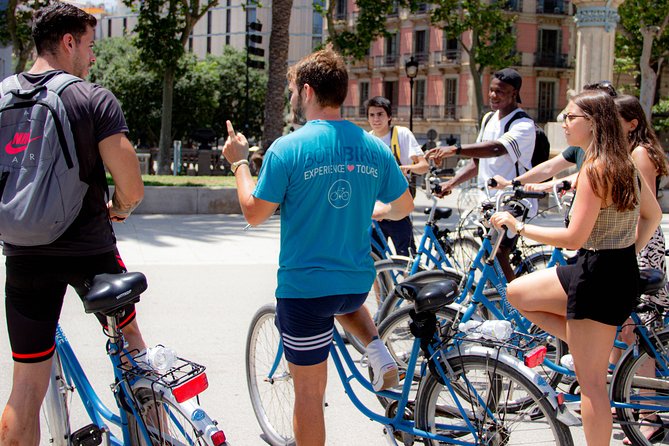
The route then reaches the Basilica of the Sagrada Família, one of Barcelona’s defining sights. The stop lasts about 10 minutes, and admission is not included.
A short exterior visit is enough to grasp the building’s scale and unusual design, but it is not a substitute for going inside. If Sagrada Família is high on your list, plan a separate visit with its own admission ticket and more time. On this bike tour, your focus is the guide’s explanation and the chance to place the basilica within the wider city.
This is a useful stop because Gaudí’s work can seem strange when viewed without context. A guide can help you look at the façade as part of Barcelona’s modernist story rather than as an isolated attraction. Photos can be especially helpful here, since the building has more detail than you can absorb during a short street-side pause.
You should also keep your expectations clear. The tour provides an overview, not entry, an audio guide, or a long architectural lecture. That makes it good for a first orientation, but less suitable if your main purpose is to study Sagrada Família in detail.
Casa Milà and Casa Batlló on the modernist route
Casa Milà, also called La Pedrera, receives a 10-minute stop. Casa Batlló receives another 10-minute stop. Admission to both is separate.
These two buildings show a different side of Gaudí’s work from the Sagrada Família. Instead of a church on a large site, you see residential architecture woven into the city’s main streets. The contrast helps you understand how modernist design changed everyday buildings, not just monumental ones.
Casa Milà is known by its nickname, La Pedrera, and the tour uses both names. Casa Batlló is another major modernist landmark. At each stop, you can expect a brief explanation and time to look at the exterior before moving on.
Again, the timing is the key limitation. Ten minutes lets you take in the façade, hear the main points, and take a few photos. It does not give you enough time to visit the interiors. If you want to enter either building, plan that separately and allow much longer than the bike-tour pause.
The advantage is efficiency. In one morning, you can see all three headline Gaudí sites without committing your entire day to them. You then have the information needed to decide which buildings deserve a return visit.
What the guide adds to a short itinerary
The guide is the part of the tour that turns a series of stops into a connected story. Without that help, you would see a church, a museum, a cultural center, and several famous façades, but you might not understand how they relate to the city.
Past guides have included Morgane, Ernesto, and Thomas, as well as the company’s owner. Their approaches have included personal stories, photographs, practical advice, and adjustments for the group. One route was adapted for a child and riders who were less confident on bicycles, with a tandem bike used for the child and a gentler route chosen for the group.
That does not guarantee the same arrangement on every departure. Still, it tells you what to ask about if your group has mixed cycling ability. Mention children or nervous riders when booking, and confirm what bike options are available.
The experience is offered in English, but it may be led by a multilingual guide. That can be helpful for mixed-language groups, though the exact language balance may vary. If you want a highly specialized architectural lecture, this may feel too general. If you want stories, orientation, and practical city advice, the format is a better fit.
What $43.55 includes, and what it does not
At $43.55 per person, the tour sits in a reasonable range for a three-hour guided activity, provided you value the bicycle and the city overview. You are paying for the guide, the bike, helmet, and bottled water, along with the convenience of covering several districts in one outing.
You are not paying for entry to Museu Picasso, Sagrada Família, Casa Milà, or Casa Batlló. That keeps the tour price from climbing sharply, but it means you should budget separately if you want to visit those places inside.
The best value comes when you take the tour early in your Barcelona stay. You can use the route to choose which sights deserve a longer visit and return to them on your own. Taking it late in your trip still works, but you lose some of the planning benefit.
The 3-hour length is also practical. It is long enough to cover the old center and the main modernist landmarks, yet short enough to leave room for lunch or another afternoon activity. The route does not promise a relaxed stop at every site, so think of it as a broad city survey.
Practical details before you book
The tour begins and ends at Carrer de la Marquesa, 1, in Ciutat Vella. It is near public transportation, and the activity allows service animals. Most people can participate, but you should be honest about your cycling ability and ask questions if your group includes children or riders who are not confident.
A helmet and bike are supplied, and bottled water is included. Wear clothing that lets you pedal comfortably, though the supplied information does not specify a dress code or bike type for every booking.
The group can have up to 15 people, with a minimum of four required per booking. That size offers more personal contact than a large sightseeing bus, while still keeping the price below a private tour.
Confirmation is sent within 48 hours of booking, subject to availability. Free cancellation is available if you cancel at least 24 hours before the start time. Changes or cancellations made later are not accepted for a refund, so keep the local cut-off time in mind.
Who will get the most from this Barcelona bike tour
I would choose this tour if you are in Barcelona for the first time and want a quick sense of how the center fits together. It is especially useful for people who want both medieval streets and modernist architecture in one outing.
It also suits you if you like learning through stories instead of reading every detail in a guidebook. The photo-based explanations used by some guides can make a short exterior stop more meaningful.
Families and mixed-ability groups should ask about bike arrangements before booking. The company has adapted routes for groups with a child and less confident riders, but that does not mean every departure will include a tandem or the same route.
I would choose something else if your main goal is interior access. This tour does not include entry to the Picasso museum, Sagrada Família, Casa Milà, or Casa Batlló. It is also not ideal if you want a slow, highly detailed visit at each location.
Should you book the Historical and Modernist Bike Tour?
Book it if you want a practical introduction to Barcelona, enjoy cycling, and value a guide who can connect the Gothic Quarter, El Born, and Gaudí’s buildings in one route. The included bike, helmet, water, and small-group format make the $43.55 price easy to justify when used as an early-trip orientation.
Skip it if cycling in city streets sounds stressful or if you want to spend serious time inside the major attractions. For most visitors who want a lively overview and a clear sense of Barcelona’s different eras, this is a smart three-hour use of your morning.
FAQ
How long does the Historical and Modernist Bike Tour Barcelona last?
The tour lasts approximately 3 hours.
How much does the tour cost?
The listed price is $43.55 per person.
What language is the tour offered in?
The tour is offered in English. It may be operated by a multilingual guide.
What is included in the tour price?
The price includes bottled water, a local guide, use of a bicycle, and use of a helmet.
Where does the tour begin?
The meeting point is Carrer de la Marquesa, 1, Ciutat Vella, 08003 Barcelona, Spain.
Where does the tour end?
The activity ends back at the meeting point.
Are entrance tickets to the museums and buildings included?
No. Admission to Museu Picasso, Sagrada Família, Casa Milà, and Casa Batlló is not included.
How many people can join the tour?
The tour requires a minimum of four people per booking and has a maximum of 15 participants.
Is the tour near public transportation?
Yes. The meeting point is near public transportation.
Can I cancel for a full refund?
Yes, if you cancel at least 24 hours before the experience start time. Cancellations or changes made less than 24 hours before the start time are not accepted for a refund.
More History Tours in Barcelona
- Barcelona: Tipsy Tapas & History Tour in the Gothic Quarter
★ 4.8 · 227 reviews - Barcelona Historical Walking Tour: Gothic Quarter and El Born
★ 5.0 · 217 reviews - Barcelona: Gothic Quarter Tour Dark History & Ghosts Tour
★ 4.8 · 64 reviews - Barcelona: Market, Tasty Tapas/Food and Gothic History Tour
★ 4.7 · 48 reviews
Just added around Barcelona
- Love in the Gothic Quarter Barcelona: Self-Guided Romantic Walk★ 4.5 · 9 reviews
- Walking tour of the Gothic Quarter of Barcelona + Cathedral★ 5.0 · 8 reviews
- Wine tasting with a view of the Sagrada Familia★ 4.5 · 13 reviews
- Visit to the Modernist houses of the Americans★ 5.0 · 2 reviews
- Barcelona Jewish & Gothic Tour★ 5.0 · 18 reviews
- Roman & Gotic & Gaudi in Barcelona: private walking tour★ 4.5 · 2 reviews
- Self-Guided Audio Tour-The Surrealist Barcelona of Dalí and Gaudí★ 3.5 · 8 reviews
- Barcelona Gaudi Tour: Sagrada Familia, Casa Batllo & Casa Mila★ 5.0 · 4 reviews
Segway and Bike Architecture Tours, compared.
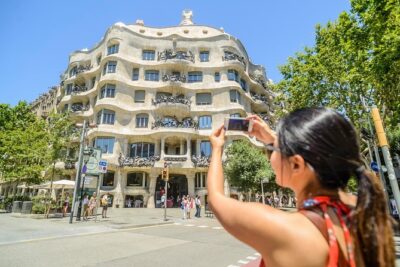
Barcelona e-Bike Tour: Gaudí & Old Town Small Group
Read our review →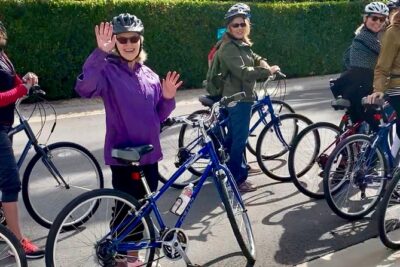
Palm Springs Modernism Architecture & History Bike Tour
Read our review →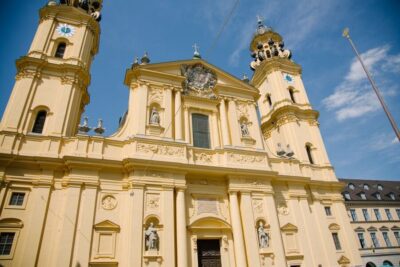
Munich 3-Hour Segway Tour: Nazi Munich & Royal Architecture
Read our review →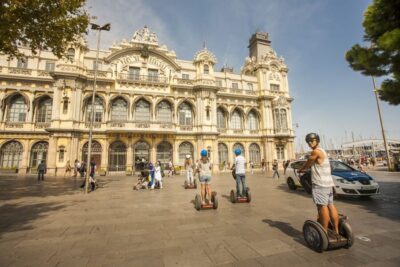
Barcelona: Old Port and Gothic Quarter Guided Segway Tour
Read our review →
Barcelona Bike tour, Gaudí houses or beach bike or eBike tour
Read our review →
Miami Beach Art Deco & History Bike Tour with Design Enthusiast
Read our review →Browse the lists this tour appears in