
Review · BARCELONA
Gaudí and Barcelona Legends Walking Tour
Barcelona’s Modernist story is not confined to one famous building. This tour connects Casa Milà, Casa Batlló, and Casa Amatller along Passeig de Gràcia, then leads you toward Els 4 Gats, the Palau de la Música Catalana, and El Born. Guides such as Christian and Michael add the human stories behind the stone, while questions about what you see keep the walk from becoming a lecture.
I like two things here. First, you get more than a Gaudí checklist: the route explains how Barcelona’s architects, artists, cafés, and city growth fit together. Second, the tour ends in El Born, where the legends and old streets give you a different view of the city than the polished Eixample boulevard.
The main consideration is that this is an exterior-focused walk. Entrance fees are not included, and two hours is enough for context and close looks, not a full visit inside Casa Milà, Casa Batlló, or the Palau de la Música Catalana. The group size also needs clarification: the highlights describe a maximum of eight, while the additional tour information allows up to 15.
Key points to know before booking
- Gaudí is only part of the story: You also learn about Casa Amatller, Casa Morera, Lluís Domènech I Montaner, and Barcelona’s Modernist movement.
- The route is mostly outside: Admission to Casa Milà, Casa Batlló, Casa Amatller, La Mansana de la Discordia, and the Palau de la Música Catalana is not included.
- Passeig de Gràcia gets close attention: Pavement, lamps, façades, and the boulevard’s design all become part of the lesson.
- El Born provides the final change of mood: The last 30 minutes connect local legends with an older neighborhood.
- The guides shape the experience: Christian, Michael, and Chris are praised for clear stories, friendly pacing, and involving people with questions.
- The price is $46.85 per person: That is reasonable if you want interpretation and orientation, but less attractive if you mainly want admission to major interiors.
Why this walk works for Barcelona’s Modernist center
Barcelona can feel like an open-air architecture museum, but the details are easy to miss when you walk alone. A balcony may look decorative until someone explains its purpose. A neighboring façade may seem ordinary until you learn that it belongs to another major Modernist architect.
This tour gives you that missing frame. It begins at Pg. de Gràcia, 90, near Casa Milà, and moves downhill toward the old city. You pass from the orderly Eixample, with its broad streets and grand apartment blocks, to the narrower setting of El Born.
I like this change in scenery because it prevents the walk from becoming a single-subject tour. You see Gaudí’s imagination, but you also get Barcelona’s artistic rivalries, café culture, urban expansion, and old legends.
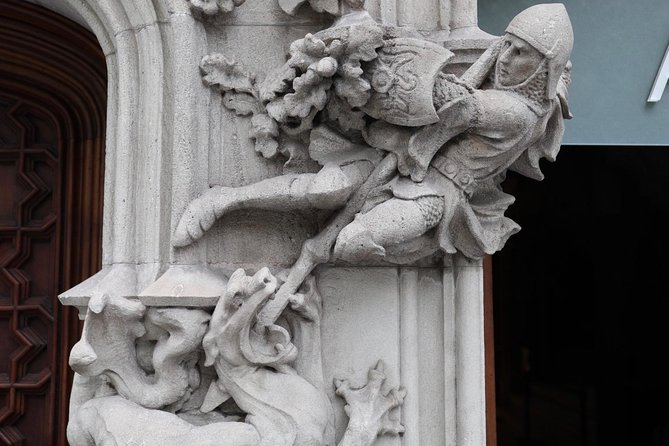
The guides’ style appears to be conversational rather than formal. Christian is praised for stories about architecture, architects, and local culture, while Michael is noted for asking questions about what people see on the buildings. That approach matters. You are more likely to remember a strange face, a floral detail, or an unusual structural choice when you have been asked to find it yourself.
More Gaudí tours in Barcelona:
- Barcelona: Park Güell and Gaudí House Museum Entry Ticket
★ 4.5 · 6,326 reviews - Sagrada Familia & Gaudi Tour Private or Small Group with Tickets
★ 4.5 · 1,188 reviews - Complete Gaudi Tour: Casa Batllo, Park Guell & Sagrada Familia
★ 5.0 · 1,152 reviews
Casa Milà and the beginning of the route
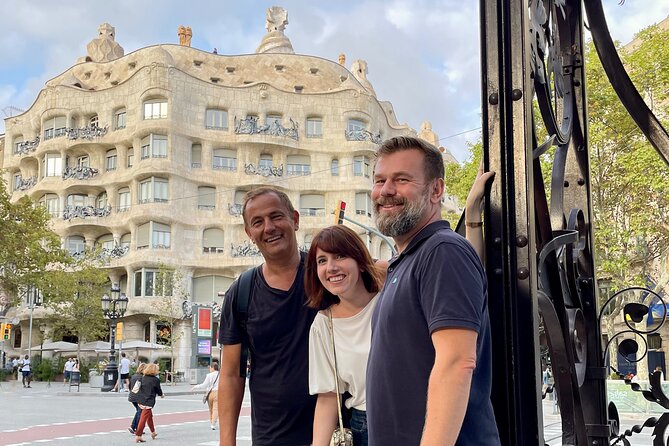
The opening stop is Casa Milà, better known as La Pedrera. You spend about 10 minutes learning about the façade and Gaudí’s place in Barcelona’s architectural story.
The building is important not only because it is one of Gaudí’s best-known works, but also because it was his last civic building before he devoted the rest of his life to the Sagrada Família. That fact gives the opening stop a useful sense of direction: you begin with Gaudí’s mature secular work before following the wider Modernist story through the city.
The guide focuses on the exterior. You can study the undulating stone front, wrought-iron details, and unusual shapes, but admission is not included. If you want the roof, courtyards, or interior displays, you need a separate ticket and another part of your Barcelona schedule.
The 10-minute stop is enough for explanation and orientation. It is not enough for an interior visit, so plan accordingly. If Casa Milà is a priority, book this walk for its context and arrange the paid visit separately.
Passeig de Gràcia and the architecture of daily life
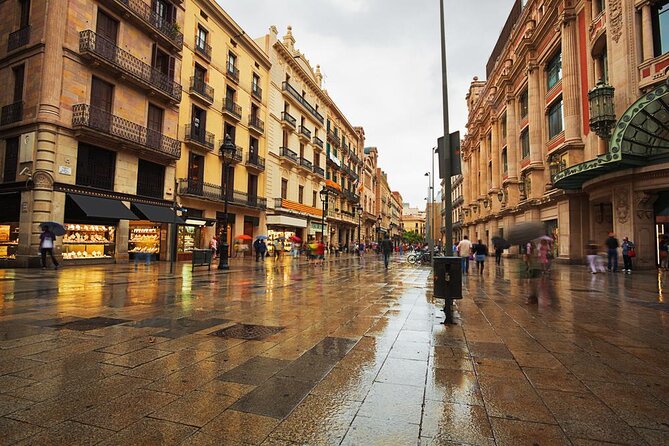
From Casa Milà, the walk continues down Passeig de Gràcia. The boulevard is famous for its Modernist buildings, but the tour also draws attention to the street itself.
That means looking at pavement patterns, lamp posts, and the design of the avenue, not just craning your neck at façades. This is one of the strongest parts of the route for anyone who likes cities as working places rather than collections of monuments.
You get a sense of how Barcelona’s new town connected with the older city. The route later passes Plaça Catalunya, the meeting point between the Eixample and the old town. This gives the walk a useful urban thread: Barcelona’s architecture reflects both grand private ambition and the city’s physical growth.
Passeig de Gràcia can be busy, and you will be walking in an active central district rather than a quiet museum setting. The benefit is that you see these buildings in their real setting, with shops, traffic, and daily city life around them. The drawback is that stopping to hear the guide may require attention in a crowded street.
Casa Batlló and Gaudí’s visual imagination
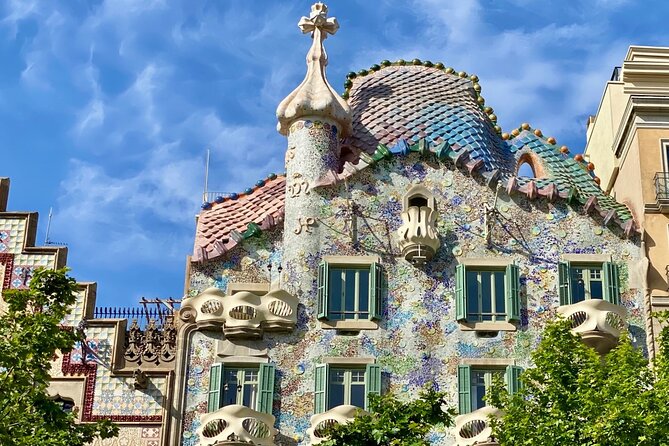
Casa Batlló receives another 10-minute stop. Here the guide explains the exterior and Gaudí’s creative choices.
Even from the street, the building gives you plenty to examine. The façade is designed to reward close looking, and the guide helps turn its curves, colors, and details into an explanation of how Gaudí worked. You are not simply told that the building is unusual. You are encouraged to notice the features that make it unusual.
Again, the admission fee is separate. The tour does not replace a visit inside Casa Batlló, and you should not expect time to explore its rooms or upper levels during this walk.
This stop suits you if you want to understand what you are seeing before deciding which interiors deserve your money. At $46.85, the tour can help you choose. If you already know you want to enter Casa Batlló, remember that the tour price and admission are two separate costs.
More architecture walks in Barcelona:
- Barcelona: Old Town and Gothic Quarter Walking Tour
★ 4.8 · 1,393 reviews - Ramblas, Old Town, Gothic and Gaudi Architecture Walking Tour
★ 5.0 · 723 reviews - Kids and Family Gothic Quarter Walking Tour in Barcelona
★ 5.0 · 465 reviews - Barcelona Gothic Quarter Walking Tour
★ 4.5 · 456 reviews
Casa Amatller and La Mansana de la Discordia
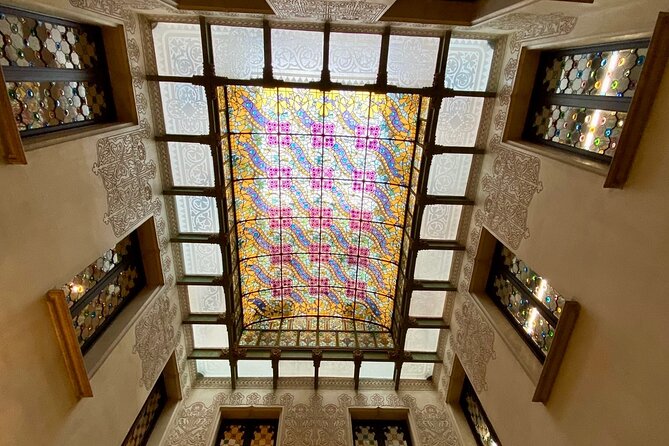
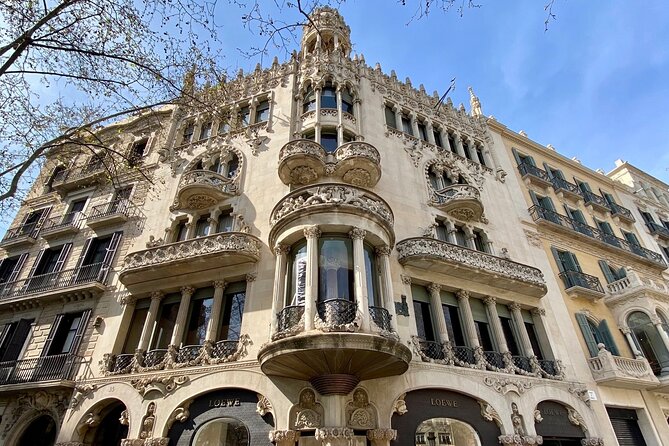
Casa Amatller is one of the most useful stops because it keeps Gaudí from taking over the entire story. Many people look only at Casa Batlló and miss the neighboring buildings. The guide makes Casa Amatller part of the main event, explaining its architecture and history for about 10 minutes.
This is a good place to compare styles side by side. Instead of treating Barcelona’s Modernism as one uniform look, you begin to see different architects making different choices on the same boulevard.
The next stop is La Mansana de la Discordia, the famous block associated with competing Modernist designs. Here the focus includes Casa Morera, designed by Lluís Domènech I Montaner. The stop lasts about five minutes and points out a surprising detail among the building’s floral decoration.
That detail is exactly why a guide earns the fee. You could walk past the façade and admire its ornament, but you might not know where to look or why a small feature matters. The short stop also keeps the tour moving, which is important on a two-hour schedule.
Admission is not included at either stop. These are exterior explanations, useful for comparison and orientation rather than full architectural visits.
Plaça Catalunya and Els 4 Gats
The walk passes Plaça Catalunya, where the newer Eixample meets the older city. This transition helps explain the route’s structure. You are leaving the grand avenue and moving toward districts with older streets and stronger links to Barcelona’s artistic life.
Els 4 Gats is a 10-minute stop. This Modernist café played a role in Barcelona similar to the artistic cafés of Paris, and both Picasso and Gaudí were associated with it.
The café gives the tour a welcome shift from buildings to people. Architecture did not develop in isolation. Artists, writers, architects, and patrons met in places like this, and the café helps you picture Barcelona as a working art center rather than a row of photogenic façades.
The stop is free from an admission standpoint, but you should not confuse seeing the site with taking a full café visit. The supplied details promise a look at the Modernist art café and its cultural importance, not a meal or extended stay there.
The Palau de la Música Catalana
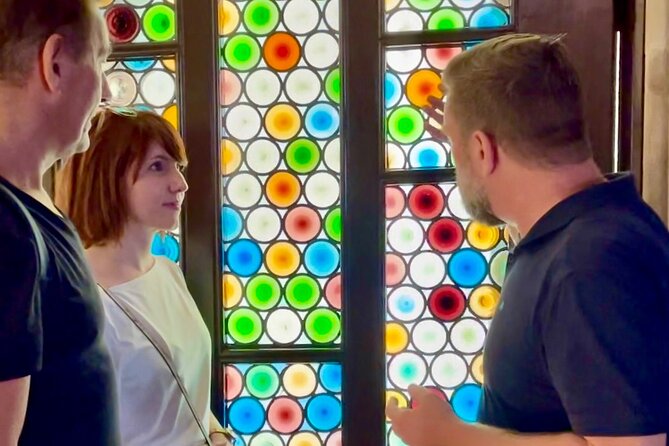
The Palau de la Música Catalana is the final architectural landmark before the walk settles into El Born. The guide explains the exterior façade, points out its many details, and gives you a glimpse into the lobby.
This is another place where the tour gives you a useful preview but not a full concert-hall visit. Entrance is not included, so you will see only the parts covered by the walk. If you want a longer look inside, you need a separate admission.
The Palau works well as a late stop because its decoration reinforces the themes you have already seen on Passeig de Gràcia: craft, ornament, music, and public pride. The building is not simply another ornate façade. The guide places it in the larger Modernist movement and helps you read its details.
The glimpse into the lobby is a small but worthwhile touch. It gives you more than a pavement view, though you should keep your expectations modest. This is not a complete guided interior tour.
El Born and the legends behind the route
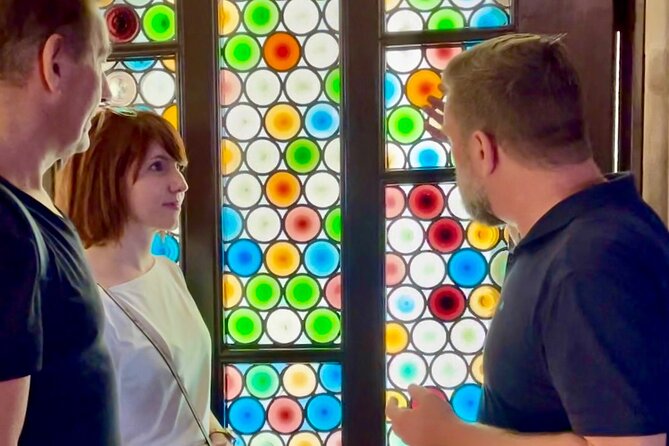
The final 30 minutes take place in El Born. Here the tour explores the neighborhood and connects it with the legends introduced earlier.
This ending gives the experience a different rhythm. The first part is centered on grand avenues and architectural comparison. El Born brings you into an older setting, where streets and local stories carry more weight than monumental façades.
I like ending here because it leaves you with a practical next step. You can continue exploring El Born after the tour, using the guide’s stories as a starting point. The supplied details do not promise a particular restaurant, shop, or museum, so you should treat this as neighborhood orientation rather than a package of extra stops.
The 30-minute length is substantial compared with the five-minute Casa Morera stop and the 10-minute Gaudí stops. It also means the tour is not just a rapid succession of photo points. You have time to connect the legends to the place where they belong.
What $46.85 buys you
At $46.85 per person, this is a mid-priced walking tour. You are paying for about two hours of a guided route, interpretation of several major buildings, and a clear connection between the Eixample and El Born.
The value is strongest if you are visiting Barcelona for the first time, care about architecture, or want help making sense of Modernism. A good guide can show you details you would otherwise miss and explain why Casa Amatller and Casa Morera deserve attention alongside Gaudí.
The value is weaker if you expect admission to the major buildings. None of the listed attractions includes an entrance fee, so your total cost rises if you add Casa Milà, Casa Batlló, or the Palau de la Música Catalana afterward.
The tour also has strong published feedback, with a 5 out of 5 rating from 34 ratings and a 100 percent recommendation rate. Christian, Michael, and Chris receive particular praise for clear explanations, friendly conversation, and a pace that worked for families with teenagers. That points to a tour that aims to involve you rather than overwhelm you with dates.
Pace, group size, and practical fit
The walk lasts approximately two hours and requires a moderate level of physical fitness. You will be on foot through central Barcelona, so comfortable shoes are sensible. The tour is offered in English and includes a mobile ticket and a guide.
There is conflicting group-size information. The main description says the tour is limited to eight for a personal experience, while the additional information states a maximum of 15. I would confirm the expected group size before booking if intimacy is a major reason you are choosing it.
The start point is Pg. de Gràcia, 90, in L’Eixample. The finish is the Palau de la Música Catalana at C/ Palau de la Música, 4-6, in Ciutat Vella. Since the walk ends in a different district, you can continue into El Born or use public transportation from the central area.
Confirmation is provided when you book. Service animals are allowed, and the route is near public transportation. Free cancellation is available up to 24 hours before the start time. Cancellations or changes made less than 24 hours ahead are not refunded or accepted, and the tour requires a minimum number of participants.
Who should book this Barcelona walk?
I would choose this tour if you want a strong first look at Barcelona’s Modernist center without spending half a day inside one building. It suits couples, families, and visitors who prefer stories and comparisons to a long academic lecture.
It is also a good pick for families with older children or teenagers. The guides’ use of questions and visual details can keep the architecture active and concrete. You do not need to recognize every architect in advance.
I would think twice if your main goal is interior access. The walk does not include tickets, and each major building receives a short exterior explanation. In that case, a dedicated visit to Casa Batlló, Casa Milà, or the Palau de la Música Catalana may serve you better.
Should you book it?
Book this tour if you want context, good city orientation, and a human guide to connect Gaudí with Barcelona’s wider Modernist scene. The route is varied, the price is fair for guided interpretation, and the move from Passeig de Gràcia to El Born gives you more than a single architectural corridor.
Skip it if you only want entry to famous buildings or dislike walking through busy central streets. Before paying, confirm the expected group size and set aside extra money for any interiors you want to visit. For a first or second day in Barcelona, this is a useful way to learn what you are looking at, then return to the buildings that deserve more of your time.
FAQ
Where does the Gaudí and Barcelona Legends Walking Tour start?
It starts at Pg. de Gràcia, 90, in the Eixample district of Barcelona.
Where does the tour finish?
The tour ends at the Palau de la Música Catalana, C/ Palau de la Música, 4-6, in Ciutat Vella.
How long does the tour last?
The tour lasts approximately two hours.
What language is the tour offered in?
The tour is offered in English.
Are entrance fees included?
No. Entrance fees to the attractions are not included.
Does the tour visit Casa Milà and Casa Batlló?
The tour stops at both buildings and explains their exteriors. Admission to each building is not included.
Is the tour suitable for people with limited fitness?
The tour requires a moderate level of physical fitness.
What is the maximum group size?
The tour information gives two group-size details: the highlights describe a limit of eight, while the additional information lists a maximum of 15. Confirm the expected group size when booking.
Can I cancel for a full refund?
Yes. You can cancel at least 24 hours before the experience start time for a full refund. Cancellations or changes made less than 24 hours before the start time are not accepted or refunded.
Just added around Barcelona
- Love in the Gothic Quarter Barcelona: Self-Guided Romantic Walk★ 4.5 · 9 reviews
- Walking tour of the Gothic Quarter of Barcelona + Cathedral★ 5.0 · 8 reviews
- Wine tasting with a view of the Sagrada Familia★ 4.5 · 13 reviews
- Visit to the Modernist houses of the Americans★ 5.0 · 2 reviews
- Barcelona Jewish & Gothic Tour★ 5.0 · 18 reviews
- Roman & Gotic & Gaudi in Barcelona: private walking tour★ 4.5 · 2 reviews
- Self-Guided Audio Tour-The Surrealist Barcelona of Dalí and Gaudí★ 3.5 · 8 reviews
- Barcelona Gaudi Tour: Sagrada Familia, Casa Batllo & Casa Mila★ 5.0 · 4 reviews
Gaudí Tours, compared.
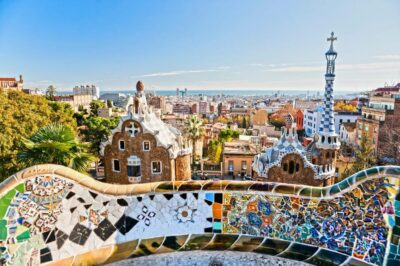
Barcelona: Park Güell and Gaudí House Museum Entry Ticket
Read our review →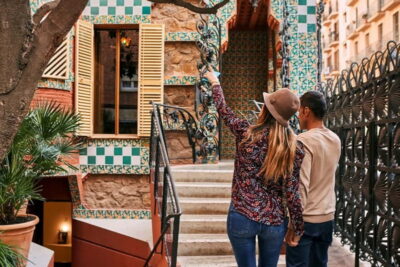
Barcelona: Gaudi’s Casa Vicens Skip-the-Line Entrance Ticket
Read our review →
Sagrada Familia & Gaudi Tour Private or Small Group with Tickets
Read our review →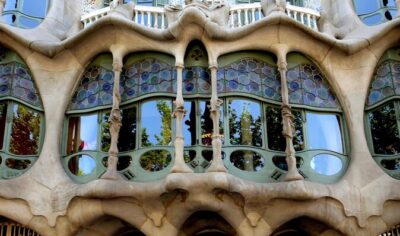
Complete Gaudi Tour: Casa Batllo, Park Guell & Sagrada Familia
Read our review →
Park Güell: Guided Tour with Optional Gaudí Experience Entry
Read our review →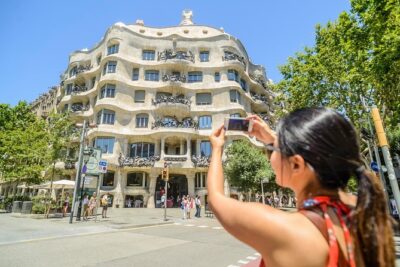
Barcelona e-Bike Tour: Gaudí & Old Town Small Group
Read our review →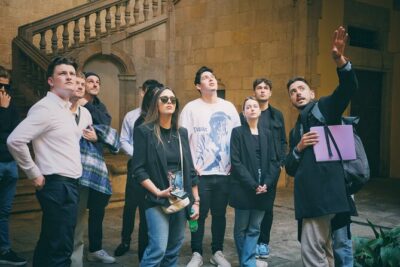
Ramblas, Old Town, Gothic and Gaudi Architecture Walking Tour
Read our review →
Gaudi´s Casa Vicens Skip the Line Ticket with Audioguide
Read our review →Browse the lists this tour appears in