
Review · BARCELONA
Private Barcelona Modernism and Gaudí Walking Tour
Barcelona’s Modernisme is best understood from the pavement, where a single block can hold the work of several rival architects. This tour connects Sagrada Familia, Casa Batlló, and La Pedrera with lesser-known façades, giving you the visual story of how Barcelona became a showcase for daring design.
I like the way the walk puts Gaudí in context rather than treating him as a lone genius. You also get a useful look at the Eixample and Ildefons Cerdà’s grid plan. The main drawback is simple: it is a long walk between buildings, and the tour generally focuses on exterior architecture rather than entry into the monuments.
Key points
- See Barcelona’s Modernist stars in one route: Sagrada Familia, Casa Batlló, La Pedrera, Casa Batlló, Casa Amatller, and more.
- Compare several architects: Gaudí, Lluís Domènech i Montaner, Josep Puig i Cadafalch, and other Modernisme figures.
- Learn the story behind the façades: Guides explain design ideas, artistic influences, urban planning, and the unfinished Sagrada Familia.
- Walk the Eixample grid: Cerdà’s mid-19th-century plan helps explain why Barcelona feels so different from its old medieval center.
- Small-group format: The maximum is 12 people, with private group options available.
- Good value at $21: Three to three and a half hours of guided sightseeing costs less than many single monument admissions.
Why Barcelona’s façades deserve a guided walk
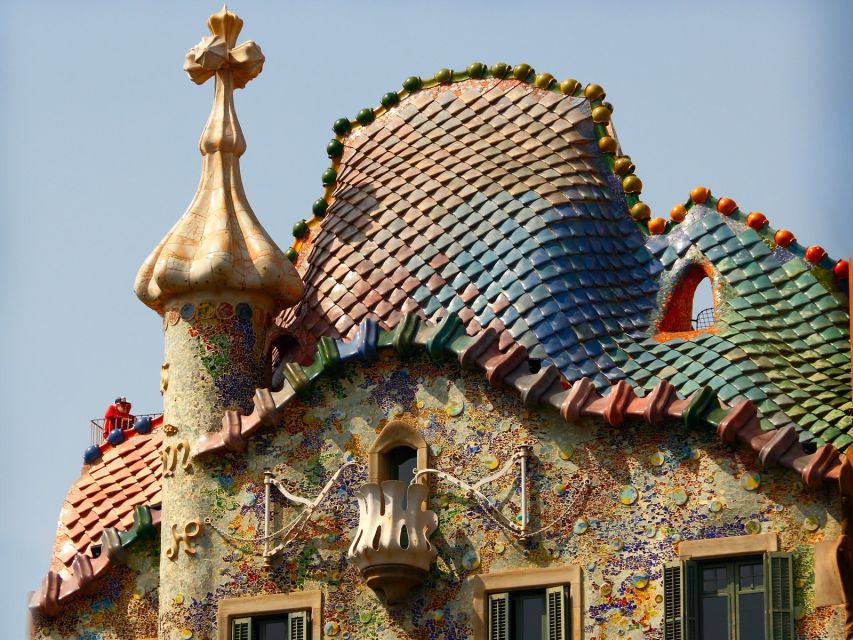
Gaudí’s buildings are easy to admire and surprisingly easy to misunderstand. You can see a wave-shaped wall, a dragon-like roof, or a forest of stone columns, then move on without knowing why the architect designed it that way.
A good guide slows the city down. You learn how Gaudí used curves, natural forms, colored ceramics, ironwork, and unusual structural ideas. You also see that Barcelona’s Modernisme was not only Gaudí’s achievement. Domènech i Montaner and Puig i Cadafalch created buildings with their own styles, ambitions, and political context.
That comparison is one of the strongest reasons to book this walk. At Casa Batlló, Gaudí’s playful organic forms take center stage. Nearby, Casa Amatller shows Puig i Cadafalch’s more angular, historicizing approach. Casa Lleó Morera, by Domènech i Montaner, adds another voice to the famous group of buildings on Passeig de Gràcia.
Without a guide, you may photograph the largest façade and miss the smaller details above the shopfronts. With one, you get a lesson in Barcelona’s artistic competition, wealthy patrons, and the city’s push toward a modern identity.
More Gaudí tours in Barcelona:
- Barcelona: Park Güell and Gaudí House Museum Entry Ticket
★ 4.5 · 6,326 reviews - Sagrada Familia & Gaudi Tour Private or Small Group with Tickets
★ 4.5 · 1,188 reviews - Complete Gaudi Tour: Casa Batllo, Park Guell & Sagrada Familia
★ 5.0 · 1,152 reviews
Starting with Sagrada Familia
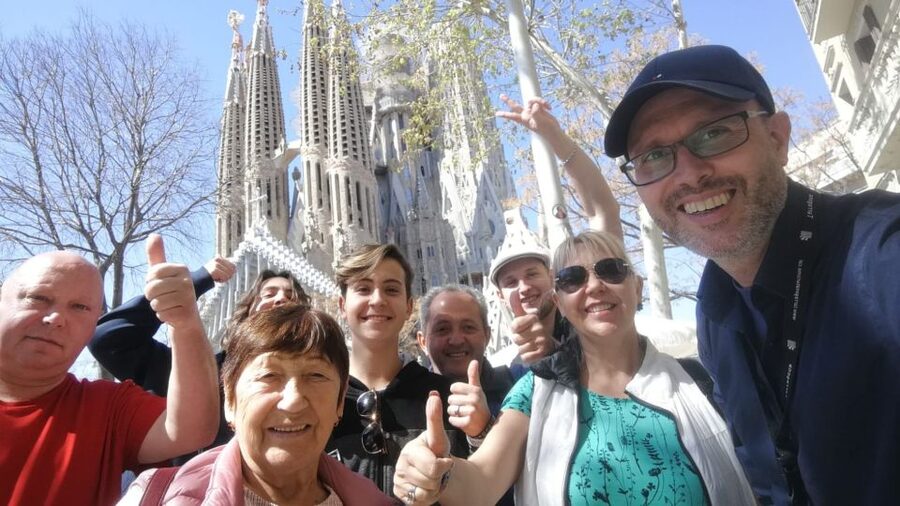
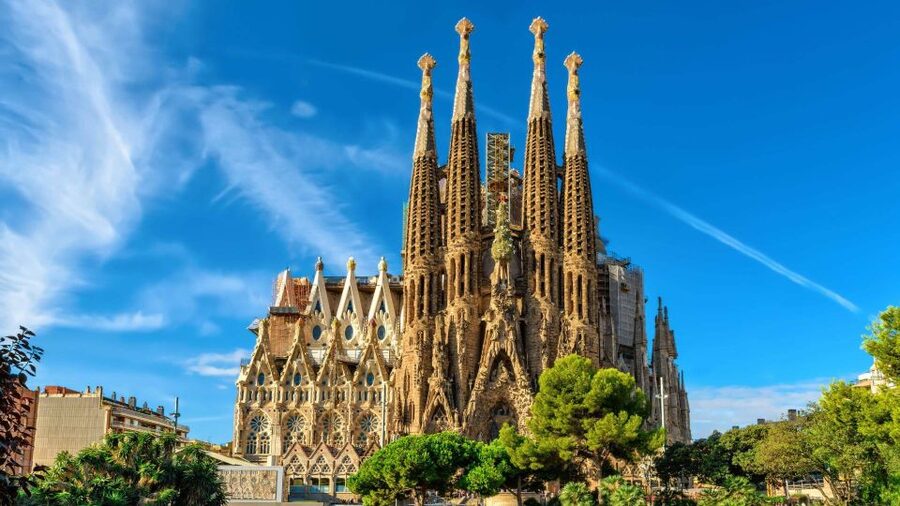
The tour includes La Sagrada Familia, Barcelona’s great unfinished basilica and a UNESCO World Heritage Site. Its towers and sculpted façades are so familiar from photographs that seeing the structure in person can be oddly disorienting. The scale is larger, the details are stranger, and the building changes appearance as you move around it.
Your guide explains Gaudí’s role in the project and the long construction process that continued for more than a century. You also hear about the Passion façade, designed by Josep Subirachs after Gaudí’s death. Its sharp, spare figures differ greatly from the more crowded Nativity façade, making the basilica a useful place to discuss how one architect’s vision can be interpreted by successors.
The tour appears to treat Sagrada Familia as a principal outdoor stop. Do not assume that the walking tour includes admission inside the basilica. One useful planning tip comes from the route itself: the tour ends at Sagrada Familia, so you can arrange an interior visit afterward if timed entry is available for your date.
One past participant wished they had realized this in advance and would have booked an inside visit at the end. That is good advice. If you want to see the interior, plan it separately and check the timing carefully. The guided walk gives you context, but it is not a substitute for entering the basilica.
Reading the Eixample grid
The Eixample is more than a convenient collection of Modernist buildings. It was created as Barcelona expanded beyond its medieval walls in the mid-19th century. Ildefons Cerdà designed a broad grid with wide streets and chamfered corners, aiming to give residents more air, light, greenery, and room to move.
Your guide uses this district to explain how urban planning shaped the city’s architecture. The wide avenues allowed wealthy families and businesses to commission eye-catching buildings along important routes. Passeig de Gràcia became the grandest of these avenues, lined with impressive residences, hotels, shops, and civic buildings.
This context makes the walk more useful than a string of photo stops. You begin to see why Modernist buildings appear in clusters and why the façades compete so fiercely for attention. The city plan created a stage, and Barcelona’s architects filled it with stone, glass, tile, sculpture, and wrought iron.
The Eixample is also where the tour requires sensible footwear. Three hours or more on city streets is manageable for most people, but the distance between Gaudí’s major buildings is real. Wear comfortable shoes, bring water, and leave large luggage behind. Large bags and luggage are not allowed on the tour.
Passeig de Gràcia and the famous architectural trio
Passeig de Gràcia brings together several of the most recognizable buildings in Barcelona. The best-known group is the so-called architectural trio: Casa Batlló, Casa Amatller, and Casa Lleó Morera.
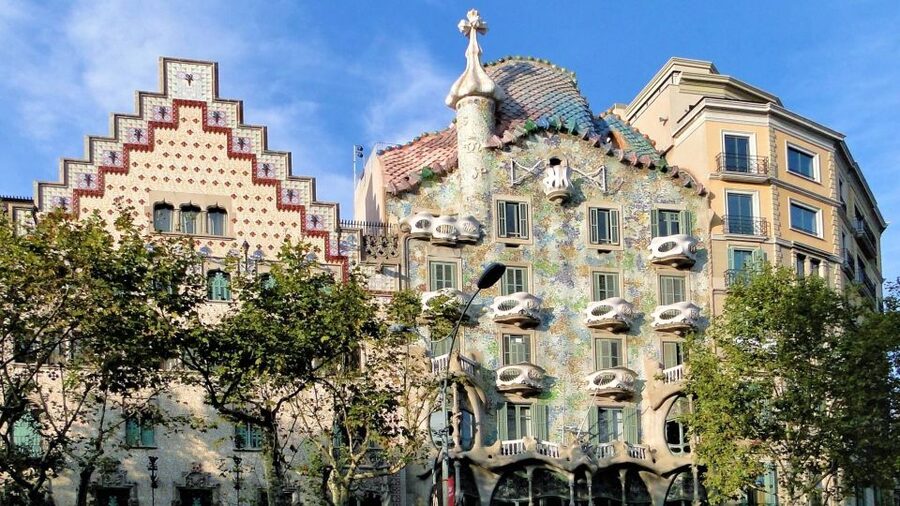
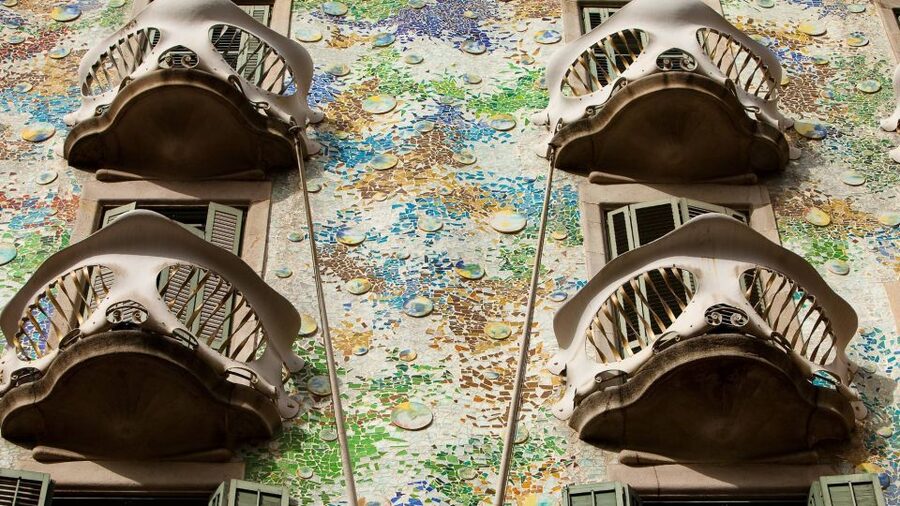
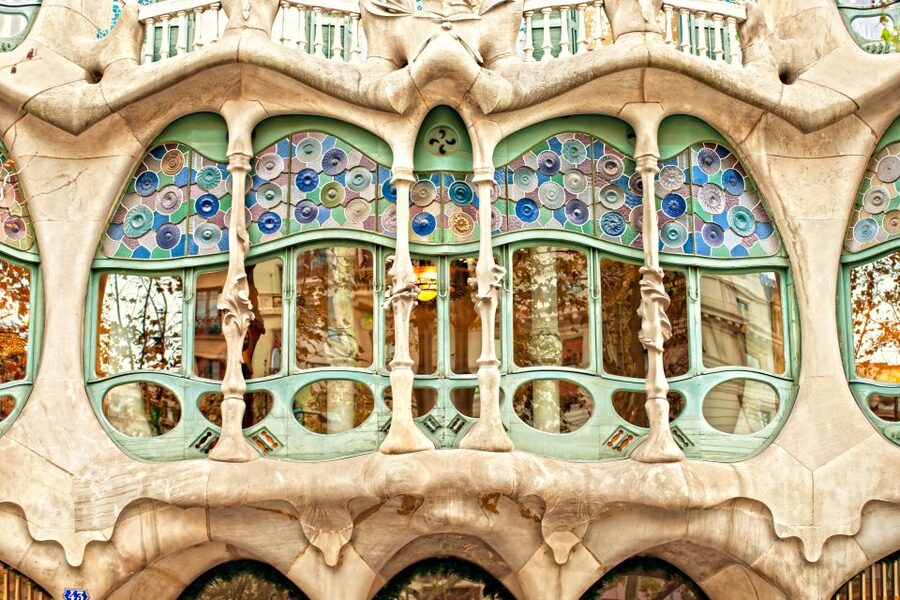
Casa Batlló is Gaudí’s great exercise in movement. Its curving façade, irregular windows, colorful surface, and unusual roofline give it a watery, almost creature-like appearance. A guide can point out how the building’s details work together instead of leaving you with the vague impression that it simply looks unusual.
Next door, Casa Amatller shows how different Puig i Cadafalch could be from Gaudí. Its façade has a more geometric and historical character, with a distinctive stepped roof and carefully arranged ornament. Seeing the two buildings side by side is one of the walk’s most rewarding comparisons.
Casa Lleó Morera, designed by Lluís Domènech i Montaner, completes the trio. Its decoration is refined and detailed, with a style that feels more formally balanced than Casa Batlló. Together, the three façades show that Catalan Modernisme was a broad movement, not one architect’s personal signature.
The route also includes Casa Calvet, an early Gaudí work. It is more restrained than his later buildings, which makes it useful for understanding how his style developed. You can look for the controlled stonework and ornamental details that hint at ideas he would later push much further.
More architecture walks in Barcelona:
- Barcelona: Old Town and Gothic Quarter Walking Tour
★ 4.8 · 1,393 reviews - Ramblas, Old Town, Gothic and Gaudi Architecture Walking Tour
★ 5.0 · 723 reviews - Kids and Family Gothic Quarter Walking Tour in Barcelona
★ 5.0 · 465 reviews - Barcelona Gothic Quarter Walking Tour
★ 4.5 · 456 reviews
La Pedrera, Gaudí’s final civil project
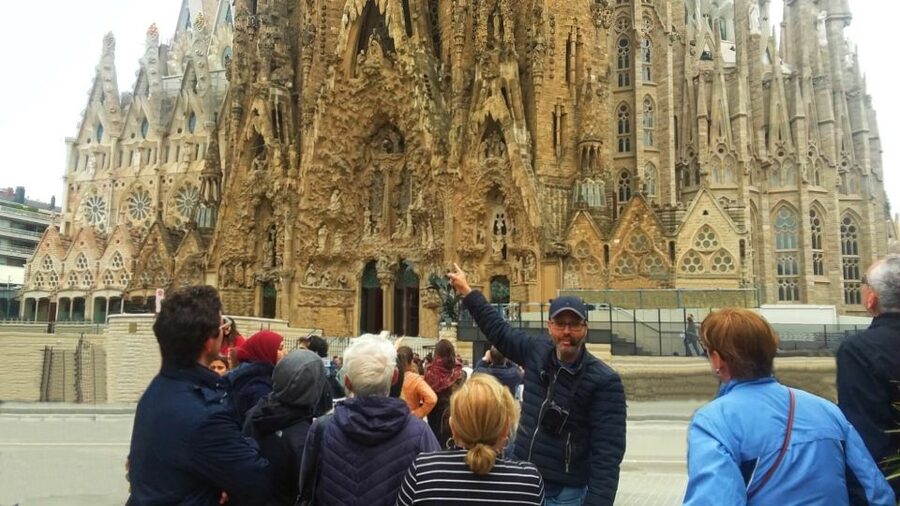
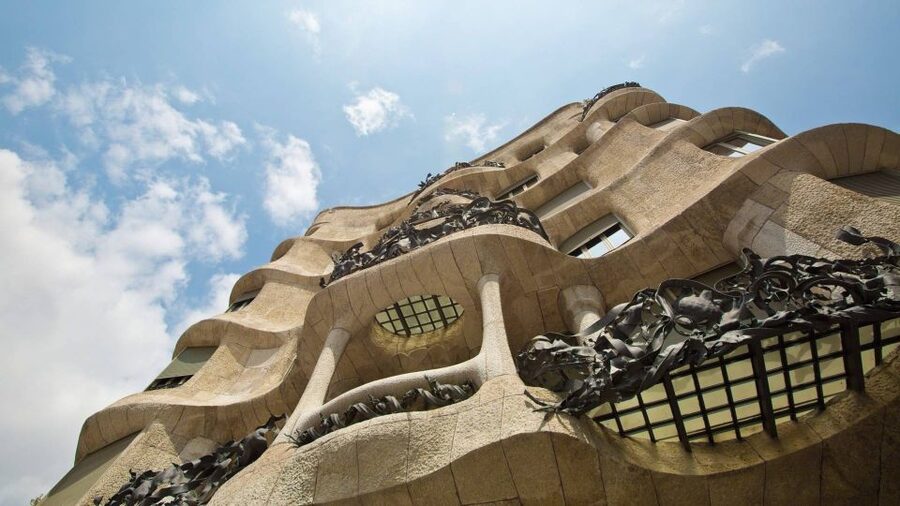
La Pedrera, officially Casa Milà, is one of Gaudí’s most famous residential buildings and his last civil project. Its rippling stone façade rejects the straight lines that usually make a city block feel orderly. Balconies twist across the front, and the surface seems to move even though it is built from heavy masonry.
The exterior is the main focus of this walk. That is enough to appreciate the building’s bold shape, but it does not provide the full experience of the interior courtyards, roof, or exhibition areas. If La Pedrera is high on your list, consider arranging a separate admission.
A guide can still make the outside more rewarding by explaining the structure and Gaudí’s approach to natural forms. The building is not merely decorative. Its irregular appearance reflects an attempt to rethink how an apartment block could be organized and expressed.
I especially like seeing La Pedrera after Casa Batlló. Both are Gaudí buildings on Passeig de Gràcia, yet they use different moods. Casa Batlló feels colorful and theatrical. La Pedrera feels heavier, more abstract, and almost geological.
The lesser-known stops add balance
The tour does not stop with the postcard buildings. It also includes Casa Comalat, whose organic forms show Gaudí’s influence, along with Palau del Baró de Quadres by Puig i Cadafalch.
Casa de les Punxes, also known as Casa Terradas, adds a fairytale quality to the route. Its pointed towers give it a strong silhouette and make it easy to distinguish from the more flowing façades nearby. Palau Montaner provides another example of Barcelona’s Modernist variety.
These stops matter because they prevent the outing from becoming a greatest-hits parade. You see how architectural ideas spread across the city and how different designers adapted the same broad movement to their own purposes.
The smaller buildings may not have the fame of Sagrada Familia or La Pedrera, but they are often where a guide earns the price of the tour. A good explanation can direct your attention to a doorway, balcony, tile pattern, or upper-floor detail you would otherwise walk past.
What the guide adds to the experience
The guide is the key variable on any architecture walk. The listed guides speak English or Spanish, and past tours have been led by people including Stephanie, Isabel, Antonio, André, Roberto, Olga, Jordi, Miguel, and Flora.
The strongest praise centers on the human side of the guiding. Stephanie was described as an art and architecture specialist who covered famous and lesser-known buildings. Isabel was praised for creating the feeling of walking through the city with a friend. Antonio was appreciated for his clear account of Barcelona’s monuments and history.
That gives you a useful idea of the intended style. This is not just a memorized list of dates and names. Guides are expected to answer questions, explain the artists’ ideas, and connect the buildings to the city around them. One guide also added a short look at the historic area where the participant was staying, showing that the route can sometimes respond to your interests.
The tour is offered as a small group with a maximum of 12 participants, and private group booking is available. Group size matters here. On a busy avenue, a giant group can make it difficult to hear or gather around a façade. A small group should make questions easier, though the exact feel depends on how many people book your departure.
Is three hours enough?
Three to three and a half hours gives you a useful introduction without turning the day into an architecture marathon. You see many major façades, receive city-planning context, and finish at Sagrada Familia.
The tradeoff is that the itinerary is broad. You are covering a lot of ground and looking at many buildings from outside. You will not get the slow, detailed interior visit that comes with a dedicated Sagrada Familia or La Pedrera ticket.
I would treat this as an orientation walk. It works especially well near the beginning of a Barcelona stay, when you want to understand the city before choosing which buildings deserve a separate entry. One past participant called it a highlight of a first day, and that timing makes sense: the guide can help you decide how to use the rest of your visit.
Another participant described the walking level as perfect, while another noted that it is a lot of walking because the buildings are spread out. Both observations can be true. The route is reasonable for a typical sightseeing day, but it is not a seated tour and should not be booked casually if walking is difficult for you.
The $21 price and what you receive
At $21 per person, this is unusually inexpensive for a three-hour guided city walk. The value comes from the amount of interpretation rather than included admissions. You are paying for a live English or Spanish-speaking guide, a planned route, and the ability to ask questions as you go.
The price does not cover personal expenses, and the information provided does not promise entrance tickets to the major buildings. Budget separately if you want to go inside Sagrada Familia, La Pedrera, or Casa Batlló.
For someone who would otherwise wander the Eixample alone, the cost is easy to justify. You see a large number of important façades and gain a framework for understanding them. For an architecture specialist who wants lengthy interior access, the tour may feel too introductory.
Free cancellation up to 24 hours before the start and reserve-now, pay-later booking make it easier to fit into a changing itinerary. The meeting point can vary by the option you choose, so check your confirmation rather than assuming the walk begins at Sagrada Familia.
Who should book this Barcelona walk?
I would recommend it to first-time Barcelona visitors, architecture fans, and anyone who wants more than a quick photograph of Gaudí’s most famous works. It is also a good choice for families with older children who can handle several hours on foot. Children up to age two may join free.
The tour suits curious general sightseers as well as serious design fans because it covers both the headline buildings and the less familiar ones. It is especially useful if you want to compare Gaudí with Domènech i Montaner and Puig i Cadafalch.
I would hesitate if your priority is spending a long time inside each monument. The walk is mainly a guided look at the city’s architecture from the outside, and its strength is the connections between buildings.
Should you book it?
Book this tour if you want a low-cost, well-paced introduction to Barcelona’s Modernisme, with Sagrada Familia, Casa Batlló, La Pedrera, and a strong list of additional buildings in one outing. The guides receive especially warm praise for being friendly, clear, and willing to answer questions.
Before booking, make two decisions. First, choose comfortable shoes. Second, decide which interiors you want to visit separately, since the walking tour should not be treated as an admission ticket.
At $21, the risk is modest. If you enjoy city architecture and want to understand what you are seeing, this is a smart way to get your bearings fast. If you want only an indoor monument visit, book a dedicated ticket instead.
FAQ
How long does the Barcelona Modernism and Gaudí tour last?
The tour lasts approximately 3 to 3.5 hours. Availability shows the start times offered for your chosen date.
Which languages are available?
The live guide is available in English or Spanish.
Is this a private tour?
Private group booking is available. The standard format is a small group with a maximum of 12 participants.
Does the tour include entry to Sagrada Familia?
The provided information describes a guided walking tour that visits Sagrada Familia, but it does not state that admission inside the basilica is included. Plan separately if you want an interior visit.
Which buildings will I see?
The route includes Sagrada Familia, La Pedrera, Casa Batlló, Casa Calvet, Casa Lleó Morera, Casa Amatller, Casa Comalat, Palau del Baró de Quadres, Casa de les Punxes, and Palau Montaner.
What should I bring?
Bring comfortable shoes. Luggage and large bags are not allowed.
Can young children join?
Children up to two years old can join free of charge.
Just added around Barcelona
- Love in the Gothic Quarter Barcelona: Self-Guided Romantic Walk★ 4.5 · 9 reviews
- Walking tour of the Gothic Quarter of Barcelona + Cathedral★ 5.0 · 8 reviews
- Wine tasting with a view of the Sagrada Familia★ 4.5 · 13 reviews
- Visit to the Modernist houses of the Americans★ 5.0 · 2 reviews
- Barcelona Jewish & Gothic Tour★ 5.0 · 18 reviews
- Roman & Gotic & Gaudi in Barcelona: private walking tour★ 4.5 · 2 reviews
- Self-Guided Audio Tour-The Surrealist Barcelona of Dalí and Gaudí★ 3.5 · 8 reviews
- Barcelona Gaudi Tour: Sagrada Familia, Casa Batllo & Casa Mila★ 5.0 · 4 reviews
Gaudí Tours, compared.
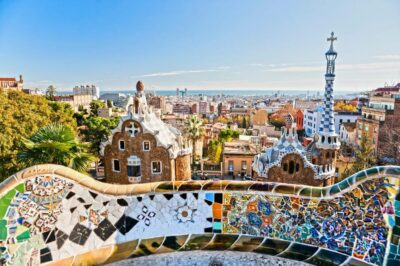
Barcelona: Park Güell and Gaudí House Museum Entry Ticket
Read our review →
Barcelona: Gaudi’s Casa Vicens Skip-the-Line Entrance Ticket
Read our review →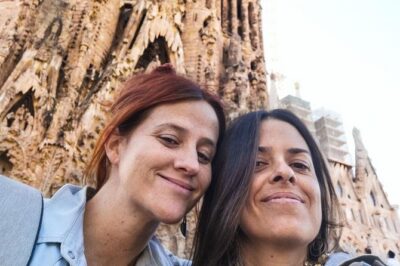
Sagrada Familia & Gaudi Tour Private or Small Group with Tickets
Read our review →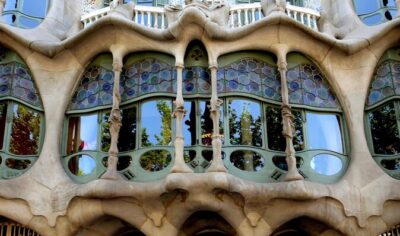
Complete Gaudi Tour: Casa Batllo, Park Guell & Sagrada Familia
Read our review →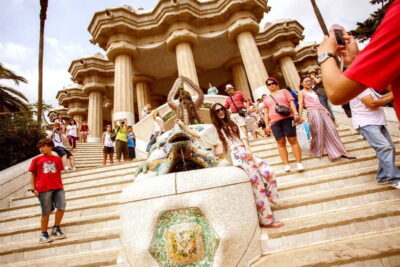
Park Güell: Guided Tour with Optional Gaudí Experience Entry
Read our review →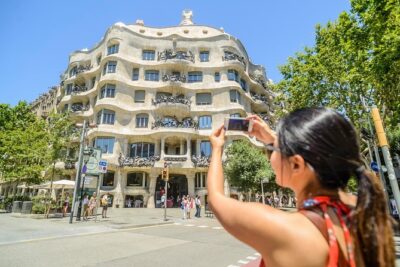
Barcelona e-Bike Tour: Gaudí & Old Town Small Group
Read our review →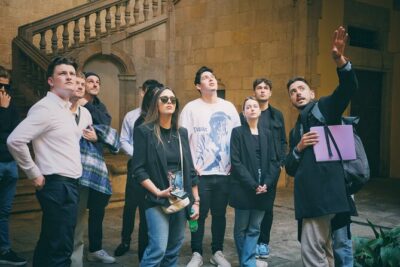
Ramblas, Old Town, Gothic and Gaudi Architecture Walking Tour
Read our review →
Gaudi´s Casa Vicens Skip the Line Ticket with Audioguide
Read our review →Browse the lists this tour appears in