
Review · BARCELONA
Gaudi’s Modernist Legacy: Small Group Walking Tour
Barcelona’s Modernist story unfolds along grand Passeig de Gràcia, where Gaudí’s Casa Batlló and Casa Milà compete for your attention with the work of his teachers and rivals. This 2.5-hour walk connects those famous façades with Barcelona’s wider artistic movement, ending at Sagrada Família.
I like the small maximum of 12 people, which gives you a fair chance to ask questions, and the wide choice of start times. Guides such as Roberto, Antonio, Montse, and Laura have earned praise for clear explanations, good restaurant tips, and an easy way with families.
The main catch is important: this is chiefly an exterior architecture walk. Entrance tickets are not included, so do not expect to tour the inside of Casa Batlló or Sagrada Família during the walk. One guide also let the tour run an hour late, so keep your next appointment flexible.
Key details before you book
- See Barcelona’s Modernist center on foot: Walk from central Carrer de Fontanella to Sagrada Família, passing the city’s grandest architectural addresses.
- Expect a small group: The tour is limited to 12 people, allowing more room for questions and personal attention.
- Study the façades closely: Your guide points out details you could easily miss, from sculpted symbols to organic forms and unusual color.
- Learn the rivalries and influences: The tour places Gaudí beside Domènech i Montaner and other Modernist architects.
- Plan for an outdoor experience: Casa Batlló, La Pedrera, and Sagrada Família are explained, but admission fees and interior visits are not included.
- Allow extra time: The stated duration is about 2 hours 30 minutes, but one reported tour ran an hour longer.
Why this walk is a useful introduction to Barcelona
Barcelona’s Modernist architecture can seem like a parade of fanciful buildings until someone explains the ideas behind it. This tour gives you that framework while you walk through the city, rather than placing you in a lecture room or sending you from one isolated attraction to another.
You will learn how Modernisme blended architecture, sculpture, decorative arts, nature, Catalan identity, and new urban life. That context matters. Without it, Casa Batlló can look like a colorful fantasy and La Pedrera like a strange stone apartment block. With a good guide, the buildings begin to feel connected.
The tour is especially useful at the start of a Barcelona visit. It gives you a working map of the central Modernist district and helps you decide which buildings deserve a separate paid visit. Laura, for example, was praised for helping people understand Gaudí before they chose what else to see. That is a sensible way to use the walk.
The guide quality appears to be one of the strongest parts of the experience. Antonio was described as passionate, well prepared, and fun. Jose Carlos received praise for adjusting to his group, while Roberto was noted for patience and care, including when a member of the group used a wheelchair. Names may vary by date, but the experience clearly depends on the individual guide.
More Gaudí tours in Barcelona:
- Barcelona: Park Güell and Gaudí House Museum Entry Ticket
★ 4.5 · 6,326 reviews - Sagrada Familia & Gaudi Tour Private or Small Group with Tickets
★ 4.5 · 1,188 reviews - Complete Gaudi Tour: Casa Batllo, Park Guell & Sagrada Familia
★ 5.0 · 1,152 reviews
Starting on Carrer de Fontanella
The meeting point is Carrer de Fontanella, 2, in the Ciutat Vella district. From there, the route heads into the grand central avenues of Barcelona. The start is near public transportation, which makes it practical if you are staying outside the old center.
Your first major setting is likely Passeig de Gràcia, Barcelona’s famous boulevard of elegant apartment houses and high-end shops. It is more than a pretty street. The avenue shows how the expanding city became a place where wealthy families competed for distinctive homes and architects used façades to display status, taste, and imagination.
I like this opening because it gives you the social setting behind the architecture. You are not simply looking at isolated façades. You are seeing a whole street where Modernist design became part of daily urban life.
There is also a practical benefit. The boulevard is an easy place to return later for photographs, shopping, or a meal. Your guide may also suggest restaurants nearby. One guide’s recommendations were useful enough for the group to visit several afterward, though restaurant advice is naturally dependent on the guide and the day.
The early Modernist buildings and Domènech i Montaner
One stop focuses on a building that helped pioneer Barcelona’s Modernist style. It was designed by Lluís Domènech i Montaner, who taught Gaudí at university. This is a valuable piece of the story because Gaudí did not create his work in a vacuum.
Domènech i Montaner helped shape the movement’s use of decorative detail, Catalan references, craftsmanship, and new structural ideas. Learning about him gives you a better way to judge Gaudí. You begin to see that Barcelona’s Modernisme was a broad movement, not simply a collection of Gaudí’s eccentric houses.
The guide also points out less obvious features along the route. One participant found that the detailed stories revealed things they would otherwise have walked past. That is exactly where a walking guide earns the fee: not by taking you to places you could find on a map, but by showing you what to look at once you arrive.
Casa Amatller and Barcelona’s chocolate connection
Casa Amatller is one of the memorable façades on Passeig de Gràcia. Its name is linked with the famous Barcelona chocolate makers, and the stop gives you a chance to connect architecture with commerce and family identity.
The building is not Gaudí’s work. That distinction matters. Barcelona’s most famous Modernist avenue is a conversation between several architects, and Casa Amatller helps you see that clearly. Its design has a strong, decorative character that differs from the neighboring buildings, making the comparison especially useful.
You may also buy chocolate to take home. This is a small detail, but it makes the stop more tangible than a quick photograph. If you are building edible souvenirs into your Barcelona plans, it is a natural place to do so.
Your guide should also explain how Casa Amatller relates to Casa Batlló and Casa Lleó Morera. Together, the buildings are often treated as a showcase of competing Modernist visions. The value is in comparing them side by side, not simply checking off one famous address.
More architecture walks in Barcelona:
- Barcelona: Old Town and Gothic Quarter Walking Tour
★ 4.8 · 1,393 reviews - Ramblas, Old Town, Gothic and Gaudi Architecture Walking Tour
★ 5.0 · 723 reviews - Kids and Family Gothic Quarter Walking Tour in Barcelona
★ 5.0 · 465 reviews - Barcelona Gothic Quarter Walking Tour
★ 4.5 · 456 reviews
Casa Batlló and the drama of the Passeig de Gràcia
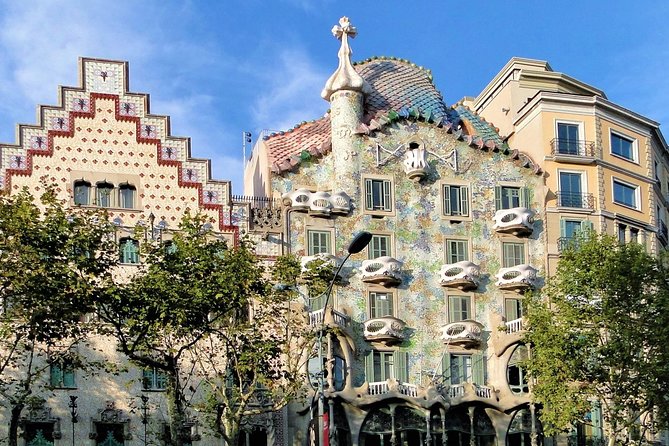
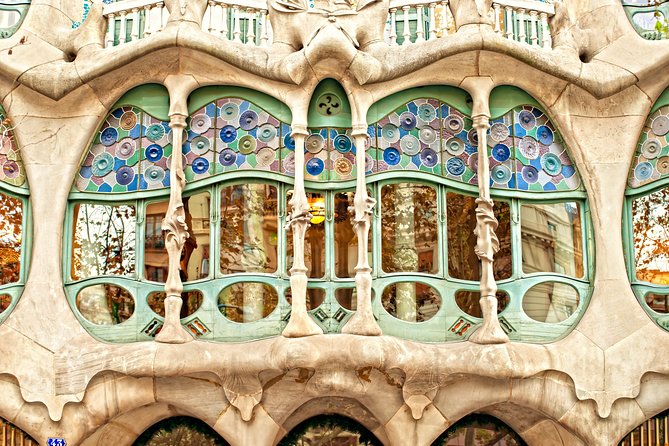
Casa Batlló is the visual high point of the boulevard. Its color, curved surfaces, and fantasy-like details make it easy to understand why it attracts attention even before the guide begins speaking.
The building was designed with unusual creative freedom, and that freedom shows in the façade. Organic forms, symbolic decoration, and strong color make it unlike the neighboring houses. The tour explains why it belongs to Barcelona’s Modernist tradition and why it is listed as a UNESCO World Heritage Site.
This is also where you need to manage your expectations. The tour includes an explanation of Casa Batlló, but the supplied details do not include an admission ticket. A review specifically pointed out confusion about access to buildings that require paid entry. Unless your booking confirmation says otherwise, treat the stop as an exterior visit.
That is not a weakness if you want orientation. The façade has enough detail to occupy a careful look, and a good guide can help you notice features that a quick photograph misses. If you want the full interior, book a separate admission and allow extra time beyond this walking tour.
Casa Milà, or La Pedrera
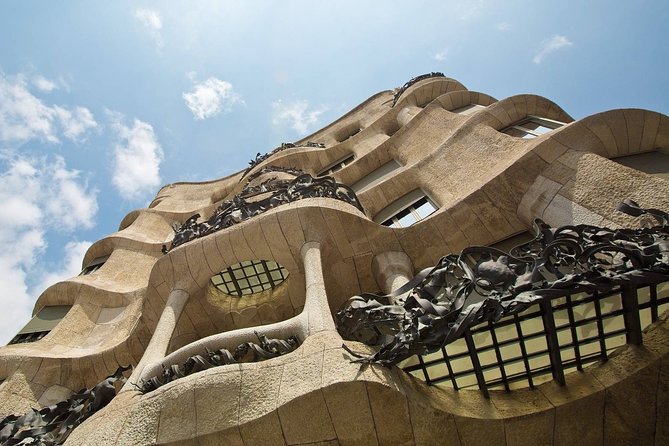
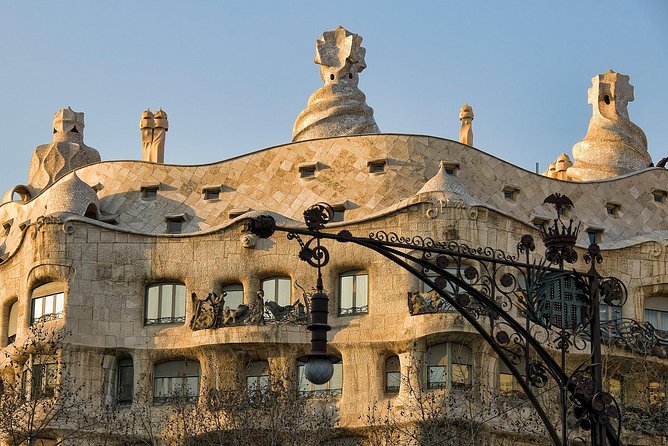
Casa Milà is another essential Gaudí stop. Its broad, rippling stone façade looks less like a conventional apartment building and more like a natural formation shaped by wind or water.
The tour presents La Pedrera as the culmination of Gaudí’s career and connects its design with nature and organic forms. That explanation helps you understand why Gaudí’s buildings rarely rely on straight lines and plain surfaces. He was not decorating ordinary structures after the fact. He was rethinking how the whole building could feel and function.
Casa Milà is also a UNESCO World Heritage Site. As with Casa Batlló, the walk gives you the architectural explanation but does not list interior admission as included. If you want the rooftop, courtyards, or interior displays, plan a separate visit.
I consider this exterior stop particularly valuable because the building can be hard to read from a distance. The façade’s curves and balconies make more sense once someone explains the design choices. You can then decide if the inside is worth the added ticket cost for your own interests.
The St. George legend and Catalan meaning
Another point along the route introduces the legend of St. George, the patron saint of Barcelona and many other places. This adds cultural context to the decorative symbols you see on Modernist buildings.
St. George is closely tied to Catalan identity, and his story appears in the city’s art and architecture. The point is not just to memorize a legend. It is to understand why façades carry symbols, animals, flowers, dragons, and references that may otherwise look like random decoration.
This is the kind of short explanation that makes the walk more rewarding. You are learning how to read Barcelona’s buildings as expressions of local culture, not only as unusual works of design.
Ending at Sagrada Família
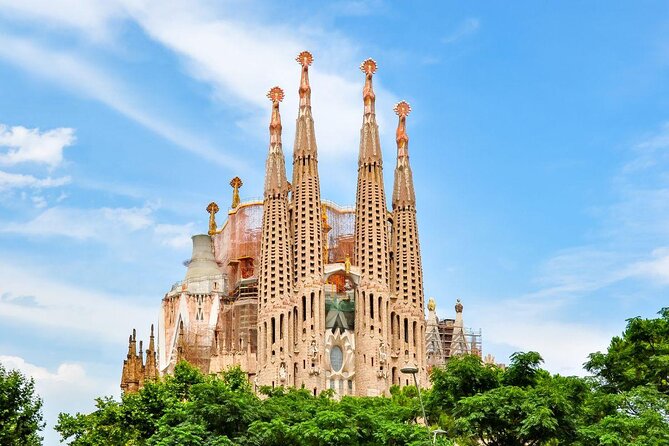
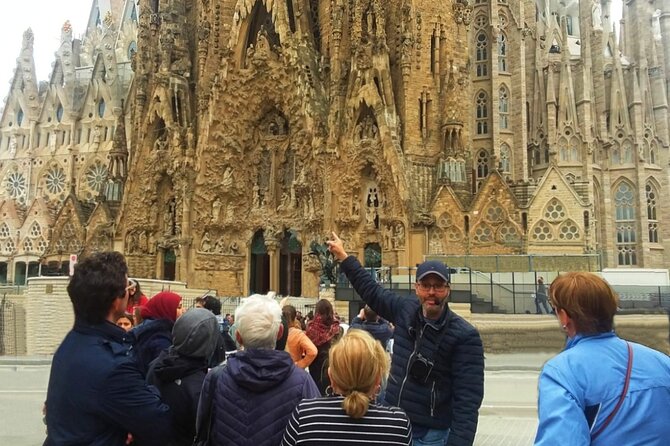
The route ends at Sagrada Família in the Eixample. This gives the walk a strong finish, since Gaudí’s basilica is the city’s most famous Modernist landmark and the clearest statement of his artistic vision.
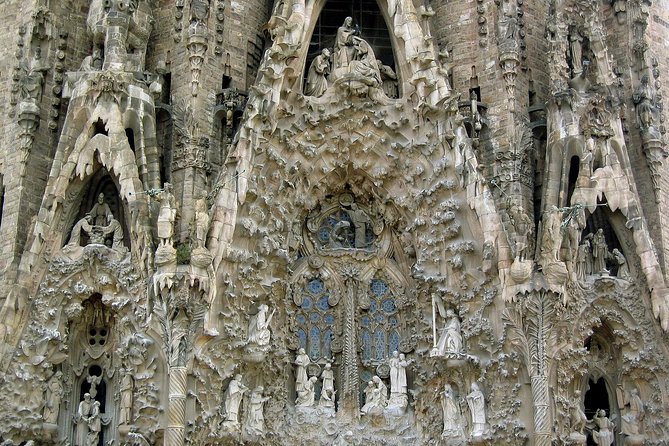
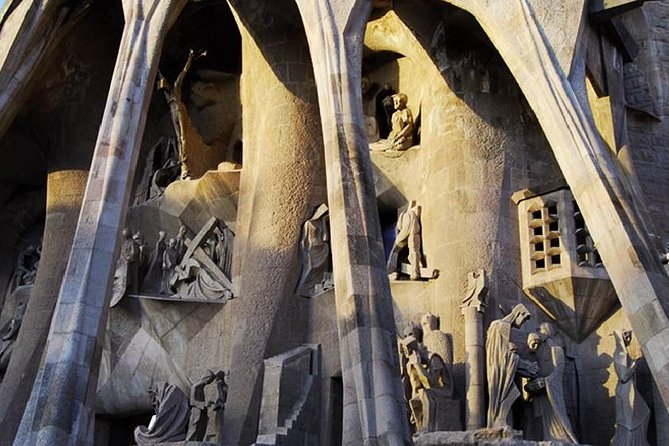
The guide explains the building’s symbolic structure, organic shapes, sculpted façades, and stained glass. You should have time to look closely and take photographs, although the exact amount of time depends on the group and the guide’s pacing.
Again, do not confuse an explanation of Sagrada Família with entry to the basilica. The tour description promises a thorough account of the building, but the listed inclusions do not include a ticket. One review specifically warned that people expected to enter because of unclear wording about free admission. Check your confirmation carefully and plan a separate timed visit if you want to see the interior.
The exterior alone can be powerful, but the inside is a different experience. Since this walking tour finishes at the basilica, it is convenient to continue into a separate visit if you have arranged one. Do not book that admission too tightly against the tour’s scheduled end, since the walk may run late.
What the small group and guide quality mean
A maximum of 12 people is a real advantage in a city where sidewalks can feel crowded. You can hear the explanation more easily, ask questions, and get help with photographs or restaurant suggestions without competing with a large group.
The guide makes the biggest difference. Several guides received strong praise for combining architecture with Barcelona’s past and Catalan culture. Antonio was singled out for enthusiasm and preparation. Jose Carlos was praised for accommodating the group. Roberto was noted for patience, humor, and care with a wheelchair user. Montse was valued for her passion for local culture and architecture, while Jordi gave a clear introduction to Modernisme and useful ideas for the rest of a Barcelona stay.
That does not guarantee a particular guide on your date. It does show the kind of service the tour aims to provide. If you care about personal attention, the 12-person limit is more important than the low price alone.
The route is described as manageable for most people, and service animals are allowed. A wheelchair user received careful assistance from Roberto, but the available details do not guarantee that every section of the route has identical accessibility conditions. If mobility is a major concern, ask the provider before booking.
Is $22.01 good value?
At $22.01 per person, this is a modestly priced way to get an organized introduction to Barcelona’s Modernist district. You are paying for a professional guide, a small group, and a connected route through several major landmarks. You are not paying for attraction admission, food, drinks, or hotel transport.
The value is strongest if you want context. You could walk along Passeig de Gràcia alone, but you might miss the links between Gaudí, Domènech i Montaner, Casa Amatller, Casa Lleó Morera, and the wider Modernist movement. The walk also helps you decide which interiors deserve separate ticket money.
The price is less attractive if you expect a guided visit inside Sagrada Família, Casa Batlló, or La Pedrera. Those are separate experiences here. Read the inclusions as a walking explanation of the buildings, not as a package of admissions.
The tour has a 4.6 rating from 43 reviews, with 91 percent recommending it. One cancellation-related complaint does not assess the tour itself, but it does remind you that plans can change. Free cancellation is available up to 24 hours before the start time, with the local cut-off time applying.
Who should book this walk?
I would choose this tour if you are new to Barcelona, curious about architecture, or unsure which Gaudí sites deserve a full visit. It also suits you if you prefer learning while walking and want restaurant suggestions or a quick introduction to the city before exploring on your own.
Families can benefit from the short format and the visual nature of the buildings. Teenagers may respond well to the unusual façades, especially when the guide keeps the stories lively. The small group also makes it easier to adjust explanations to the interests of the people present.
You may want something else if your main goal is to enter Sagrada Família or spend long periods inside Casa Batlló and La Pedrera. In that case, book admission tours separately, or choose a product that clearly includes interior tickets.
Should you book Gaudí’s Modernist Legacy?
Book it if you want a well-priced orientation to Barcelona’s Modernist architecture, with a small group and a guide who can explain the people, symbols, and ideas behind the façades. The strongest reason to go is not simply seeing Casa Batlló or Sagrada Família. It is learning how those buildings fit into a much larger Catalan movement.
Before paying, confirm that you understand the outdoor format and have no tight plans after the finish. If you can accept that limitation, this is a practical first step into Gaudí’s Barcelona, and it may help you spend your later admission fees more wisely.
FAQ
Where does the tour begin?
It begins at Carrer de Fontanella, 2, in the Ciutat Vella area of Barcelona.
Where does the tour end?
The tour ends at Sagrada Família in Barcelona’s Eixample district.
How long does the walking tour last?
The listed duration is approximately 2 hours 30 minutes. One recorded experience ran about an hour longer, so avoid scheduling another activity immediately afterward.
What language is offered?
The tour is offered in English.
How large is the group?
The maximum group size is 12 people.
Are attraction entrance tickets included?
The listed inclusions cover the Modernist walking tour and explanations of Casa Batlló, La Pedrera, and Sagrada Família. Entrance tickets are not listed as included.
Does the tour go inside Sagrada Família?
The tour provides an explanation of Sagrada Família and ends there, but an interior admission ticket is not listed as part of the experience.
Are food and drinks included?
No. Food and drinks are not included.
Is hotel pickup and drop-off provided?
No. Hotel pickup and drop-off are not included.
Can I cancel for a full refund?
Yes. You can cancel at least 24 hours before the experience start time for a full refund. Cancellations or changes made less than 24 hours before the start time are not accepted for a refund.
Just added around Barcelona
- Love in the Gothic Quarter Barcelona: Self-Guided Romantic Walk★ 4.5 · 9 reviews
- Walking tour of the Gothic Quarter of Barcelona + Cathedral★ 5.0 · 8 reviews
- Wine tasting with a view of the Sagrada Familia★ 4.5 · 13 reviews
- Visit to the Modernist houses of the Americans★ 5.0 · 2 reviews
- Barcelona Jewish & Gothic Tour★ 5.0 · 18 reviews
- Roman & Gotic & Gaudi in Barcelona: private walking tour★ 4.5 · 2 reviews
- Barcelona Gaudi Tour: Sagrada Familia, Casa Batllo & Casa Mila★ 5.0 · 4 reviews
- Self-Guided Audio Tour-The Surrealist Barcelona of Dalí and Gaudí★ 3.5 · 8 reviews
Gaudí Tours, compared.
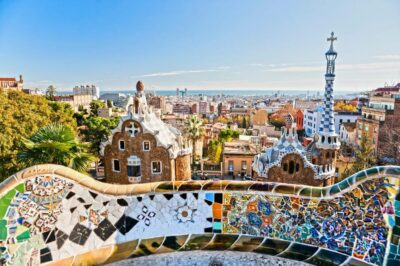
Barcelona: Park Güell and Gaudí House Museum Entry Ticket
Read our review →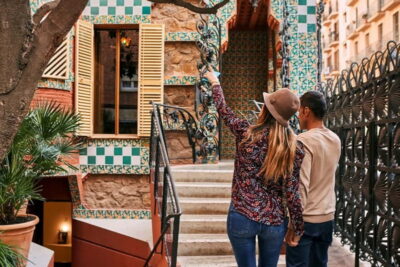
Barcelona: Gaudi’s Casa Vicens Skip-the-Line Entrance Ticket
Read our review →
Sagrada Familia & Gaudi Tour Private or Small Group with Tickets
Read our review →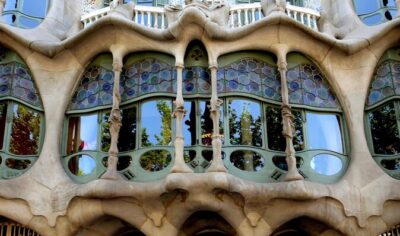
Complete Gaudi Tour: Casa Batllo, Park Guell & Sagrada Familia
Read our review →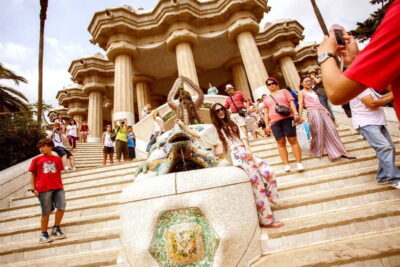
Park Güell: Guided Tour with Optional Gaudí Experience Entry
Read our review →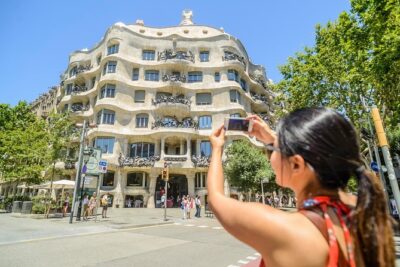
Barcelona e-Bike Tour: Gaudí & Old Town Small Group
Read our review →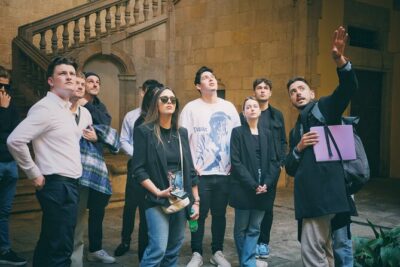
Ramblas, Old Town, Gothic and Gaudi Architecture Walking Tour
Read our review →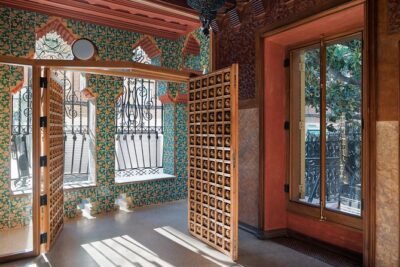
Gaudi´s Casa Vicens Skip the Line Ticket with Audioguide
Read our review →Browse the lists this tour appears in