
Review · BARCELONA
Exclusive Gaudi Segway Guided Tour Architectural Marvels
Barcelona’s Gaudí sights are spread across the city, and this Segway tour links them with far less walking than a standard sightseeing outing. You glide from Roman walls and the Gothic Quarter to Port Vell, the Olympic waterfront, Sagrada Família, Casa Milà, Casa Batlló, and Ciutadella Park.
I like the efficient route and the chance to cover a lot of ground in two to three hours. I also like that the guide can adjust attention to what interests you most, a useful touch on a quick city tour. The main drawback is that most stops are brief and admission tickets are not included, so this is best for seeing the exteriors and getting your bearings rather than touring Gaudí’s interiors.
Key points at a glance
- Cover several distant sights by Segway: The route connects the Gothic Quarter, waterfront, Eixample, and Ciutadella Park without requiring a long day on foot.
- See Gaudí’s best-known façades: Casa Milà, Casa Batlló, and Sagrada Família are the architectural highlights, but the itinerary focuses on outside views.
- Ride through Barcelona’s historic core: Plaça dels Traginers, Passage Colom, El Born, and the Roman wall add older layers to the modernist story.
- Use the city’s bike paths: A past participant specifically praised the easy access to monuments by bike path and the guide’s willingness to focus on personal interests.
- Expect a small or large group: The maximum is 30 people, so the experience can feel personal with a small booking but less intimate at full capacity.
- Plan around the weather: The activity requires good weather, with a new date or full refund offered if poor conditions force cancellation.
Why a Segway makes sense in Barcelona
Barcelona is laid out in broad avenues and compact old quarters, but its major sights are not all next door to one another. The Roman wall sits in the old city, the waterfront stretches south and east, and Gaudí’s grandest buildings are farther inland along the Eixample grid.
A Segway gives you a practical middle ground. You cover more distance than you would walking, yet you remain close enough to the streets, buildings, and public spaces to notice the city as you move through it. You are not sealed inside a bus, and you avoid spending much of the tour waiting for taxis or public transport.
The route lasts about two to three hours. That is enough time to see a wide slice of Barcelona, but not enough for long visits inside the basilica or houses. At Casa Milà, Casa Batlló, and Sagrada Família, you should expect a short stop for orientation, photographs, and exterior details rather than an interior tour.
A guide leads the ride, and the experience can be shaped around your main interests. One useful detail from the available feedback is that the guide asked what the group most wanted to see. That kind of flexibility matters here because the route contains several different themes: Roman Barcelona, medieval streets, waterfront redevelopment, Modernisme, and city parks.
No guide name is provided, so you cannot request a particular person in advance. The operator is Barcelona Segway Glides, and the tour begins and ends at Carrer del Correu Vell, 6, in Ciutat Vella.
More Gaudí tours in Barcelona:
- Barcelona: Park Güell and Gaudí House Museum Entry Ticket
★ 4.5 · 6,326 reviews - Sagrada Familia & Gaudi Tour Private or Small Group with Tickets
★ 4.5 · 1,188 reviews - Complete Gaudi Tour: Casa Batllo, Park Guell & Sagrada Familia
★ 5.0 · 1,152 reviews
Starting among Roman stones in the Gothic Quarter
The first stop at Plaça dels Traginers introduces Barcelona’s oldest layer. Here, sections of the Roman wall remain visible among the narrow streets of the Gothic Quarter. The setting is compact, but the contrast is striking: ancient stonework sits beside the medieval street plan and the everyday movement of the old city.
You get about 15 minutes at this stop, with no admission charge. That is enough time to look closely, take photographs, and hear how the Roman settlement fits into the later city. I like this opening because it gives the tour a sense of time before it turns toward Gaudí’s much more recent work.
The nearby Passage Colom adds another short look at the old quarter. The passage takes its name from Christopher Columbus and combines historic buildings with shops and cafés. It is less a formal monument than a quick taste of the area’s streets and connections.
A Segway can be especially useful in this part of Barcelona, though the old quarter’s narrow lanes mean you should pay attention and follow the guide closely. This is not a place for racing. The value comes from moving through the setting without losing sight of the stone façades, small squares, and changing street views.
Port Vell and the city’s maritime side
The route then reaches Port Vell, where Barcelona opens toward the Mediterranean. The harbor brings together boats, waterfront paths, shopping, and dining around Maremagnum. The Christopher Columbus Monument is another major reference point, rising near the edge of the old city.
This section changes the mood of the tour. After the enclosed Gothic Quarter, you have more open space and long views across the harbor. The waterfront also helps explain Barcelona’s modern identity as a port city, not simply a collection of old churches and Gaudí buildings.
The stop at Cara de Barcelona is brief, about five minutes, and admission is not included. The large face sculpture is easy to recognize and makes a straightforward photo stop. Do not expect a long art talk or a museum visit. Its role here is to add a memorable public artwork to the waterfront ride.
The itinerary also passes Estació de França, a grand railway station built for the 1929 International Exposition. Its classical and Mediterranean details make it worth noticing from outside. Since the ride covers many sights in a short period, the guide’s commentary is important. You will get more from the building if you pause to look at the façade rather than treating it as another landmark on a checklist.
Port Olímpic and the 1992 transformation
Port Olímpic shows a different Barcelona again. Developed for the 1992 Summer Olympics, the harbor area combines beaches, promenades, restaurants, nightclubs, and modern buildings. The marina and palm-lined streets give you a clear sense of the city’s connection to leisure and the sea.
The listed stop lasts about five minutes and is free. That timing suggests a quick look rather than time for a beach break, meal, or water activity. If you want to enjoy Port Olímpic at a slower pace, save it for another visit.
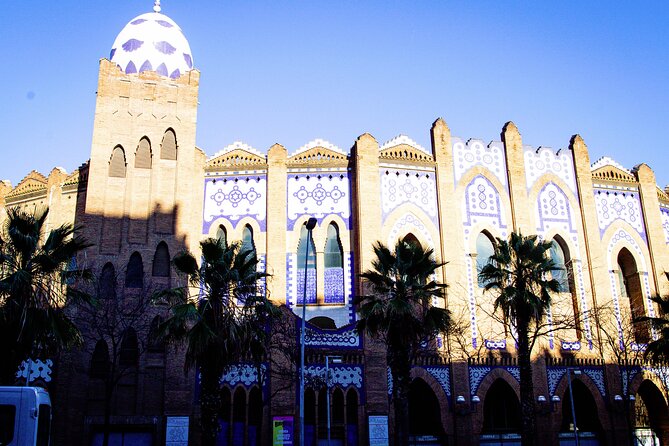
The route continues toward Plaza de Toros Monumental, the former bullfighting arena built in a Moorish Revival style. Bullfighting ended there in 2011, and the building now hosts concerts, exhibitions, and other events. Its inclusion adds cultural context that goes beyond architecture. You see how a building can change purpose as public attitudes change.
This is one of the strengths of the route: the sights are not all variations on Gaudí. You get a wider picture of Barcelona’s public spaces, transportation, sports development, and changing traditions.
More segway and bike architecture tours in Barcelona:
- Barcelona e-Bike Tour: Gaudí & Old Town Small Group
★ 5.0 · 769 reviews - Historical and Modernist Bike Tour Barcelona
★ 5.0 · 262 reviews - Barcelona: Old Port and Gothic Quarter Guided Segway Tour
★ 4.9 · 185 reviews - Barcelona Bike tour, Gaudí houses or beach bike or eBike tour
★ 5.0 · 140 reviews
Sagrada Família: the major architectural stop
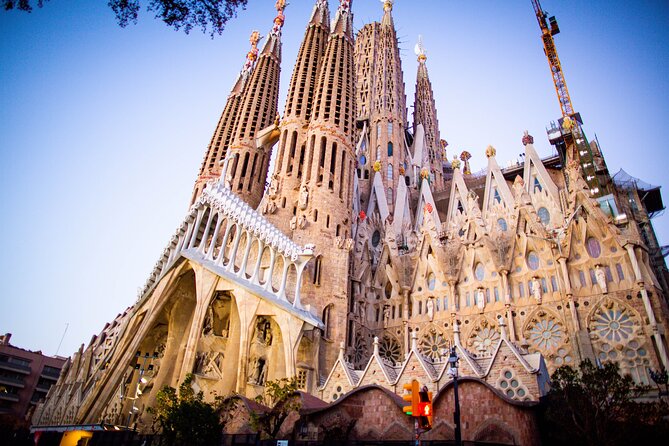
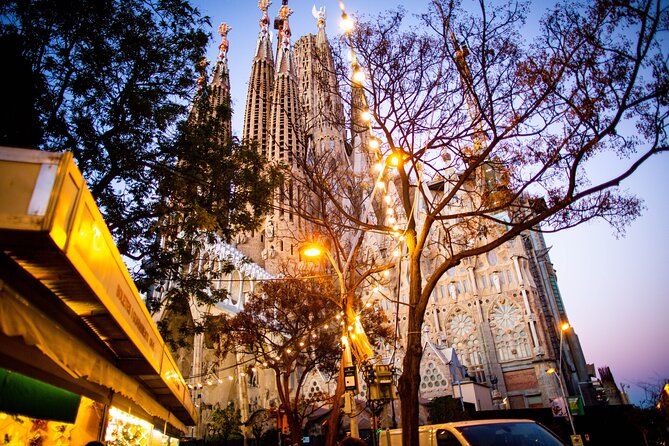
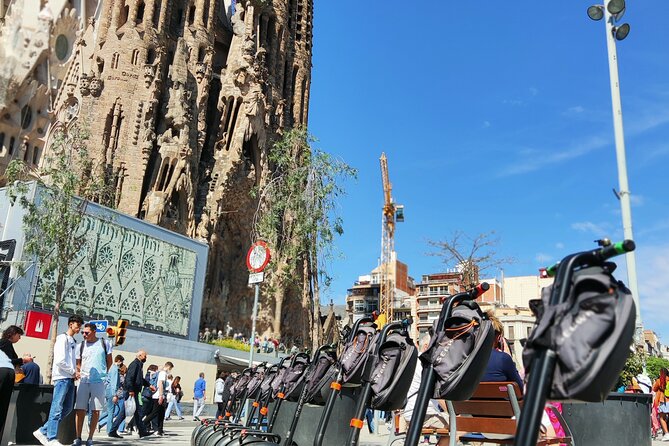
Sagrada Família is the tour’s biggest landmark. Gaudí’s basilica is still under construction and is known for its tall spires, detailed façades, religious sculpture, stained glass, and interior columns inspired by trees.
The itinerary allows about 15 minutes here, and admission is not included. That is enough for a first look at the exterior, but not enough to explore the basilica properly. If Sagrada Família is your main reason for coming to Barcelona, I would treat this stop as an introduction and arrange a separate timed visit inside.
From outside, you can focus on the differences between the façades and the many small details that reward close attention. The building reflects Gaudí’s interest in nature, faith, and Catalan identity, so even a short stop can give you plenty to discuss with the guide.
The practical advantage is that you arrive without spending energy navigating Barcelona’s busy streets on your own. The practical limitation is time. Fifteen minutes passes quickly at a building this complex, especially when you also need to keep the group moving.
Casa Milà and Casa Batlló along Passeig de Gràcia
The next two Gaudí buildings are Casa Milà and Casa Batlló, both on the grand Passeig de Gràcia. They offer a useful comparison because each shows a different side of Gaudí’s imagination.
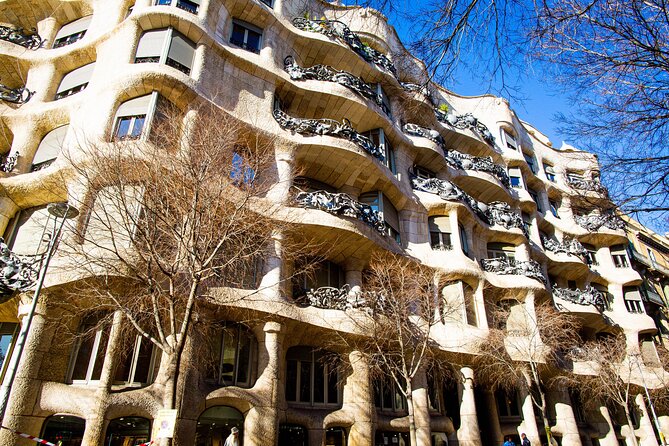
Casa Milà, commonly called La Pedrera, is known for its rolling stone façade, iron balconies, curved spaces, and unusual rooftop chimneys. The rooftop is one of Barcelona’s most memorable architectural spaces, but you will not enter it on this tour. The listed stop is about five minutes, with admission not included.
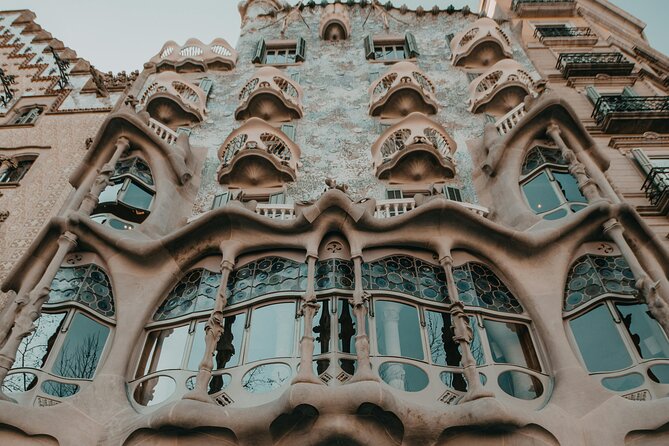
Casa Batlló has a more colorful and decorative exterior. Its ceramic tiles, bone-like columns, ironwork, and dragon-inspired roof give it a storybook quality. Gaudí remodeled the house for the Batlló family between 1904 and 1906, and the building remains one of the clearest examples of Catalan Modernisme.
Again, the five-minute stop is best understood as a viewing pause. You can admire the façades, learn what to look for, and take photographs. You cannot reasonably explore the Noble Floor, loft, rooftop, or museum spaces within the time and price of this outing.
I like seeing these buildings as part of a moving city route rather than as isolated attractions. You can compare Casa Milà’s rough, flowing stonework with Casa Batlló’s color and ornament, then continue along Passeig de Sant Joan toward the city’s parks and older neighborhoods.
Passeig de Sant Joan and Arc de Triomf
Passeig de Sant Joan offers a calmer stretch between major sights. Trees, cafés, shops, and pedestrian areas give the boulevard a local feel. It is a useful reminder that Barcelona is more than its headline monuments.
The route reaches Arc de Triomf, the red-brick arch built as the main entrance to the 1888 Barcelona World Fair. Unlike many triumphal arches, it was designed with a welcoming and celebratory character rather than as a victory monument. Its decorative details and broad approach make it a good place for photographs.
You get about five minutes at the arch, and admission is not included. There is no need for a ticket to appreciate it from the public space, but the short timing means you should listen while looking rather than expect a full historical stop.
This part of the route also works well on a Segway because the avenue gives you room to move through a more open setting. The tour’s use of bike paths is a real advantage here. A previous participant singled out those paths as making access to the monuments easy, and that is useful information for anyone wondering if the ride will feel like a series of disconnected stops.
Twenty minutes in Ciutadella Park
Parc de la Ciutadella is the longest listed stop, at about 20 minutes. That extra time makes sense. The park has broad paths, gardens, sculptures, a lake, and the Cascada fountain, which was designed by Josep Fontserè with help from a young Antoni Gaudí.
The park began as a military fortress before becoming a public space connected with the 1888 World Fair. It also contains the Barcelona Zoo and Catalan Parliament. You will not have time to see every part of the park, but the stop gives you a welcome pause from dense streets and façades.
I especially like this section for the change of pace. After moving through the Gothic Quarter, waterfront, and Eixample, the park gives you room to notice Barcelona’s public life. The Segway lets you cover its paths without turning the stop into a long hike.
Admission is not included, though much of the park itself can be appreciated from public areas. If you want to visit the zoo or spend a relaxed afternoon beside the lake, plan a separate visit.
El Born and the return to Ciutat Vella
The final section returns to the old city through El Born. This neighborhood combines medieval streets with boutiques, cafés, galleries, tapas bars, and cultural sites. Santa Maria del Mar is an important Catalan Gothic church in the area, while the Picasso Museum is another major attraction.
The tour does not list an admission visit to either site, so you should treat El Born as a street-level introduction. Its narrow lanes and small squares are better appreciated slowly, with time to stop for food or explore a museum. Still, passing through by Segway gives you a useful orientation and helps you decide where to return later.
The activity ends back at the starting point on Carrer del Correu Vell. That makes planning easier, particularly if you have a dinner reservation or another appointment in Ciutat Vella.
Is $75.19 a fair price?
At $75.19 per person, this is not the cheapest way to see Barcelona. You are paying for the Segway, a guide, and a route that links several parts of the city in two to three hours. The price makes more sense if you value saved walking time and want an overview before deciding which sites deserve a longer visit.
It is less convincing as a substitute for paid entry to Sagrada Família, Casa Milà, or Casa Batlló. None of those admission tickets is included, and the stops at the buildings are short. If you want detailed interior access, you will need to budget separately and allow more time.
Group discounts may improve the price for people booking together. The maximum group size is 30, so ask yourself how much personal attention you want. A smaller group should make questions and route adjustments easier, while a full group may feel more like a moving sightseeing party.
The activity is booked, on average, 31 days ahead. That suggests planning early is sensible, especially if your Barcelona dates are fixed. Confirmation arrives at booking, and the tour is near public transportation.
Who will enjoy this ride most?
I would recommend this for a first visit when you want a broad introduction without spending a full day on foot. It also suits people who enjoy architecture but want to see the city between major monuments, rather than moving directly from one ticketed interior to the next.
It can work well for a group of friends or a family that wants to share an unusual sightseeing format. Most people can participate, according to the supplied information, but the tour still requires you to feel comfortable taking part in a Segway activity.
You should choose another format if you dislike group rides, want long museum visits, or need a slow pace at every stop. The route is ambitious, and the short pauses are part of the bargain.
Cancellation is free up to 24 hours before the start time for a full refund. Changes or cancellations inside 24 hours are not accepted for a refund. Since the ride requires good weather, poor conditions can lead to a new date or a full refund.
Should you book the Exclusive Gaudí Segway Guided Tour?
Book it if you want to cover Barcelona’s major districts efficiently, enjoy a guide-led ride, and are happy to see Gaudí’s buildings from outside before returning for proper interior visits. The route offers more variety than a Gaudí-only outing, with Roman remains, the Gothic Quarter, two waterfront areas, Olympic architecture, parks, and El Born.
Skip it if your priority is entering Sagrada Família, Casa Milà, or Casa Batlló. For that purpose, book timed admission separately and give each building the attention it deserves.
For many people, the best use of this tour is on the first or second day in Barcelona. It helps you understand the city’s layout, identify the sights you want to revisit, and reach distant landmarks without wearing out your feet. That makes the $75.19 cost reasonable for an efficient introduction, provided you accept the brisk pace and outdoor focus.
FAQ
How long does the Segway tour last?
The experience lasts approximately two to three hours.
Where does the tour begin and end?
It begins at Carrer del Correu Vell, 6, in Ciutat Vella, Barcelona, and ends back at the same meeting point.
Which Gaudí buildings are included?
The route includes Sagrada Família, Casa Milà, also called La Pedrera, and Casa Batlló.
Are admission tickets to the buildings included?
No. Admission is not included for Sagrada Família, Casa Milà, Casa Batlló, or the other stops where an admission charge may apply.
What is the maximum group size?
The activity can have a maximum of 30 people.
Can I cancel for a full refund?
Yes. You must cancel at least 24 hours before the experience start time for a full refund. Cancellations inside 24 hours are not refunded.
What happens if bad weather cancels the tour?
If poor weather prevents the activity from running, you will be offered a different date or a full refund.
Just added around Barcelona
- Love in the Gothic Quarter Barcelona: Self-Guided Romantic Walk★ 4.5 · 9 reviews
- Walking tour of the Gothic Quarter of Barcelona + Cathedral★ 5.0 · 8 reviews
- Wine tasting with a view of the Sagrada Familia★ 4.5 · 13 reviews
- Visit to the Modernist houses of the Americans★ 5.0 · 2 reviews
- Barcelona Jewish & Gothic Tour★ 5.0 · 18 reviews
- Roman & Gotic & Gaudi in Barcelona: private walking tour★ 4.5 · 2 reviews
- Barcelona Gaudi Tour: Sagrada Familia, Casa Batllo & Casa Mila★ 5.0 · 4 reviews
- Self-Guided Audio Tour-The Surrealist Barcelona of Dalí and Gaudí★ 3.5 · 8 reviews
Gaudí Tours, compared.
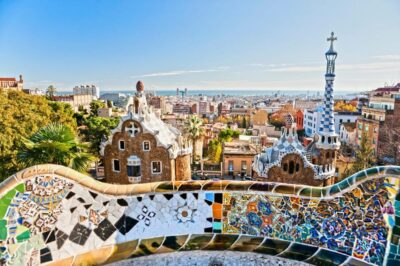
Barcelona: Park Güell and Gaudí House Museum Entry Ticket
Read our review →
Barcelona: Gaudi’s Casa Vicens Skip-the-Line Entrance Ticket
Read our review →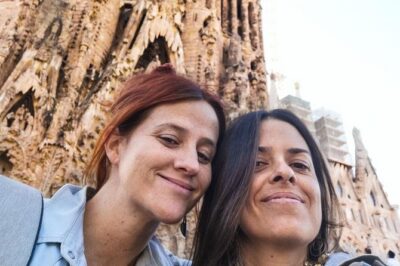
Sagrada Familia & Gaudi Tour Private or Small Group with Tickets
Read our review →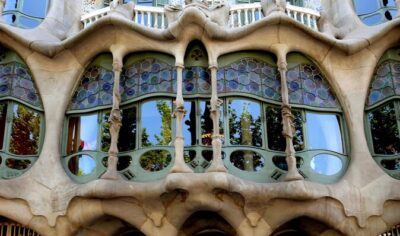
Complete Gaudi Tour: Casa Batllo, Park Guell & Sagrada Familia
Read our review →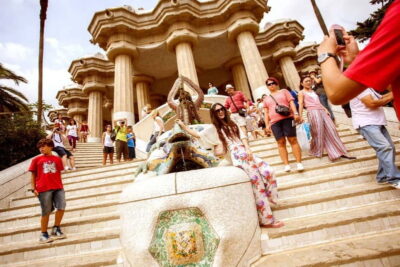
Park Güell: Guided Tour with Optional Gaudí Experience Entry
Read our review →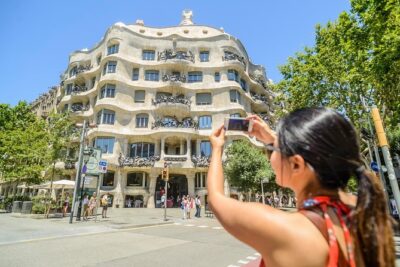
Barcelona e-Bike Tour: Gaudí & Old Town Small Group
Read our review →
Ramblas, Old Town, Gothic and Gaudi Architecture Walking Tour
Read our review →
Gaudi´s Casa Vicens Skip the Line Ticket with Audioguide
Read our review →Browse the lists this tour appears in