
Review · BARCELONA
Barcelona & Gaudi. Regular Tour
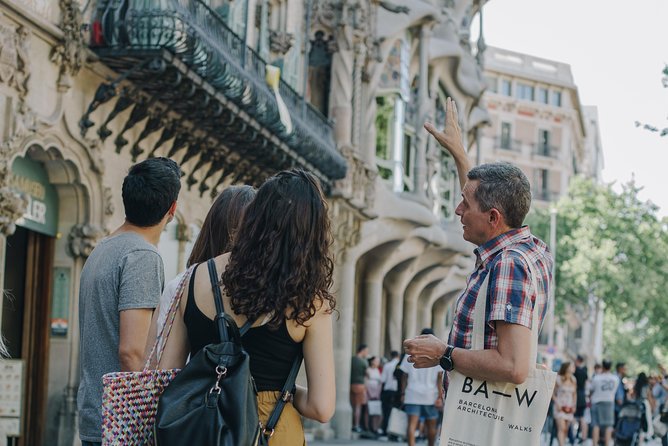
Barcelona makes an excellent outdoor classroom, and this three-hour walk uses its grand Eixample streets to explain how Gaudí and his fellow Modernist architects changed the city. I like the focus on practicing architects and the way the tour links design to socialism, industry, religion, anarchism, and the Spanish Civil War. I also like the maximum group size of 20, which should give you a better chance to ask questions.
The main limitation is clear: you do not go inside the buildings. If you want the interiors of Casa Batlló or Casa Milà, you will need separate tickets and extra time. This tour is about reading the façades, understanding the ideas behind them, and seeing several important works without paying admission at every stop.
Key points at a glance
- Three hours in the Eixample: The route stays in central Barcelona and returns to its starting point.
- Architecture with social context: Gaudí’s work is explained alongside utopian socialism, positivist materialism, bourgeois culture, and the Civil War.
- Five named stops: Casa Milà, Casa Batlló, Casa Calvet, La Mansana de la Discordia, and the Antoni Tàpies Foundation anchor the walk.
- A guide with professional training: The tour is led by practicing architects, with Pia named in several especially warm comments about the experience.
- Outside-only sightseeing: You will study the buildings from the street, not tour their interiors.
- Good value at $54.44: The price is reasonable if you want interpretation rather than entry tickets, but less attractive if your main goal is going inside Gaudí’s buildings.
Why an architect-led walk changes Barcelona
You can look at Casa Batlló and Casa Milà on your own and still enjoy their strange shapes, bright surfaces, and bold use of stone. The harder part is understanding how these buildings fit into Barcelona’s growth and why their design was so unusual for its time.
That is where this tour earns its keep. An architect can point out structure, materials, ornament, and the choices hidden behind a decorative façade. You are not simply shown a famous building and told its name. You are encouraged to connect the building to the people who commissioned it, the intellectual life of the city, and Gaudí’s changing interests.
The route also follows Gaudí’s move from social concerns toward a more intense spiritual vision. That arc helps explain why Casa Calvet feels different from later work and why the Sagrada Família became such a consuming project, even though the basilica is discussed rather than visited on this walk.
The subject matter is serious, but the experience does not appear to be dry. Pia, one of the named guides, is praised for combining strong command of Gaudí with kindness, humor, and enthusiasm. That matters on a three-hour walk. Barcelona architecture can become a blur of elaborate façades, so a guide who can keep the story lively is a real advantage.
More Gaudí tours in Barcelona:
- Barcelona: Park Güell and Gaudí House Museum Entry Ticket
★ 4.5 · 6,326 reviews - Sagrada Familia & Gaudi Tour Private or Small Group with Tickets
★ 4.5 · 1,188 reviews - Complete Gaudi Tour: Casa Batllo, Park Guell & Sagrada Familia
★ 5.0 · 1,152 reviews
Starting at the Monument al Llibre
The walk begins at the Monument al Llibre on Gran Via de les Corts Catalanes, 634, in the Eixample. The scheduled start is 10:30 am, and the activity ends back at the same meeting point.
That central location makes the tour easy to fit into a morning plan, though you should leave time to find the monument. The Eixample is built on a broad street grid, but a large avenue and several nearby landmarks can still make a precise meeting point worth checking before you set out.
The route is conducted in English. A mobile ticket is provided, and confirmation arrives when you book. Public transportation is nearby, which is useful if you are staying outside the central district.
Expect a walking tour rather than a ride between monuments. The stated duration is about three hours, and the route includes several stops close enough to connect on foot. Wear comfortable shoes and be ready to look up often. The most rewarding details are on upper floors, balconies, rooflines, and sculpted surfaces.
Casa Milà and the logic of La Pedrera
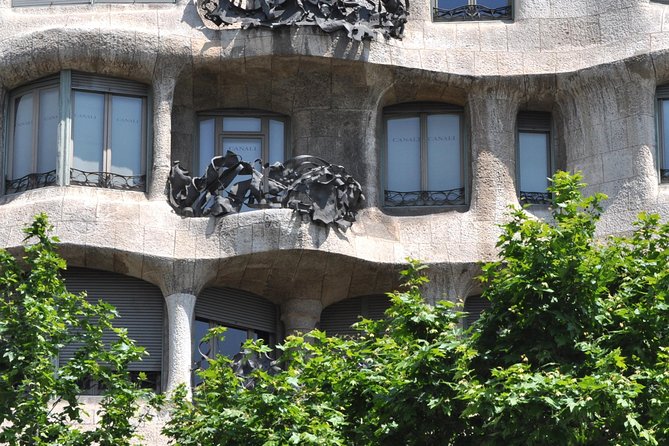
Casa Milà, better known as La Pedrera, is one of the clearest examples of Gaudí refusing to treat a building as a simple box. Its rippling stone front gives the structure a moving, almost geological quality.
From the street, the building can look like a mass of waves and wrought iron. An architect guide can help you notice that the irregular surface is not random decoration. The design raises practical questions about structure, light, ventilation, and how people move through a large urban apartment building.
This is also a useful place to begin because it introduces Gaudí at full strength. You see his taste for curved forms and his willingness to make ordinary city housing feel theatrical. At the same time, the building was created for urban life, not only for visual effect.
You will not enter La Pedrera on this tour. That means you will miss the interior spaces and any rooftop visit, but you will not spend time waiting for an admission slot. If your schedule is tight, the exterior discussion gives you a useful first reading of the building before you decide if a separate interior visit is worth the cost.
Casa Batlló and Gaudí’s most famous façade
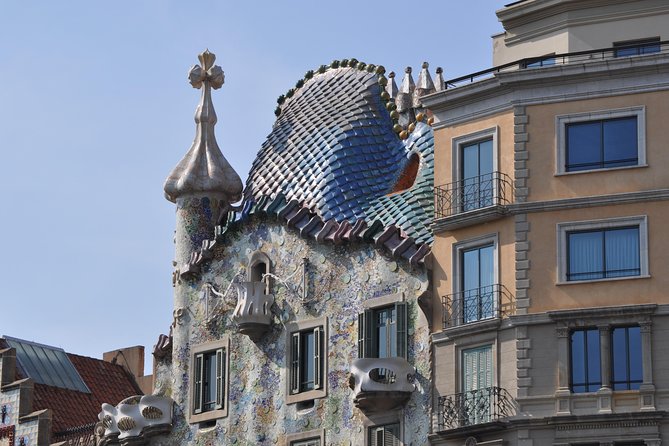
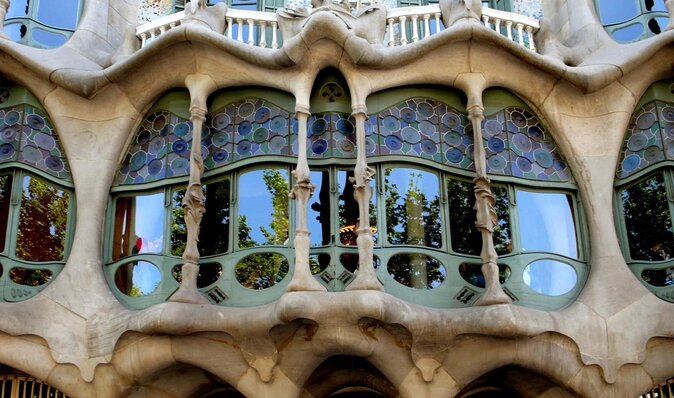
Casa Batlló is often the moment when a Barcelona architecture walk turns into a lesson in imagination. Its façade uses color, curved forms, irregular windows, and sculpted details to create a building that seems to shift as you look at it.
The guide’s role here is to move you past the first reaction of simply calling it beautiful or strange. Look for the way the surface is organized. Notice how balconies, windows, ceramic pieces, and roof forms work together. The point is not just that Gaudí made an unusual façade. The point is how the design transforms a conventional city building into a complete artistic statement.
Casa Batlló is also a good place to discuss the relationship between architecture and wealthy urban society. Barcelona’s Eixample offered an ambitious setting for families and architects competing to make their mark. The tour connects this world to the intellectual bourgeoisie and to the wider cultural force known as Modernisme.
Again, the visit is from outside. Casa Batlló’s interior is a separate experience, so do not book this walk expecting rooms, stairways, or the famous roof terrace. I see that as a drawback for anyone who wants a full building visit, but an advantage if you want to compare several façades in one morning.
Same city, a completely different century:
- Barcelona: Sagrada Familia Entry Ticket with Audio Guide
★ 4.6 · 105,312 reviews - Barcelona: Casa Batlló Entry with Self-Audioguide Tour
★ 4.7 · 25,359 reviews - Barcelona in 1 Day: Sagrada Familia, Park Guell,Old Town & Pickup
★ 5.0 · 13,541 reviews - Barcelona: Sagrada Familia Skip-the-Line Entry Ticket & Tour
★ 4.8 · 12,789 reviews
La Mansana de la Discordia and competing visions
La Mansana de la Discordia, the Block of Discord, brings several leading architects into one stretch of the Eixample. This is one of the most efficient parts of the route because you can compare different approaches without crossing half the city.
The name hints at rivalry, and the buildings make the point visually. Gaudí, Domènech i Montaner, and Puig i Cadafalch each handled ornament, color, geometry, and the street front in different ways. Casa Batlló, Casa Amatller, and Casa Lleó Morera belong to the same broad Modernist moment, but they do not speak in the same architectural voice.
That comparison is more valuable than seeing Gaudí in isolation. It shows you that Barcelona’s Modernisme was not one fixed style produced by one genius. It was a lively field of competing ideas, clients, materials, and personal tastes.
The tour specifically includes Casa Lleó Morera by Domènech i Montaner and Casa Amatller by Puig i Cadafalch, though the five listed itinerary stops are grouped around the main route. You should expect the guide to point out these important façades and explain their place in the district, rather than treat every building as a formal stop with interior access.
Casa Calvet, an earlier and more restrained Gaudí
Casa Calvet offers a useful contrast with the wilder forms of La Pedrera and Casa Batlló. It is still unmistakably Gaudí, but its street presence is more controlled and its decorative language is less openly dreamlike.
This makes it valuable for understanding development in Gaudí’s work. The walk traces his path from social and practical concerns toward a stronger spiritual focus, and Casa Calvet helps fill in that progression. Instead of presenting Gaudí as someone who arrived fully formed, the tour places his buildings in an evolving career.
The building also helps you see how architecture responds to its setting. A façade must work within a city block, meet the expectations of a client, and communicate status. Gaudí’s imagination did not operate apart from those pressures.
Casa Calvet is seen from outside, like the other buildings. That limitation is worth remembering if your interest is mainly in domestic interiors. Its value here is as a comparison point, not as a full museum visit.
The Antoni Tàpies Foundation and the wider Modernist route
The Antoni Tàpies Foundation adds a later artistic note to a route otherwise centered on Gaudí and early Modernisme. Its building, associated with Lluís Domènech i Montaner, helps show how Barcelona’s architectural story continued beyond the most familiar Gaudí addresses.
This stop is useful because it prevents the walk from becoming a greatest hits tour of one architect. You see how ideas about ornament, structure, and public identity carried across different periods and artists. The foundation’s presence also connects architecture with modern art, giving the route a broader cultural frame.
The walk may also include some less obvious Eixample courtyards. These spaces matter because the district is not only about dramatic street façades. Its urban design includes blocks, interior spaces, and planned relationships between public streets and private buildings.
The exact amount of time at each location is not specified, so you should expect the guide to adjust the pace according to the group and the flow of the walk. The maximum group size is 20, which is small enough to make explanations more personal than on a large coach tour, though it is not a private visit.
From Gaudí to politics, religion, and civil conflict
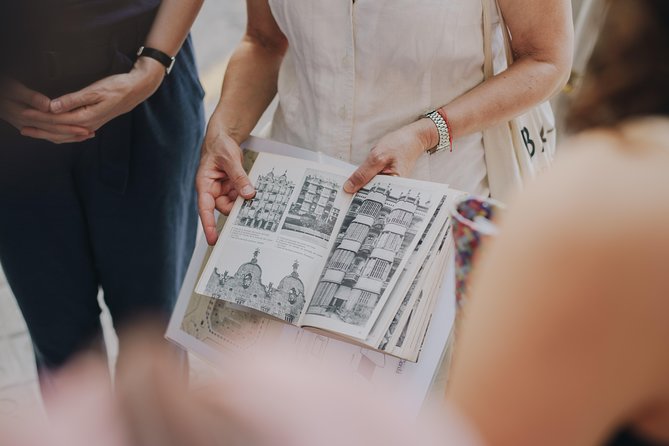
The most distinctive part of the experience is its effort to explain architecture through Barcelona’s political and social life. The route touches on utopian socialism, positivist materialism, anarchism, the intellectual bourgeoisie, and the Spanish Civil War.
Those subjects may sound far removed from balconies and stonework, but they help answer a basic question: why did Barcelona produce such daring architecture in this period? Buildings reflect money, ambition, technology, religion, and public ideals. They also reflect tensions within the city.
Gaudí’s spiritual turn is central to the walk. His work eventually moved toward a profound concern with the divine, culminating in the Sagrada Família and the image of Gaudí as the last great cathedral builder. You will not visit the Sagrada Família during this tour, but its role in Gaudí’s career gives meaning to the route’s larger story.
This approach suits you if you like architecture explained through people and ideas. It may be less suitable if you want a quick collection of photo stops with only basic dates and names. The subject matter is broad, and a three-hour tour cannot explore every political or artistic point in equal depth.
Is $54.44 a fair price?
At $54.44 per person, this is not the cheapest way to see Barcelona’s Modernist façades. You can walk past many of them for free. The price pays for interpretation, organization, and the chance to ask an architect how the buildings work and why they matter.
The value improves if you are new to architecture or want a stronger framework for the rest of your Barcelona visit. After the walk, you can look at Gaudí’s buildings with more purpose instead of seeing only elaborate decoration. It can also help you decide which interiors deserve separate admission fees.
The value is weaker if you already know Gaudí well or plan to spend your morning inside Casa Batlló, La Pedrera, or the Sagrada Família. Admission is not included, and the tour itself does not enter the buildings. In that case, you may prefer to put the money toward an interior visit.
The group limit of 20 is another part of the price calculation. It is not a private tour, but it should be more manageable than a large group. The strongest feature is the guide’s professional architectural background, especially if your guide is Pia and you enjoy a lively, people-focused explanation rather than a rehearsed list of facts.
Who should book this walk?
I would recommend it to first-time visitors who want to understand why Barcelona looks the way it does. It also suits anyone with a specific interest in Gaudí, Modernisme, urban planning, or the link between design and politics.
Families with older children may find the visual details and unusual buildings engaging, though the discussion can become demanding if younger children are not interested in architecture. The walk is described as suitable for most people, and service animals are allowed.
You should think twice if you need a fully accessible indoor activity, although the available information confirms only that most people can participate and that the route is near public transportation. The experience requires good weather, and poor conditions can lead to a different date or a full refund.
Free cancellation is available up to 24 hours before the 10:30 am start. Late cancellations and changes are not refunded or accepted, so keep that deadline in mind when arranging your Barcelona schedule.
Should you book Barcelona and Gaudí?
Book this tour if you want the city’s famous façades to make more sense. The best reason to go is not simply the number of buildings. It is the combination of architect-led explanation, Gaudí’s personal development, and the social forces shaping Barcelona’s Modernist era.
Skip it if your priority is entering the buildings or seeing the Sagrada Família. This is an exterior walking tour, and you will need separate plans for interiors.
For most visitors, I would place it early in a Barcelona stay. The three-hour route can give you a useful way to read the Eixample afterward, and the small group, English format, and $54.44 price make it a practical introduction to the city’s architecture. If Pia is leading your walk, expect a guide who brings humor and warmth to a demanding subject.
FAQ
How long does the Barcelona and Gaudí tour last?
The tour lasts approximately three hours.
What time does the tour begin?
It starts at 10:30 am.
Where does the tour begin?
The meeting point is the Monument al Llibre at Gran Via de les Corts Catalanes, 634, in Barcelona’s Eixample district.
Where does the tour end?
The walk ends back at the starting meeting point.
Is the tour conducted in English?
Yes. The experience is offered in English.
Does the tour enter Casa Batlló or Casa Milà?
No. The tour does not go inside the buildings.
What buildings are included on the route?
The named stops are Casa Milà, Casa Batlló, Casa Calvet, La Mansana de la Discordia, and the Antoni Tàpies Foundation. The route also includes discussion of other important Modernist works and some Eixample courtyards.
How large is the group?
The tour has a maximum of 20 participants.
Is the tour suitable for most people?
The activity states that most people can participate. Service animals are allowed, and the meeting area is near public transportation.
Can I cancel for a full refund?
Yes, if you cancel at least 24 hours before the experience begins. Cancellations or changes made less than 24 hours before the start time are not refunded or accepted. The tour can also be moved or refunded if poor weather or an insufficient number of participants causes cancellation.
Just added around Barcelona
- Love in the Gothic Quarter Barcelona: Self-Guided Romantic Walk★ 4.5 · 9 reviews
- Walking tour of the Gothic Quarter of Barcelona + Cathedral★ 5.0 · 8 reviews
- Wine tasting with a view of the Sagrada Familia★ 4.5 · 13 reviews
- Visit to the Modernist houses of the Americans★ 5.0 · 2 reviews
- Barcelona Jewish & Gothic Tour★ 5.0 · 18 reviews
- Roman & Gotic & Gaudi in Barcelona: private walking tour★ 4.5 · 2 reviews
- Self-Guided Audio Tour-The Surrealist Barcelona of Dalí and Gaudí★ 3.5 · 8 reviews
- Barcelona Gaudi Tour: Sagrada Familia, Casa Batllo & Casa Mila★ 5.0 · 4 reviews
Gaudí Tours, compared.
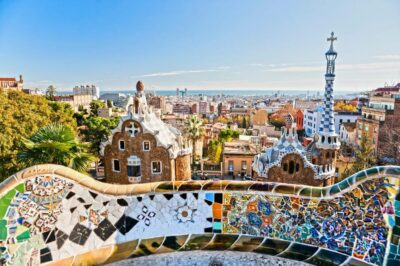
Barcelona: Park Güell and Gaudí House Museum Entry Ticket
Read our review →
Barcelona: Gaudi’s Casa Vicens Skip-the-Line Entrance Ticket
Read our review →
Sagrada Familia & Gaudi Tour Private or Small Group with Tickets
Read our review →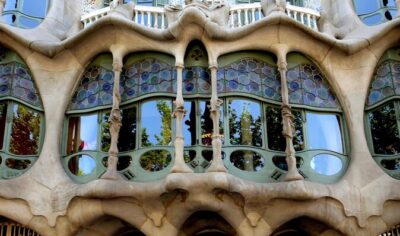
Complete Gaudi Tour: Casa Batllo, Park Guell & Sagrada Familia
Read our review →
Park Güell: Guided Tour with Optional Gaudí Experience Entry
Read our review →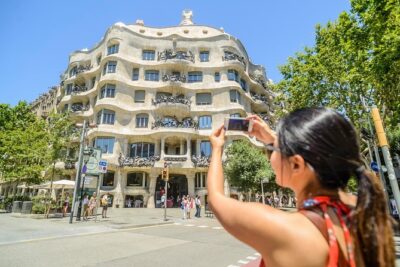
Barcelona e-Bike Tour: Gaudí & Old Town Small Group
Read our review →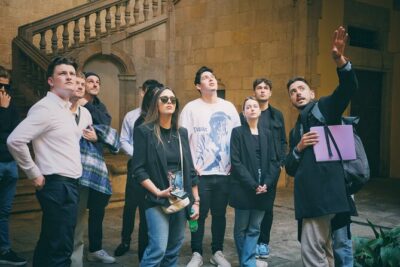
Ramblas, Old Town, Gothic and Gaudi Architecture Walking Tour
Read our review →
Gaudi´s Casa Vicens Skip the Line Ticket with Audioguide
Read our review →Browse the lists this tour appears in