
Review · BARCELONA
Barcelona: Discover Gaudi Architectural Guided Tour
Barcelona’s Modernisme quarter makes far more sense when an architect shows you how to read it. This three-hour walk links Gaudí’s Casa Batlló, Casa Milà, and Casa Calvet with the work of Domènech i Montaner and Puig i Cadafalch, turning a pleasant stroll into a lesson in design, engineering, and city planning.
I like the practicing-architect guides, especially the way guides such as Pia, Daniela, and Tomasz have connected façades to Barcelona’s social and political changes. I also like the hidden courtyards and the focus on urban design, since they give you more than the usual Gaudí greatest hits. The main drawback is clear: you view every building from outside and do not enter them.
Key points to know

- Architect-led walking tour: Your guide works in architecture, and some guides also teach or write about the subject.
- Three famous Gaudí façades: See Casa Calvet, Casa Batlló, and Casa Milà on the same morning.
- Modernisme beyond Gaudí: Compare his work with Casa Lleó Morera and Casa Amatller.
- Urban planning included: Learn how Barcelona’s streets, blocks, courtyards, and public gardens developed.
- Three hours on foot: The tour is wheelchair accessible and conducted in English.
- Good flexibility: The $53 price includes a city architecture guide, and cancellation is free up to 24 hours before departure.
What this Barcelona architecture walk actually gives you
This is not a museum visit with a quick explanation at the door. It is an outdoor architecture lesson built around some of Barcelona’s most famous streets.
You meet at the Joan Brossa sculpture in front of the Comedia Cinema, at the junction of Passeig de Gràcia and Gran Via. That location puts you close to the grand residential buildings of the Eixample, the district where Barcelona’s wealthy families commissioned elaborate homes during the Modernisme period.
The walk lasts three hours, so you have time to stop, look up, compare details, and ask questions. That pace matters. Gaudí’s buildings can be visually overwhelming. A guide can help you separate the structure from the decoration, and the practical ideas from the theatrical ones.
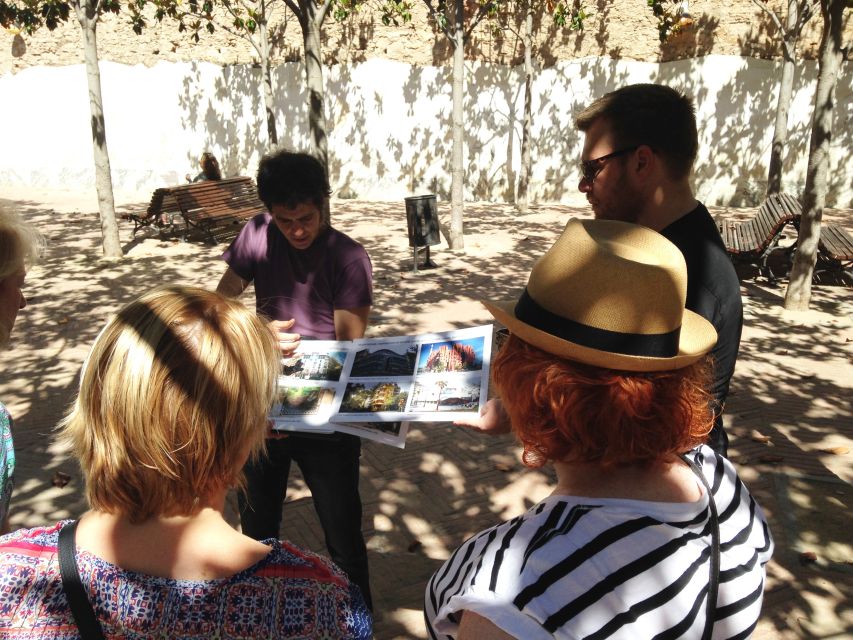
Your guide is an English-speaking practicing architect. Guides have included Pia, Daniela, and Tomasz, with Pia receiving especially warm praise for her use of drawings, maps, and photographs. You should expect the style to vary slightly from one guide to another, but the subject is consistent: Gaudí in the wider story of Barcelona.
More Gaudí tours in Barcelona:
- Barcelona: Park Güell and Gaudí House Museum Entry Ticket
★ 4.5 · 6,326 reviews - Sagrada Familia & Gaudi Tour Private or Small Group with Tickets
★ 4.5 · 1,188 reviews - Complete Gaudi Tour: Casa Batllo, Park Guell & Sagrada Familia
★ 5.0 · 1,152 reviews
Starting with Barcelona’s city plan
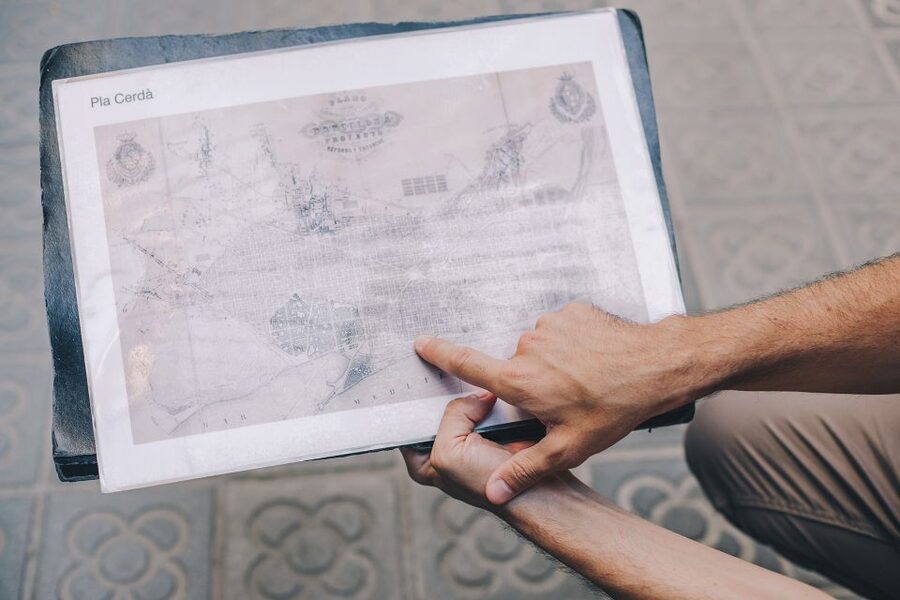
One of the strongest parts of the tour is that it does not treat Gaudí as an isolated genius. You first get a sense of how the city developed and why the Eixample looks so different from the older parts of Barcelona.
The tour explains the beginnings of modern urbanism and the ideas that shaped the city’s layout. You learn how planning decisions affected streets, blocks, light, ventilation, and quality of life. That context helps you understand why the buildings appear where they do, rather than seeing them as unrelated works of art.
I especially like this approach for first-time visitors. Once you understand the city plan, you can read other parts of Barcelona more easily on your own. A building is no longer just a colorful façade. Its shape, entrance, courtyard, and position on the block all start to carry meaning.
The urban-planning discussion also gives the walk a useful social edge. Barcelona’s architecture grew from changing ideas about society, public space, and living conditions. The guide can address political, social, and environmental questions without letting the conversation become a personal debate.
Comparing three Modernisme masterpieces
Passeig de Gràcia gives you an unusually good chance to compare several major architects within a short distance. This is where the tour earns its price for anyone who enjoys architecture but does not have technical training.
Casa Lleó Morera, designed by Lluís Domènech i Montaner, shows a different version of Modernisme from Gaudí’s more eccentric work. The Antoni Tàpies Foundation adds another architectural point of comparison. Then comes Casa Amatller by Josep Puig i Cadafalch.
These buildings help you see that Modernisme was not simply another name for Gaudí’s style. Several architects were experimenting with ornament, materials, structure, craft, and the relationship between old European traditions and new technology.
Casa Amatller is particularly useful in this comparison because it makes the street feel like an architectural conversation. Casa Batlló sits nearby, and the contrast between the neighboring façades becomes part of the lesson.
You will not enter these buildings, so the tour cannot show you their interiors, staircases, or private rooms. Still, the outside views are carefully chosen. A guide can point out details that are easy to miss when you are looking at the façade as one giant image.
Casa Calvet and Gaudí’s practical side
Casa Calvet is one of the three main Gaudí residential buildings on the walk. It is often a useful stop because it can broaden your idea of Gaudí.
Many people arrive in Barcelona expecting only the dreamlike forms associated with Casa Batlló or Casa Milà. Casa Calvet gives you a chance to consider a more restrained stage in his work, while still seeing his concern for detail and invention.
The guide explains Gaudí’s architectural thinking rather than simply reciting dates. You may look at how the building meets the street, how decorative elements relate to the structure, and how the design reflects the needs of its original setting.
This is also where the architect guide can add value beyond a standard sightseeing walk. A practicing architect can explain why a solution matters, not just what it looks like. One guide might focus on engineering, another on materials or social context, but the aim is the same: to help you read the building.
More guided tours in Barcelona:
- Barcelona: Sagrada Familia Entry Ticket with Audio Guide
★ 4.6 · 105,312 reviews - Fast Track Sagrada Familia Guided Tour
★ 4.5 · 8,795 reviews - Barcelona: Sagrada Familia Skip-the-Line Guided Tour
★ 4.3 · 5,365 reviews - Barcelona: Sagrada Familia Priority Access Guided Tour
★ 4.9 · 4,917 reviews
Casa Batlló and Gaudí’s visual power
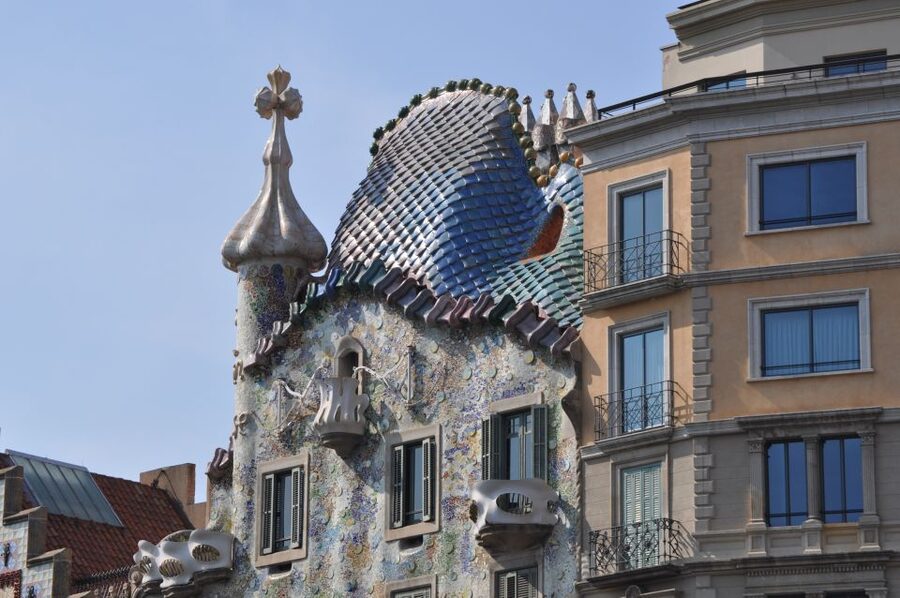
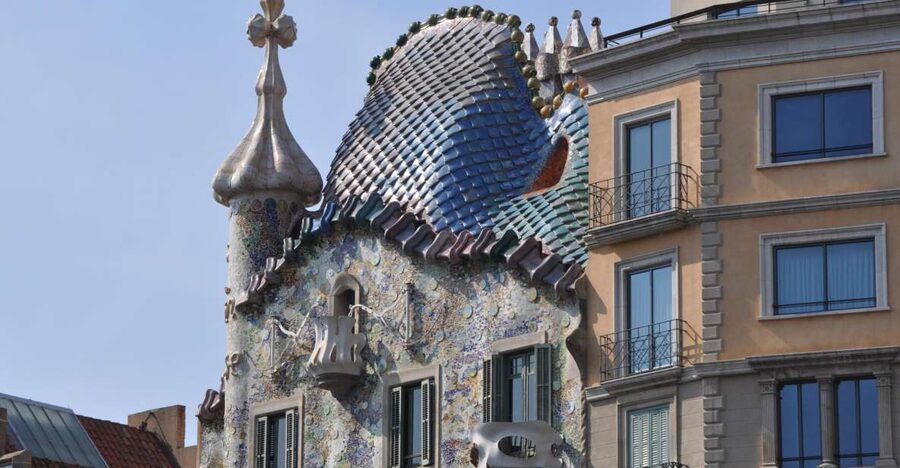
Casa Batlló is the tour’s most immediately theatrical stop. Its surface, color, and organic shapes make it easy to understand why Gaudí later inspired Surrealist artists and remains the most famous Spanish architect for many visitors.
The guide traces how Gaudí imagined his projects and how his visual language changed. You look at the building from the street, so the explanation has to make the façade work as both sculpture and construction.
That balance is important. It is easy to photograph Casa Batlló and move on. It is more useful to ask how the building creates movement, how the details relate to one another, and how Gaudí’s imagination was tied to engineering rather than separated from it.
A strong guide will keep the talk accessible. You do not need an architecture degree to follow the discussion. Past tours have worked well for people with no specialist background, while still giving technically minded participants room to ask more detailed questions.
If Casa Batlló is high on your Barcelona list, remember that this tour does not include entry. If you want the interior experience, you will need a separate ticket and visit. This walk is best for understanding the building from the street and placing it within the wider city.
Casa Milà and the move toward abstraction
Casa Milà, often called La Pedrera, shows Gaudí moving toward a freer and more abstract architectural language. Its stone façade and unusual forms can look almost impossible at first glance.
The guide uses the building to discuss Gaudí’s visual power and his changing relationship with structure, decoration, and nature. This is one of the places where an architect’s perspective can make a real difference. You begin to consider how the building works as a whole, rather than only collecting colorful facts about balconies and windows.
Casa Milà also helps explain why Gaudí became known as the last great cathedral builder. The phrase refers to a growing spiritual focus in his later work, not simply to a fondness for grand shapes. The tour follows the shift from social concerns toward a more complete absorption with the divine.
That arc gives the walk emotional direction. You are not just moving from one famous façade to another. You are following changes in Gaudí’s beliefs, ambitions, and design methods.
Again, you remain outside. That is a limitation if your main goal is to see the rooftop, interior courtyards, or apartment spaces. It is an advantage if you want a focused overview of several buildings in one morning without spending the whole session inside a single attraction.
Courtyards that became public gardens
The hidden courtyards add a welcome change of pace. Barcelona’s block design included interior spaces that were not always obvious from the main street. The tour explains how some courtyards became public gardens and why these open areas mattered to city life.
This part connects architecture with daily experience. Streets and façades may get the attention, but courtyards affect light, air, greenery, and the feel of a neighborhood. They also show that urban design is not just about impressive buildings.
Access to courtyards can depend on the route and the spaces available during the walk, so you should not expect a private interior tour. The point is to understand their role and see how the city has opened selected spaces to the public.
I like this section because it prevents the morning from becoming a parade of famous houses. It gives you a quieter look at how Barcelona’s blocks work and why planners cared about shared open space.
Gaudí’s turning points, from Manhattan to the Sagrada Família
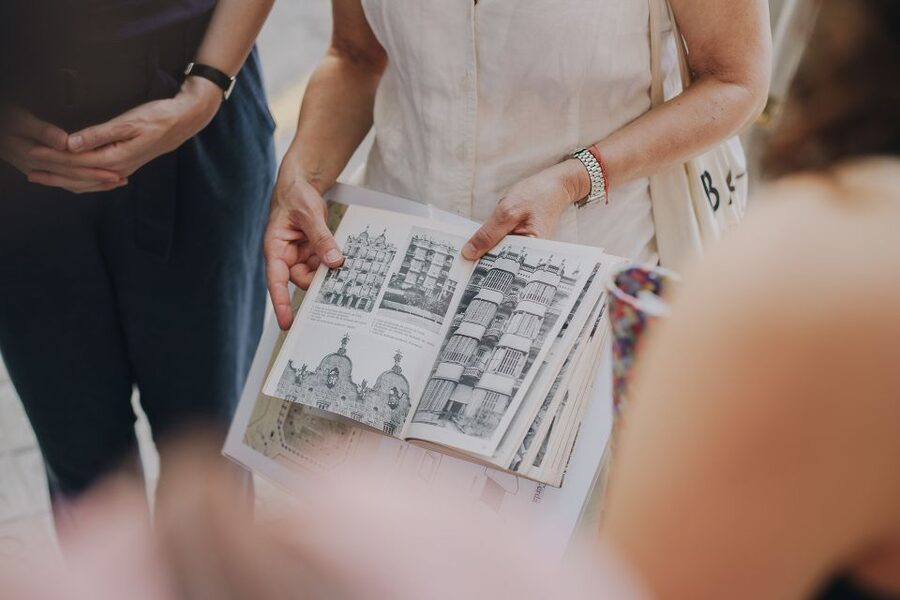
The tour also follows several less familiar moments in Gaudí’s career. These include a project connected with Manhattan, the final commission from his patron Eusebi Güell, and his early architectural steps with the Sagrada Família.
These references help place the better-known buildings in a longer career. You hear about projects that reveal his ambitions, his relationships with patrons, and the directions his work might have taken.
The Manhattan project is especially useful because it shows Gaudí thinking beyond the buildings you can see in Barcelona. The Güell commission points to the importance of patronage, while the Sagrada Família marks the beginning of the work that eventually consumed much of his later life.
The guide’s job is to keep these ideas connected to the streets around you. This is not a full biography, and three hours cannot cover every commission or controversy. Instead, you get selected turning points that explain how Gaudí developed from an architect concerned with society into a designer driven by spiritual purpose.
Why the architect guides make a difference
All guides for this experience are practicing architects, and most also teach architecture or work as critics. That is the central reason to choose this walk over a basic audio guide or general city stroll.
Past guides have included Pia, Daniela, and Tomasz. Pia has been praised for using her own notes, city maps, and photographs to clarify difficult ideas. Tomasz has used visual aids and kept a large group engaged. Daniela has also received strong praise for her command of the subject and warm delivery.
You should not assume every guide will teach in exactly the same way. Still, the format gives you access to someone who can discuss both the big idea and the practical detail.
The best benefit is flexibility. If you want a high-level explanation of Modernisme, you can follow along easily. If you ask about engineering or architectural choices, the guide can usually take the conversation further. Past sessions have also handled questions about politics, society, and the environment without losing the main thread.
Price, walking conditions, and who gets good value
At $53 per person, this is not the cheapest way to see Barcelona’s façades. You are paying for three hours with a practicing architect, an organized route, and an architectural city guide to take with you afterward.
I consider that fair value if you are genuinely interested in Gaudí, city planning, or design. The tour gives you a framework you can use for the rest of your stay. You may notice architectural details in other neighborhoods that would otherwise pass without a second look.
The value is weaker if you simply want quick photo stops or entry to Gaudí attractions. The tour does not include admission to Casa Batlló, Casa Milà, Casa Calvet, or the other buildings. You should book separate interior visits if those matter most to you.
The walk is wheelchair accessible, and the entire route is described as accessible. Wear clothing suited to the weather. Barcelona often has pleasant conditions, but tours are canceled only when weather creates a safety risk.
The meeting point is easy to identify: look for the Joan Brossa sculpture in front of the Comedia Cinema where Passeig de Gràcia meets Gran Via. Check the available start times when booking, since the exact departure time can vary.
Who should book this tour?
I would choose this walk if you want to understand why Barcelona looks the way it does, not just collect photographs of Gaudí. It suits adults, students, design fans, and curious first-time visitors who want a strong introduction to Modernisme.
It is also a good choice for people who normally find architecture intimidating. The guides explain the subject for a general audience, and the city streets provide an immediate visual reference for every idea.
You may want a different experience if you dislike walking, need extended indoor visits, or care mainly about seeing interiors. Families can take it, but the three-hour architectural focus may be more successful with older children who can stay engaged with the discussion.
Should you book it?
Book this tour if you want context, comparison, and expert explanation rather than a simple Gaudí checklist. The architect guides, the mix of famous façades and urban planning, and the courtyard discussion give the morning real substance.
Skip it if you expect to go inside the buildings or prefer a fast-paced photo walk. For most visitors interested in Barcelona’s design, $53 is a sensible investment, especially early in your stay, because it teaches you how to notice the city for yourself.
FAQ
How long does the Barcelona Gaudí architecture tour last?
The tour lasts three hours.
Where does the tour meet?
Meet beside the Joan Brossa sculpture in front of the Comedia Cinema, at the intersection of Passeig de Gràcia and Gran Via.
What language is the tour conducted in?
The live guided tour is conducted in English.
Are the guides practicing architects?
Yes. The guides are practicing architects, and most are also architecture professors or critics.
Which Gaudí buildings are included in the walk?
The route includes Casa Calvet, Casa Batlló, and Casa Milà.
Will I go inside the buildings?
No. The buildings are viewed from outside.
Is the tour wheelchair accessible?
Yes. The entire tour is wheelchair accessible.
What does the $53 price include?
The price includes the guided tour and an architectural city guide.
Can I cancel the booking for a refund?
Yes. You can cancel up to 24 hours before the tour for a full refund.
Just added around Barcelona
- Love in the Gothic Quarter Barcelona: Self-Guided Romantic Walk★ 4.5 · 9 reviews
- Walking tour of the Gothic Quarter of Barcelona + Cathedral★ 5.0 · 8 reviews
- Wine tasting with a view of the Sagrada Familia★ 4.5 · 13 reviews
- Roman & Gotic & Gaudi in Barcelona: private walking tour★ 4.5 · 2 reviews
- Visit to the Modernist houses of the Americans★ 5.0 · 2 reviews
- Barcelona Jewish & Gothic Tour★ 5.0 · 18 reviews
- Self-Guided Audio Tour-The Surrealist Barcelona of Dalí and Gaudí★ 3.5 · 8 reviews
- Barcelona Gaudi Tour: Sagrada Familia, Casa Batllo & Casa Mila★ 5.0 · 4 reviews
Gaudí Tours, compared.
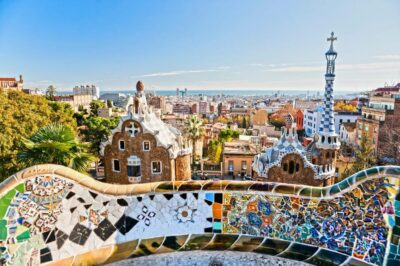
Barcelona: Park Güell and Gaudí House Museum Entry Ticket
Read our review →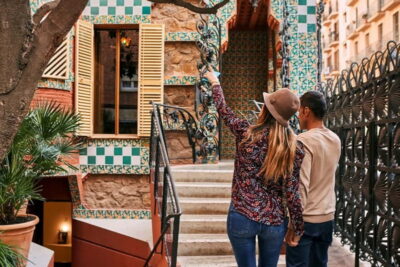
Barcelona: Gaudi’s Casa Vicens Skip-the-Line Entrance Ticket
Read our review →
Sagrada Familia & Gaudi Tour Private or Small Group with Tickets
Read our review →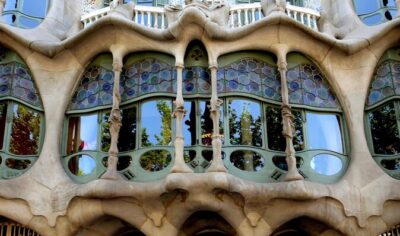
Complete Gaudi Tour: Casa Batllo, Park Guell & Sagrada Familia
Read our review →
Park Güell: Guided Tour with Optional Gaudí Experience Entry
Read our review →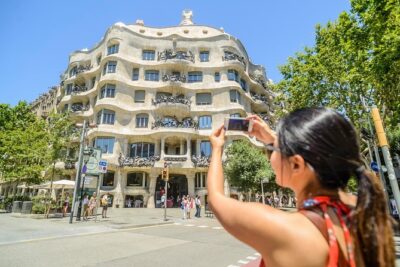
Barcelona e-Bike Tour: Gaudí & Old Town Small Group
Read our review →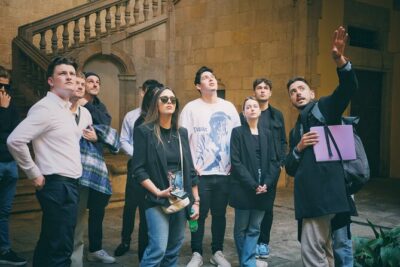
Ramblas, Old Town, Gothic and Gaudi Architecture Walking Tour
Read our review →
Gaudi´s Casa Vicens Skip the Line Ticket with Audioguide
Read our review →Browse the lists this tour appears in